New Scholarship on the “Bad Men” Clause in the Sherman Treaties

James D. Leach has published “Bad Men Among the Whites” Claims After Richard v. United States” in the New Mexico Law Review.

An excerpt:

This article contends that Richard provides Indians with exactly what they bargained for and received when their tribes negotiated and signed treaties with the United States. The government is unlikely to return the parties to their pre-agreement status by returning to Indians the lands they gave up in treaties. The right of Indians to receive what the government promised them in exchange for large amounts of tribal land would seem to be beyond moral or legal dispute. But as we will see, even these seemingly self-evident principles are now disputed.

Our post on the Richard case is here.

Howard Brown and Ray Austin Update Article on Navajo Preference in Employment Act

Howard L. Brown and the Honorable Raymond D. Austin have published “The Navajo Preference in Employment Act: A Review and Update of Cases and Rules, 2010–2012” in the New Mexico Law Review. 

The original article from 2010 is here.

Fletcher Talk on Tribal Civil Jurisdiction at Arizona State

Here is a link to the audio: http://media.law.asu.edu/Law/2014/Spring/ILP/Tribal_Civil_Jurisdiction_02_13_14.mp3. Paper here.

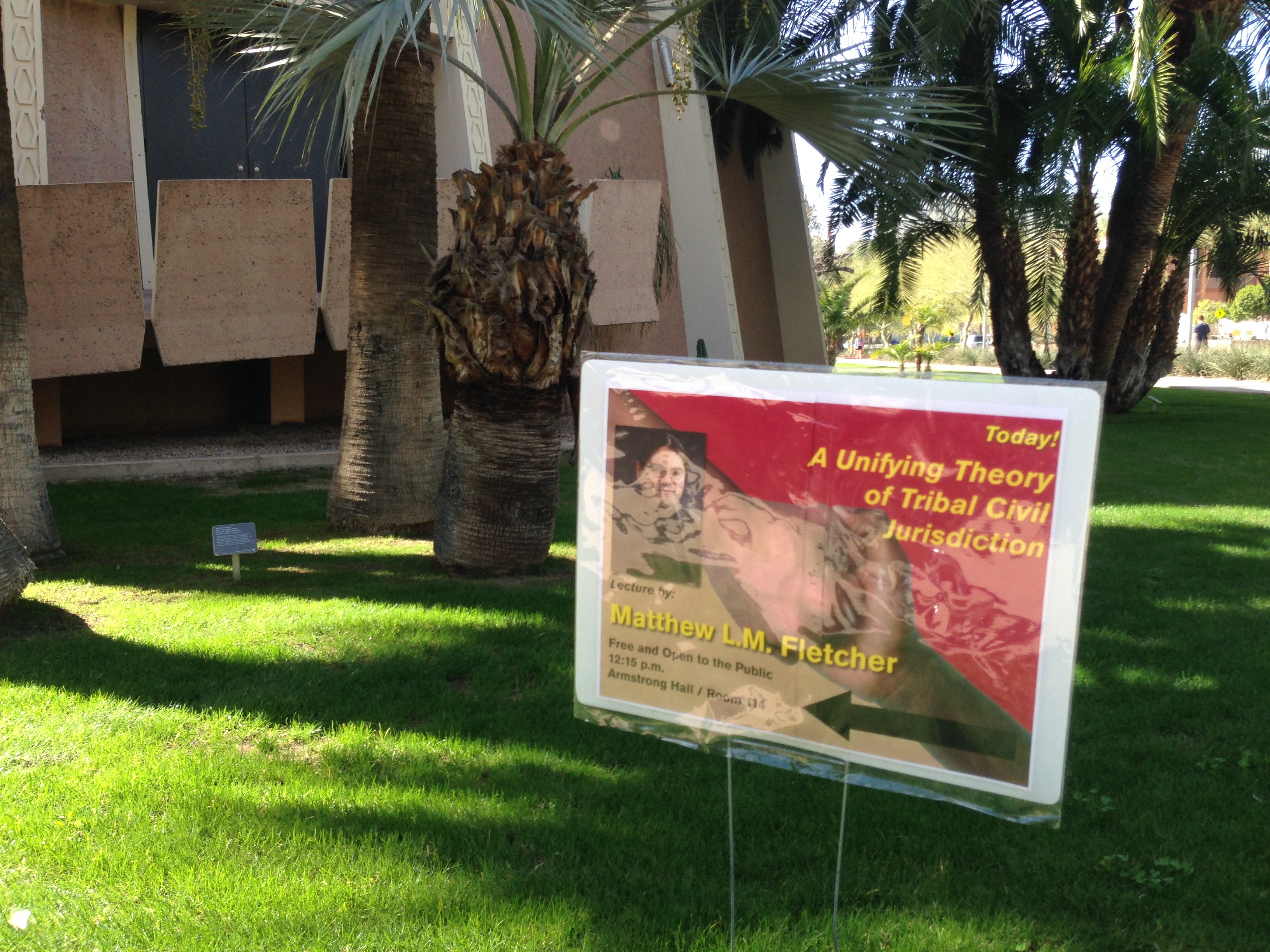
Poster

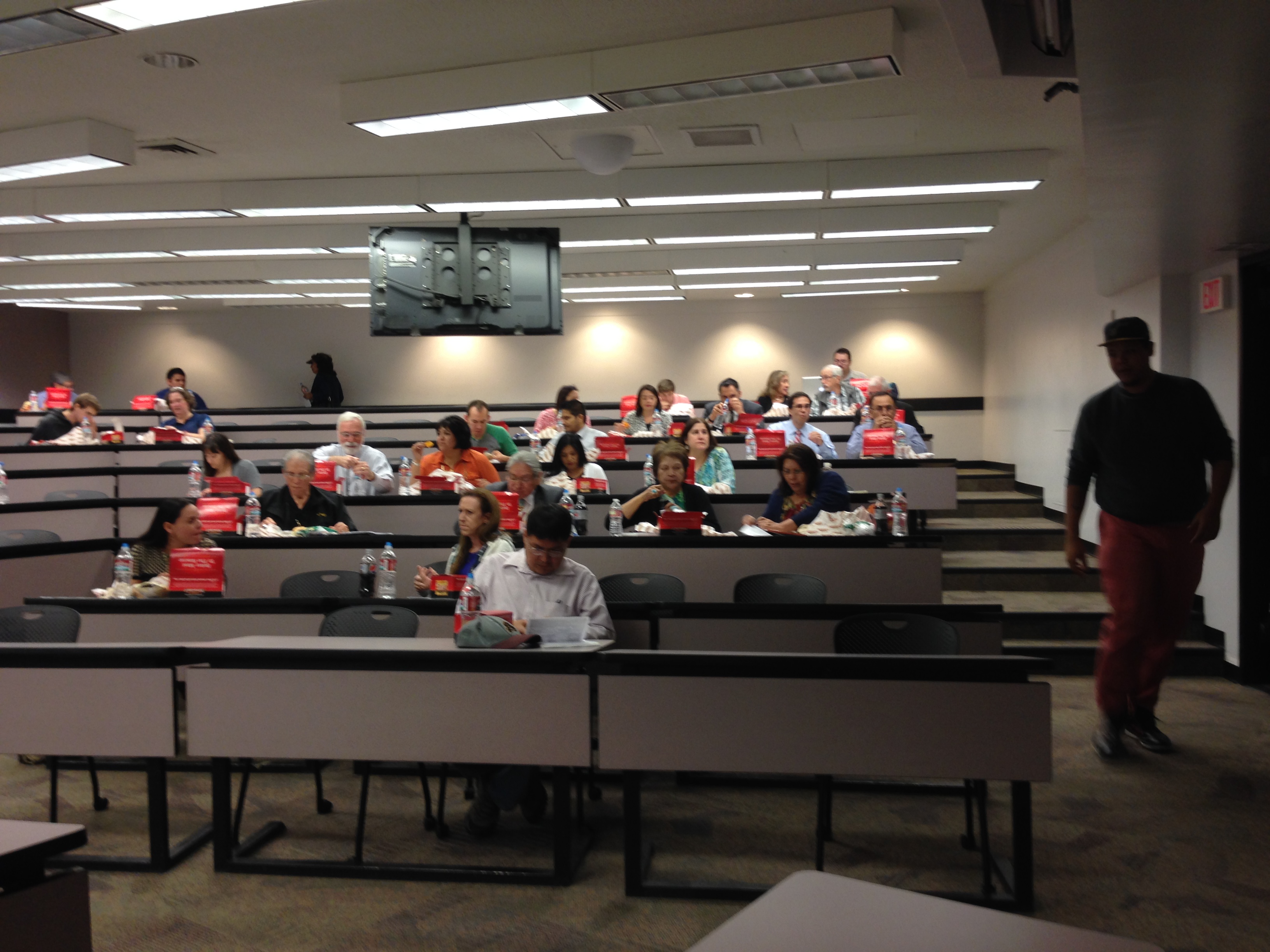
Great crowd. Miigwetch for attending.

crowd

Briefs in Alaska ICWA/Tribal Jurisdiction Case — Simmonds v. Parks

Here they are (well, most of them anyway):

Alaska Tribal Amici

[Simmonds Principal Brief]

Parks Brief

Stearman Brief

Simmonds Reply

Prior post here.

NARF case update page here.

Federal Court Holds Omaha Reservation Not Diminished in Tribal Liquor Jurisdiction Matter

Here are the new materials in Smith v. Parker (D. Neb.):

134 Nebraska Response

135 US Response

136 Village of Pender Response

138 Omaha Tribe Response

140 Opinion

Cross-motions for summary judgment and briefs are here. Prior posts here, here, and here.

Great Lakes Ice Cover Nears Record

Here.

The bridge:

20140215-121106.jpg

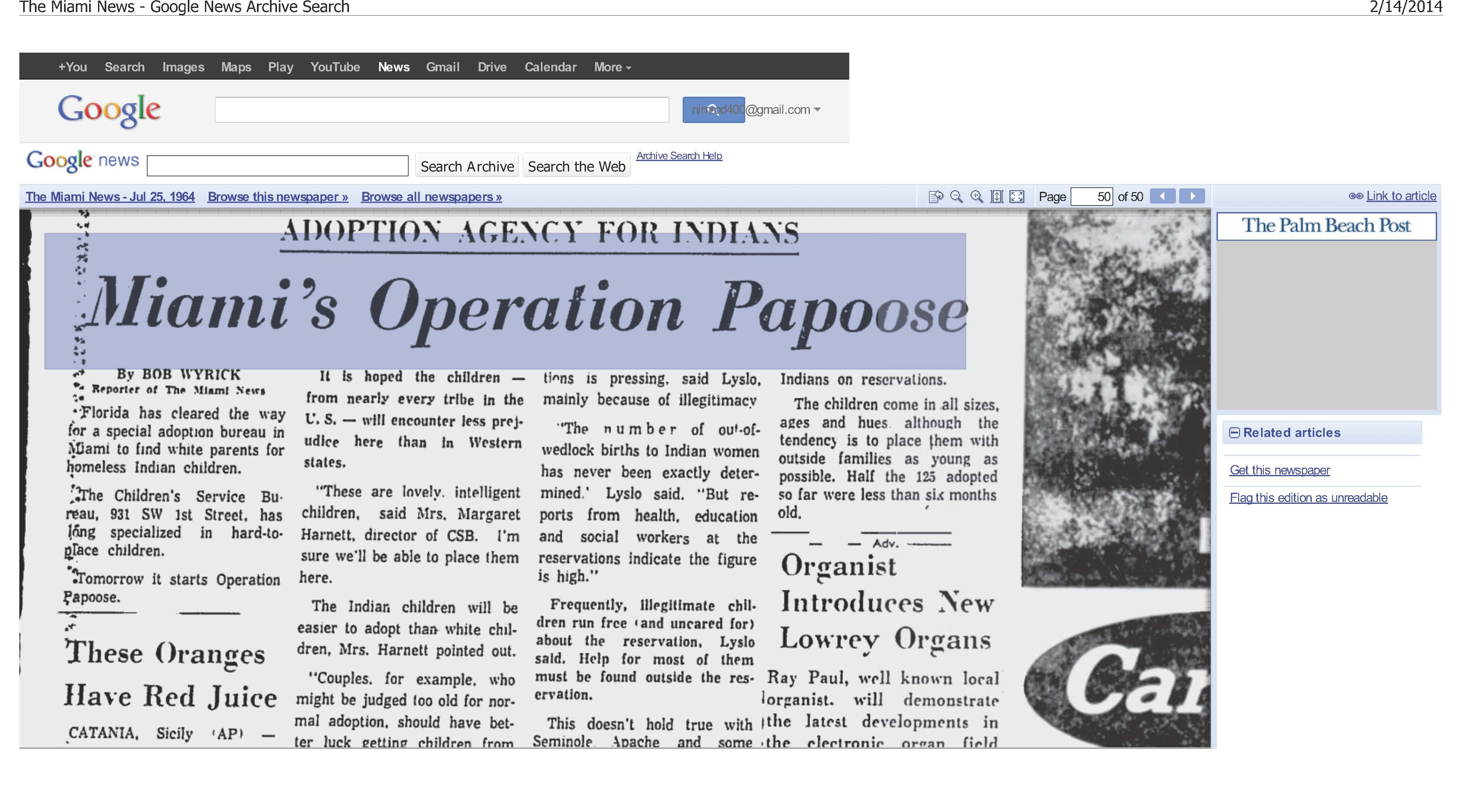
American Indian Child Welfare History — Florida’s “Operation Papoose” (1964)

Designed to find white families for Indian kids:

Operation Papoose

NCAI: Feds to Pay Contract Support Costs

Here:

Contract Support Costs To Be Paid IN FULL By Federal Government

WASHINGTON, DC – For the first time in decades, tribal nations will receive full payment on contracts signed with the federal government. The Bureau of Indian Affairs (BIA) and the Indian Health Service (IHS) have submitted plans to pay their 2014 contracts with tribes in full.

Many issues face Indian Country but one of the most far-reaching is the fiduciary relationship between tribal nations and the federal government. In setting out plans to pay their contract support cost requirements in full, the federal government will begin to treat tribal nations with the respect and honor due to them.

Under the Indian Self-Determination Act, the United States enters into inter-governmental contracts with tribes under which tribes administer federal programs for the benefit of tribal members. The Indian Self-Determination Act represents the cornerstone of this nation’s federal policy toward tribes for more than a third of a century and represents one of the most successful policy eras for tribes in US history.

Yet, time and time again, BIA and IHS have failed to pay the contract support costs in full while expecting the programs to be fulfilled completely. This cycle of negotiating contracts and then refusing to pay the agreed upon amount has prevented tribes from achieving self-determination and progress towards self-sufficiency.  When Indian contract and self-governance compact contract support costs are short funded, tribes are actually penalized for exercising their self-determination rights, by being compelled to reduce program operations to cover these unavoidable costs.

While this recent development is a positive step for future contracts, federal agencies must also speed up the settlement of past claims. Agencies owe tribal nations millions of dollars in unpaid contract support costs – money that is critical for tribes to achieve full self-determination.

The National Congress of American Indians is committed to working with tribal nations and the federal government to ensure full payment of future contracts and to resolve the millions of dollars of debt owed to tribes.

For additional background information on Contract Support Costs, please read NCAI’s full report on Contract Support Costs or the summary briefing document.
Eighth Circuit Affirms Pine Ridge Man’s Drug Conviction, but Criticizes Harsh Sentence

Here is the opinion in Walking Eagle v. United States.

And footnote 2 (joined by two of the judges):

In affirming the denial of postconviction relief to Walking Eagle, we nevertheless observe that Walking Eagle’s 20-year mandatory minimum sentence is another example of a harsh sentence that is required for a non-violent crime in what now seems generally recognized as this country’s continuing but unsuccessful War on Drugs. On August 12, 2013, in a speech before the American Bar Association, United States Attorney General Eric Holder emphasized the need to “fundamentally rethink[] the notion of mandatory minimum sentences for drug-related crimes,” as these sentences “oftentimes generate unfairly long sentences” and, as a result, “breed disrespect for the system.” Eric Holder, Attorney General of the United States, United States Department of Justice, Remarks at the Annual Meeting of the American Bar Association’s House of Delegates (Aug. 12, 2013), available at http://www.justice.gov/iso/opa/ag/speeches/2013/ag-speech-130812.html.

Update on EPA’s Partial Stay of Wind River Decision

Here are materials :

2014.02.13 Press Release re EPA Issues Stay [Eastern Shoshone]

EPA Stay Letter – 2.13.14

Letter to Shaun McGrath 2.12.14

The EPA’s original decision is here.