Oregon Court of Appeals Applies ICWA to Guardianships

But does not require contemporaneous active efforts when ordering one.

Here is the opinion.

Given our conclusion that the guardianship was a “foster care placement”  under ICWA, we now consider whether the juvenile court was required under ICWA to make an “active efforts” finding at the proceeding in which that guardianship was  established. Mother argues that, because the guardianship is a foster care placement, the  juvenile court was required to include an active efforts finding in the guardianship  judgment. Although we disagree with DHS’s argument that the guardianship was not a  “foster care placement,” we conclude nonetheless that DHS satisfied ICWA’s “active  efforts” requirement at the 2011 permanency hearing. Therefore, the juvenile court was  not required to make an “active efforts” finding in the guardianship judgment.

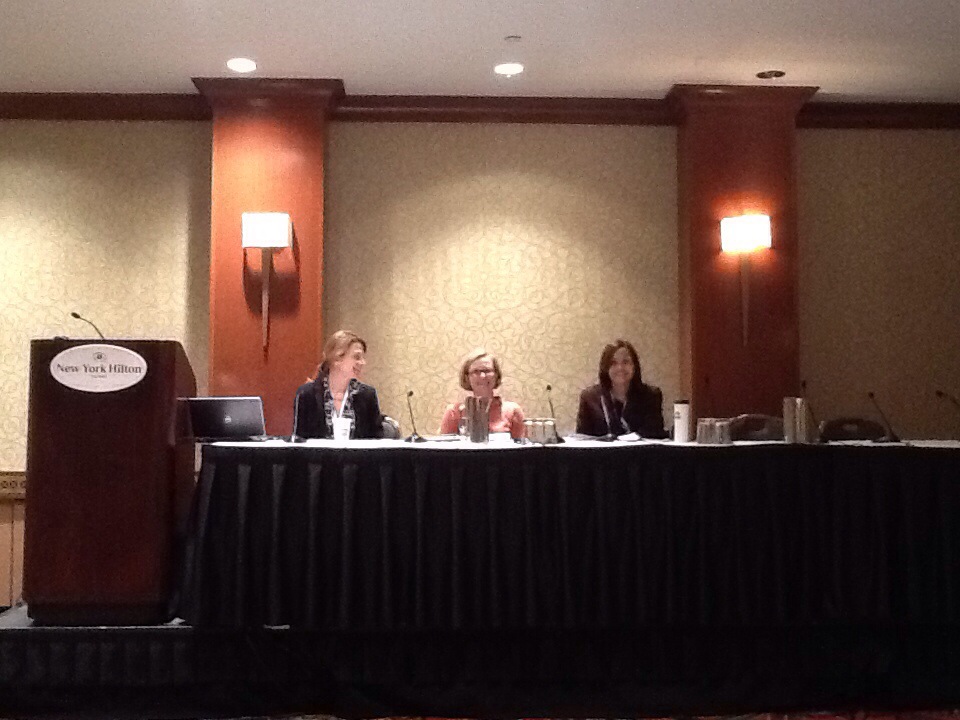
AALS Hot Topics Session on Adoptive Couple v. Baby Girl

Bethany Berger, our own Kate Fort, and Solangel Maldonado

20140104-082735.jpg

ICWA Transfer Case Out of Nebraska

Here.

We conclude that Cameron and Amanda failed to timely
appeal from the orders denying the motions to transfer the cases to tribal court. As such, this court is without jurisdiction to address Cameron and Amanda’s argument that the juvenile court erred in that respect. Upon our de novo review, we find that the State presented clear and convincing evidence that termination of Cameron’s and Amanda’s parental rights to S, L, H, and J was in the children’s best interests. Accordingly, we affirm the orders of the juvenile court.

Oklahoma ICWA Interpretation Case: In re T.S.

We posted recently about the Supreme Court’s contempt for Congress. In this case that looks like an active efforts case, but turns into a long opinion interpreting many provisions of ICWA (active efforts, foster care placement, emergency removal) out of Oklahoma, it appears this contempt isn’t limited to the Supreme Court. This could be particularly harmful in ICWA cases. Opinion here.

From the trial court regarding active efforts in foster care placement:

The juvenile court announced his conclusion of ′′a lack of congressional intent in seeking foster care placement that active efforts have been proven unsuccessful. I think that was meant just for termination of parental rights proceeding.′′ Commenting ′′other courts have attempted to make rather constrained ways of finding active efforts have been met,′′ the court found ′′there has been offering of parenting classes to Father, even the placement of these children with their mothers is certainly an attempt to prevent the breakup of the Indian family, although they are not in [Father’s] care and he can’t have them returned to him on his demand.′′ After he acknowledged the opinion testimony of the qualified expert witness, Ms. Watashe, that ′′[active efforts] don’t apply but they have been met,′′ the court found ′′those things allow the Court to go forward with a finding that active efforts have been met here. I don’t find that they’ve been proven unsuccessful, but I don’t know how they could be at this stage. Again poor wording by Congress. Take that up.′

Footnote 10

And a troubling use of Baby Girl from the Oklahoma Appellate Court (this is a case where the children were with father, and removed on an abuse charge. NOT the fact pattern of Baby Girl):

Our decision to affirm is supported by the U.S. Supreme Court’s recent interpretation of ¶ 1912(d) in an adoption proceeding opposed by the Indian child’s biological father, a member of the Cherokee Nation who was never married to the child’s mother. See Adoptive Couple v. Baby Girl, 133 S.Ct. 2552, 2562- 2563 (June 25, 2013). In pertinent part, a majority of
the U.S. Supreme Court interpreted ¶ 1912(d) to apply ′′only in cases where an Indian family’s ′′breakup′′ would be precipitated by the termination of the parent’s rights,′′ and found such interpretation was confirmed by ¶ 1912(d)’s ′′placement next to ¶ 1912(e) and ¶ 1912(f), both of which condition the outcome of proceed- ings on the merits of an Indian child’s ’continued cus- tody’ with his parent.′′ (Emphasis added.) Id. Construing these adjacent provisions together, the Court further found:
None of the provisions create parental rights for unwed fathers where no such rights would otherwise exist. Instead, Indian parents who are already part of an ′′Indian family′′ are provided with access to ′′remedial services and rehabilitative programs′′ under ¶ 1912(d) so that their ′′custody′′ might be ′′continued′′ in a way that avoids foster-care placement under ¶ 1912(e) or termination of parental rights under ¶ [**59] 1912(f). In other words, the provision of ′′remedial services and rehabilitative programs′′ under ¶ 1912(d) supports the ′′continued custody′′ that is protected by ¶ 1912(e) and ¶ 1912(f). (Emphasis added; citation and footnote omitted.)
In this contested deprived child proceeding subject to ICWA, even if State had provided Father access to the specific services and programs after the show cause hearing and he had successfully commenced those programs, foster care placement could not have been avoided in light of the clear and convincing evidence supporting the juvenile court’s ¶ 1912(e)’s finding, i.e. at this stage of the proceeding Father’s continued custody was likely to result in serious emotional or physical damage to the children.
CBC Article on Residential School Case with Court Documents

Here.

St. Anne’s Residential School survivors are before the Ontario Superior Court today in a bid to get the federal government to release documents the former students say would help corroborate their claims of abuse.

The documents they want are from a five-year Ontario Provincial Police investigation in the 1990s, as well as files from the subsequent trials that resulted in several convictions against school staff and supervisors.

Attorney Sanctioned by State for Behavior in Tribal Court

Minnesota Supreme Court decision here.

The Director argues that Michael’s e-mail questioning the tribal court’s impartiality violated Rule 8.4(d). Michael counters that her accusation regarding the tribal court’s impartiality was well founded and, therefore, was not a violation of Rule 8.4(d). Similar to the misconduct in Getty, the conclusion that Michael’s conduct constitutes a violation of Rule 8.4(d) rests on the manner in which she raised her concerns about the tribal court’s alleged unfairness. Even if Michael could establish that her concerns were well founded, Michael’s flippant rhetorical question at the end of the e-mail that she addressed to the presiding tribal court judge and sent to opposing counsel was unprofessional and disrespectful. Michael’s conduct demonstrates a failure to “show . . . restraint and . . . respect for the judicial system even while disagreeing strongly with it or its decisions.” In re Getty, 401 N.W.2d at 671; cf. In re Snyder, 472 U.S. 634, 645-47 (1985)

Tulsa World Coverage Of Cherokee Nation Filing in Legal Fees Case

Here.

Also the ICT article is here.

Federal Court Dismisses Indian Child Welfare-Related Habeas Petition arising from Yakama

Here are the materials in George v. Superior Court (E.D. Wash.):

35 Fox Motion to Dismiss

39 DCt Order Dismissing Claims

An excerpt:

Here, the three elements for abstention are met. The underlying Superior Court proceedings are ongoing and it is generally recognized that family relations are a traditional area of state concern. Moore v. Sims, 442 U.S. 415, 435, 99 S.Ct. 2371, 60 L.Ed.2d 994 (1979); H.C. ex rel. Gordon, 203 F.3d at 613. The Superior Court had apparent concurrent personal jurisdiction over the parties with the Tribal Court and has jurisdiction to determine the legal affect of the Tribal Court proceedings, its own jurisdiction, and to consider deferring to the Tribal Court if it finds it appropriate. See Wash. Rev.Code 37.12.010; Maxa v. Yakima Petroleum, Inc., 83 Wash.App. 763, 767, 924 P.2d 372 (1996); Confederated Tribes of the Colville Reservation v. Superior Court of Okanogan County, 945 F.2d 1138, 1140, n. 4 (9th Cir.1991) (noting that Pub.L. 280 did not divest Tribal Courts of concurrent jurisdiction over child custody matters). The children were residing off-reservation in Spokane County for at least six months consecutive prior to when the custody petitions were filed, and it appears the children may have been domiciled on Yakama Nation land for at least a day when Plaintiff’s custody petition was filed in Tribal Court. Finally, both parties availed themselves of the child custody proceedings held in the respective courts. Defendant participated in the Tribal Court proceedings, and Plaintiff participated in the Superior Court proceedings. Thus, Plaintiff has an adequate forum in which to assert her federal claims. At this point, extraordinary circumstances do not exist that would require the Court to refrain from abstaining in this matter.


Taskforce on Violence Against American Indian Children to Hold First Public Hearing In North Dakota

Release here.

The advisory committee will convene four public hearings across the country beginning in Bismarck, N.D., Dec. 9, focusing on violence in children’s homes, schools and communities in Indian country.  Associate Attorney General Tony West will join the task force at the first hearing in Bismarck.  The other hearings will be held in Phoenix, Ariz., Fort Lauderdale, Fla. and Anchorage, Alaska early in 2014.

Prof. Karen Tani Writes About “Remembering the ‘Forgotten Child'” in Light of Adoptive Couple at Jotwell

Here.

These revelations are sure to disturb any reader, but the point of Jacobs’s important article is not to expose adoption proponents as disingenuous or malevolent. It is to place an ongoing phenomenon—Indian children’s disproportionately high rate of separation from their families—in proper historical context. (P. 154.) “It is no coincidence,” Jacobs writes, “that the IAP arose during the era in which the federal government promoted termination [of tribal nations’ special status] and relocation policies for American Indians.” (P. 152.) Adoptions enabled the federal government to terminate its responsibilities, child by child, by shifting them to “the ultimate ‘private’ sector.” (P.154.) By extension, Jacobs argues, adoptive families also advanced the government’s long-term “effort[] to eliminate Indianness.” (P. 154.) This, Jacobs demonstrates, was the backdrop for the ICWA. When tribal leaders and advocacy organizations convinced Congress to enact the new law, it was a small victory in a long war. And when plaintiffs invoke the ICWA today, they raise a hard-won shield.

We agree that Margaret Jacobs “Remembering the ‘Forgotten Child’: The American Indian Child Welfare Crisis of the 1960s and 1970s” 37 American Indian Quarterly 136 (2013) is an excellent and important article.