Carole Goldberg, Theresa Pouley, and Ted Quasula have been appointed to the Indian Law & Order Commission. Congratulations to all of them!
Criminal
U.S. v. Medearis — Tribal Search Warrant Valid under Federal Law
Here are the materials in this case that details the interaction of tribal (Rosebud Sioux, in this case) and federal criminal procedure rules, holding that FRCrimPro 41 is inapplicable to tribal law enforcement officers when investigating alleged violations of tribal criminal law.
Murder Conviction of Navajo Man Reinstated by Ninth Circuit En Banc Panel
Here is the opinion in United States v. Begay (8-3).
The panel decision that vacated a first-degree murder conviction for insufficiency of evidence of premeditation is here.
The three judges that dissented from the reversal, under Judge Reinhardt’s byline, write:
This is a case in which there is no conflict among circuits, no intra-circuit conflict, and no issue of national importance.The court went en banc not over any legal issue, but only to decide whether a few specific facts identified in the majority opinion were sufficient to warrant a finding of premeditation.A similar combination of facts is not likely to occur again in a future case, especially as there are few federal murder cases—this one happened on an Indian reservation—and even fewer in which the question whether the murder was first- or second-degree hinges exclusively on whether there is sufficient circumstantial evidence to prove premeditation. Nevertheless, a majority of this court decided that it was worthy of en banc review when the three-judge panel found that the prosecution had failed to prove murder in the first as opposed to second degree. Because I disagree with the majority that the minimal facts that it sets forth in its opinion are sufficient to establish premeditation beyond a reasonable doubt, whatever reasonable inferences may be drawn, I dissent.
U.S. v. Shavanaux — Government’s Brief on Appeal Where Indictment Dismissed Based on Reliance on Tribal Court Convictions
Interesting, and a case to watch. The government is attempting to prove a recidivist element of the crime (domestic violence) through use of two or more uncounseled tribal court convictions. Lower court materials here.
Here is the opening brief: US Appellant Brief in Shavanaux.
Uniting Three Fires Against Violence Opens in the U.P.
From the Soo Evening News (miigwetch to A.K.):
A new independent agency recently opened its doors to bring coordinated help to those who endeavor to prevent and address domestic violence among Michigan’s 12 federally recognized tribes.
While the organization has been in existence for about a year under a planning grant, Uniting Three Fires Against Violence (UTFAV) recently hung its shingle at its headquarters at 531 Ashmun Street in the Sault. The offices are adjacent to the River of History Museum.
“We are a coalition for all 12 tribes to act as a training source, technical assistance and resource center,” said Executive Director Kellie LaVictor.
“There was no spot in Michigan where all the tribes could turn to for any assistance whether it was policy development, grant writing, training or presenting, providing resources and so on.”
She said the help tribes receive through UTFAV is tailored to their needs and includes tribes with more developed anti-domestic violence programs helping tribes lacking them.
The organization’s stated mission is to unite and empower American Indian communities in Michigan to end domestic violence and sexual assault, to collaboratively promote positive change for individuals experiencing violence or abuse and provide resources for safety and advocacy to ensure the physical, mental, spiritual and emotional well-being of American Indians victimized by violence.
Rep. Herseth Sandlin Named to Indian Law and Order Commission
Article here.
Thanks to T.E.
Old News But Judge Ludington Formally Approves Saginaw Chippewa Reservation Boundaries Settlement
Here is the order: DCT Order Approving Settlement.
Of note, the court addressed Michigan AG Cox’s objection relating to Nevada v. Hicks, in which the AG argued that the establishment of a “Tribal Enclave” violated Hicks:
The Attorney General next objects to any limitations on the ability of state police officers to enter the “Tribal Enclave” for law enforcement purposes. The Tribal Enclave is a small parcel within the Isabella Reservation, which includes land owned by the Tribe and viewed by the Tribe as essential to its sovereignty. State police can enter the Tribal Enclave only if they are responding to an emergency call, in “fresh pursuit” of a suspect, or with authorization from the Tribal Police. The Attorney General contends that the restrictions are inconsistent with Nevada v. Hicks, 533 U.S. 353, 121 S. Ct. 2304, 150 L. Ed. 2d 398 (2001). In Hicks, the Supreme Court held that a tribal court’s jurisdiction is limited with respect to non-Indian actors, even as to events that took place within Indian country and on land owned by a tribe. Id.at 358-60. Accordingly, a tribal member cannot sue a state game warden in tribal court for executing a search warrant within Indian country where the game warden was seeking evidence of a crime that occurred outside Indian country.
The procedures described in the law enforcement agreement are consistent with Hicks and the interests of the public. The agreement does not limit the authority of the state police to enforce state law within the Tribal Enclave. Rather, it simply requires that the state police officers follow certain procedures before entering the Tribal Enclave. The state police will still be able to execute state-issued search warrants within the Tribal Enclave after obtaining authorization from the Tribal Police. In the event of an emergency, however, pre-authorization is not required. The agreement is a compromise that enables the Tribe to retain a higher degree of sovereignty within the Tribal Enclave without sacrificing public safety. Accordingly, the Attorney General’s second objection is also reasonably addressed by the settling parties.
GAO Report on Federal Prosecution Declinations
Significantly fewer declinations than some have asserted — namely, the 80 percent figure.
GAO Report “U.S. Department of Justice Declinations of Indian Country Criminal Matters”:
From Indianz:
Federal prosecutors turn down 50 percent of cases in Indian Country, the Government Accountability Office reported.
Between fiscal years 2005 through 2009, 10,000 cases were referred to U.S. Attorney’s Offices. Federal prosecutors resolved 9,000 cases by either filing for prosecution, declining to prosecute or administratively closing the matter.
Of the 9,000 cases, only 50 percent resulted in prosecution. In 2005, the declination rate was as high as 58 percent.
“Declination rates tended to be higher for violent crimes, which were declined 52 percent of the time, than for nonviolent crimes, which were declined 40 percent of the time,” the report said.
The declination rate for sexual abuse offenses was even higher — 67 percent. “USAO officials told us that the difference in declination rates between sexual abuse and assault matters may be the result of the difficulty in obtaining evidence and witnesses in sexual abuse investigations,” the report said.
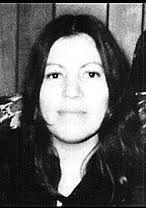
Anna Mae Aquash – A.I.M. Murder Trial (Finally) Begins This Week
This week, John Graham (aka John Boy Patton) stands trial for the murder of Anna Mae Aquash. Graham is from the Tsimshian tribe in the Yukon.
In 1975, Anna Mae Aquash (Pictou), a Mi’kmaw Indian from Nova Scotia, Canada and a member of the American Indian Movement, was shot execution style in the back of the head in the South Dakota Badlands. It was erroneously believed that she was an FBI informant. For those interested, here’s a useful chronology of her life and the events leading up to her death.
Eighth Circuit Affirms Sentence in Major Crimes Act Conviction at MHA Nation
Here is the opinion in United States v. Lone Fight.
 Turtle Talk
You must be logged in to post a comment.