Pa. High School Student Newspaper Editor: “My High School Mascot Is Offensive”

Here. An excerpt:

When I raised my hand to vote in a classroom at Neshaminy High School nearly 18 months ago, I was unaware of the battle I was about to ignite as editor-in-chief of The Playwickian, my school’s newspaper. In the fall of 2013, one of my fellow editors began a conversation about our school mascot, which is also the name of every sports team at our school and our school’s nickname. This would soon become a national controversy over our use of a racist mascot and a legal battle over the amount of control students have over their publications in public schools.

This mascot is the “Redskin.” It has been consistently criticized by a Native American parent within our Pennsylvania school district for its derogatory and hateful connotation. The paper’s staff and I came to a consensus that we should listen to what this parent had to say and start a conversation about the future use of the mascot, given how offensive it is to Native Americans. We debated, did our research, and ultimately came to a vote—14-7—in favor of removing the mascot—and the football team’s name—entirely from our newspaper, essentially forming a new policy. Both the majority and the dissenting sides wrote editorials, and we went to press Oct. 23, 2013.

—Brent Greenwood for Education Week; image text from Winona Daily Republican, 1863

As the editor-in-chief since 2013, I continue to face reproach for this decision, including the possibility of criminal charges, as well as a lot of social-media bashing by my peers and the parents in my school district.

William Mitchell and Hamline Law Schools to Merge

Huge news, especially given that these schools have significant histories of Indian law programming.

News release here.

HT faculty lounge.

Grand Forks High School Eagle Feather Graduation Policy Decision

Here are the materials — a big win!

Eagle Feather Packet

Superintendent Nybladh Eagle Feather Decision

NAICJA Webinar on Tribal Public Defense, January 8, 2015

Join the National American Indian Court Judges Association and the American Indian Law Center for the first in a series of four upcoming webinars on Emerging Practices in Civil Legal Assistance and Criminal Indigent Defense. The goal of these webinars is to share four emerging practices that incorporate the philosophy, values, and characteristics of successful and effective legal assistance practices. These webinars will also share and highlight multiply programs that are currently implementing these practices.

Webinar 1 – “Tribal Initiatives: Tribal Public Defense and How to Use Existing Resources to Provide Holistic Defense in Tribal Communities”

Thursday, January 8, 2015 from 2:00 – 3:30 p.m. (MST)

Register now for this free webinar at

https://naicja.webex.com/naicja/onstage/g.php?d=662539071&t=a

As tribal governments consider expanding their jurisdiction through the Tribal Law and Order Act, providing effective assistance of counsel to the accused is at the forefront. This webinar discusses one model of public defense and how it can be adapted to fit any community. With technical assistance from the Center for Holistic Defense at the Bronx Defenders in New York, the Tribal Defenders for the Confederated Salish and Kootenai Tribes in Montana use holistic defense to work toward solutions for their clients who struggle with the criminal justice system. Learn how in-house psychological and social work services as well as existing resources in your community can improve client outcomes.

Presenters:

Ann Sherwood, Attorney, Defenders Office of the Confederated Salish and Kootenai Tribes

Alex Sierck, Project Director of the Center for Holistic Defense, Bronx Defenders

Desiree Fox, Case Manager and Program Manager, Tribal Defenders Office Holistic Defense Program.


Moderators:

A. Nikki Borchardt Campbell, Program Administrator, NAICJA

Francine Jaramillo, Staff Attorney, American Indian Law Center, Inc.

This webinar series is supported by Grant No. 2011-AL-BX-K002 awarded by the U.S. Department of Justice, Bureau of Justice Assistance. The Bureau of Justice Assistance is a component of the Office of Justice Programs, which also includes the Bureau of Justice Statistics, the National Institute of Justice, the Office of Juvenile Justice and Delinquency Prevention, the Office for Victims of Crime, and the Office of Sex Offender Sentencing, Monitoring, Apprehending, Registering, and Tracking. Points of view or opinions in this document are those of the author and do not necessarily represent the official position or policies of the U.S. Department of Justice.


Questions? Contact Francine Jaramillo at jaramillo@law.unm.edu or call (505) 277-5462

Jeannine Bell on How to Improve Discussion of Race in the Classroom

Here is “How to Improve Discussion of Race in the Classroom,” by Jeannine Bell, who teaches at Indiana University law school.

An excerpt:

The grand juries’ decisions not to indict white police officers in the deaths of Michael Brown and Eric Garner bore all the hallmarks of sensitive topics that, to keep the peace, should be discussed only in private, or in small groups of people who share the same race and politics.

I don’t have that luxury. I teach criminal procedure to a racially mixed group of law students. Early in the semester we had discussed the constitutional requirements for the use of deadly force by the police. Coming into class the day after the Ferguson decision was announced, I knew we needed to talk.

I also wanted to talk. Though segregation is no longer required by law, too many Americans nevertheless grew up in segregated neighborhoods and attended segregated schools. A 2013 study by the Public Religion Research Institute revealed many whites’ social networks to be overwhelmingly—more than 90 percent—white. Giving in to the temptation to avoid all talk of race is a mistake because it helps perpetuate those divides.

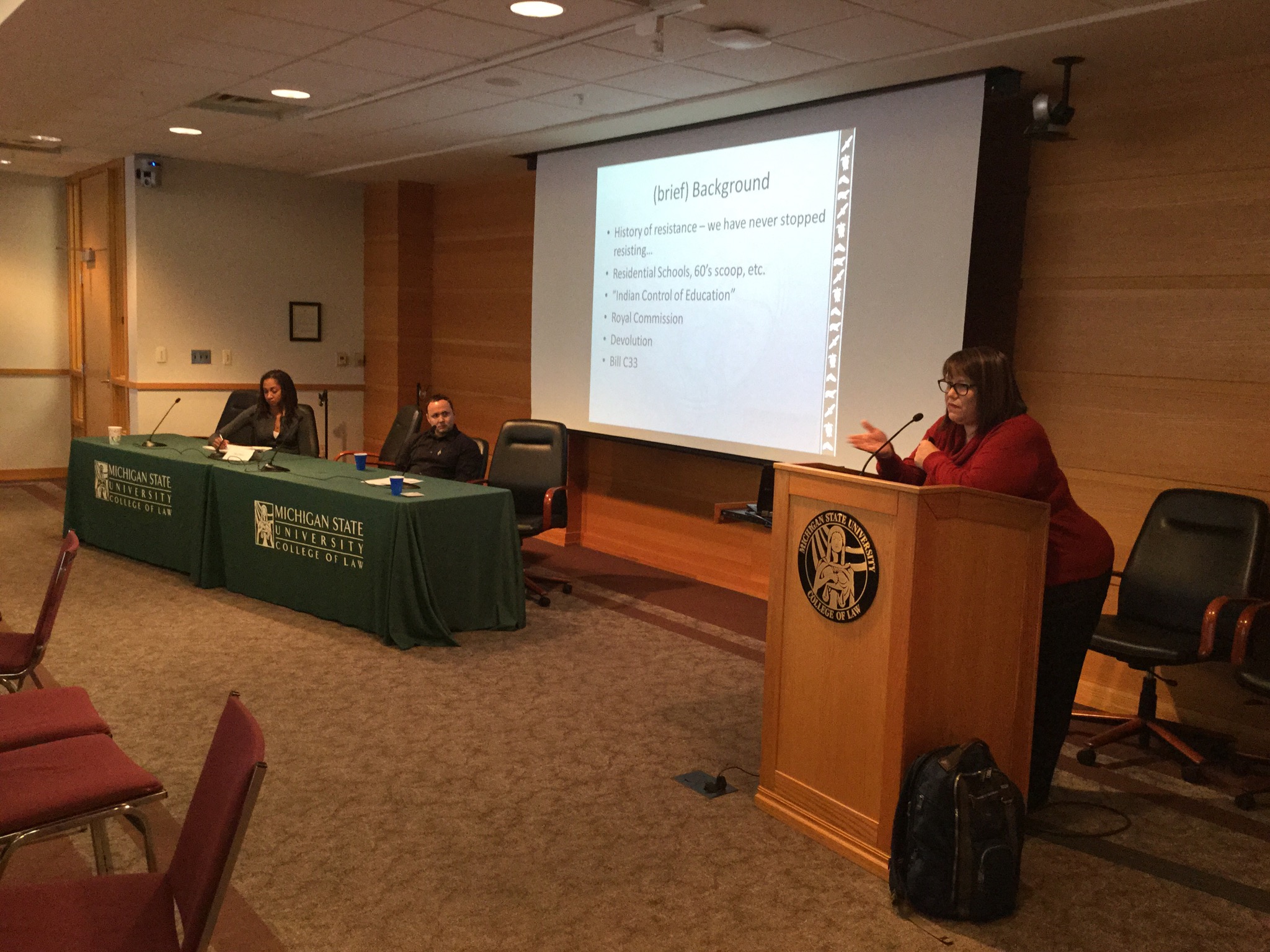
2014 ILPC Conference Final Panel

Rose Petoskey, Shelly Lowe, Melvin Monette, Dr. Tawa Sina, Dr. Angelique Day, and Dr. Suzanne Cross

IMG_1062.JPG

IMG_1060.JPG

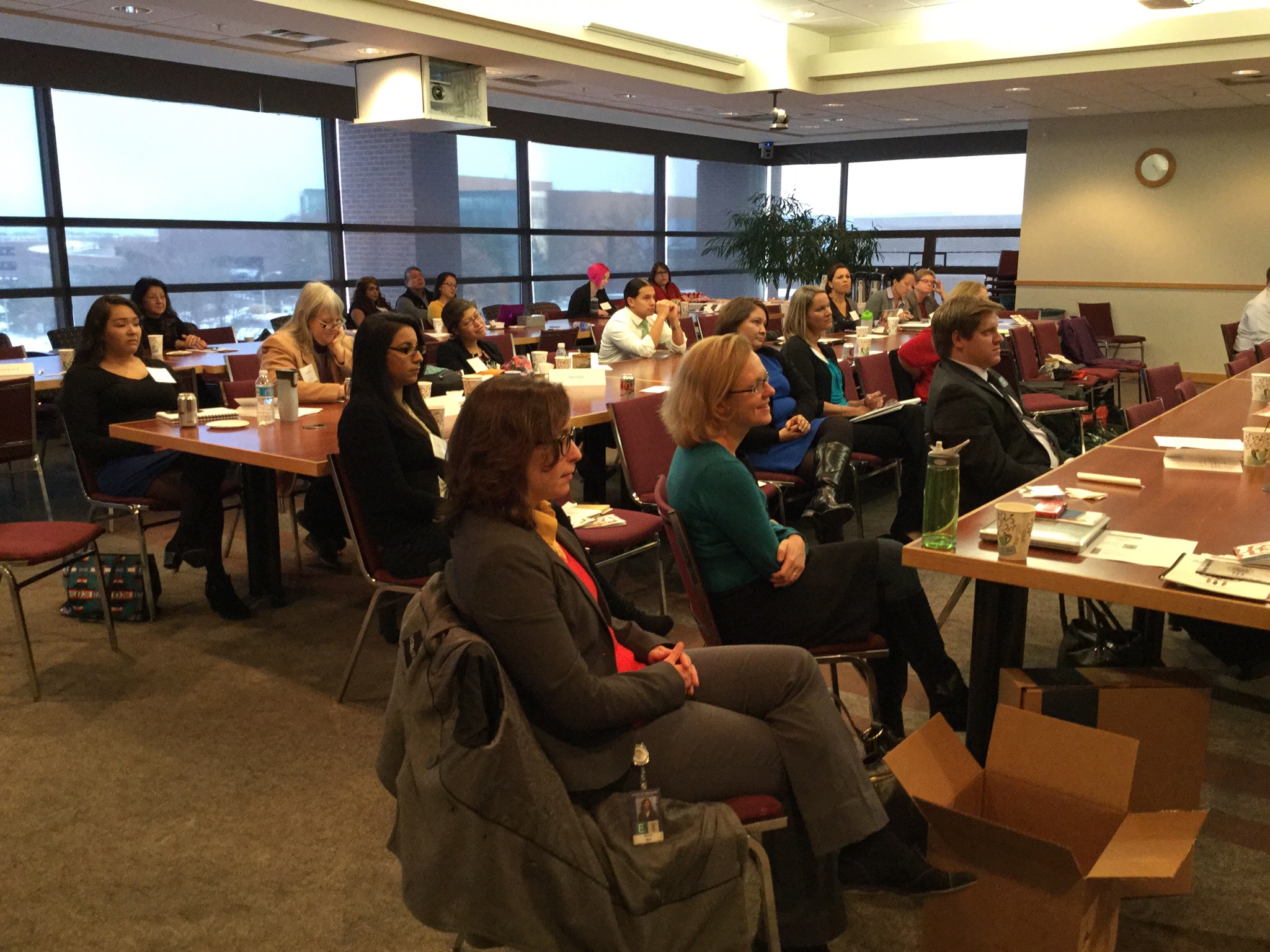
The serious participants

IMG_1067.JPG

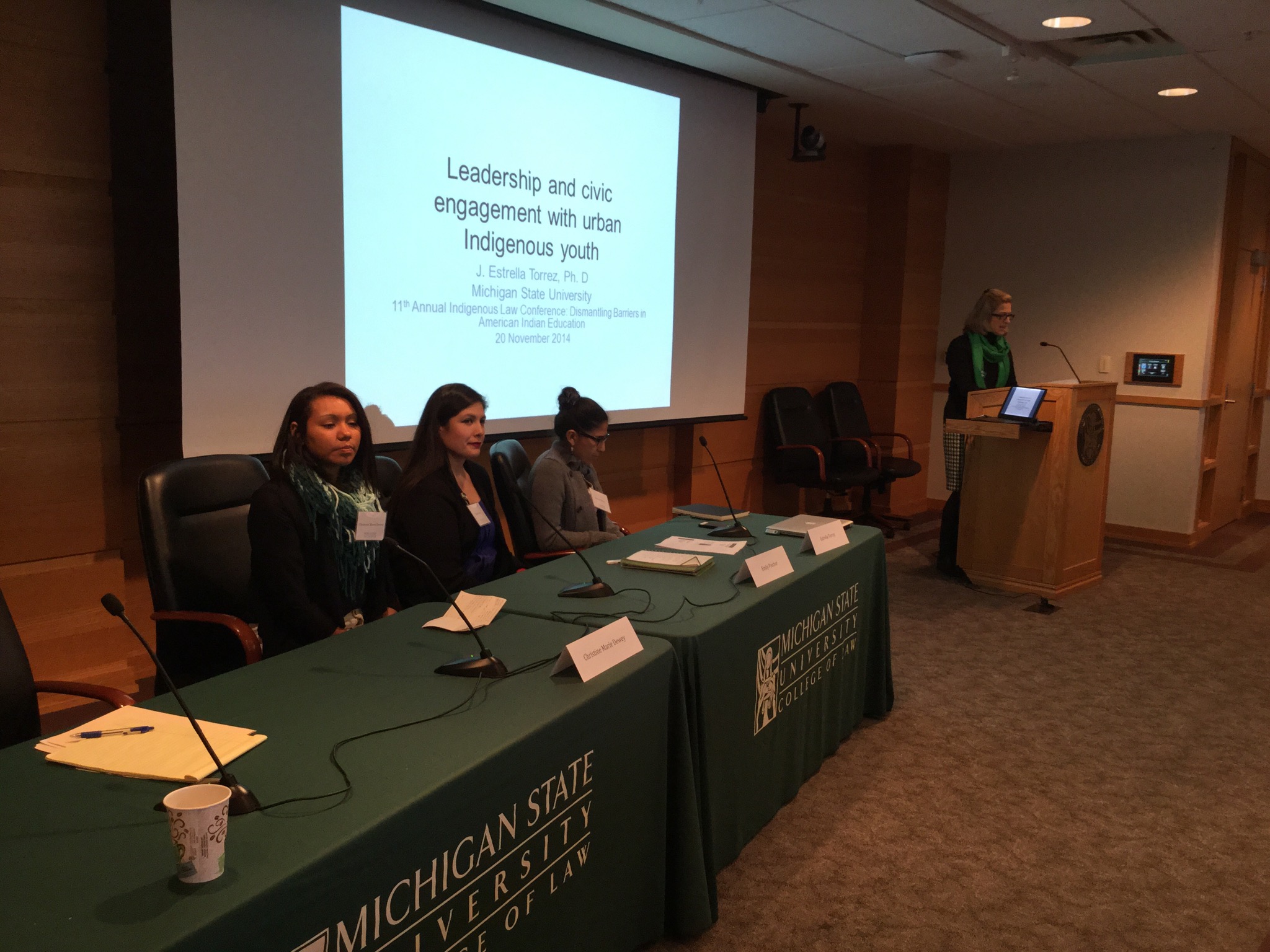
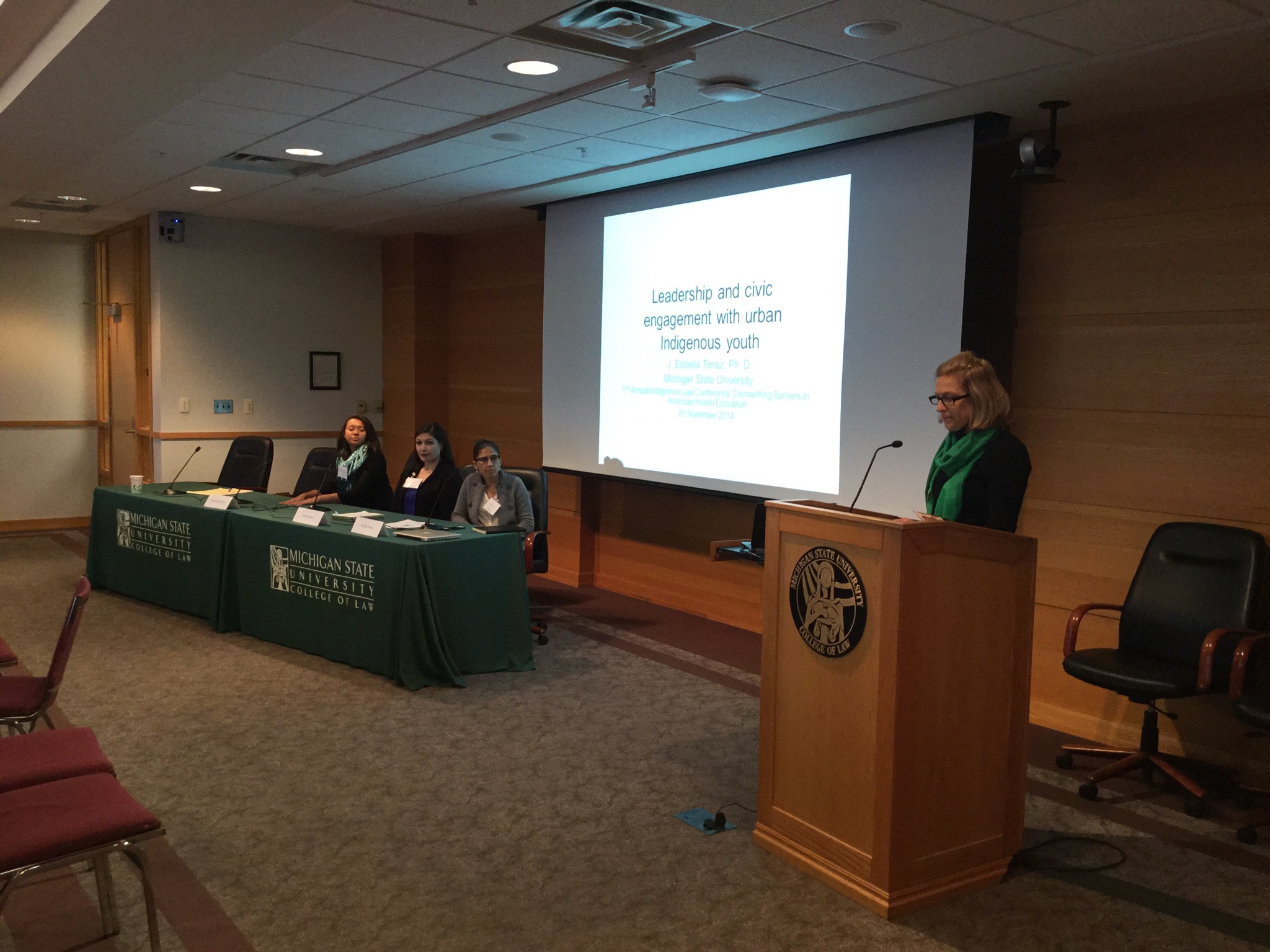
2014 ILPC Conference Fourth Panel

Christina Marie Dewey, Emily Proctor, Estrella Torrez, and Jennifer Rosa

IMG_1056.JPG

IMG_1055.JPG

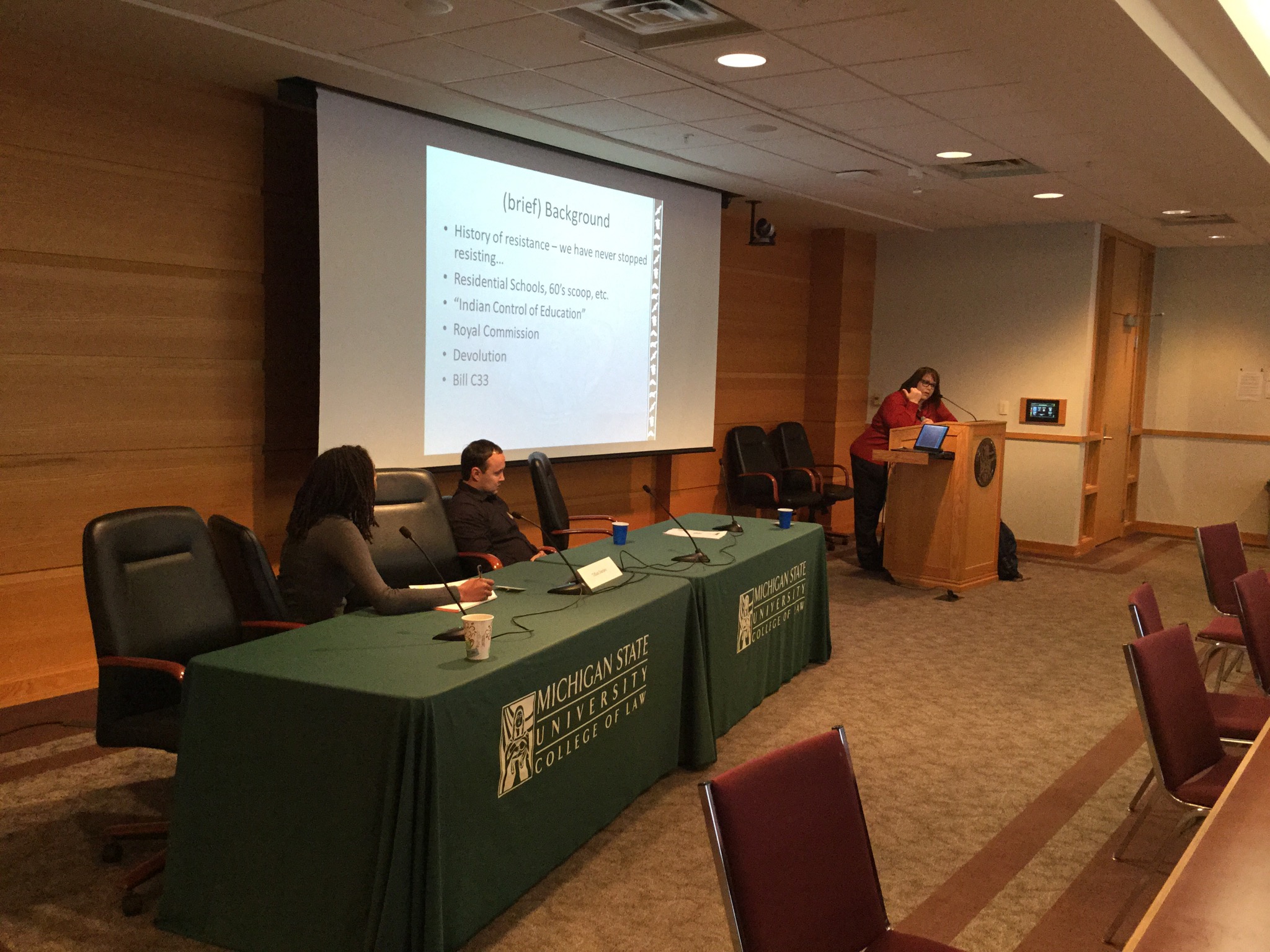
2014 ILPC Third Panel

Tiffani Darden, Eric Hemenway, and Treena Metallic

IMG_1050.JPG

IMG_1054.JPG

2014 ILPC Lunch Speaker — The Incredible Gina Jackson

IMG_1048.JPG

IMG_1049.JPG

ILPC Conference Second Panel

Dr. Nicole Blalack, Melody McCoy, April Day, and Kristi Bowman

IMG_1045.JPG

IMG_1044.JPG