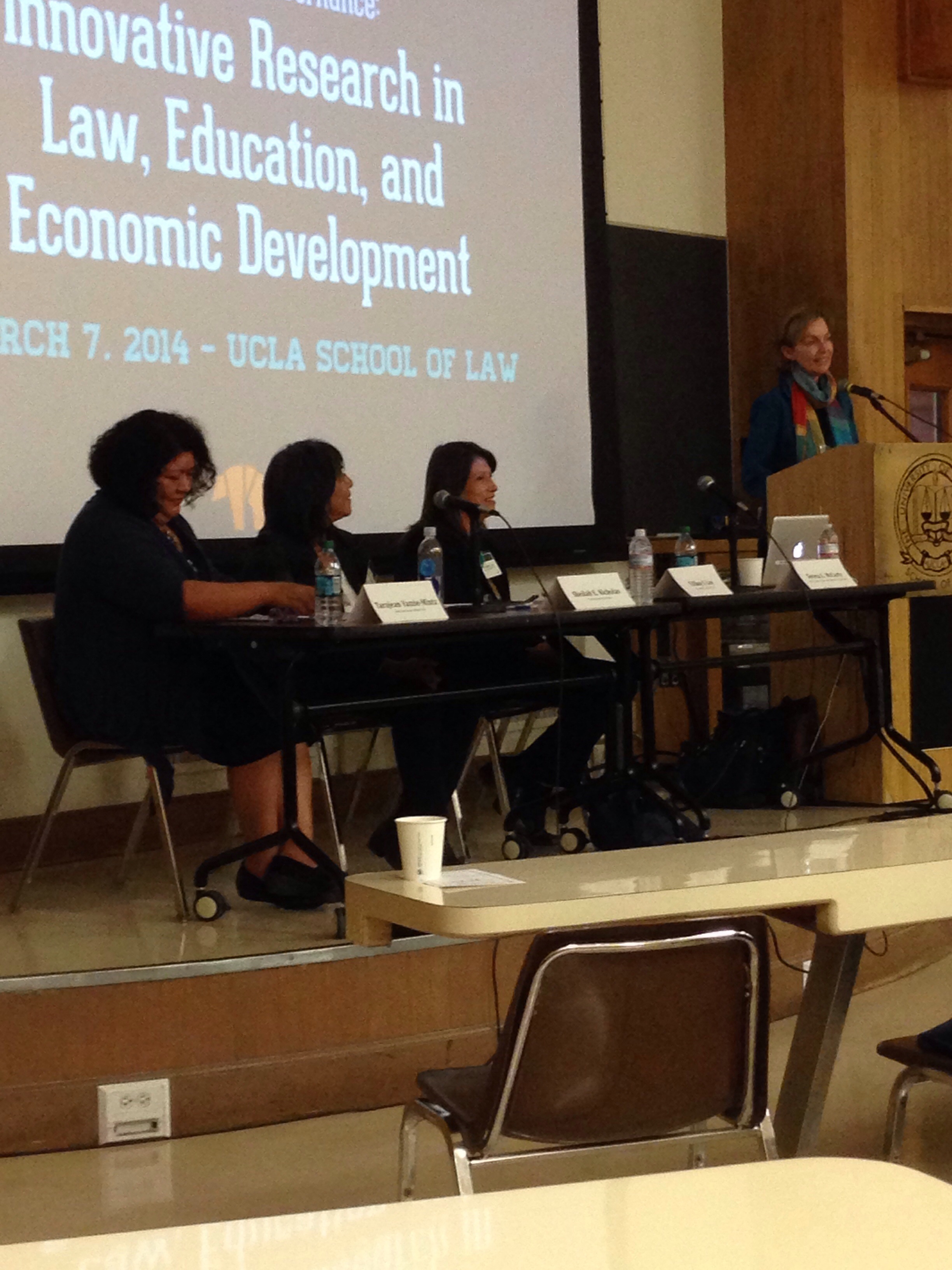
Agenda here. Our own Wenona Singel will be talking about careers in tribal law on Friday.
More details here.
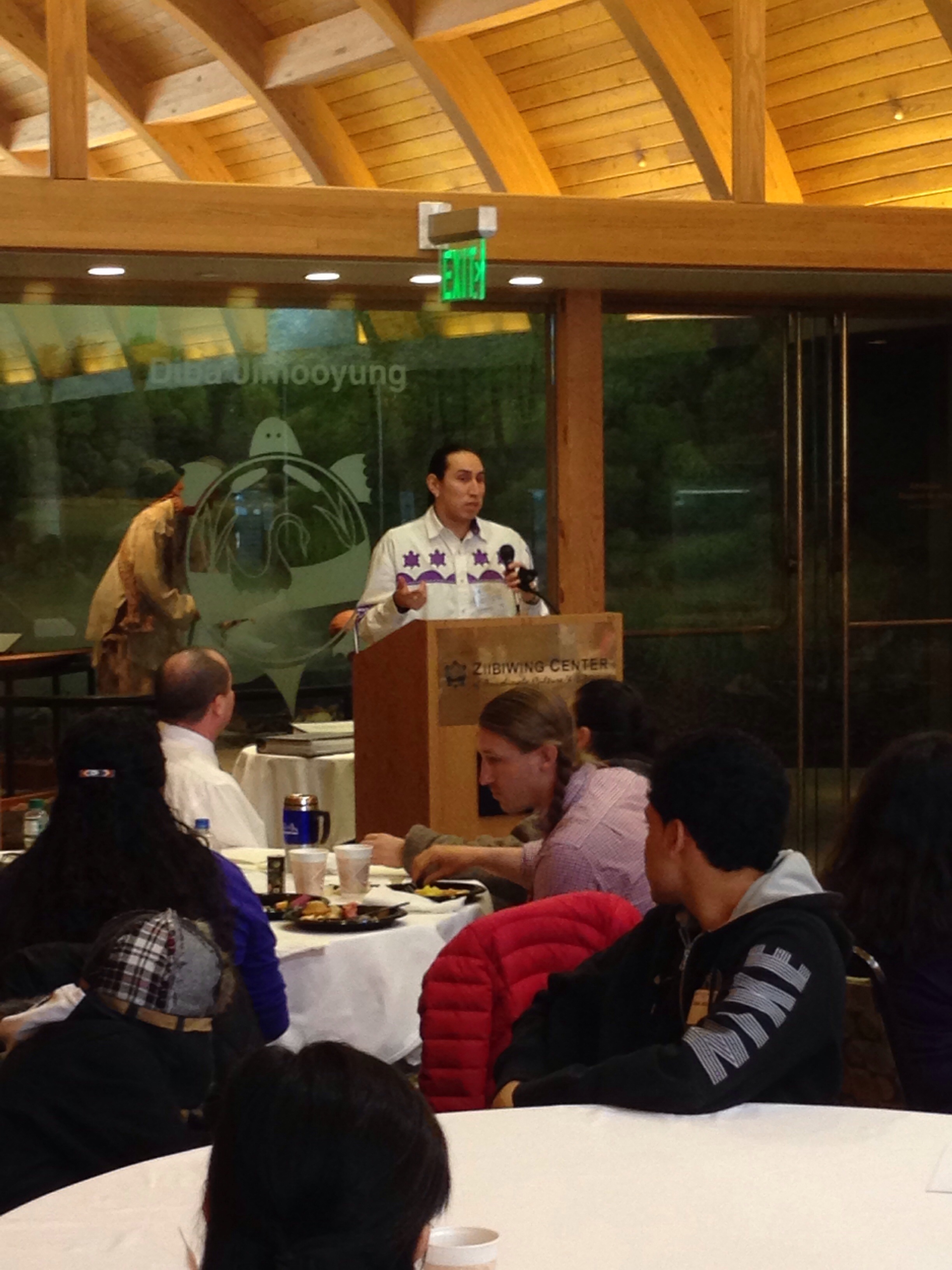
The conference will be held at Ziibiwing.
The U.S. Senate Committee on Indian Affairs has posted the link to an Oversight Hearing held on February 26, 2014.
The topic of the hearing was “Early Childhood Development and Education in Indian Country: Building a Foundation for Academic Success.” Testimony was given by:
Ms. Linda K. Smith
Deputy Assistant Secretary and Inter-Departmental Liaison-for Early Childhood Development, Administration for Children and Families, U.S. Department of Health and Human Services, Washington, DC
Mr. Danny Wells
Executive Officer-Division of Education, Chickasaw Nation, Ada, OK
Ms. Barbara Fabre
Chairman-National Indian Child Care Association; and Director, Child Care/Early Childhood Program, White Earth Ojibwe Nation, White Earth, MN
Ms. Jacquelyn Power
Superintendent/Principal-Blackwater Community School, Coolidge, AZ
Dr. E. Jane Costello
Associate Director for Research-Center for Child and Family Policy, Duke University, Durham, NC
Melina Angelos Healey has published “The School-to-Prison Pipeline Tragedy on Montana’s American Indian Reservations” in the NYU Review of Law & Social Change.
Here is the description:
American Indian adolescents in Montana are caught in a school-to-prison pipeline. They are plagued with low academic achievement, high dropout, suspension and expulsion rates, and disproportionate contact with the juvenile and criminal justice systems. This phenomenon has been well documented in poor, minority communities throughout the country. But it has received little attention with respect to the American Indian population in Montana, for whom the problem is particularly acute. Indeed, the pipeline is uniquely disturbing for American Indian youth in Montana because this same population has been affected by another heartbreaking and related trend: alarming levels of adolescent suicides and self-harm.
The statistical evidence and tragic stories recounted in this report demonstrate beyond doubt that American Indian children on the reservations and elsewhere in Montana are moving into the school-to-prison pipeline at an alarming and tragic rate. The suicides of so many children is cause for despair, and the complicity of the education system in those deaths, whether through deliberate actions or through inattention, is cause for serious self-reflection and remediation. This article has been written in the hope that the people of Montana, government officials at all levels, teachers and school administrators, and public interest lawyers will have some of the information they need to take action. Despair, prison, and untimely death should not and need not be the ending places of public education for our most vulnerable children.
Here.
Education Week just completed a special package on education in Indian Country. In addition to news stories from Pine Ridge and Morongo and a number of multimedia elements, they have also published Commentaries from four Native authors in collaboration with NIEA. They are illustrated by Brent Greenwood (Chickasaw/Ponca).
Here, via SCOTUSblog.
An excerpt:
With respect to American-Indian students, the percentage enrolled at the University of California was lower in 2012 than in 1996 on seven of nine campuses: Berkeley, Davis, Los Angeles, Riverside, San Diego, San Francisco, and Santa Barbara. In summary, even with the remarkable expansion of 72,000 seats (and a new campus) at UC during this span, the percentage of African- American and American-Indian students enrolled in the UC system was still lower in 2012 than it was in 1996.
Stefanie Fischer and Christiana Stoddard will published “The Academic Achievement of American Indians” in Economics of Education Review.
Here is the abstract:
The academic achievement of American Indians has not been extensively studied. Using NAEP supplements, we find that the average achievement relative to white students resembles other disadvantaged groups. However, there are several differences. Family characteristics explain two times as much of the raw gap as for blacks. School factors also account for a larger portion of the gap than for blacks or Hispanics. The distribution is also strikingly different: low performing American Indian students have a substantially larger gap than high performing students. Finally, racial self-identification is more strongly related to achievement, especially as American Indian students age.
Here.
Here.
You must be logged in to post a comment.