Ecuadorean Natives Prevail in Second Circuit against Chevron

Here is today’s opinion: Chevron v Naranjo.

The court’s syllabus:

Defendants-appellants – residents of the Ecuadorian Amazon and their American attorney – challenge a preliminary injunction issued by the district court that prohibited them from enforcing or preparing to enforce a potential Ecuadorian judgment against plaintiffappellee anywhere outside of the Republic of Ecuador. Because New York’s Uniform Foreign Country Money-Judgments Recognition Act, N.Y. C.P.L.R. §§ 5301-5309, does not authorize affirmative relief of this kind, but only recognizes a defense available when a would-be judgment-creditor first attempts enforcement in New York, we VACATE the injunction and REMAND to the district court with instructions to DISMISS the plaintiffappellee’s complaint.

And some news coverage from How Appealing.

This item explains the import of the decision:

If Chevron was still hoping for a ruling from New York’s federal courts that would make it impossible for Ecuadorean plaintiffs to collect their $18 billion judgment against the oil company, Thursday’s long-awaited opinion by the U.S. Court of Appeals for the Second Circuit puts an end to that strategy. The appellate panel’s30-page opinion — which explains the court’s Sept. 2011 order lifting the worldwide injunction barring enforcement of the Ecuadorean judgment — gives Chevron the chance to argue once again that the Ecuadoreans can’t collect in New York, under the state’s Uniform Foreign Country Money-Judgments Recognition Act. But in no uncertain terms, the Second Circuit advised that even if Chevron eventually persuades a New York judge that the Ecuadoreans procured their judgment through fraud, that judge cannot bar enforcement of the judgment outside of the United States.

Powerful New Yorker Profile on Ecuadorean Indigenous Environmental Suit against Chevron

Here.

We posted on the multi-billion dollar judgment against Chevron in Ecuador here.

Commentary: Tribes Lead Efforts to Implement UN Declaration

by Robert T. Coulter*

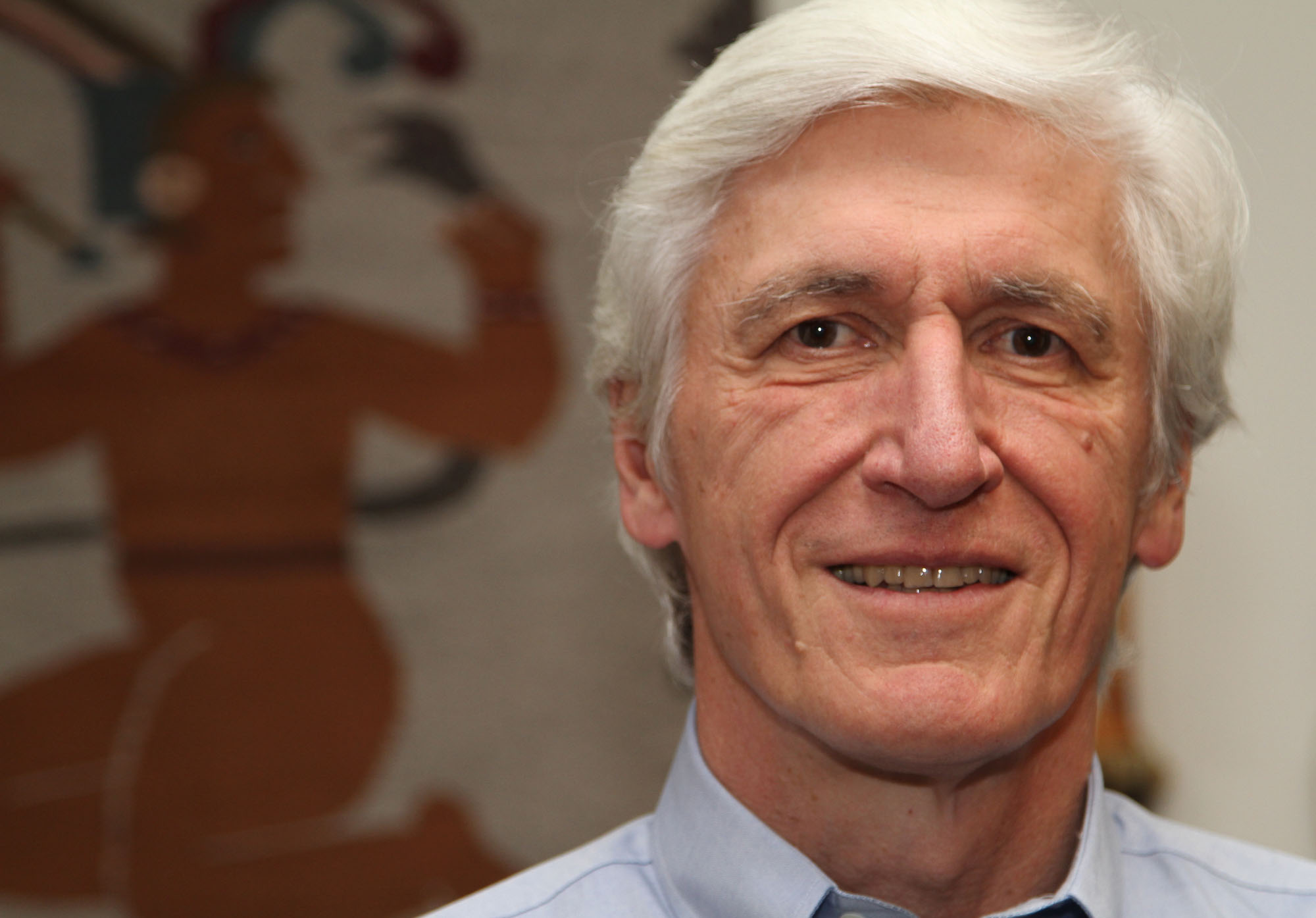
Photo for Robert T. Coulter
Robert T. Coulter is Executive Director of the Indian Law Resource Center. He is a member of the Citizen Potawatomi Nation and has more than 30 years of experience in the field of Indian law.

It has been just a year since President Obama announced the Administration’s support for the UN Declaration on the Rights of Indigenous Peoples and promised action to implement at least some of those rights.  Across the country, tribal governments are seizing the Declaration and using it creatively to protect their lands and resources, and especially their rights to cultural and sacred sites.

For example, the Navajo Nation has used the Declaration in its efforts to protect the San Francisco Peaks, and the Seneca Nation has pointed out Article 37 (“Indigenous peoples have the right to the recognition, observance and enforcement of treaties”) in its efforts to resolve a 60-year occupation of Seneca territory by the New York State Thruway that violates the 1794 Treaty of Canandaigua. Continue reading

International Commission Holds Historic Hearing on Violence Against Native Women in the U.S. – U.S. Officials and Native Advocates Agree Violence Must End

Terri Henry, Co-Chair, National Congress of American Indians Task Force on Violence Against Native Women, and Tribal Council Representative, Eastern Band of Cherokee Indians, encouraged the Inter-American Commission on Human Rights to visit Native communities to learn more about the epidemic of violence against Native women. An ILRC photo by Leonardo Crippa.

WASHINGTON, D.C. — During an historic hearing dedicated to their missing and murdered Native sisters throughout the Americas, Native women and tribal advocates resorted to an international human rights body to raise global awareness on the epidemic of violence against Native women in the United States.   Representatives of the United States appearing at the hearing admitted that this level of violence against Native women is “an assault on the national conscience.” Continue reading

ICT Coverage of Hul’qumi’num Treaty Group Land Claim Presentation at IACHR

Here. An excerpt:

WASHINGTON—Six First Nations of British Columbia have taken to the international legal sphere in an effort to shame the Canadian government into recognizing long-standing land claims. Their rationale is simple: We never gave you the land, you took it, so either give us back the land, or give us some other form of remuneration, for stealing and profiting from the plunder.

The First Nations’ efforts were showcased in the capital of the United States on October 28 at a hearing before the Inter-American Commission on Human Rights (IACHR) of the Organization of American States (OAS). The OAS is billed as the world’s oldest regional organization, dating back to 1889, and the IACHR was established in 1960 as a vehicle for the organization to promote and protect human rights.

The unprecedented hearing was granted to the Hul’qumi’num Treaty Group (HTG), which is made up of the Cowichan Tribes, Lake Cowichan First Nation, Halalt First Nation, Penelakut Tribe, Lyackson First Nation and Stz’uminus First Nation. The group accuses the Canadian government of violating the human rights of its 6,400 members by failing to recognize and protect their rights to property, culture and religion as recognized under the OAS’s principal human rights instrument, the American Declaration of the Rights and Duties of Man. Canada has been a member of the OAS since 1989.

Hul'qumi'num Treaty Group, Canada
Robert A. Williams, Professor of Law and American Indian Studies and Director of the Indigenous Peoples at the University of Arizona, presents evidence at the hearing. He is flanked by Heather Neun of Lawyers Rights Watch Canada and HTG president Richard Thomas, chief of Lyackson First Nation.


Update in Hul’qumi’num Land Claim: Press Release and Link to IACHR Presentation this Weekend

The Hul’qumi’num Land Claim presentation before the Inter-American Commission on Human Rights WILL BE WEBCAST LIVE ON THE IACHR WEBSITE on Friday, October 28 and 9am ET, from the Padilha Vidal Room of the Commission, and will also be available for taped viewing after that on the Commission’s website.

Here are additional details, and news about a post-hearing press conference:

Canadian First Nations Secure Hearing before

International Rights Commission in Washington, D.C.

 Press release (PDF)

Ladysmith BC – The Hul’qumi’num Treaty Group (HTG) will hold a media briefing conference call on Friday, October 28, 2011, following the Inter-American Commission on Human Rights (IACHR) hearing on the merits of their land rights claims.  This case is significant because it is the first time that IACHR is considering a Canadian indigenous land rights issue.

“This represents a historic opportunity to address a human rights issue in Canada that could have far-reaching implications for the indigenous movement worldwide,” saidRobert Morales, Chief Negotiator for the HTG.

HTG has had a longstanding petition against Government of Canada for failing to secure, recognize and safeguard the property rights of the Hul’qumi’num indigenous peoples in their ancestral lands.

Morales added: “We are not asking to turn back the clock and investigate historic wrongs; rather urging effective resolution of land rights and consultations with the Hul’qumi’num indigenous peoples regarding the on-going deforestation and development activities by private corporations.”

WHAT: Press briefing conference call following IACHR hearing on Hul’qumi’num land rights case.

WHEN: Friday, October 28, 2011 at 12:00 noon U.S. EDT/ 9 a.m. BC time.

WHERE: Dial in to the following conference numbers:

U.S. Toll free: 1-888-529-0347

Canada/International: +1-719-234-7500

Pass code: 283634

WHO:  Chief Richard Thomas, Chief Lydia Hwitsum, Robert A. Williams, Robert Morales HTG Spokespersons; Craig Benjamin, Amnesty International; Heather Neun, Lawyers Rights Watch Canada; and, Jody Wilson Raybould, Assembly of First Nations.

For additional details and to RSVP, please contact:

Rosanne Daniels

250-710-2201

Htg-rdaniels@shaw.ca

Kelly Cross

202-530-4528

Kelly.cross@bm.com

Elizabeth Berton-Hunter

416-363-9933 ext. 332

Bberton-hunter@amnesty.ca


Here is an additional press release from supporting organizations: Continue reading

Violence Against Native Women gaining global attention

Native women face greater rates of violence than any other group in the United States.

WASHINGTON, D.C. — The epidemic proportions of violence against Native women in the United States continues to gain global attention.   The Inter-American Commission on Human Rights will hold a hearing on Oct. 25, 2011 at 10:15 a.m. at the General Secretariat Building of the Organization of American States (OAS) in Washington, D.C.  The Commission is an autonomous organ of the OAS, created by countries to protect human rights in the Americas.

Continue reading

OAS Human Rights Commission Grants Hearing on Hul’qumi’num Land Claim

Press Release here. And the text:

Amnesty International, National Assembly of First Nations File Briefs in Support

LADYSMITH, BC, Oct. 5, 2011 /CNW/ – In an unprecedented action, the Inter-American Commission on Human Rights of the Organization of American States (OAS) will hear a human rights complaint brought by six British Columbia First Nations, charging Canada with the uncompensated taking of their ancestral territory for the benefit of private forestry and development corporations on Vancouver Island. The Hul’qumi’num Treaty Group (HTG), comprised of the Cowichan Tribes, Lake Cowichan First Nation, Halalt First Nation, Penelakut Tribe, Lyackson First Nation and the Stz’uminus First Nation, has accused Canada of violating the human rights of its 6,400 members by failing to recognize and protect their rights to property, culture and religion, as recognized under the OAS’ principal human rights instrument, the American Declaration of the Rights and Duties of Man. Canada has been a member of the OAS since 1989.

According to Robert Morales, Chief Negotiator for the HTG, Canada, despite repeated protests, continues to permit widespread clear-cutting, deforestation and environmentally destructive development activities throughout their ancestral territory by three major forestry development companies, TimberWest Forest Corporation, Hancock Timber Resource Group and Island Timberlands. The three corporations are the major successors in interest to Canada’s 1884 grant of over 237,000 hectares of Hul’qumi’num lands containing valuable timber, coal and other resources to the E&N railroad corporation. Today, those companies control nearly 190,000 hectares, roughly 2/3 of the HTG members’ ancestral territory. The HTG has submitted extensive evidence to the human rights body documenting the companies’ clear-cutting operations, which it claims go unregulated by the government, while causing the relentless destruction of the traditional way of life, culture, and religious practices of the HTG communities.

HTG’s human rights complaint charges that under Canada’s Comprehensive Land Claims Policy, relied upon by the government since 1973 in negotiating treaties with First Nations, so-called “private lands” owned by the large timber, mineral and real estate development companies are “off the table.” The government refuses to negotiate over the return or replacement of these lands, and, under its land claims policy, will not discuss compensation at the treaty table.  HTG also charges that Canada refuses to consult with HTG, as required under well-established principles of international human rights law, before allowing the forestry companies to permanently destroy their lands and resources, with no benefits provided to the HTG First Nations.

Prominent international human rights groups, including Amnesty International, and over a dozen Canadian First Nations governments and organizations, including the Assembly of First Nations (AFN), have filed briefs supporting HTG. First Nations leaders and human rights experts predict that a victory in the case for HTG could throw the government’s entire process for negotiating and implementing treaties involving land claims with First Nations across Canada into serious question.

Robert A. Williams, Jr., a law professor and Director of the Indigenous Peoples Law and Policy Program of the University of Arizona, is representing HTG as lead counsel in the case. He believes that a  favorable decision for HTG in the case “will vindicate the position of First Nations leaders and communities throughout Canada that the Comprehensive Land Claims Policy needs to be scrapped in favor of a process that complies with international human rights standards for the recognition and protection of First Nations’ peoples in their ancestral lands.”
Continue reading

International Commission Decision Brings New Hope to Native Women Facing Domestic Violence in the U.S.

UPDATE: The materials are here:

Read the Inter-American Commission on Human Rights decision and the friend-of-the-court brief by the Indian Law Resource Center and Sacred Circle National Resource Center to End Violence Against Native Women.

WASHINGTON, D.C. — An international human rights body has done something that federal courts, including the United States Supreme Court, failed to do — bring justice to a domestic violence survivor.

“This decision is important for Native women who face the highest rates of sexual and physical assault of any group in the United States,” said Jana Walker, Indian Law Resource Center attorney. “Although this case did not originate in Indian Country, it has major implications for an ethnic group who rarely sees their abusers brought to justice.” Continue reading

Navajo Group Petition to Human Rights Commission

Here’s a copy of the Petition filed by ENDAUM (Eastern Navajo Diné Against Uranium Mining) with the Inter-American Commission on Human Rights to challenge the NRC’s issuance of a uranium mining license to HRI.

ENDAUM_Final_Petition_to_IACHR