Cert Petition in Seminole Tribe of Florida v. State of Florida Dept. of Revenue

Here:

Seminole Cert Petition

Here is the question presented:

This Court established in Ex parte Young, 209 U.S. 123 (1908), that a plaintiff may sue state officials for prospective injunctive relief against the enforcement of an unconstitutional state law. In the intervening years, this Court and most courts of appeals have repeatedly held that Ex parte Young allows federal courts to enjoin the future enforcement of state tax schemes that violate federal law or the Constitution. This Court has also observed that an injunction requiring a state’s future compliance with federal law does not violate state sovereign immunity, even if it has a “substantial ancillary effect on the state treasury.” Papasan v. Allain, 478 U.S. 265, 278 (1986).
In this case, however, the Eleventh Circuit concluded otherwise. It departed from this Court’s precedent, and “create[d] a circuit split,” Pet. App. 24a (Jordan, J., concurring in part and dissenting in part), when it held that Ex parte Young does not permit the Seminole Tribe of Florida to seek injunctive or declaratory relief against the future unconstitutional enforcement of Florida’s fuel tax scheme. The court’s holding turned on the fact that Florida precollects this tax from a third party, which means that an order barring future enforcement against the tribes might require the state to issue tribal consumers refunds “from state coffers,” supposedly in violation of the Eleventh Amendment. Pet. App. 12a.
The question presented is whether sovereign immunity bars an American Indian tribe from seeking Ex parte Young relief from the unconstitutional enforcement of a state tax scheme merely because that relief might require refunds for taxes unlawfully collected in the future.


Lower court materials and my commentary here.

More Pics from National Intertribal Tax Alliance Meeting

The NITA Board:

DSC_0566

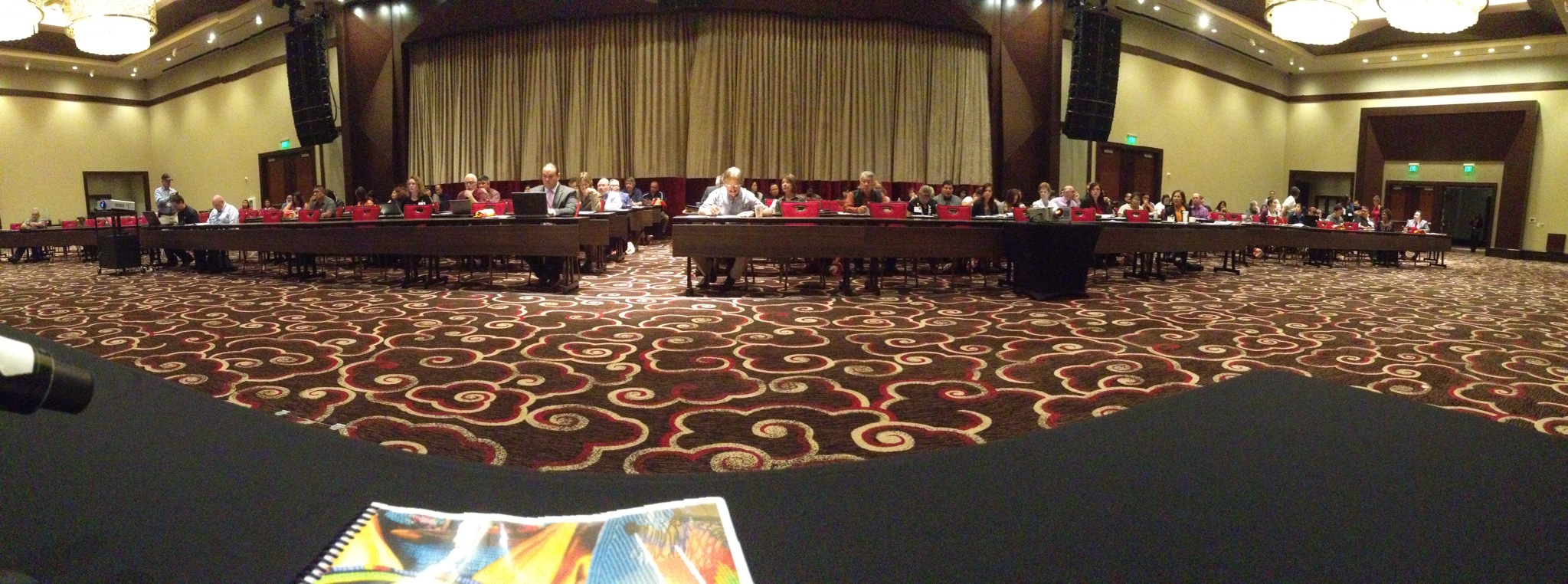
Audience pics:

DSC_0523 DSC_0525

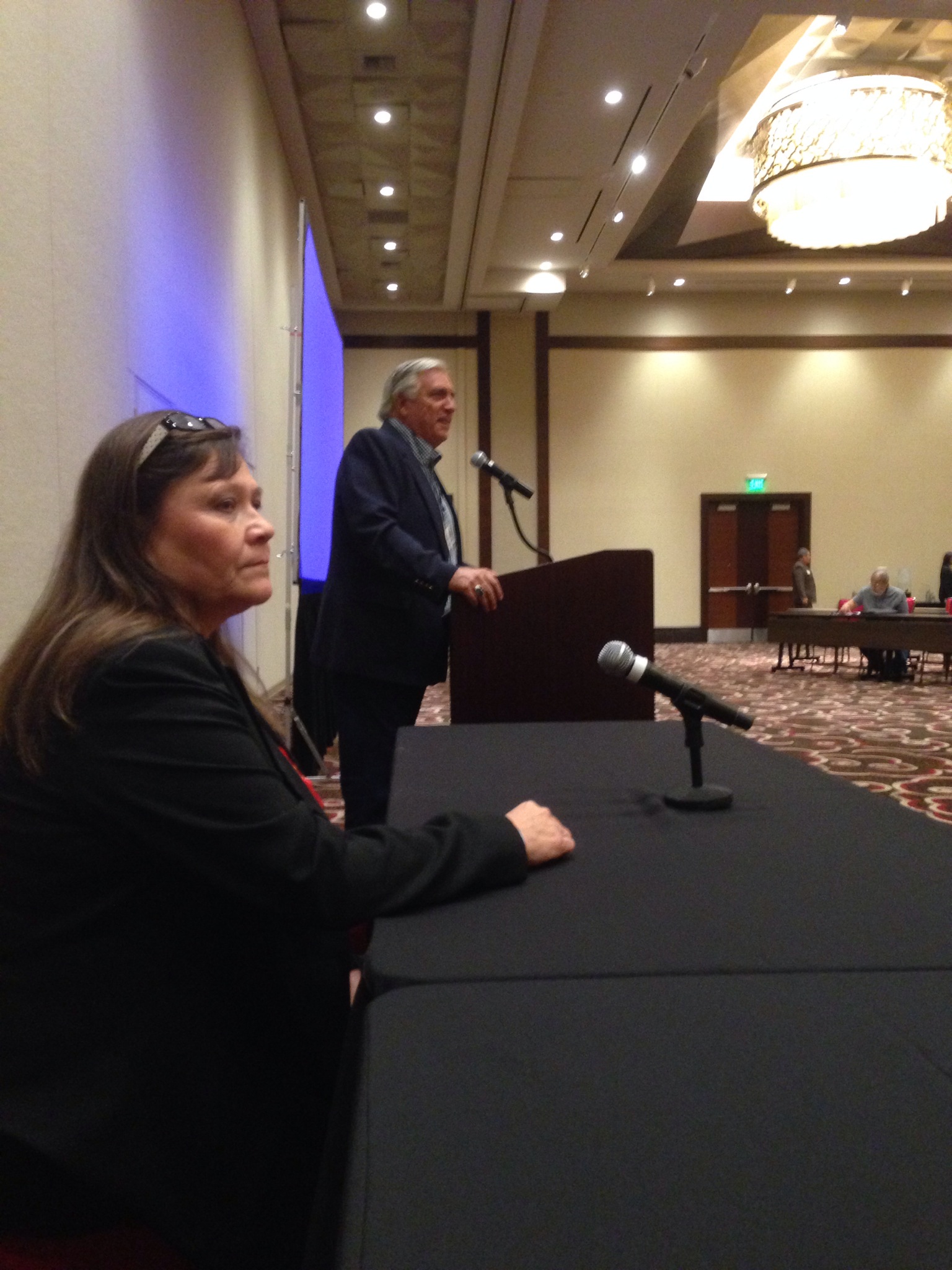
Fletcher again

DSC_0532

Ninth Circuit Rejects Treaty Argument in King Mountain Tobacco v. McKenna

Here is the opinion.

The court’s syllabus:

Affirming the district court’s summary judgment, the panel held that the Yakama Treaty of 1855 did not preclude enforcement of the State of Washington’s escrow statute, which requires tobacco companies to place money from cigarette sales into escrow to reimburse the State for health care costs related to the use of tobacco products.

The panel held that Washington’s escrow statute was a nondiscriminatory law and that the activities of King Mountain Tobacco Co., a company owned and operated by an enrolled member of the Yakama Indian Nation, were largely off-reservation. Accordingly, absent express federal law to the contrary, King Mountain was subject to the escrow statute. The panel held that the plain text of the Yakama Treaty did not create a federal exemption from the escrow statute. Specifically, Article II of the Treaty, which established the boundaries of the Yakama reservation and reserved it for Yakama use and benefit, was not an express federal law that exempted King Mountain from the escrow statute. Nor was Article III, which reserved to the tribe the right to travel on public highways and the right to hunt and fish. The panel held that the district court did not err by declining to make findings regarding the Treaty’s meaning to the Yakama people at the time of its signing because the meaning to the Yakama people could not overcome the clear words of the Treaty.

Briefs here.

Late Morning NITA Panels

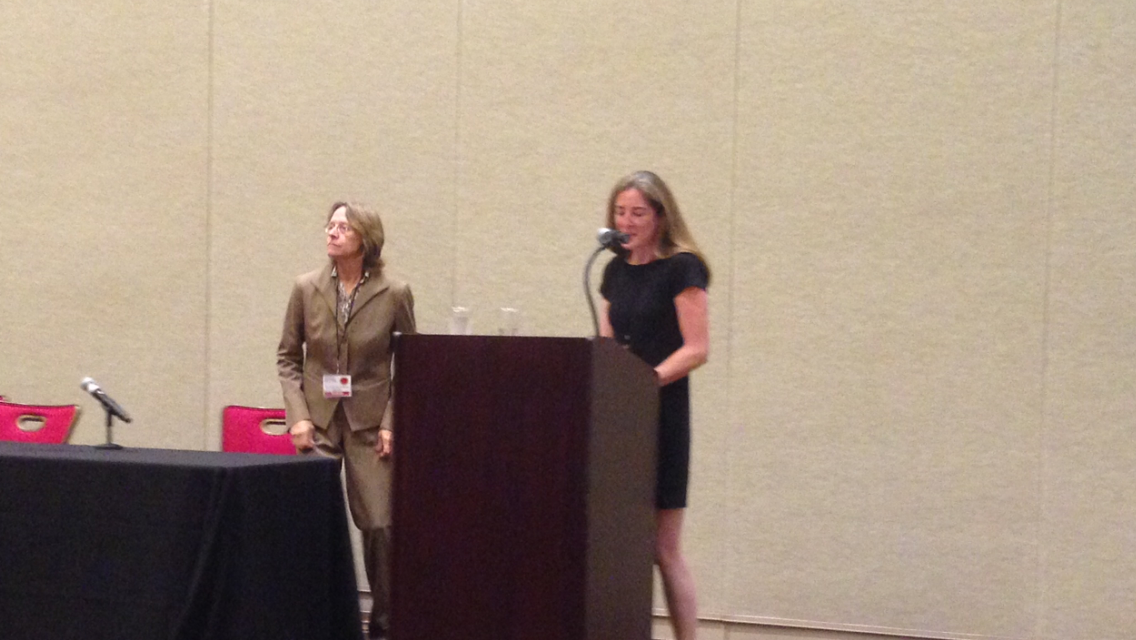
Leslie Cushman (on the left)

IMG_7600.PNG

IMG_7600-0.PNG

Dale White and Wade Blackmon

IMG_7602.PNG

National Intertribal Tax Alliance Meeting

Fletcher presented “Rights without Remedies” as the keynote.

Conference attendees

IMG_7590.JPG

Chairman Mazzetti and Mary Mashunkashey

IMG_7589.JPG

First panel — Kelly Croman, Sharon Swepston, Mary Streitz, and Skip Durocher

IMG_7598.PNG

Ninth Circuit Materials in King Mountain Tobacco v. McKenna

Here are the briefs:

King Mountain Opening Brief 

Washington Answer Brief

King Mtn Reply Brief

Oral argument link here.

Lower court materials here.

Recent Decision Applying BIA Leasing Regulations Signals a Shift in Indian Tax Law

By: Del Laverdure and Bryan Newland

Last week’s decision out of the U.S. District Court in Southern Florida in Seminole Tribe of Florida v. Florida could signal a potential shift in Indian tax law.

For many tribal leaders and Indian law practitioners, tax law in Indian country is an intimidating jurisdictional maze – often times allowing state and local taxes to apply in Indian country in spite of tribal territorial sovereignty. The outcome of an Indian tax case depends upon a combination of the type of tax or government fee imposed, the government doing the taxing, the individual or entity being taxed, and the location of the activity, individual, or property being taxed.

Many states have levied taxes on non-Indians and non-Indian businesses working in Indian country; and, in recent years, these efforts have been upheld under the Supreme Court’s decision in White Mountain Apache Tribe v. Bracker. Under that case, a reviewing court must balance the interest of the tribe, the state, and the federal government when deciding whether state taxes in Indian country are preempted by federal law. In many losing cases, tribal litigants have tried to invalidate state taxation without a clear statement of the federal government’s interest.

In the Seminole case, the State of Florida was attempting to impose two different taxes on tribal lands: a “rental tax” on businesses leasing property from the Tribe; and, a “utility tax” on electricity delivered to the Tribe’s lands. The Court held that Florida’s rental tax was preempted by federal laws governing leasing on Indian lands (it also invalidated the utility tax because the legal incidence of the tax fell on the Tribe).

Continue reading

Updated Materials in Agua Caliente Tax Matter — Updated 9/10/14

Here are the new materials in Agua Caliente Band of Cahuilla Indians v. Riverside County (C.D. Cal.):

42-1 Defendants’ Motion for Judgment on the Pleadings

43 Agua Caliente Response

45 Defendants’ Reply

Prior materials here.

Update w/ additional materials:

34 order granting DWA intervention

46 order for supp. MJP briefing

Federal Court Holds that Federal Indian Country Leasing Regs Preempt State Rental and Utility Taxes

Here are the materials in Seminole Tribe of Florida v. State of Florida (S.D. Fla.):

59 Seminole Motion for Summary J

61 Florida Motion for Summary J

66 Florida Response

68 Seminole Response

70 Florida Reply

71 Seminole Reply

84 DCT Order

An excerpt:

The Seminole Tribe of Florida filed this lawsuit challenging the imposition of two Florida taxes: the Rental Tax and the Utility Tax. After considering the extensive briefing by the parties, as well as hearing oral argument from each side, the Court finds that Federal law prohibits both taxes from being imposed.

US Prevails in Tax Assessments Dispute with King Mountain Tobacco

Here are the materials in United States v. King Mountain Tobacco Co. Inc. (E.D. Wash.):

48 US Motion to Summary J

62 DCT Order Granting Summary J in 11-3038

70 US Renewed Motion for Summary J

74 King Mountain Response

80 US Reply

87 DCT Order Granting Renewed Motion for Summary J

Related case here.