New Scholarship: “The Savage Constitution”

Gregory Ablavsky has posted his paper, “The Savage Constitution,” forthcoming from the Duke Law Journal, on SSRN.

Here is the abstract:

Conventional histories of the Constitution largely omit Natives. This Article challenges this absence and argues that Indian affairs played a key role in the Constitution’s creation, drafting, and ratification. It traces two constitutional narratives about Indians: a “Madisonian” and a “Hamiltonian” perspective. Both views arose from the failure of Indian policy under the Articles of Confederation, where explicit national authority could not constrain states, squatters, and Native nations. Nationalists agreed that this failure underscored the need for a stronger federal state, but disagreed about the explanation. Madisonians blamed interference with federal treaties, while the Hamiltonians argued the federal military was too weak to overawe the “savages.”

Both accounts resulted in constitutional remedies. More important than the Indian Commerce Clause, provisions declared federal treaties supreme law, barred state treaty-making, and provided exclusive federal power over western territories. But expansionist states won concessions guaranteeing federal protection and western land claims, while other provisions created a fiscal-military state committed to western expansion.

The two narratives fared differently during ratification. Few embraced centralization, while the Federalists repeatedly invoked “savages” to justify a stronger federal state and a standing army. This argument swayed Georgia, which ratified to secure federal aid in its ongoing war with the Creeks. But it also elevated dispossession of Natives into a constitutional principle. The Article concludes by exploring this history’s interpretive implications. It suggests the Indian affairs context unsettles conventional understandings of the Constitution as intended to restrain state power, and challenges both originalist and progressive assumptions about constitutional history.

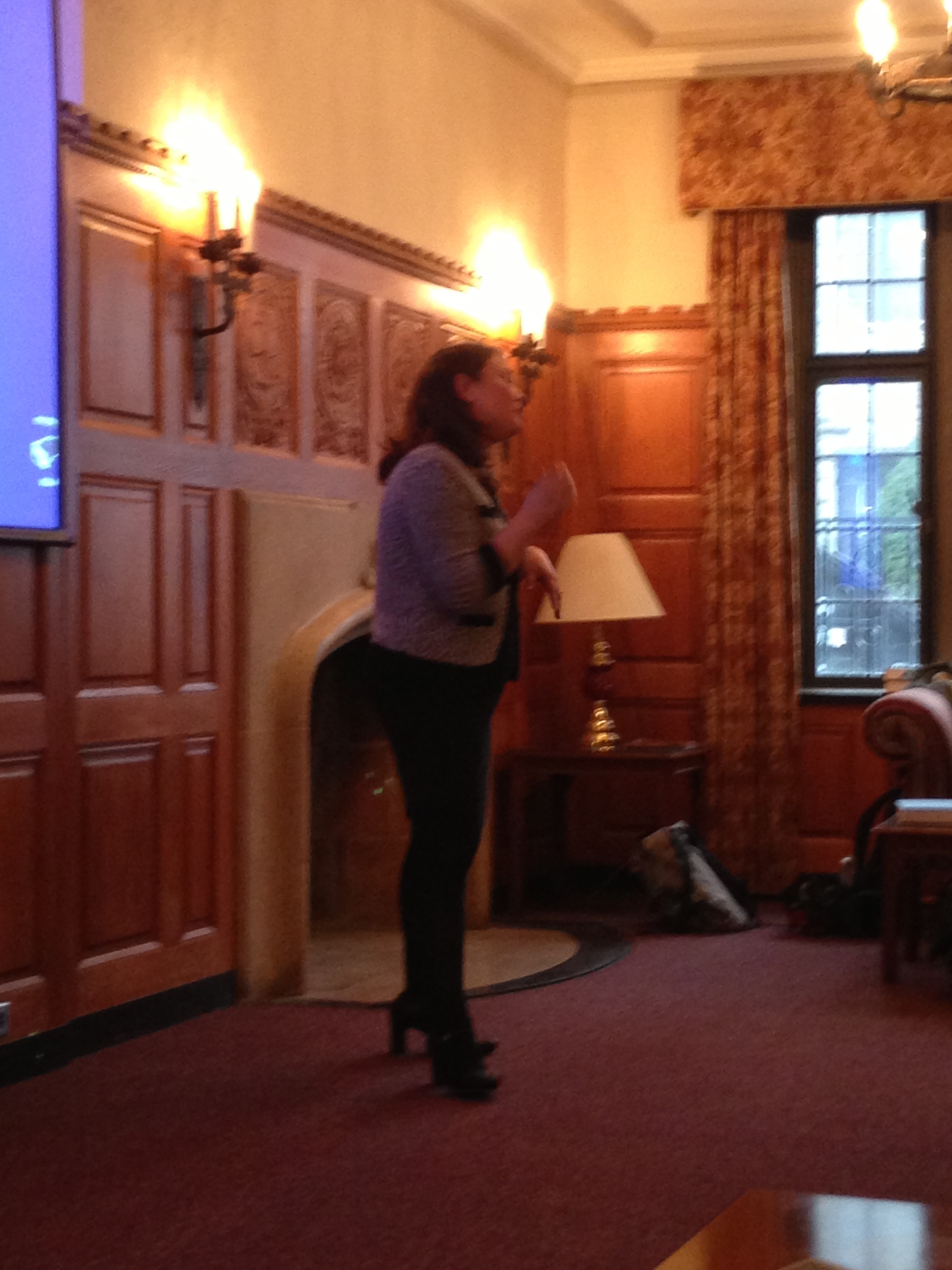
Singel and Fletcher Talk at Cornell

Rose Petoskey, GTB member and Cornell NALSA president

20130312-131123.jpg

Wenona Singel

20130312-131207.jpg

Cornell’s excellent A:kwe:kon hall

20130312-131314.jpg

Federal Court Enjoins Sault Tribe from Seeking Trust Acquisition for Lansing Casino Property

News coverage here.

Link to opinion here.

DCT Order Granting Injunction

Briefs here.

Draft State Dept. EIS re: Keystone XL Pipeline

Here.

News coverage here.

Salazar, Washburn Commend Passage of VAWA Reauthorization

Legislation Recognizes and Affirms Tribal Court Jurisdiction over Non-Indians in Domestic Violence Crimes

02/28/2013

Contact: Jessica Kershaw (202) 208-6416

WASHINGTON – Secretary of the Interior Ken Salazar and Assistant Secretary – Indian Affairs Kevin K. Washburn today praised the passage of the Violence Against Women Act, which includes important provisions for federally recognized tribal communities, saying it advances the progress the nation has made in combating violence against women by providing greater protections against homicide, rape, assault and battery in the home, workplace and on school campuses across the country.

“By providing stronger protections and greater resources to states and Indian tribes, this legislation will make women and vulnerable populations safer,” Salazar said. “This legislation is especially significant for the First Americans because it closes a gaping legal loophole that prevented the arrest and prosecution of non-Indian men who commit domestic violence against Indian women on federal Indian lands. This historic legislation, which recognizes and affirms inherent tribal jurisdiction over non-Indians in domestic violence cases, will provide much needed tools to tribal justice systems to effectively protect Indian women from abuse.”

“American Indian women experience among the highest domestic violence victimization rates in the country and more than half of all married Indian women have non-Indian husbands,” said Assistant Secretary Washburn. “This legislation provides tools to tribal governments to address the problem of domestic violence much more completely on Indian reservations.”

“I applaud Congress’s reauthorization of the Violence Against Women Act today. Tribal leaders, tribal law enforcement, and tribal courts are all too familiar with this type of violence. It is shameful that for far too long, many American Indian women victims came to accept that there was nothing they could do when their abuser was non-Indian,” said Washburn. “Now, tribal courts have the ability to enforce protection orders again non-Indians, regardless of where the order originated, and to prosecute any individual who stands accused of domestic violence on a federal Indian reservation. American Indian women are now safer with the passage of this law.”

The Senate last week voted for a broadened version of the landmark law, first enacted in 1994, which provides a comprehensive approach to violence against women by combining tough new provisions to hold offenders accountable with programs to provide services for the victims of such violence. The Senate version approved by the House today also enhances protections for other vulnerable populations, such as American Indians and gay, lesbian, bisexual and transgender victims. The bill now goes to the President for his signature.

Study Suggests ABA Assessment of Judicial Nominees Biased against Women and Minorities

The study is here, hat tip to the Monkey Cage, a great site. I should say historically biased, since the study goes back to 1960.

The abstract:

This paper uses two new datasets to investigate the reliance by political actors on the external vetting of judicial candidates, in particular vetting conducted by the nation’s largest legal organization, the American Bar Association (ABA). First, I demonstrate that poorly rated lower-court nominees are signi cantly more likely to have their nominations fail before the Senate. However, I also show that minority and female nominees are more likely than whites and males to receive these lower ratings, even after controlling for education, experience, and partisanship via matching. Furthermore, by presenting results showing that ABA ratings are unrelated to judges’ ultimate reversal rates, I show that these scores are a poor predictor of how nominees perform once con fimed. The fi ndings in this paper complicate the ABA’s influential role in judicial nominations, both in terms of its utility in predicting judicial performance and also in terms of possible implicit biases against minority candidates, and suggest that political actors rely on these ratings perhaps for reasons unrelated to the courts.

An excerpt:

Despite attempts by Presidents and by advocacy groups, federal courts in the United States are still unreflective of the U.S. population. Of the 874 federal judges in service as of 2008, only 24% were women, 10% were African American, and 7% were Hispanic …. Fewer than 1% were Asian American and, even today, there are no federal judges who self-identify as Native American — surprising given the courts’ involvement in interpreting federal Indian laws.


The Denver Indian Center, Inc. is Celebrating Thirty Years of Service and Culture

There will be a reception and dinner at the Denver Art Museum on Friday, March 1, 2013, to celebrate the Denver Indian Center. Tickets to the dinner can be purchased here.

Information about the event, which will feature a performance by Shelley Morningsong and the 1491s,  and the Denver Indian Center can be found here.

The Denver Indian Center, Inc. serves a diverse group of tribes, the majority of which represent the Southwest and the Northern and Southern Plains. Most come seeking economic stability, education and security for their families. The Center continues to be a highly sought after location for the community to gather for powwows and various other activities held at the facility throughout the year.

Job Announcement: The Lower Elwha Klallam Tribe seeks an Associate General Counsel (“Tribal Attorney”)

This is my current employer. It’s a great place to work and a great place to live. Feel free to contact me if you have any questions.

*****

The Lower Elwha Klallam Tribe seeks a full-time Associate General Counsel for its on-reservation Office of General Counsel. The Office was established in August 2008, and has taken on most of the workload formerly performed by outside counsel. The Associate serves under the supervision of the General Counsel and will have a significant opportunity to help shape the strategic legal planning of the Tribe. The Lower Elwha Klallam Tribe is involved in many important and fascinating issues.

Nature of Practice: The Associate General Counsel is one of two lawyers in the Office. As a salaried professional, the Associate General Counsel will generally have substantial latitude to work on projects directly with the Tribal Council, CEO, and tribal programs, to exercise independent professional judgment, and to contribute to the development of the Office. Duties include all matters pertaining to representation of the tribal government, as assigned or authorized, including: advice to and representation of the Tribe, its officers and staff; drafting of ordinances, regulations, and policies; representation of the Tribe and its entities in tribal, federal, and state courts, administrative tribunals, and before federal and state legislative bodies and agencies; negotiation and review of contracts and commercial transactions; drafting legal documents.

Qualifications

  • Required: A law degree from an accredited law school and a license to practice law (lawyers licensed by a state other than Washington must acquire a Washington license ASAP); strong writing, research, negotiation, and interpersonal communication skills; litigation experience; and an ability to thrive in an interdisciplinary and cross-cultural work environment.
  • Desired: A Washington State law license with 5–8 years as a practicing attorney; civil litigation experience in federal, tribal, and state courts; experience in Indian law and tribal-government representation, including ordinance drafting and basic governmental processes such as Self-Governance compacting, grants, contracts, etc.; experience working with federal and state agencies; economic development, gaming, and commercial transaction experience; exceptional writing and research skills.

Location: The Office of General Counsel is located in the Elwha Tribal Center on the Lower Elwha Reservation, about five miles west of Port Angeles, Washington. Port Angeles is a small, historic town located on the Strait of Juan de Fuca and just a few miles from Olympic National Park. The office is approximately 85 miles west of Seattle.

Salary: Depends on experience. Full-time compensation includes medical and dental, retirement savings plan, and other fringe benefits.

Application: Applications must be received by March 15, 2013, but because the Tribe would like to hire a lawyer for this position as soon as possible, applicants are encouraged to apply ASAP. To apply, submit a cover letter, a current resume, at least three professional references, and a writing sample to (e-mail preferred):

            Trent S.W. Crable, Associate General Counsel

            Lower Elwha Klallam Tribe                             

            2851 Lower Elwha Road                                  

            Port Angeles, Washington 98363                     

            E-mail: trent.crable@elwha.nsn.us

Michigan Republicans Want Michigan Civil Rights Commission to Dismiss Indian Name/Mascot Complaint

Here. H/T Pechanga.

They should watch this.