Differing Scholarly Opinions on the Ethics of Representing Tribes Engaged in Disenrollments

Here is George K. Komnenos, Tribal Advocates as Ministers of Justice: A Potentially Problematic Concept, 29 Geo. J. Legal Ethics 1079 (2016): GeorgeKKomnenosTribalAdvo

An excerpt:

In June 2015, the National Native American Bar Association (NNABA) adopted its first Ethics Opinion entitled Formal Duties of Tribal Court Advocates to Ensure Due Process Afforded to All Individuals Targeted for Disenrollment (“Opinion”). The Opinion is not intended to prescribe an overarching code of professional conduct for tribal advocates. On the contrary, the Opinion serves as a reminder to attorneys and Indian bar associations that “lawyers’ ethical obligations to their licensing jurisdictions do not stop at reservation boundaries.” The Opinion puts forward the notion that tribal advocates have a dual duty: they are bound not only to their individual clients, but to the Native American community at large. According to the Opinion, “[t]he responsibility of a tribal advocate differs from that of the usual advocate; his or her duty is to further justice in the greater Native American community, not merely to win his or her case.” Though this statement is made in the context of encouraging lawyers to be vigilant in defending their clients’ constitutional rights, it bears grave dangers.

And here is Nicole Russell, “To Further Justice in the Greater Native American Community”: Ethical Responsibilities of a Tribal Attorney in Disenrollment Disputes, 30 Geo. J. Legal Ethics 911 (2017):

TO FURTHER JUSTICE IN THE GREATER NATIVE AMERICAN COMMUNITY ETHICAL RESPONSIBI

An excerpt:

This Note will explore the ethical challenges faced by attorneys when representing member clients in two contexts. Part I will examine the generally heightened ethical obligations facing attorneys in their representations of tribal clients. This section will provide an analysis of procedural and ethical requirements, detail their variances, and point to recent attempts by tribal coalitions to develop a more coordinated code to guide nonmember representation. The discussion will necessarily involve the Model Rules of Professional Conduct(Model Rules) and their state derivations because many tribes have used these codes as the foundation for their own standards. Part II will examine what has been termed the tribal “disenrollment epidemic” and interrogate the premise that tribal advocates have a duty to distance themselves from disenrollment proceedings. Ultimately, this Note posits that not only are tribal advocates held to more– and sometimes higher–ethical standards than those put forth in the Model Rules, but that they are barred from representing tribes in many of the ongoing disenrollment proceedings which take place without the trappings of due process.


Presidential Proclamation on National Native American Heritage Month

Here.

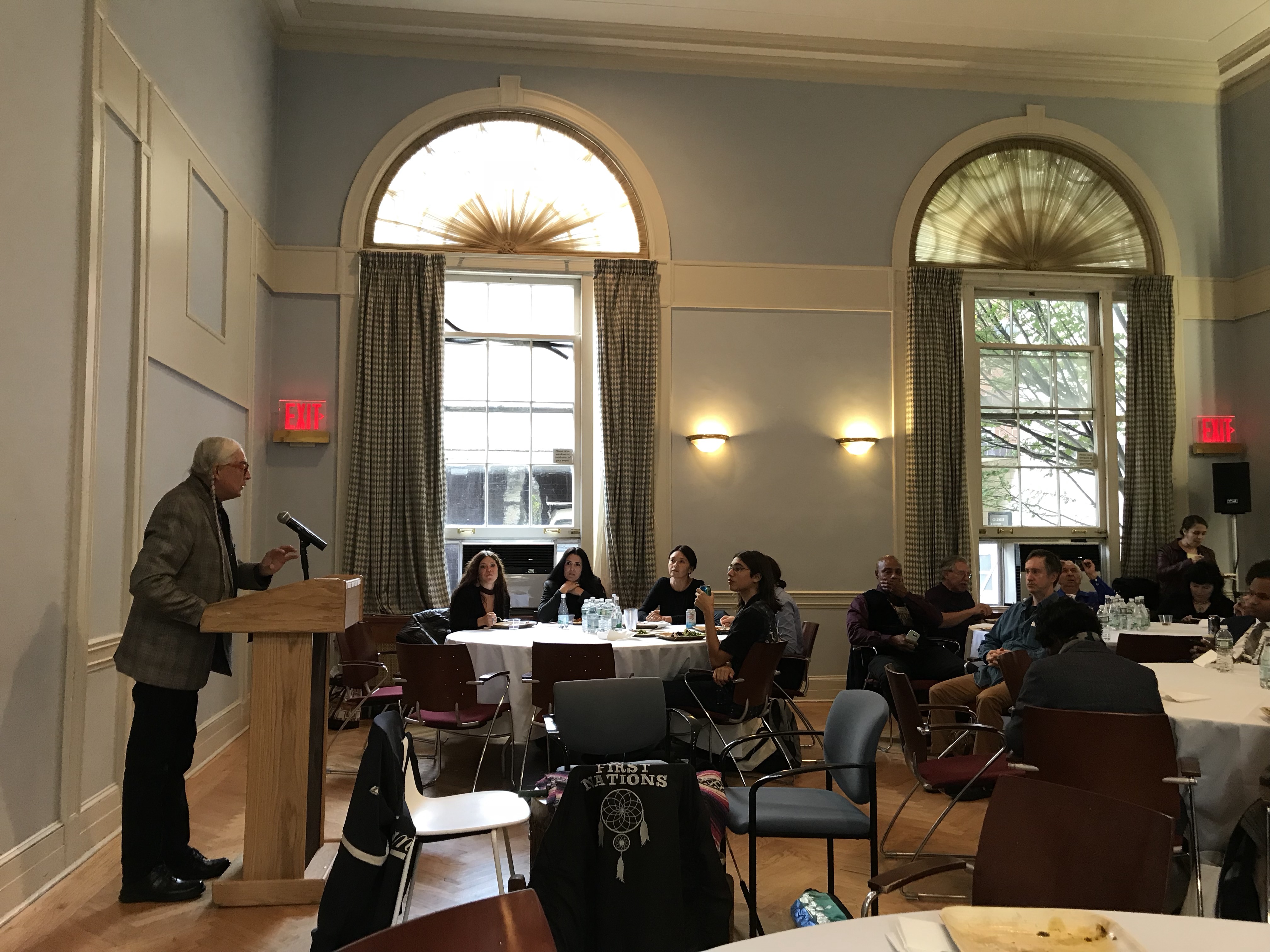
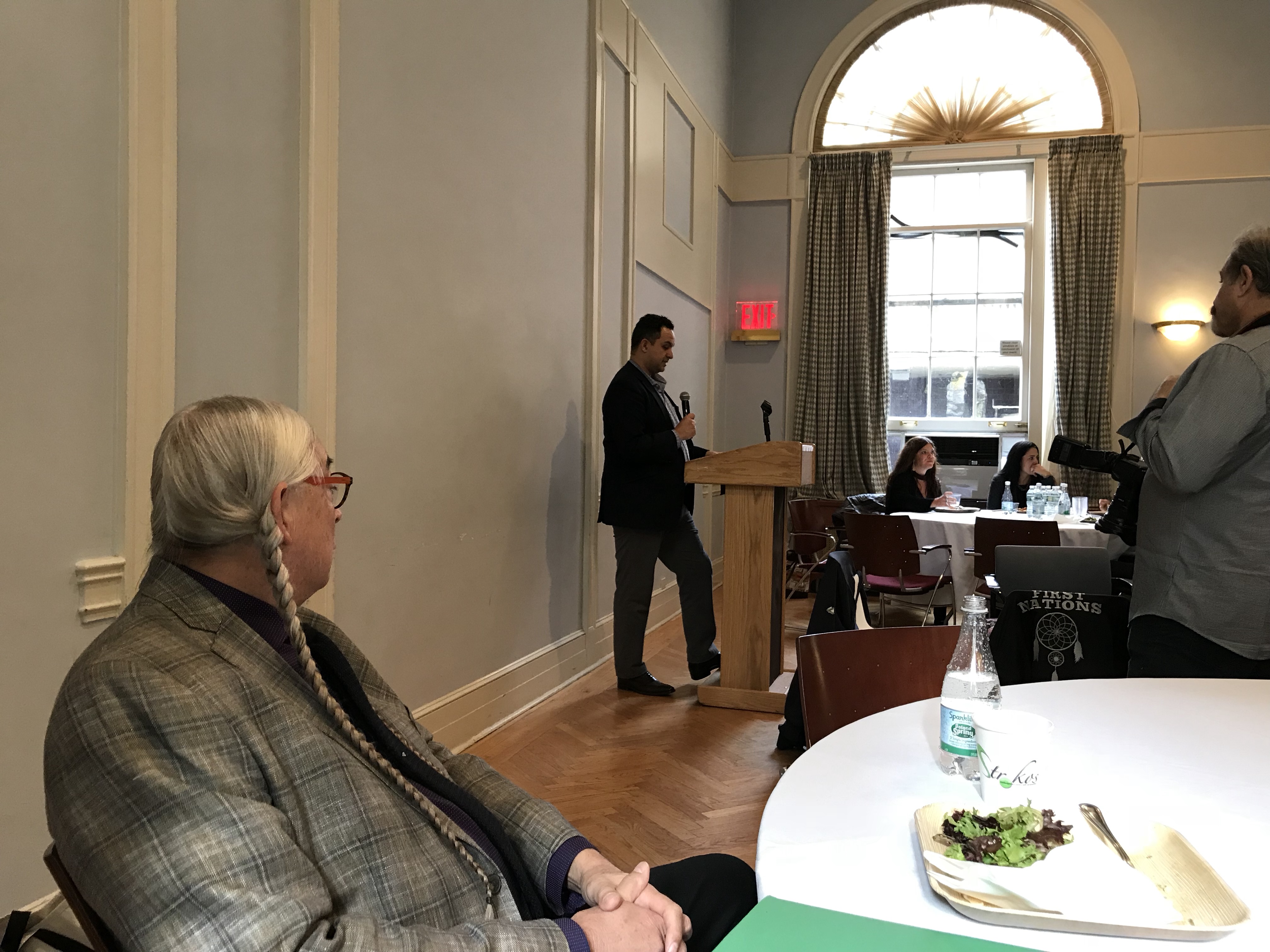
Columbia Law School Indigenous Law Conference

Walter Echo-Hawk keynote address
Shawn Watts Introducing Walter
Oren Lyons leading discussion

Commentary on Ak-Chin Same-Sex Marriage Case

Here’s a brief interview of me (Ann Tweedy) by Mark Brodie of KJZZ on the significance of the Ak-Chin same-sex marriage case. Previous coverage is here.

Friday Job Announcements

Job vacancies are posted on Friday. Some announcements might still appear throughout the week. If you would like your Indian law job posted on Turtle Talk, please email indigenous@law.msu.edu.

Senate Indian Affairs Committee

Spring 2018 Law Clerk, Washington, D.C. The Democratic staff of the Senate Committee on Indian Affairs is offering an unpaid legal clerkship to a current law student or recent law graduate for the Spring of 2018.  The law clerk will be responsible for performing legal research, preparing memoranda for professional staff, participating in preparation for hearings, and composing a variety of written materials.  Law Clerks must be able to write quickly and clearly, be flexible in adjusting to changing circumstances and legislative priorities, and be self-starters capable of taking responsibility for ongoing projects.  Applicants should have an interest in Federal Indian Law.  The clerkship provides an opportunity to gain firsthand knowledge on how a Senate Committee works to pass legislation and conducts oversight on federal agencies, programs and policy implementation. Full-time applicants preferred; part-time applicants welcome.  Interested applicants should apply by emailing a cover letter indicating availability (start date and hours per week), a resume, and brief writing sample to resumes@indian.senate.gov. Indicate “Spring 2018 Internship” in the subject line.  All application materials must be submitted by 5:00 pm EST on November 9, 2017. No phone calls or drop-ins please.

National Indian Country Training Coordinator

Behavioral Health Program Manager, Washington, D.C. Will work with the Director of Public Health Policy and Programs to implement project activities, conduct evaluation, prepare reports, identify and address areas for program quality improvement, and write grants to ensure the sustainability of current programs and advance the organization’s behavioral health/public health goals.

Chickasaw Nation

Assistant General Counsel, Ada, O.K. Provides legal advice and consultation to various departments, divisions, or programs of the Nation, participates in routine legal actions, may provide support and/or participate in major legal actions, prepares and reviews contracts and other documents for departments of the Nation.

Previous Friday Job Announcements10/27/2017

Federal Court Dismisses Challenge to Tulalip Land Use Ordinances for Lack of Ripeness

Here are the materials in Mitchell v. Tulalip Tribes of Washington (W.D. Wash.):

6 motion to dismiss

7 response

11 reply

12 dct order

Interior Delays Tribal Consulation on Proposed Revisions to 25 CFR Part 151 to 2018

Here.

California COA Affirms Tribal Official Immunity in Disenrollment Challenge at Elem Colony

Here is the opinion in Brown v. GarciaPDF

An excerpt:

This case is different. As the trial court noted, Maxwell and Pistor make clear that the general rule is not dispositive if the lawsuit will encroach upon the tribe’s sovereignty. (See Maxwell, supra, 708 F.3d at p. 1088.) Here, substantial evidence established that defendants were tribal officials at the time of the alleged defamation and that they were acting within the scope of their tribal authority when they determined that, for the reasons stated in the allegedly defamatory Order of Disenrollment, plaintiffs should be disenrolled from the Tribe pursuant to a validly enacted tribal ordinance. On this record, which we have carefully reviewed, the trial court concluded that plaintiffs sought to hold defendants liable for actions they took as tribal officials in pursuing plaintiffs’ disenrollment from the Tribe on the basis of plaintiffs’ alleged unlawful acts. The court further found that adjudicating the dispute would require the court to determine whether tribal law authorized defendants to publish the Order and disenroll plaintiffs, “which itself requires an impermissible analysis of Tribal law and constitutes a determination of a non-justiciable inter-tribal dispute.”

ICWA Expert Witness Case out of Colorado

Opinion here. The Colorado Court disagrees with holdings in Montana and Michigan on the same issue–what does a qualified expert witness have to say for it to count under 25 U.S.C. 1912(f).

Congress’s primary reason for requiring qualified expert testimony was to prevent courts from basing decisions “solely upon the testimony of social workers who possessed neither the specialized professional education nor the familiarity with Native [American] culture necessary to distinguish between cultural variations in child-rearing practices and actual abuse or neglect.” Steven H., 190 P.3d at 185 (quoting L.G. v. State, 14 P.3d 946, 952- 53 (Alaska 2000)). This purpose would not necessarily be furthered by a requirement that an expert witness recite the precise language of 25 U.S.C. § 1912(f).

***

Although [the Regulations and Guidelines] emphasize the need for a qualified expert witness to offer testimony supporting a finding regarding likely damage to the child, they stop short of demanding a verbatim recitation of the statutory standard by the expert.

***

Additionally, the Department presented testimony from a
qualified expert witness under ICWA — a social worker with Navajo Children and Family Services. The social worker did not directly opine that the child would suffer damage in mother’s care. Rather, when asked to give her opinion regarding whether the child would suffer serious emotional or physical harm if returned to a parent, the social worker indicated that mother had not fulfilled the treatment requirements to address the reasons for the child being placed in the Department’s custody. The social worker also testified that the recent domestic violence issues between the parents were concerning.

Supreme Court of Canada Rejects First Nation’s Religious Exercise Claims

Here is the 7-2 opinion in Ktunaxa Nation Council v. Minister of Forests:

Ktunaxa_en

An excerpt:

The Ktunaxa are a First Nation whose traditional territories include an area in British Columbia that they call Qat’muk. Qat’muk is a place of spiritual significance for them because it is home to Grizzly Bear Spirit, a principal spirit within Ktunaxa religious beliefs and cosmology. Glacier Resorts sought government approval to build a year-round ski resort in Qat’muk. The Ktunaxa were consulted and raised concerns about the impact of the project, and as a result, the resort plan was changed to add new protections for Ktunaxa interests. The Ktunaxa remained unsatisfied, but committed themselves to further consultation. Late in the process, the Ktunaxa adopted the position that accommodation was impossible because the project would drive Grizzly Bear Spirit from Qat’muk and therefore irrevocably impair their religious beliefs and practices. After efforts to continue consultation failed, the respondent Minister declared that reasonable consultation had occurred and approved the project. The Ktunaxa brought a petition for judicial review of the approval decision on the grounds that the project would violate their constitutional right to freedom of religion, and that the Minister’s decision breached the Crown’s duty of consultation and accommodation. The chambers judge dismissed the petition, and the Court of Appeal affirmed that decision.