Here is “Nooksack Indian Tribe creates Supreme Court, gets restraining order against appeals court.”
Read more here: http://www.bellinghamherald.com/news/local/article107854522.html#storylink=cpy
Kirsten Matoy Carlson has posted “Why Lobby Congress? Constitutive and Instrumental Influences on Indian Groups’ Strategies for Federal Recognition, 1977-2012” on SSRN. This paper is highly recommended.
Here is the abstract:
When and why do marginalized groups chose a particular institutional venue when pursuing their legal claims? This article combines theoretical and methodological insights from sociolegal and interest group studies to investigate why non-federally recognized Indian groups used legislative strategies for federal recognition from 1977 to 2012. It finds Indian groups employed legislative strategies both to increase their chances of success and for constitutive purposes, including educating the public and leveraging institutional tensions. The article’s emphasis on constitutive and instrumental motivations provides a more nuanced approach to understanding marginalized groups’ venue decisions.
Here is the opinion in United Auburn Indian Community v. Brown.
Here is the unpublished opinion in Citizens for a Better Way v. Brown.
Here are the briefs in the matter of Public Service Company of NM v. Barboan, et al, 16-cv-02050:
Brief of Intervenor-Appellant Transwestern Pipeline Company, LLC
Response Brief of Appellee Navajo Nation
Response Brief of the United States
Defendants-Appellees Individual Allottees’ Response Brief
Link to previous posts: Public Service Co. of New Mexico v. Approximately 15.49 Acres of Land in McKinley County
From the announcement:
The Indian Law Resource Center is a non-profit legal advocacy organization that provides legal advice, assistance, and representation to Indian tribes and indigenous communities throughout the Americas. We are also committed to developing new attorneys in the fields of Indian law and international human rights law.
We offer fellowship and clerkship opportunities in both our Helena, Montana and Washington, D.C. offices. These fellowship and clerkship opportunities require a minimum eight week commitment and entail legal research and writing on major Indian rights issues related to current projects of the Indian Law Resource Center. The Lewis and Sidley Fellowships both offer a stipend of $3,000 for the term of the Fellowship. Applicants are welcome to supplement this stipend with additional financial support through their law school’s public interest programs or through other public interest scholarships.
Complete details available here: lewis-and-sidley-fellowships-2017
The Department of Justice is expanding the Tribal Access Program (TAP) for National Crime Information which provides federally-recognized tribes access to national crime information databases for both civil and criminal purposes. Tribes interested in participating in TAP must submit a letter or resolution from the tribe’s governing body by December 2, 2016.
Full announcement and application details: tpa-phase-1-announcement-final
Here.
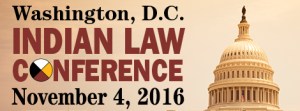
Register here.
Indigenous Law Conference at Michigan State College of Law
Thursday and Friday, November 3-4, 2016
Online and in-person attendees can register here.
Registration includes TICA membership, continental breakfast and lunch both days along with the reception Thursday night at the East Lansing Marriott. We’ve also applied for 11.25 CLEs from the Minnesota State Bar Association, and will provide forms for those seeking credits in other states.
The current agenda is here.
If you, your firm, or organization would like to be a conference sponsor, please see the form here for more information, and our deepest thanks for making the conference possible.
 Turtle Talk
You must be logged in to post a comment.