Here are the materials in Lewis v. Clarke (Conn.):
Sarah Krakoff on American Indian Tribes, Race, and the Constitutional Minimum
Sarah Krakoff has posted “They Were Here First: American Indian Tribes, Race, and the Constitutional Minimum” on SSRN.
Here is the abstract:
In American law, Native nations (denominated in the Constitution and elsewhere as “tribes”) are sovereigns with a direct relationship with the federal government. Tribes’ governmental status situates them differently from other minority groups for many legal purposes, including equal protection analysis. Under current equal protection doctrine, classifications that further the federal government’s unique relationship with tribes and their members are not subject to heightened scrutiny. Yet this deferential approach has been subject to recent criticism and is currently being challenged in pending cases. Swept up in the larger drift toward colorblind or race-neutral understandings of the Constitution, courts and commentators question the distinction between tribes’ political and racial status, and urge courts to strike down child welfare and gaming laws that benefit tribes. Yet tribes (as collectives) must trace their heritage to peoples who preceded European/American settlement in order to establish the political relationship with the federal government. Tribes, in order to be recognized as such under the Constitution, therefore must, as an initial definitional matter, consist of people tied together by something akin to lineage. Descent and ancestry (often conflated with the socio-legal category of “race,”) are the difference between legitimate federal recognition of tribal status and unauthorized and unconstitutional acts by Congress. Congress, in other words, cannot establish a government-to-government relationship with just any group of people. Tribes are treated differently from other groups due to their ties to the indigenous peoples of North America, and federal courts should not use that constitutional distinction against tribes in a misguided effort to eradicate all traces of things currently sounding in “race.”
The argument advanced here might be seen as a form of American Indian law exceptionalism. Yet it is consistent with racial formation theory’s project of understanding race as a construction that serves, creates, and perpetuates legalized subordination, and that also shapes daily social conceptions and interactions. Racial formation theory calls for multiple accounts of racialization depending on the social and economic purposes served by each groups’ subordination. On the remedial side, racial formation theory therefore necessarily anticipates what we might think of as multiple exceptionalisms. Reversing policies that aimed to eliminate Native people from the continent, and the racialized understanding of Indians that drove them, requires maintaining the political status of tribes as separate sovereigns, not destroying it in the name of an ahistorical conception of “race” neutrality.
National Indian Law Library Bulletin 3/10/2016
Here:
| NEW ONLINE RESOURCE: NILL has added a new research guide to our section on Indian child welfare. The new page provides information about Title IV-E funding for tribes. Visit the Title IV-E page now. The National Indian Law Library added new content to the Indian Law Bulletins on 3/10/16. U.S. Courts of Appeals Bulletin U.S. Federal Trial Courts Bulletin State Courts Bulletin News Bulletin U.S. Legislation Bulletin U.S. Regulatory Bulletin Law Review & Bar Journal Bulletin |
Suit against Navajo Housing Authority over Domestic Violence
SCOTUS Blog Petition of the Day: Seminole Tribe of Florida v. Stranburg
Here.
KU Law’s Frickey Fund for American Students


“7 Books About Women in Law Besides RBG”
Here. Includes “Mastering American Indian Law by Angelique Townsend Eaglewoman and Stacy L. Leeds.”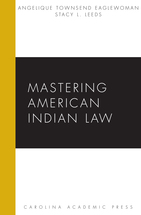
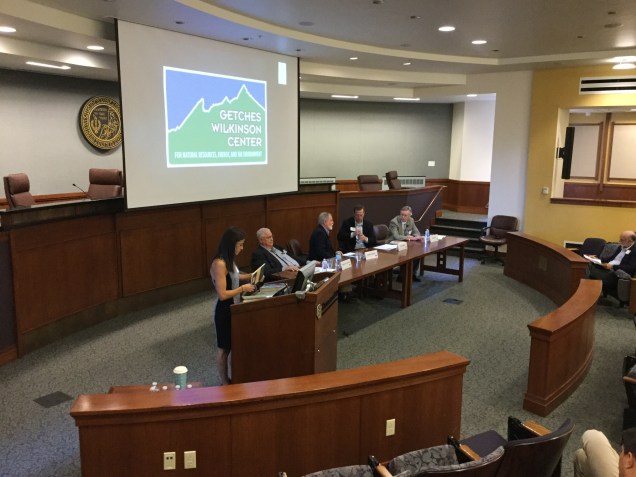
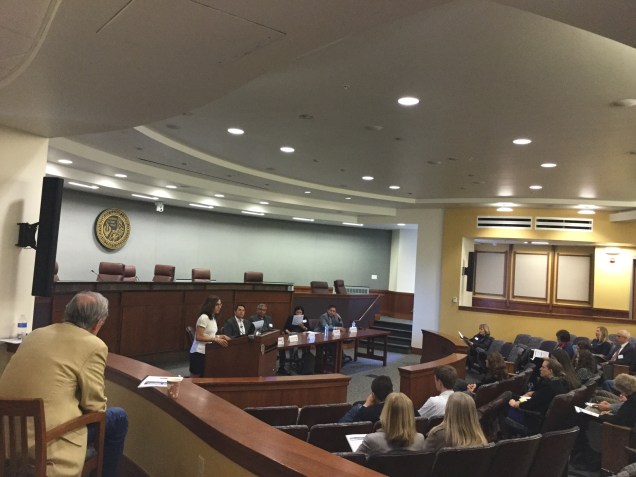
Charles Wilkinson Celebration Afternoon Panels
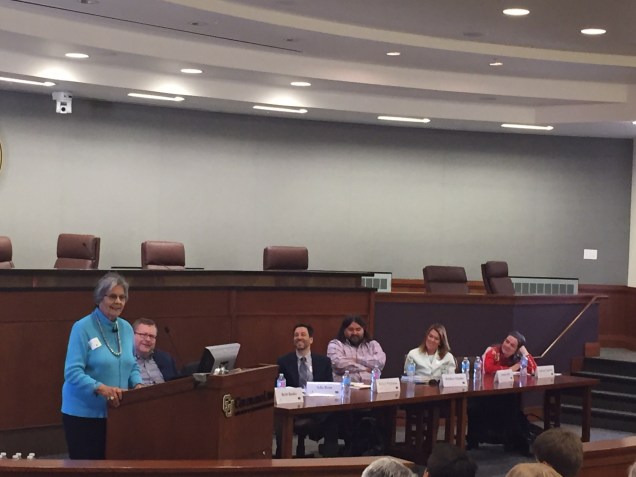

Charles Wilkinson Celebration Morning Panels

Federal Subsistence Board Restores Saxman Tribe’s Subsistence Rights
Big announcement today out of Alaska: The Federal Subsistence Board (FSB), the body charged with managing subsistence hunting and fishing on Alaska’s public lands and waters, restored the Organized Village of Saxman to “rural community status,” thereby making members once again eligible for priority harvest of fish and game.
The Alaska National Interest Lands Conservation Act (ANILCA) grants a harvest priority of fish and game on public lands, but this priority is only extended to “rural communities.” In 2006, under political pressure from the State, the FSB terminated Saxman’s rural status and grouped the village in with the city of Ketchikan. Represented by NARF, Saxman later filed suit to restore its rural status, but parties settled the case in favor of today’s administrative fix.
 Turtle Talk
You must be logged in to post a comment.