MSNBC Coverage of Cherokee Freedmen Controversy

Here.

An excerpt:

“The Cherokee Nation will not be governed by the BIA,” Joe Crittenden, the tribe’s acting principal chief, said in a statement responding to the U.S. Bureau of Indian Affairs.

Crittenden, who leads the tribe until a new principal chief is elected, went on to complain about unnamed congressmen meddling in the tribe’s self-governance.

The reaction follows a letter the tribe received on Monday from BIA Assistant Secretary Larry Echo Hawk, who warned that the results of the September 24 Cherokee election for principal chief will not be recognized by the U.S. government if the ousted members, known to some as “Cherokee Freedmen,” are not allowed to vote.

Two News Articles on the State of Sequoyah Conference

Here is the first on Anishinaabe veteran Jim Northrup’s talk. An excerpt:

Despite the horrors he has experienced, Northrup retained his sense of humor. His poems evoked laughter, applause, and a sense of the tragedy of battle.

In one of his poems, “The Duke,” the soldiers realize that a VIP visitor arriving by helicopter is John Wayne himself. They ask him to go for a walk with him, but he refuses to go out with the “grunts.”

Northrup wrote their experiences contained “more killing than he had seen in a quarter of a century of movie killing.”

“And I have photographs that go along with that,” he said, after reading the poem.

Today Northrup travels the country, sharing his experiences with those who can best understand them.

“We’re creating new veterans in Iraq and Afghanistan. They’re coming home as messed up as I was – some less, some more,” he said.

“A lot of them just want to unload to someone who will understand.”

Many audience members were fellow Vietnam vets. Northrup asked them to help work with these new veterans.

Following his speech, the group saw the Vietnam portion of the “Way of the Warrior” video by Patty Loew. The Vietnam section on the video about native warriors features Northrup, among several others.

Dr. Richard Allen, also a Marine Vietnam veteran, organizes the annual State of Sequoyah Conference.

He said one purpose of the Friday morning session was to explore the different way of thinking many American Indians have about their war experiences. Many young people follow a warrior tradition when they enter the service. Allen echoed Northrup’s statements.

“Now we’re in a war in Iraq and Afghanistan. A lot of these young people are coming back with PTSD. We know what that is,” he said. “These are the kinds of things that are familiar to veterans and a lot of people don’t understand them.”

The second is about Julia Coates’ talk.

Federal Government and Cherokee Nation Responses to Cherokee Freedmen Motion to Enjoin Principal Chief Election

Here are the updated materials in Vann v. Salazar (D. D.C.):

USA Response to Vann Motion

Cherokee Nation Response to Vann Motion

The Vann motion is here.

Interior Warns Cherokee Nation that Principal Chief Election May Be Invalid

Here, via Pechanga.

The text:

United States Department of the Interior

OFFICE OF THE SECRETARY

WASHINGTON, D.C. 20240

SEP 0 9 2011

The Honorable S. Joe Crittenden

Acting Principal Chief, The Cherokee Nation

P.O. Box 948

Tahlequah, Oklahoma 74465-0948

Dear Chief Crittenden:

We have followed the news of the upcoming election for Principal Chief with interest and growing concern. I write to advise you that the Department of the Interior (Department) has serious concerns about the legality of the Cherokee Nation’s actions with respect to the Cherokee Freedmen, as well as the planned September 24, 2011, election.

On August 22, 2011, the Supreme Court of the Cherokee Nation issued its decision in the matter of the Cherokee Nation Registrar v. Nash, Case No. SC-2011-02. In this decision, the Court vacated and reversed the earlier decision of the Cherokee District Court, as well as the temporary injunction that maintained the citizenship of the Freedmen. We have carefully reviewed this most recent decision. I am compelled to advise you that the Department respectfully disagrees with the Court’s observations regarding the meaning of the Treaty of 1866, between the United States of America and the Cherokee Nation (Nation), 14 Stat. 799, as well as the status of the March 3, 2007, amendment to the Cherokee Constitution.

The Cherokee Constitution ratified by the voters in June 1976 expressly provides that “[n]o amendment or new Constitution shall become effective without the approval of the President of the United States or his authorized representative,” which is the Secretary of the Interior. The Department declined to approve the 2003 amendments of the 1976 Constitution, as evidenced by the August 30, 2006, letter from Associate Deputy Secretary James Cason to Principal Chief Chad Smith and the March 28, 2007, letter from Assistant Secretary -Indian Affairs (AS-IA) Carl Artman to Principal Chief Smith, copies of which are enclosed. Although on August 8, 2007, AS-lA Artman approved a June 23, 2007, amendment to the 1976 Constitution that removes the requirement for Secretarial approval of amendments, that decision is not retroactive. Thus, the decision of the Cherokee Nation Supreme Court appears to be premlsed on the misunderstanding that both the unapproved Constitution adopted in 2003, and the March 3, 2007, amendment that would make Freedmen ineligible for citizenship, are valid. The Department has never approved these amendments to the Cherokee Constitution as required by the Cherokee Constitution itself.

Furthermore, we understand that in 2010 the Nation adopted new election procedures which will govern the upcoming election for Principal Chief. Those procedures were never submitted to, nor approved by, the Secretary of the Interior or any designated Department of the Interior official as required by the Principal Chiefs Act, (Pub. L. 91-495, 84 Stat. 1091). Pursuant to the Principal Chiefs Act enacted by Congress in 1970, the Secretary is required to approve procedures for the selection of the Principal Chief of the Cherokee Nation.

We are concerned that the recent decision from the Cherokee Nation Supreme Court together with 2010 election procedures that have not been approved by the Secretary of the Interior as required by the Principal Chiefs Act, will be the basis for denying Cherokee Freedmen citizenship and the right to vote in the upcoming election. The Department’s position is, and has been, that the 1866 Treaty between the United States and the Cherokee Nation vested Cherokee Freedmen with rights of citizenship in the Nation, including the right of suffrage.

I urge you to consider carefully the Nation’s next steps in proceeding with an election that does not comply with Federal law. The Department will not recognize any action taken by the Nation that is inconsistent with these principles and does not accord its Freedmen members full rights of citizenship. We stand ready to work with you to explore ways to honor and implement the Treaty.

Sincerely,

Larry Echo Hawk

Assistant Secretary -Indian Affairs

Enclosures
Scenes from Tahlequah

Tahlequah right before Cherokee National Holiday, from Fletcher’s perspective….

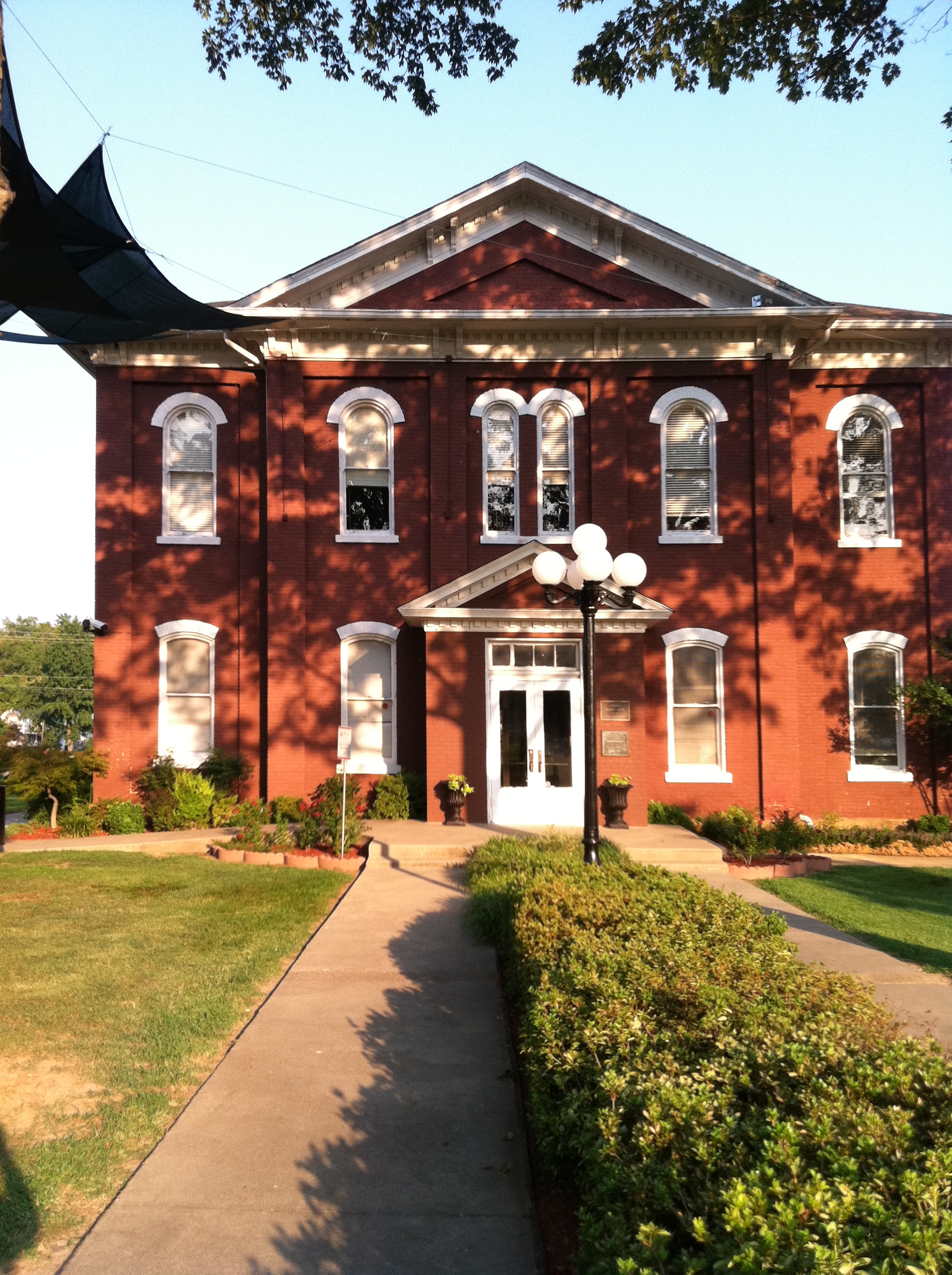
Cherokee courthouse:

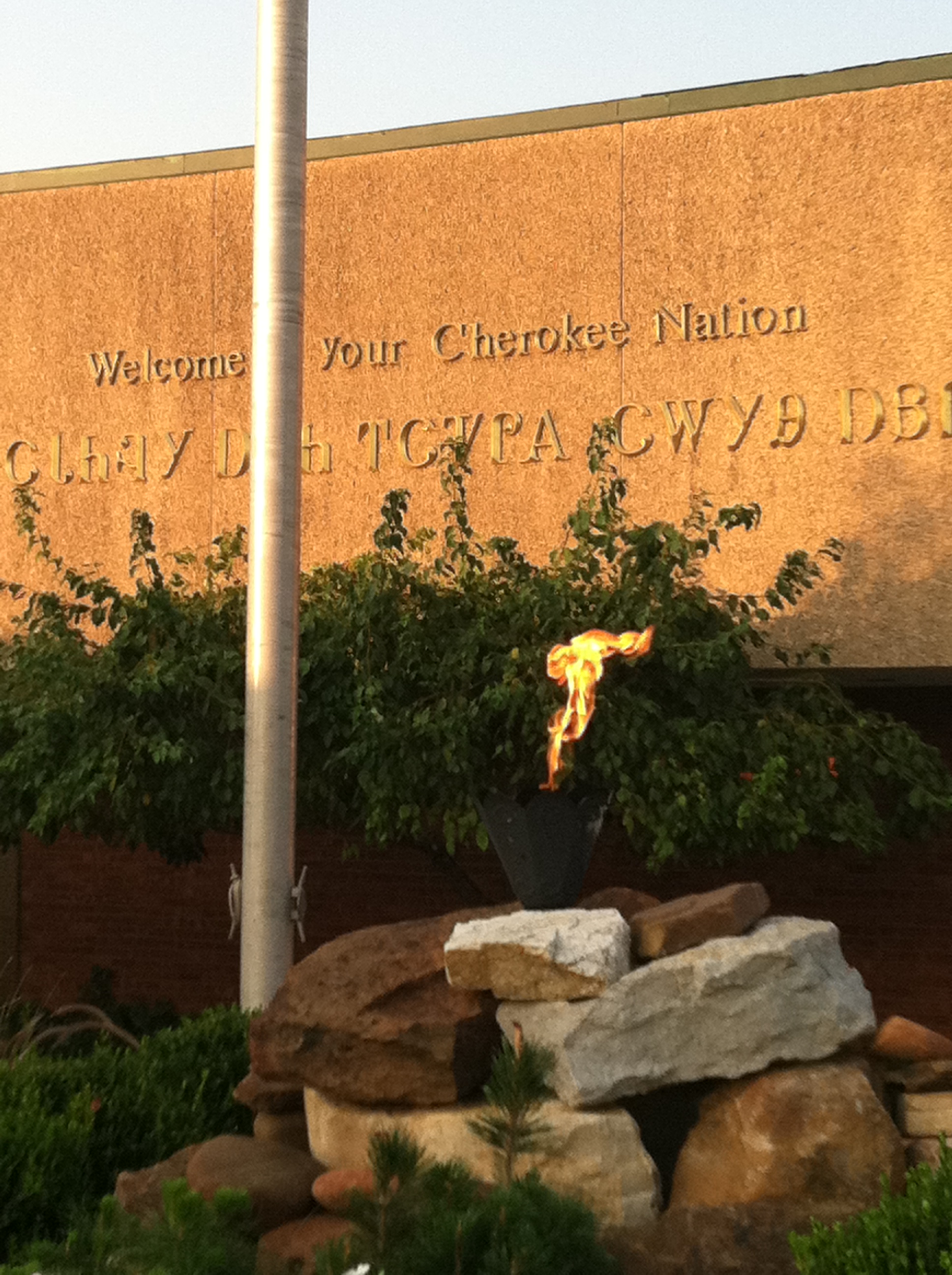
Cherokee Unity Fire:


Continue reading

News From Indian Country Op-Ed on Cherokee Freedmen

Here.

Cherokees flee the moral high ground over Freedmen

by Robert Warrior

Cherokee Chief Chad Smith is wrong and Representative Melvin Watt (D-North Carolina) is right. As those who follow the American Indian political world know, earlier this year an overwhelming majority of Cherokee voters decided to deny descendants of the Cherokee Freedmen, freed slaves who trod the Trail of Tears with their Native American owners, rights to political enfranchisement guaranteed to them in an 1866 treaty the Cherokees signed with the United States in the aftermath of the Civil War.

***

The politics of this issue are certainly interesting—the embarrassingly low number of Cherokees, for instance, who participate in their nation’s electoral process (less than 8000 in a group of well over 150,000), the predictable way that this decision by one group exposes all American Indian nations to alienating people who have been important, reliable friends (the Congressional Black Caucus most visibly). Morality, however, has been the missing topic in the wrangling thus far, and I would argue is the basis for why it is important for everyone, especially American Indian people who have been silent thus far, to support efforts like those of Representative Watt.

The moral case against the Cherokees is straightforward. As a duly constituted nation in the nineteenth century, they legally embraced and promoted African slavery, a position they maintained after Removal to Indian Territory in the 1830s. The vast majority of Cherokees could not afford slaves, as was also the case throughout the American South, and historians of Cherokee slavery have demonstrated that some aspects of the Cherokee social world gave a different, less negative character to being enslaved by wealthy Cherokees rather than wealthy whites. Make no mistake, though. No one is on record as having volunteered to become a Cherokee slave. History records plenty of Cherokee slaves attempting to escape to freedom, as well as Cherokee slave revolts.

The institution of slavery was for Cherokees, as it has been for all people who practice it, morally and politically corruptive, and many citizens of this Native slaving nation knew it. Stories like that of the children of Shoeboots and Doll, a Cherokee slaveowner and his black concubine/wife, whose father risked his reputation as a war hero in petitioning for their recognition as Cherokees provides a picture of this ambiguity, but the cruelty, sexual violence, and physical degradation of modern slavery under Cherokees like James Vann is just as unambiguous (both are captured magnificently by University of Michigan scholar Tiya Miles in her 2005 book Ties that Bind: The Story of an Afro-Cherokee Family in Slavery and Freedom).

***

In spite of being egged on and provoked by the legislated racism of the Cherokee Nation, the vast majority of Freedmen descendants have reacted with impressive dignity befitting their proud history. Melvin Watt and other black members of Congress have likewise responded in a measured, but active way. It remains for more people, including Native American writers, scholars, and artists, not to mention elected leaders, presidents, and chiefs, to stand up and be counted on the right moral side of this question. Better yet, Chad Smith could save us all the trouble by following some of the best examples of Cherokee history rather than the morally corrupting and exclusionary ones he and his supporters have chosen thus far.

Cherokee Supreme Court Invalidates Principal Chief Election

As reported on the Indianz twitter feed, the Cherokee Supreme Court has invalidated the election for Principal Chief.  Finding that it is “impossible to determine the election result with mathematical certainty or to certify a successful candidate for the Office of Principal Chief of the Cherokee Nation in this election,” the Court found that the election was invalid and vacated all certifications of the results.

The order is here.

Our previous coverage is here.

Iowa Court of Appeals Decides ICWA Notice Case

Here is the opinion in In re L.B.-A.D.

An excerpt:

Under the circumstances presented, we find the State has proved by clear and convincing evidence grounds for termination under section 232.116(1)(h). Additionally, we find no error in the juvenile court’s determination that termination of the mother’s parental rights was in the best interests of the children. However, because we determine the court erred in failing to give proper notice to the tribes in which the children could be determined to be “Indian children,” we remand the matter to the juvenile court, which shall give notice of the termination proceedings to the appropriate Indian tribes. See R.E.K.F., 698 N.W.2d at 150. If the tribes fail to respond within the appropriate timeframe or reply and determine the children are not eligible for tribal membership, the juvenile court’s original order of termination will stand. If a tribe responds and intervenes, reversal of the termination and further proceedings consistent with the requirements of the Iowa ICWA will be necessary. We therefore affirm the juvenile court‟s termination ruling on this condition. We do not retain jurisdiction.

The Trial of Ned Christie — Cherokee Nation — June 10-11, 2011

Here is the flyer:

Ned Christie Trial Outline 2011

Stacy Leeds on the Tenth Circuit’s ICWA Decision re: Cherokee Nation Citizenship Act

Here:

The Cherokee Nation has an automatic 240 day citizenship that attaches to any newborn who is a descendant of the Dawes Rolls.  This was enacted to ensure that newborns are Cherokee citizens subject to the Indian Child Welfare Act’s protections and presumes that the parents will make a decision whether the enroll the child as a Cherokee citizen during their infancy.  I would like to see our Nation go one step further and simply have natural born citizenship laws like other sovereigns throughout the globe, but that’s an aside.  The decision from the the Tenth Circuit is here.  The federal court does not like the idea of this “temporary citizenship” for inclusion in protections of a federal statute.

My question for tribal legal reform:  why have people “enroll” a child as a citizen in the first place?  Why not have Cherokee Nation laws that automatically extend citizenship to children who are eligible for citizenship and if someone chooses to disavow their citizenship, go thru the administrative process to renounce citizenship?  When tribes requires someone to “enroll” as members/citizens of the Nation, it contributes to the idea the tribal citizenship is inferior to other citizenship.  I envision this sequence:  Citizenship by birth, followed by a Cherokee Nation Birth Certificate and/Cherokee Nation ID card for documentation purposes, followed by a Cherokee Nation driver’s license to operate a vehicle.