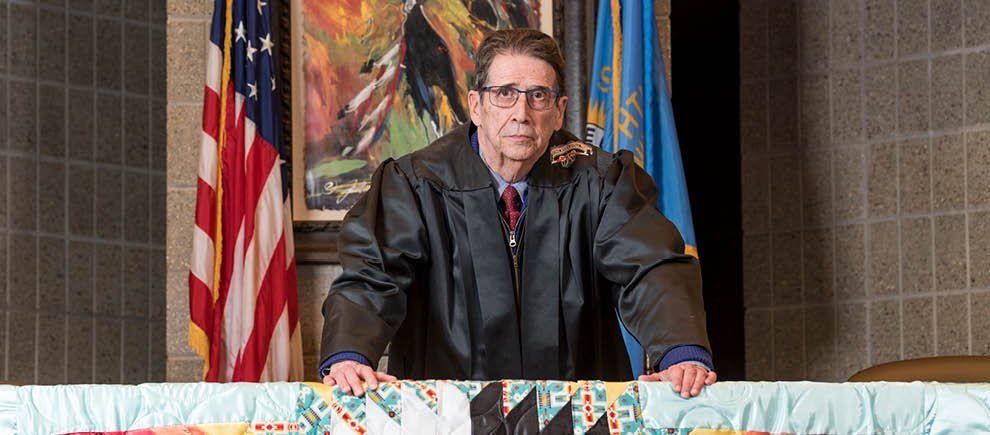
Pommersheim and Drapeau on the Black Hills SCT Case

Frank Pommersheim and Bryce Drapeau have published “United States v. Sioux Nation of Indians Revisited: Justice, Repair, and Land Return” in the South Dakota Law Review. PDF

HIGHLY RECOMMENDED!! A Frank Pommersheim joint is always worth it.

The abstract:

The amazing legal journey of this case begins in 1923 and ends with a Sioux Nation of Indians “victory” in the Supreme Court in 1980. Before reaching the Supreme Court, the case was litigated four different times before the Court of Claims because of the ineffective assistance of counsel and the necessity of a congressional statute to clear away the threatening ghost of res judicata. The historical backstory begins not in 1923, but with the signing of the Fort Laramie Treaty of 1868 and the United States’ illegal taking of the sacred Black Hills in1877. And the case does not end with the Sioux “victory” before the Supreme Court and its award of “just compensation” for the illegal taking. The Sioux Nation of Indians rejected—and continues to reject—the remedy of financial compensation without an attendant search for mutual repair and a justice that includes some form of land return. Despite some modest examples of land return in other parts of Indian country, no such efforts involve the Black Hills. This article seeks to inform all, but particularly those two generations of Lakota and non-Native citizens born since 1980, that now is the time for renewed effort and commitment to realize reconciliation and a justice that includes land return. This must be done before history closes its door for a second and final time and the Black Hills will remain stranded in historical infamy. No, this article is not just another twist on classic Indian Law principles gone awry, but the first of something we might call the Historical (Trauma) Trilogy of stealing Lakota land (and breaking treaties), suppressing the teaching and learning of the Lakota language and culture, and the battering ram of boarding schools to break-up Lakota families where a core value has always been to be a “good relative.” In its own careful way, this article is also about the persistence of Lakota resistance and the hard work of restoring the (sacred) hoop of land, language, and family for these new days.
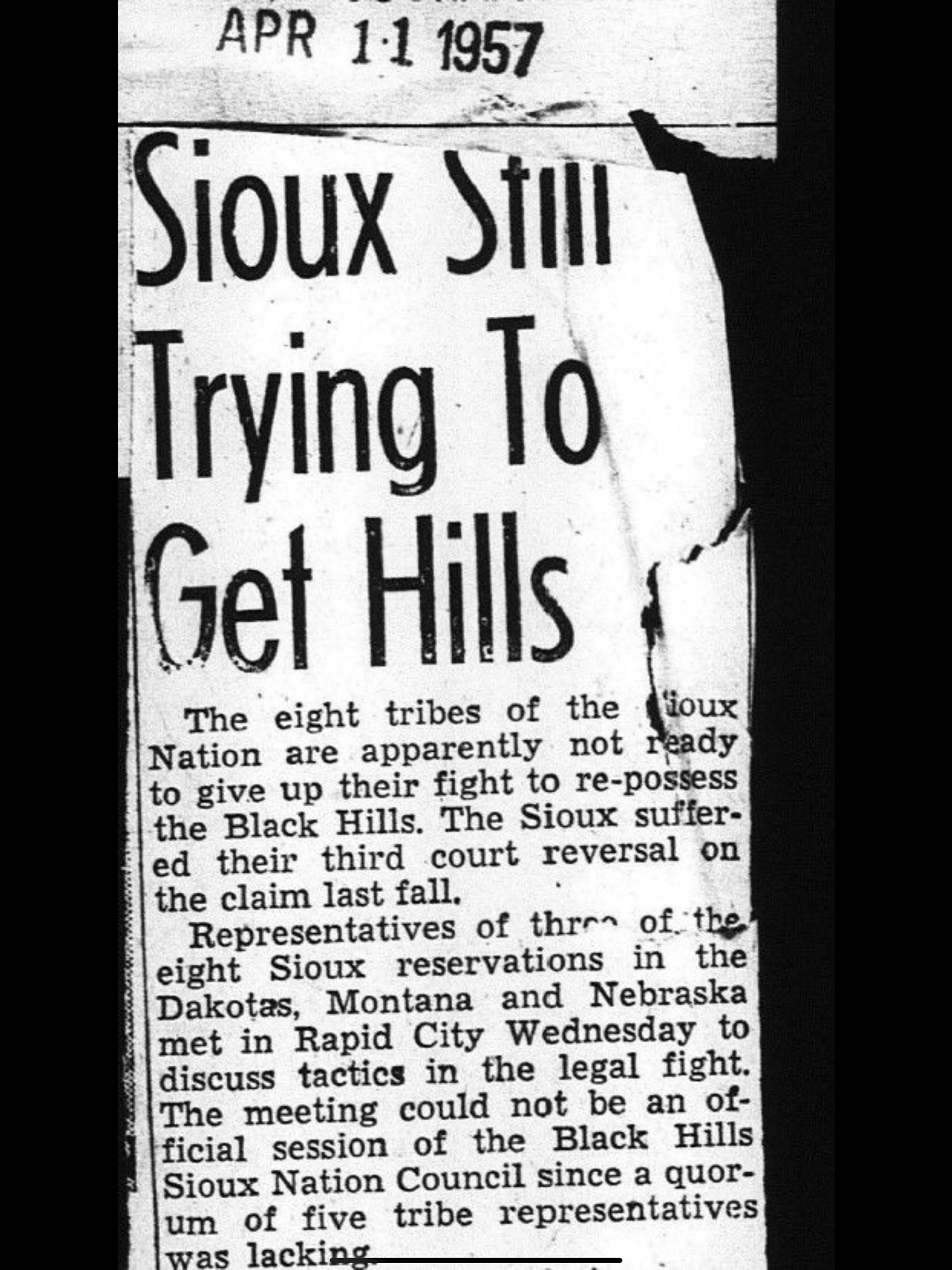
Guest Post by Frank Pommersheim on the Retirement of Judge Sherman Marshall

JUDGE SHERMAN MARSHALL RETIRES

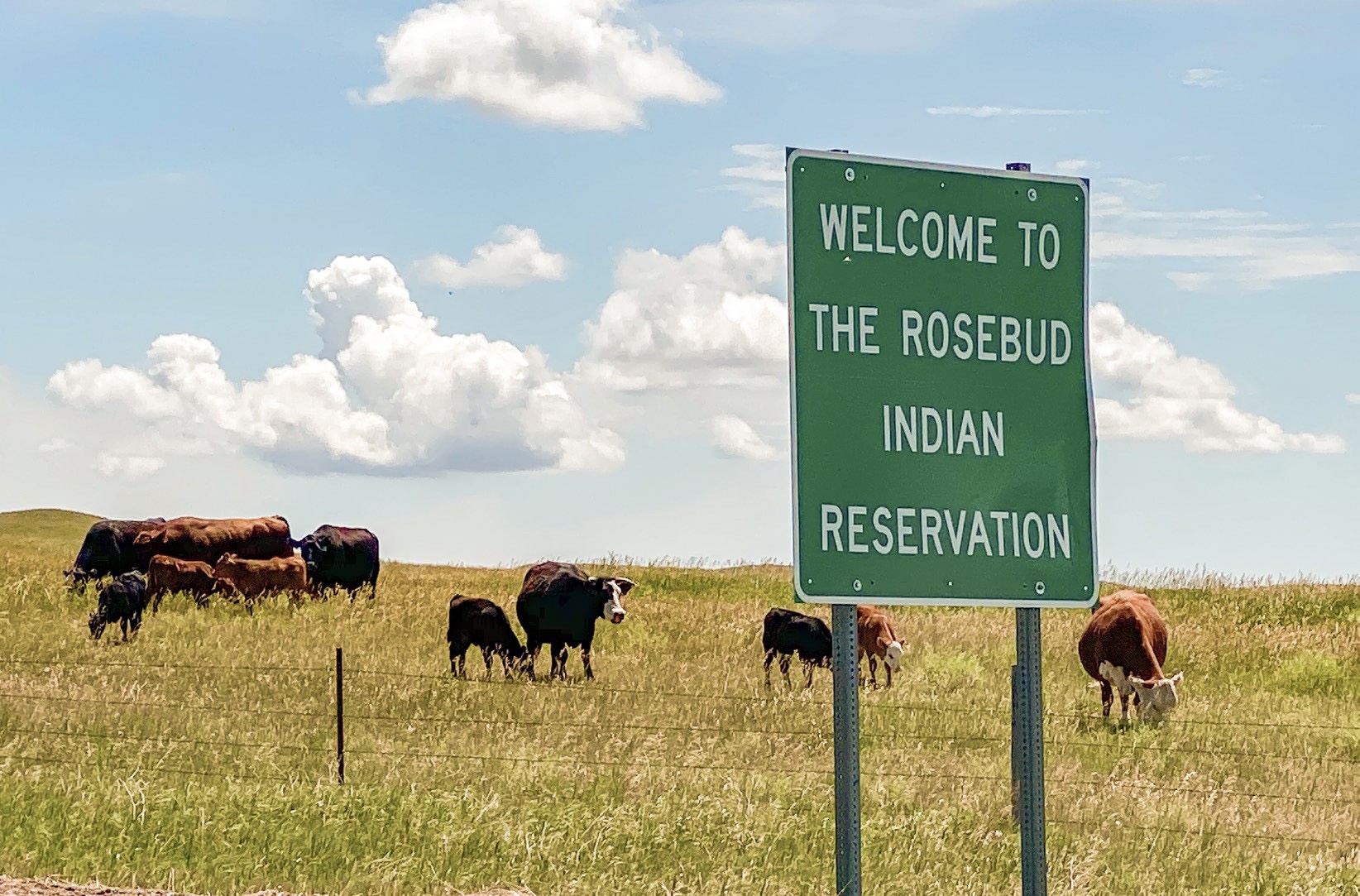
Sherman Marshall, Chief Judge of the Rosebud Sioux Tribal Court, recently retired after more than 35 years as the heart and soul of the Rosebud Sioux Tribal Court system. Judge Marshall was born and raised on the Rosebud Sioux Indian Reservation. He is a fluent Lakota speaker and deeply steeped in Lakota tradition and custom. Sherman received his Associate of Arts degree from Sinte Gleska University and also was the first recipient of a Bachelor of Selected Studies from Sinte Gleska University. He is a 1984 graduate of the University of South Dakota School of Law and a long time member the South Dakota Bar Association. Upon graduation from USD Law, Sherman was admitted to practice and returned home to the Rosebud Sioux Reservation. After serving as an administrator at Sinte Gleska University for several years, he joined the Rosebud Sioux Tribal Court as the Chief Judge, a position he has held since 1986. It is likely that Judge Marshall is one of longest serving judges on any tribal court in Indian Country.

It is difficult to fully understand and comprehend how much Sherman was able to accomplish during his long tenure on the bench. Early in his judicial career, Judge Marshall decided that it was incumbent upon him and his staff to visit all 20 tribal communities on the Reservation to describe the judicial system to community members and equally important, to receive input (including criticism) from community members. Over time, these efforts did much to enhance and increase community respect for the Rosebud Sioux Tribal Court system. Judge Marshall was also instrumental in helping to establish the Rosebud Sioux Tribal Bar Examination, as a necessary prerequisite for practice in the tribal courts of the Rosebud Sioux Tribe. Rosebud is the only tribe in South Dakota and one of the few anywhere in Indian country that prepares and administers its own Bar Examination. Closely related to the implementation of its own Bar Examination, Sherman was a key figure in establishing Sicangu Oyate Tribal Bar Association, one of the very few functioning tribal bar associations that exists in Indian Country. The Sicangu Oyate Tribal Bar Association, which includes both law trained and non-law trained tribal advocates has served to help create and identify a community of practitioners who are committed to practicing in tribal court with integrity and a commitment to fairness and due process.

Continue reading

Frank Pommersheim’s NAICJA Keynote

Frank Pommersheim asked us to post his keynote speech from this year’s NAICJA conference, “An Emeritus Prose Podcast: The Pandemic Checkpoints of the Cheyenne River Sioux Tribe: A Teaching Essay.”

Here it is:

The Pandemic Checkpoints of the Cheyenne River Sioux Tribe

An excerpt:

In the Spring of 2020, the Cheyenne River Sioux Tribe (CRST) began implementing a series of limited vehicle checkpoints within the boundaries of the reservation as part of its comprehensive public health response1 to limit the spread of COVID-19. One of the checkpoints was located on a state highway running through the Reservation. There was an immediate uproar in South Dakota. Many people, both Native and non-Native, contacted me and asked, ‘Frank, can the Tribe really do this?’ My answer was ‘yes.’
As the questions about this Tribal public health initiative became increasingly heated, the merits of the health policy were increasingly subsumed in political rhetoric concerning the ‘rights’ of non-Natives and the authority of the state to quash the Tribe’s efforts. The calls kept coming. My answer of ‘yes’ remained the same. Yet the supporting legal analysis was not so easily summarized. No (federal) statute or Supreme Court case unequivocally said yes or no. The answer of ‘yes’ required a careful exegesis of both Supreme Court precedent and the law of the CRST.

Frank Pommersheim on Reparations

Here is “Not one without the other: Reparations for African-Americans and Indigenous peoples” in Indian Country Today.

S. Dakota NALSA Lecture — Frank Pommersheim — April 22

Buddha Reads Some Poetry for These Pandemic Times

more here: https://libguides.law.usd.edu/c.php?g=744258&p=8135137

South Dakota Public Broadcasting: “McGirt v. Oklahoma With Frank Pommersheim”

Here.

South Dakota Public Broadcasting: “Pommersheim Talks Legal Battle Between Tribe & Government”

Here. This is part 2. Part 1 is here.

Frank Pommersheim on Checkpoints

Here is “Prof Pommersheim Talks Checkpoints” on South Dakota Public Broadcasting.

Frank Pommersheim’s Valedictory Notes and Collage

Frank Pommersheim has published “I Was So Much Older Then/I’m Younger Than That Now: Valedictory Notes and Collage” in the South Dakota Law Review (pdf).

Here is an excerpt:

Teacher, Scholar, Tribal Justice, Colleague. These are theseasons turning and braiding across my years and decades in thefield, the factory, and the monastery of my work and vocation.The toil of craft and building community. Yet there is alsosomething valedictory and elegiac that guides this pen and spillsthis ink in the desire to provide both a professional and personalsense of my thirty-five years of service at the University of SouthDakota School of Law (hereinafter USD).

Frank (far right) at the Montana Law Review symposium 2018