Here.
NYTs: “How G.O.P. Laws in Montana Could Complicate Voting for Native Americans”
Here.
Here.
On July 1, 2021, the U.S. Supreme Court released a decision in Brnovich v. DNC that upheld two Arizona voting policies that make it harder for people—and especially people of color and Native Americans—to vote.
BACKGROUND:
On March 2, the US Supreme Court heard arguments in Brnovich v. Democratic National Committee. The case looks at whether two issues of Arizona voting law—restricting out-of-precinct ballots and ballot collection—violate Section 2 of the Voting Rights Act. In 2016, Arizona lawmakers passed laws limiting ballot collection and out-of-precinct voting. Ballot collection is an essential tool that rural Native American communities use to make voting accessible to all eligible voters.
At about 17 minutes into the hearings, Justice Sotomayor addresses the voting burdens in Native communities. The points that Justice Sotomayor raises, echo those found in the National Congress of American Indians’ (NCAI) “friends of the court” amicus brief in the case. NCAI’s brief, which was filed by the Native American Rights Fund in January, explains how American Indian and Alaska Native voters face substantial obstacles and documented discrimination as they try to participate in the American democratic process.
Native Americans are entitled to full access to the political process, but failures rooted in devastating policies and discrimination create needless barriers to the ballot. Services such as post offices and drivers’ license sites require hours of travel, postal delivery and residential addressing is insufficient or completely absent, poorly maintained dirt roads become impassable during November election season, lack of internet and cell phone coverage abound on reservation, and insufficient economic means and transportation make it impossible to access basic government services. There also have been instances of untrustworthy election officials capitalizing on these inequities to disenfranchise voters and undermine Native American political power. Section 2 of the Voting Rights Act provides much needed protections against this type of systemic voter disenfranchisement.
Read more about the barriers that Native American voters face in the report, Obstacles at Every Turn: Barriers to Political Participation Faced by Native American Voters.
Here.
Here.
Here (Native Voter Assistance Hotline PDF):
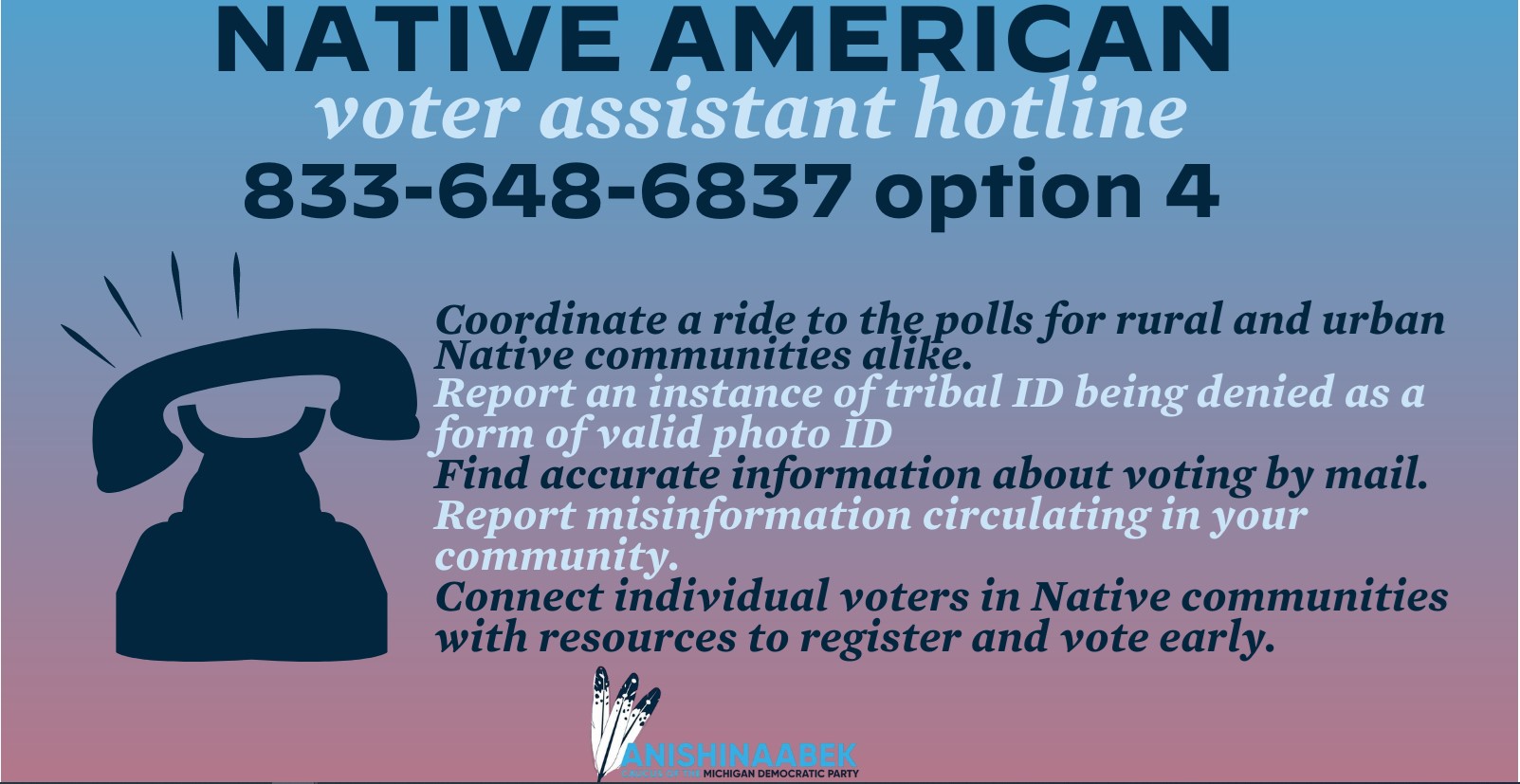
NARF’s Michigan-specific voting assistance brochure is here.
Here.
 Turtle Talk
You must be logged in to post a comment.