A Quick Overview of News Profiles and Government Documents Related to Tribal Contracting for ICE Detention Facilities and Related Activities

Prairie Band: “Prairie Band Potawatomi Nation has landed a $30 million contract to vet and design mega detention centers in the Trump administration’s push to stop illegal immigration.” [2025]

NANA Regional Corp.: “Through several presidential administrations, the company has turned itself into a large government contractor, with its biggest revenue generator run out of an office park in a suburb of Washington, DC. NANA’s largest contracts, worth hundreds of millions of dollars a year, are with the Department of Defense. But over the past decade, one of its fastest-growing lines of government business is with Immigration and Customs Enforcement. Schaeffer now says NANA is abandoning crucial values by taking an increasingly large role in President Donald Trump’s mass deportation drive.” [2025]

Other ANCs: “Alaska Native corporations and their subsidiaries do much of the work — and reap the profits — of detaining and guarding U.S. immigrants, patrolling the nation’s borders and maintaining detention centers.” [2021]

Other ANCs: “Well, I combed through the government contracts database to find out what kind of work they did. So I looked at recent contracts for ICE (U.S. Immigration and Customs Enforcement). I found a NANA subsidiary that got a $22 million contract for detention management at Krome, an ICE detention  facility near Miami. The same subsidiary got a contract of $8 million for detention support services in upstate New York. There was an AHTNA subsidiary that got a recent ICE contract for $35 million to provide guard services at a facility in Texas. And another Alaska Native corporation subsidiary runs an ICE detention center in San Pedro, California. Also, I saw one for armed ground transport — $700,000, one of the smaller ones — and it went to a Bering Straits Native corporation subsidiary.” [2018]

Bering Straits Native Corp. “Located just below the Arctic Circle, tribal communities in the Bering Straits region are well-acquainted with frozen conditions. Yet among the 8,000 Indigenous Alaskan shareholders who own the Bering Straits Native Corporation, some are unaware that their company staffs an ICE immigrant detention facility in El Paso, Texas.” [2021]

Same: “Native corporations and other Alaska-based companies have taken on at least a billion dollars in contracts with Immigration and Customs Enforcement in recent years, according to a review of available government contract data from 2012 through the present.” [2018]

Doyton Ltd and others: “Under current federal law and Department of Homeland Security regulations, Native American companies are favored recipients for immigrant detention contracts, and they reap large profits by assigning those contracts to non-Native American firms. One of the major Native-owned corporations that has received such contracts is Doyton Ltd., which holds the contract for operational, transportation and food services at the 800-bed El Paso Service Processing Center in El Paso, Texas.”

Same: “Doyon is one of several Native American corporations that are sealing major contracts with the Department of Homeland Security. Most are Alaska Native Corporations (ANCs), a collection of regional and village corporations created as part of the Alaska Claims Settlement Act of 1971. A few of these Native American corporations are contracting for various parts of ICE’s immigrant detention operations.” [2010]

Department of Homeland Security “Tribal Resources Guide

dhs-tribal-resource-guide

NANA [2025]

GAO Report : “Increased Use of Alaska Native Corporations’ Special 8(a) Provisions Calls for Tailored Oversight” [2006]

gao-06-399

More NANA/Akima: “As the Trump administration’s immigration crackdown has ramped up, officials are sending some migrants to a detention facility in Guantanamo Bay, Cuba that’s run by the subsidiary of an Alaska Native corporation.” More on same issue.

Yet more NANA/Akima: “A corporate conglomerate now running the US government’s immigration detention center at the Guantánamo Bay naval base on a lucrative contract has been the subject of critical audits and a civil rights complaint over conditions at three other migrant lockups it has run within the US, documents reviewed by the Guardian show.”

D.C. Circuit Issues CARES Act Opinion in Shawnee v. Yellen, or is it Miccosukee v. Yellen or Prairie Band Potawatomi v. Yellen?

Here is the opinion in Prairie Band Potawatomi Nation v. Yellen. Long story short, Shawnee settled (I think) so they’re out, Miccosukee is out because their challenge is moot, and Prairie Band gets a remand ‘cuz the gummint’s got some ‘splaining to do. No zhoonya for tribal interests here, though the billables keep coming.

Briefs:

Lower court materials here (I think).

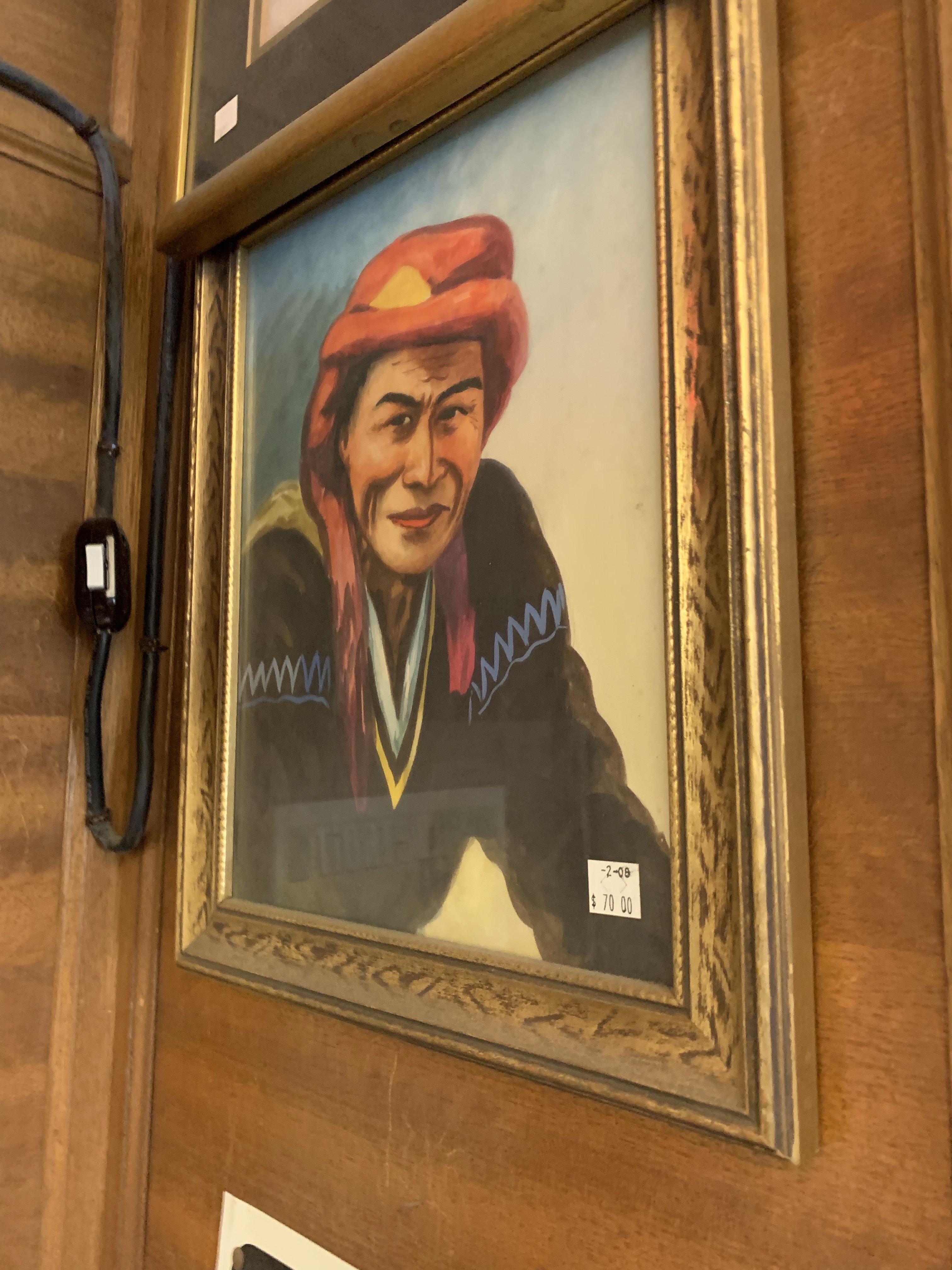
Not sure if this guy is entitled to zhoonya, but if he is, he deserves more than $70.

D.C. Circuit Briefs in Prairie Band Potawatomi Nation v. Yellen

Here:

Lower court materials here.

D.C. Federal Court Rejects Prairie Band/Miccosukee CARES Act Formula Challenge

Here are the materials in Shawnee Tribe v. Yellen (D.D.C.):

65 Tribes Motion for PI

70 Tribes Motion for Summary J

71 Opposition to 65

73 Reply in Support of 65

74 DCT Order Denying Injunction

88 Amended Tribal Motion for Summary J

91 US Cross-Motion for Summary J

93 Tribal Reply in Support of 88

95 Federal Reply in Support of 91

98 DCT Order

Prior post here.

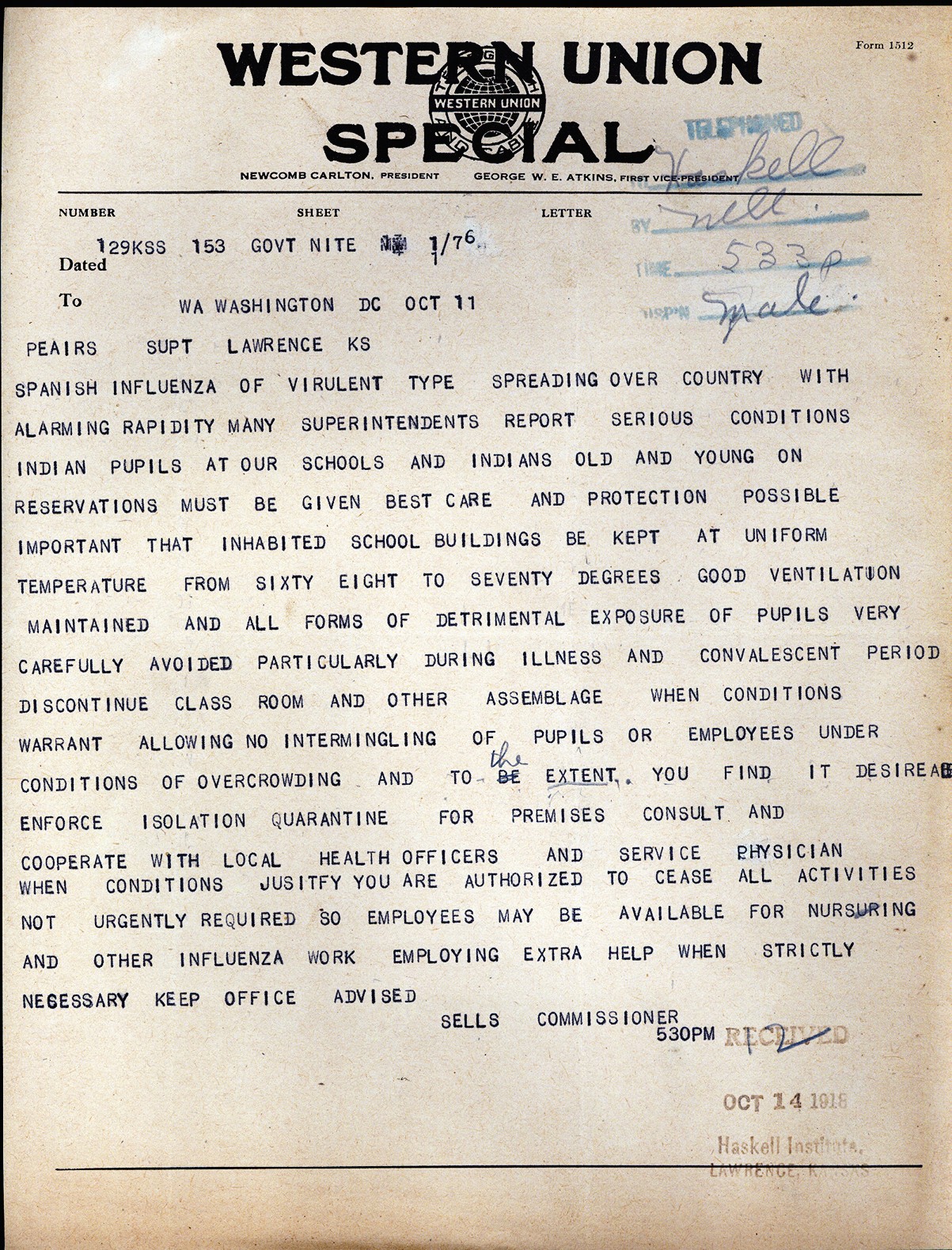
Hmmm. Comparing 1918 federal response to a pandemic — a sternly worded telegram — with 2020 — money, just not enough.

Federal Bankruptcy Court Holds Prairie Band Potawatomi Per Cap is Property of Individual Debtors

Here are the materials in In re McDonald (D. Kan. Bkrcy.):

41 Trustee Brief

42 Debtors Brief

44 Trustee Reply Brief

45 Debtors Reply

47 Order Sustaining Objections

An excerpt:

Debtors, William and Bonnie McDonald and Kliffton and Jeanette Scott, have filed chapter 13 plans that do not propose to pay any amount to satisfy the best interest of the creditors test of 11 U.S.C. § 1325(a)(4) with regard to per capita payments they receive from the Prairie Band Potawatomi Nation Indian Tribe (hereinafter “Prairie Band” or the “Tribe”). Building on governing precedent, the Court concludes that despite changes to the Prairie Band Per Capita Ordinance and Tribal Code since it last ruled on these issues, the per capita payments remain property of the respective chapter 13 estates, and the Debtors’ plans have thus failed to satisfy the best interest of the creditors test with respect to this contingent, unliquidated property.

Debtors William and Bonnie McDonald also seek to exempt the per capita payments from the bankruptcy estate by arguing they are exempt under 11 U.S.C. § 522(b)(3)(A) as “local law that is applicable . . . at the place in which the debtor’s domicile has been located for the 730 days immediately preceding the date of the filing of the petition.” The McDonalds have stipulated that their domicile is in Topeka, Kansas, however, and they are not domiciled on Prairie Band land. As a result, § 522(b)(3)(A)’s exemption based on “local law” is not applicable. The McDonalds’ other exemption arguments likewise fail.

As a result of the conclusions discussed more fully herein, the Court sustains the Chapter 13 Trustee’s objections to confirmation and objections to exemption in each case.


Prairie Band Potawatomi Nation Hosting Kansas Native Nations Law Symposium — Sept. 13, 2013

Here is the agenda.

Native_Nations_Law_Symposium_Agenda_2013_Page_1 Continue reading

Kansas SCT Reverses Suspension of Prairie Band Driver’s License Holder

Here is the opinion in Rodewald v. Kansas Dept. of Kansas.

From the court’s opinion:

Jacob C. Rodewald appeals from the district court’s summary judgment in favor of the Kansas Department of Revenue (KDR), upholding the suspension of Rodewald’s Kansas driver’s license. The basis for the suspension was K.S.A. 8-1567a, which prohibits any person less than 21 years of age from operating a vehicle in this state with a breath or blood alcohol content (BAC) of .02 or greater and which provides for a driver’s license suspension if the test results are greater than .02, but less than .08. Rodewald contends that because he is an enrolled member of the Prairie Band Potawatomi Nation and was operating a vehicle on the reservation when stopped by a tribal officer, the tribal court had exclusive jurisdiction over any civil matter arising from the incident, and the KDR acted outside the scope of its authority. We agree. The grant of summary judgment is reversed, and the matter is remanded to the district court with directions to order the reinstatement of Rodewald’s driver’s license.

In re Howley Part 2 — Tribal Per Cap Still Subject to Bankruptcy Award

Here: In re Howley Order after Motion to Amend

Earlier materials in the same proceeding are here.

Tenth Circuit Rejects Section 1983 Claim by Pro Se Prisoner against Prairie Band Tribal Police

Here is the unpublished opinion in Johnson v. Pottawatomie Tribal Police Dept. See footnote 1 for an explanation of the caption.

Lower court opinion here.

Federal Bankruptcy Court Decides Tribal Gaming Per Cap Issue against Indian Debtor

Here are the materials in In re Howley (D. Kan. Bkrtcy.):

Order Sustaining Trustee’s Objection

Trustee’s Brief

Debtor’s Brief