My Reading of The Oath, the New Book on Obama and the Supreme Court

Jeffrey Toobin’s new book of historical gossip about the Supreme Court is out, and a very good read. I’ve only made it through the first few chapters (reading last night at the park while Owen ran around with his soccer team, the Jaguars). Two things, only one of which is important.
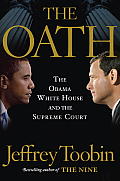
First, President Obama’s views on the Constitution and the federal judiciary are important, especially to those of us Indians who think it’s important to have an Indian or two on the federal bench. He’s not an activist. The Warren Court and the first half of the Burger Court were activist courts for the liberals, and the second half of the Burger Court, bits and pieces of the Rehnquist Court, and now the Roberts Courts were (are) activist courts for the conservatives. Toobin shows how Obama’s views of the Supreme Court and the federal judiciary differ from many conservative judges and justices (I’m not sure I buy Toobin’s all-in argument that the Chief Justice is an activist — much of this book was written before the ACA cases). True social change cannot come from on high, dictated by the courts, but instead through legislation and governing (i.e., winning elections). Sam Deloria’s been saying this for years. The real fights in the 1960 and 1970s over the very existence of federal Indian law have given way to the fights over how to govern. All too often, I suspect (and perceived from some of my clients), tribal leaders think the best way to govern is to demand more and more sovereignty from the courts. It probably doesn’t happen a lot, but it does happen.

Obama’s views on the constitution and the federal judiciary earn him a lot of heat from the left, who want him to do what the Reagan/Bush presidencies did — pack the judiciary with like-minded people. While I do hope he fills some judicial seats (and finally succeeds in getting some Indians in there) in the next term, Indian country better not expect a bunch of liberal acitivist judges. Even if he could get them through the Senate (he can’t, the filibuster will prevent that), he wouldn’t appoint them. Everyone lining up to put their name on a judicial appointments list of eligible American Indians should think about that before they talk to their Senators or whomever.

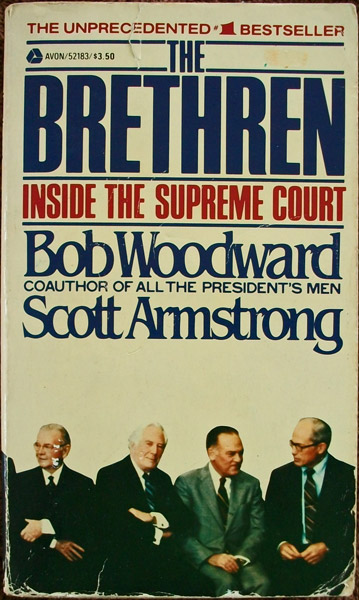
Second, and less important, more evidence about how the Supreme Court’s clerks think about Indian law. On page 54, Toobin repeats what everyone knows — the clerks think of Indian law cases as “dogs.” I guess it’s an improvement from when Justice Brennan called the Indian cases “chickenshit” in The Brethren. This is another good opportunity to remind tribal leaders that the Court just isn’t interested in Indian issues. The Court largely believes its obligations in Indian affairs are to make sure that tribal governance doesn’t unduly affect nonmembers and to make sure Interior doesn’t go too far in supporting tribal interests.
President Obama Nominates Dean Kevin Washburn for Assistant Secretary for Indian Affairs

Here.

And here.

From the White House press release:

President Obama Announces More Key Administration Posts
WASHINGTON, DC – Today, President Barack Obama announced his intent to nominate the following individuals to key Administration posts:
  • Kevin K. Washburn – Assistant Secretary for Indian Affairs, Department of the Interior
  • Jenny R. Yang – Commissioner, Equal Employment Opportunity Commission
President Obama said, “These individuals have demonstrated knowledge and dedication throughout their careers. I am grateful they have chosen to take on these important roles, and I look forward to working with them in the months and years to come.”
President Obama announced his intent to nominate the following individuals to key Administration posts:
Kevin K. Washburn, Nominee for Assistant Secretary for Indian Affairs, Department of the Interior
Kevin K. Washburn is Dean of the University of New Mexico School of Law, a position he has held since June 2009. Prior to that, he served as the Rosenstiel Distinguished Professor of Law at the University of Arizona James E. Rogers College of Law from 2008 to 2009 and as an Associate Professor of Law at the University of Minnesota Law School from 2002 to 2008. From 2007 to 2008, Mr. Washburn was the Oneida Indian Nation Visiting Professor at Harvard Law School. Previously, he served as General Counsel for the National Indian Gaming Commission from 2000 to 2002, and as an Assistant United States Attorney in Albuquerque, New Mexico, from 1997 to 2000.  Mr. Washburn was a trial attorney in the Indian Resources Section of the U.S. Department of Justice from 1994 to 1997.  Mr. Washburn is a member of the Chickasaw Nation of Oklahoma.  He earned a B.A. from the University of Oklahoma and a J.D. from Yale Law School.

HEARTH Act Signing

Here.

President Barack Obama signs H.R. 205, the HEARTH Act of 2012, in the Oval Office, July 30, 2012. Standing behind the President, from left, are: Bryan Newland, Senior Policy Advisor at the Department of the Interior; Governor Randall Vicente, Pueblo of Acoma in New Mexico; David Hayes, Deputy Secretary of the Department of the Interior; Jefferson Keel, President of the National Congress of American Indians; Rep. Martin Heinrich, D-N.M.;  Sen. Daniel Akaka, D-Hawaii; interior Secretary Ken Salazar; Cheryl Causley, Chairperson of the National American Indian Housing Council; Governor Gregory Mendoza, Gila River Indian Community of Arizona; and Del Laverdure, Acting Assistant Secretary  of the Department of the Interior.

ICT: 2012 Presidential Candidates Yet to Campaign in Indian Country

Meant to post this last week….

Here. An excerpt:

In 2012, Native Americans across the land are wondering where on Earth—or in America, at least—the outreach has been from the presidential campaigns. For an election that is forecasted to be quite close—closer by the day, according to the most recent polls—in battleground states where Native populations, though comparatively small, could tip the scale. “This will probably be a very close election, and neither campaign should ignore any group of voters, especially one that is reliably supportive,” says Daniel McCool, a political science professor at the University of Utah and co-author of the 2007 book Native Vote: American Indians, the Voting Rights Act, and the Right to Vote.

Obama realized the opportunity early on in 2008, but Indian votes appear to be less important to him this time around. As of June 14, his Chicago camp hadn’t formally named an official Native vote coordinator or hierarchy, while operations to court African-American, Latino, Asian, Jewish, gay, and women voters were already established. His campaign website in 2008 had many Native blog posts and tribal endorsements. This year, nothing yet.

Continue reading

Additional VAWA Reauthorization Materials

Here is the Administration’s policy statement on the VAWA reauthorization, largely opposition to the House version.

And here is the House Judiciary Committee Report on the H.R. 4970, VAWA Reauthorization (HRPT-112-HR4970cj).  According to the Report, “The justification for why these [tribal] provisions are necessary is also questionable. Proponents of these provisions tout unverifiable statistics about the rate of non-Indian violence against Indian women on Indian land…”

Andrew Cohen on Obama’s Indian Policy Part 2

Mr. Cohen has now quoted extensively from Indian country for greater context.

Here.

WaPo Coverage of Obama Tribal Nations Meeting

Here.

An excerpt:

WASHINGTON — President Barack Obama met for the third time with Native American tribal leaders on Friday, signing an executive order on tribal colleges and assuring them “you have a president that’s got your back.”

Obama has won plaudits among Native Americans by breaking through a logjam of inaction on tribal issues and for giving a voice to their issues with the annual gatherings in Washington. At Friday’s conference, Obama announced he had signed an executive order establishing a White House initiative on American Indian and Alaska native education. The initiative will be overseen by an executive director appointed by the interior and education secretaries.

Andrew Cohen on the Obama Administration’s Indian Policy

Here is the link to the Atlantic Online piece. And an excerpt:

President Barack Obama meets with American Indian leaders this afternoon in Washington but, on the law front, it’s already been a tough year for the tribes. In February, the president nominated Arvo Mikkanen, an Ivy-educated Native American, to a spot as a federal trial judge in Oklahoma. He would be only the third documented Native American federal judge in U.S. history. But GOP Senator Tom Coburn immediately blocked the nomination and, nine months later, Mikkanen still hasn’t received a hearing, much less a floor vote. Worse, no one in Washington seems to care.

Then, in June, the United States Supreme Court stuck it to American Indian interests in a case styled United States v. Jicarilla Apache Nation. In a 7-1 decision, the Court ruled that the U.S. could withhold from lawyers for the Jicarilla Apache Nation hundreds of documents that may be relevant to the tribe’s long-standing mismanagement claims against the feds. Justice Samuel Alito justified the decision by reminding his audience that the relationship between the feds and the tribe was less about trusteeship and more about power.

In the first instance, Congress failed to do right by Native American interests. When asked why he so quickly denounced the Mikkanen nomination, Sen. Coburn told reporters in February, “I know plenty.” Yet he has never had to explain what he knows or why it is enough to sink Mikkanen’s candidacy. In the second instance, it’s the judicial branch that has failed American Indian iterests. Only Justice Sonia Sotomayor called out the High Court majority in Jicarilla. She said that Justice Alito’s opinion “rests on false factual and legal premises.”

So what is the other branch of government, the executive branch, doing for Native Americans as 2011 comes to a close? Is the White House pushing for Mikkanen to get a hearing? No. Is it pushing Congress to help change the procedural rules in Indian trust cases so that American Indian litigants can have more access to federal documents that pertain to their claims against federal officials? No. Those things would involve the expenditure of political capital — and the administration has shown repeatedly its unwillingness to spend in this area.

Instead, the Obama Administration is looking inward. This week came news that five American Indians have been named to an Indian Trust Commission that will help suggest reforms to the odious federal management of Indian trusts. The effort is expected to take two years, at a minimum, and of course won’t be the final word. And, today, President Obama will go to the Interior Department to participate in the White House Tribal Conference, to which over 550 Native American tribes were invited. He will no doubt talk about his Administration’s devotion to Indian interests.
Devotion which is quite underwhelming. Just last month, for example, the Justice Department announced that it is “considering whether to adopt a formal policy that would memorialize and clarify its practice of enforcing federal wildlife laws in a manner that respects and protects the ability of members of federally recognized tribes to use eagle feathers and other bird feathers for cultural and religious purposes.” Amid the rubble of Jicarilla and Mikkanen, the feds want to quietly reassure Tribal members that they won’t be prosecuted as often for dealing in eagle feathers.

White House Release on 2011 Tribal Nations Conference

Dear Friend:

As a reminder, today, President Obama is hosting the 2011 White House Tribal Nations Conference at the Department of the Interior.  As part of President Obama’s ongoing outreach to the American people, this conference provides leaders from the 565 federally recognized tribes the opportunity to interact directly with the President and representatives from his Administration.  This will be the third White House Tribal Nations Conference the Obama Administration has hosted and continues to build upon the President’s commitment to strengthen the government-to-government relationship with Indian Country.

The Opening Session from 8:30am to 9:30am EST and the Closing Session from 1:00pm to 3:00pm EST will be available live online at www.whitehouse.gov/live  President Obama will speak during the Closing Session.

Sincerely,

Charlie Galbraith

The White House Office of Intergovernmental Affairs

www.WhiteHouse.gov/NativeAmericans

Obama Names Litigator with Indian Law Experience as Head of Office of Legal Counsel

Obama named Virginia Seitz as his nominee to head the Office of Legal Counsel. Ms. Sietz has fairly extensive experience in Indian law appellate advocacy.

Here is a list of her Indian law cases:

Representing Tyson Foods in opposition to the Cherokee Nation’s claim to intervene: Tyson Brief Opposing Cherokee

Benally v. United States: NCAI Brief Supporting Navajo Cert Petitioner

Hawaii v. Office of Hawaiian Affairs: Amicus In Support of Office of Hawaiian Affairs

U.S. v. Navajo Nation II: Navajo Nation Merits Brief and Navajo Cert Opp

Plains Commerce Bank: NCAI Brief Supporting Long Family

Wagnon v. Prairie Band: NCAI Brief Supporting Prairie Band Potawatomi

U.S. v. Lara: NCAI Brief

Thanks to A.K. for the tip.