Here is today’s order list — the GVR of Bear Cloud v. Wyoming is on page 4.
Lower court opinion, Bear Cloud v. State, is here.
Here is today’s order list — the GVR of Bear Cloud v. Wyoming is on page 4.
Lower court opinion, Bear Cloud v. State, is here.
Here:
Goodbear v Cobell Cert Petition
Questions presented:
I. Whether a settlement class action can be approved over timely objections interposed by class members when the single point of requisite commonality found by the D.C. Circuit is by definition not a common issue of law or fact applicable to all members of the class.
II. Whether a mandatory settlement class action can be approved over timely objections by a class member that she should be permitted to opt out of the settlement that provides for only a monetary payment?
Here:
Questions Presented:
1. Does Lapides v. Board of Regents of the University System of Georgia, 535 U.S. 613 (2003), provide a basis for finding a waiver of tribal sovereign immunity where an Indian Tribe has expressly waived sovereign immunity, is sued in state court, removes to federal court, and then asserts sovereign immunity based on the Tribe’s concealment of the fact that the Tribe did not comply with the Secretary of the Interior’s lease approval requests?
2. Does Justice Brandeis’ opinion in Turner v. United States, 248 U.S. 354 (1919). support the concept of tribal sovereign immunity or should that accidental doctrine, questioned in Kiowa Tribe of Oklahoma v. Manufacturing Technologies, Inc., 523 U.S. 751 (1998), be revisited and discarded.
3. Does the Indian Civil Rights Act, Title 25 U.S.C. § 1302(a)(5) and (a)(8) create an implicit cause of action permitting the Tribe to be sued for the taking of property without due process of law?
Here:
I have posted the data so far in chart form for my ongoing study on the impact of American Indian legal scholarship on the judiciary. The draft paper, which will be available on a limited basis at the Berkeley conference on Phil Frickey’s legacy, is called “American Indian Legal Scholarship and the Courts.” The data is available on SSRN here.
Here is the abstract for the appendices:
“American Indian Legal Scholarship and the Courts” is a forthcoming article that includes charts representing data on the citation patters of federal, state, and tribal courts to American Indian legal scholarship (defined as law review and similar publications focused on American Indian law). This paper includes three appendices in the form of simple charts that organize that data. Appendix 1 is a chart of Supreme Court opinions dating back to 1959 that include citations to Indian law review articles. Appendix 2 is a chart of law review articles cited in lower federal, state, and tribal courts since 1959, organized by article. Appendix 3 is the same chart reversed, with the chart organized by case first.
Jeffrey Toobin’s new book of historical gossip about the Supreme Court is out, and a very good read. I’ve only made it through the first few chapters (reading last night at the park while Owen ran around with his soccer team, the Jaguars). Two things, only one of which is important.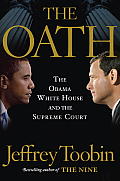
First, President Obama’s views on the Constitution and the federal judiciary are important, especially to those of us Indians who think it’s important to have an Indian or two on the federal bench. He’s not an activist. The Warren Court and the first half of the Burger Court were activist courts for the liberals, and the second half of the Burger Court, bits and pieces of the Rehnquist Court, and now the Roberts Courts were (are) activist courts for the conservatives. Toobin shows how Obama’s views of the Supreme Court and the federal judiciary differ from many conservative judges and justices (I’m not sure I buy Toobin’s all-in argument that the Chief Justice is an activist — much of this book was written before the ACA cases). True social change cannot come from on high, dictated by the courts, but instead through legislation and governing (i.e., winning elections). Sam Deloria’s been saying this for years. The real fights in the 1960 and 1970s over the very existence of federal Indian law have given way to the fights over how to govern. All too often, I suspect (and perceived from some of my clients), tribal leaders think the best way to govern is to demand more and more sovereignty from the courts. It probably doesn’t happen a lot, but it does happen.
Obama’s views on the constitution and the federal judiciary earn him a lot of heat from the left, who want him to do what the Reagan/Bush presidencies did — pack the judiciary with like-minded people. While I do hope he fills some judicial seats (and finally succeeds in getting some Indians in there) in the next term, Indian country better not expect a bunch of liberal acitivist judges. Even if he could get them through the Senate (he can’t, the filibuster will prevent that), he wouldn’t appoint them. Everyone lining up to put their name on a judicial appointments list of eligible American Indians should think about that before they talk to their Senators or whomever.
Second, and less important, more evidence about how the Supreme Court’s clerks think about Indian law. On page 54, Toobin repeats what everyone knows — the clerks 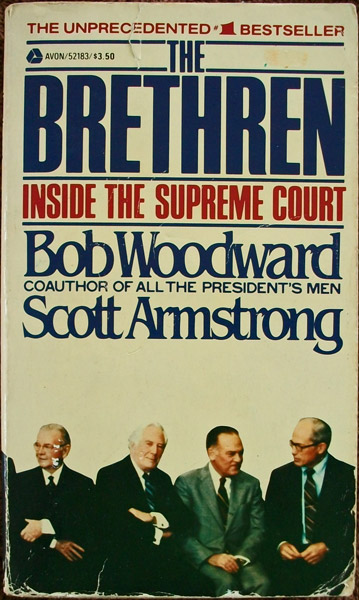 think of Indian law cases as “dogs.” I guess it’s an improvement from when Justice Brennan called the Indian cases “chickenshit” in The Brethren. This is another good opportunity to remind tribal leaders that the Court just isn’t interested in Indian issues. The Court largely believes its obligations in Indian affairs are to make sure that tribal governance doesn’t unduly affect nonmembers and to make sure Interior doesn’t go too far in supporting tribal interests.
Here. And the materials:
Docket: 12-71
Issue(s): (1) Whether the Ninth Circuit erred in creating a new, heightened preemption test under Article I, Section 4, Clause 1 of the U.S. Constitution (“the Elections Clause”) that is contrary to the Supreme Court’s authority and conflicts with other circuit court decisions; and (2) whether the Ninth Circuit erred in holding that under that test the National Voter Registration Act preempts an Arizona law that requests persons who are registering to vote to show evidence that they are eligible to vote.
Here is the petition in New 49’ers Inc. v. Karuk Tribe of Indians:
Questions presented:
Lower court materials here (case formerly captioned as Karuk Tribe of California v. USFS).
I don’t know the merits of this petition, but it probably should be denied because of the cheese ball (if not downright tacky) caption here.
Here:
Questions presented:
1) Whether the Ninth Circuit misconstrued and misunderstood requirements for finding a Federal Trust Responsibility to Indians. Is the pervasive role of the federal government based on the administration of the law as well as the letter of the law?2) Is there a conflict in the Circuits on this issue? Compare Brown v. United States, 86 F.3d 1554, 1560-61 (Fed. Cir. 1996) and other cases in the Federal Circuit with the decision of the Ninth Circuit in this case below (Marceau III, 540 F.3d 916, 928 (9th Cir. 2008).3) Is there a special burden on the federal government as it relates to Indian Housing in view of the Congressional Acts on Housing, the disadvantage to Indians caused by the Indian Allotment Act which prohibits Indians from holding title to their land, and the Indian Trust Responsibility of the federal government?4) Was the Ninth Circuit wrong in summarily dismissing Plaintiffs’ APA claim as time barred when the true state of affairs was not discovered until well within the statute of limitations? Was the Ninth Circuit wrong in not considering the federal Indian Trust Responsibility in connection with this decision?5) Was the Ninth Circuit wrong in holding that HUD had no duty to act on a specific request of the Housing Authority and the Blackfeet Tribe to “fix it?” Was the Ninth Circuit wrong in not considering the federal Indian Trust Responsibility in connection with this decision.
 Turtle Talk
You must be logged in to post a comment.