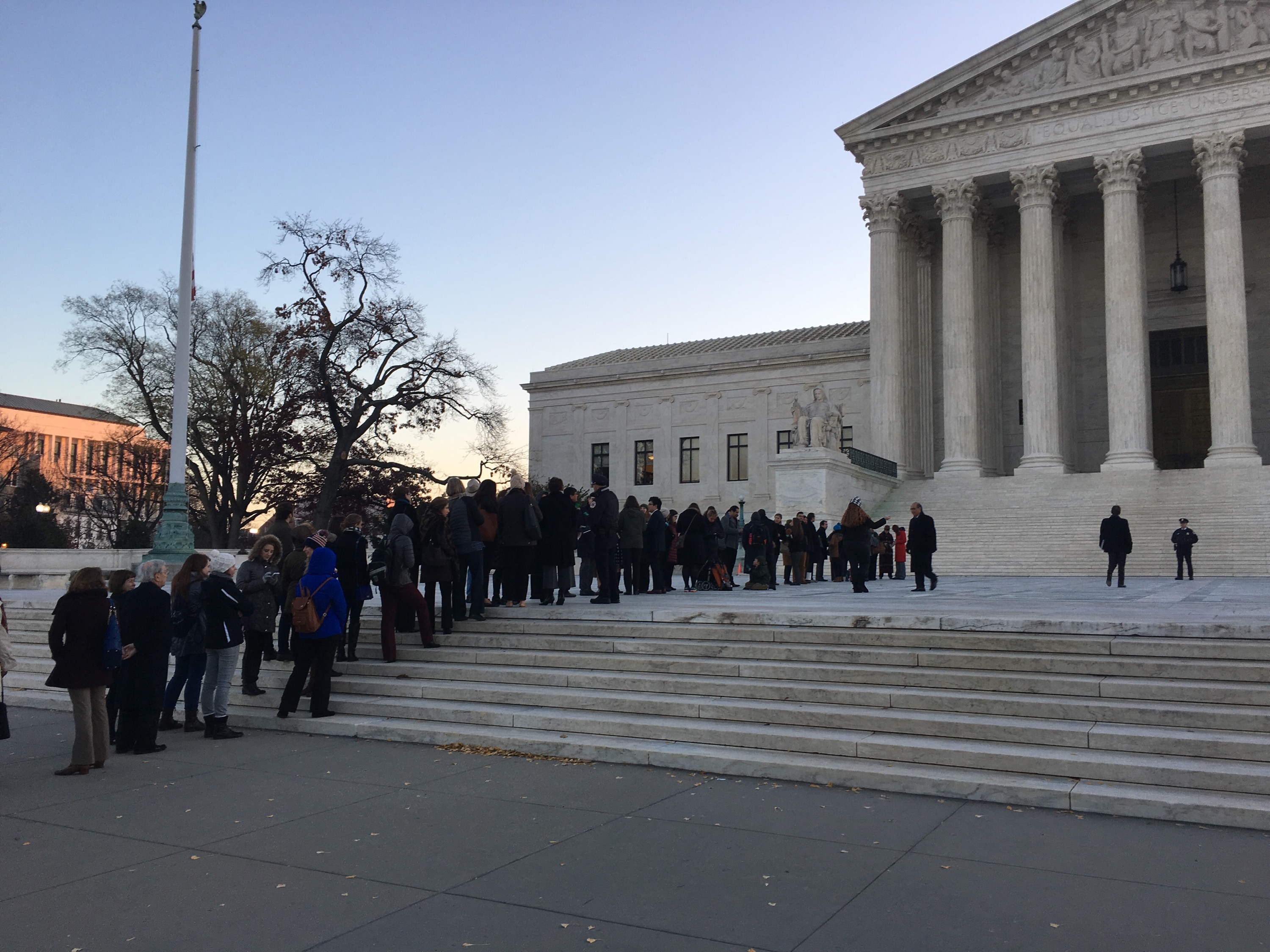
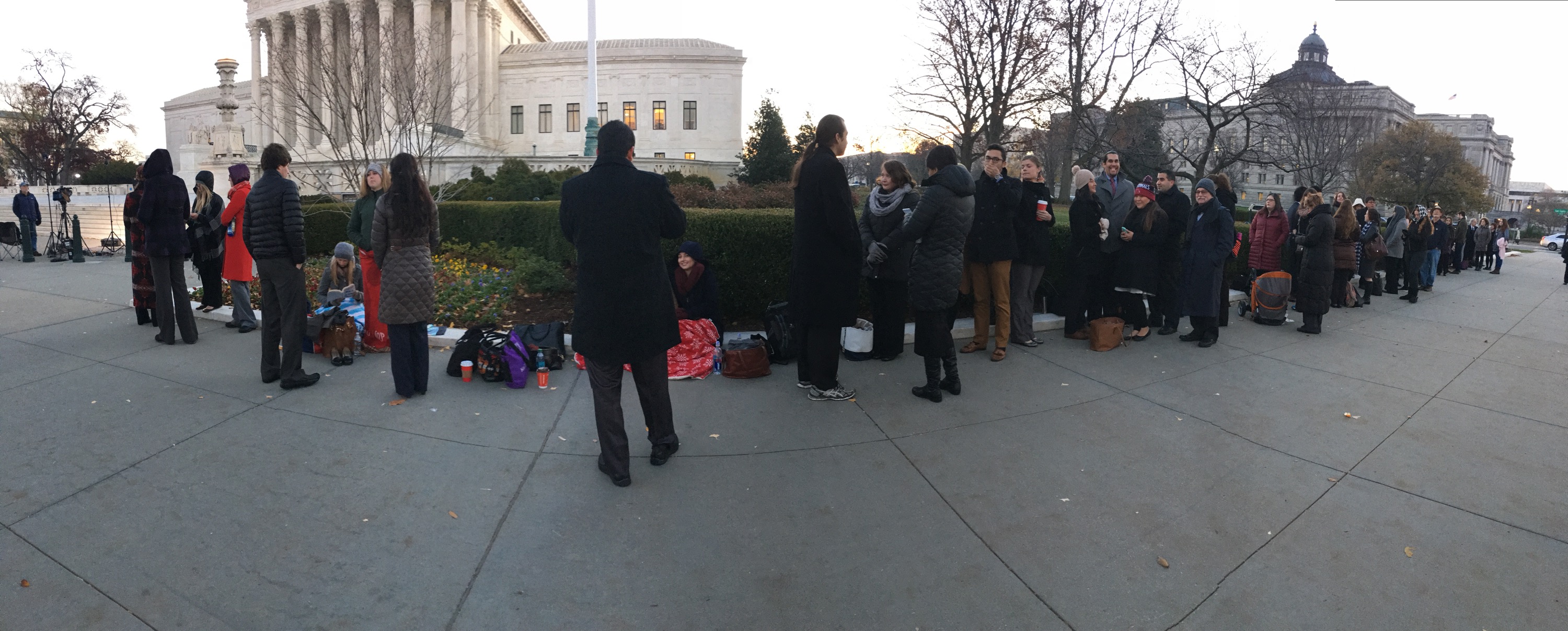
For the first time, I attended an argument live at the Supreme Court. I haven’t even read the transcript yet, and so my commentary is even more idiosyncratic than usual. But here goes.
On Judicial Discipline
If the Justices collectively had more judicial discipline, this would be one of their easiest cases, and likely would not be a candidate for certiorari review at all. But the oral argument, coupled with previous positions taken by certain Justices, suggests that there is a judicial discipline problem in federal Indian law.
First. Why this case is easy should have been adamantly clear when counsel for the tribe read the language of the business license in which Dollar General consented to the application of all manner of tribal laws, and agreed to abide by those laws. It doesn’t clear any clearer or express. Nor should it have to.
Second. Why there is a judicial discipline problem is evident where Justice Kennedy insisted from the outset that tribal sovereignty and Congression authority in relation to tribal sovereignty was in the table Monday, an issue not before the Court if the statement of questions presented is to be believed. Moreover, that Justices Scalia, Kennedy, and Thomas (who as usual did not speak but has written as such) suggested that the Supreme Court is in a position to second-guess or undo inherent tribal sovereign authority where Congress and the Executive branch have made considered judgments that tribes do have civil jurisdiction power on their own land is another expression of a lack of judicial discipline — the Supreme Court is not allowed to undo policy judgments expressed by the other branches because it disagrees with them. Finally, that Justices Kennedy, Scalia, Thomas (likely, as noted above), and possibly Alito were to disregard or significantly modify the Montana 1 analysis in the manner offered by counsel for Dollar General, it would mean that the Court’s statements favoring and assuming tribal jurisdiction in Mazurie, Colville, Montana itself, Merrion, Mescalero, National Farmers, Iowa Mutual, Strate, and Plains Commerce are to be ignored because those three or four Justices don’t agree with them now.
Fortunately, the Chief Justice is well known for guiding the Court in a manner that respects the function of an Article III court, evidenced by the decision in the Michigan v. Bay Mills Indian Community case a year ago.
Why Federal Constitutional Concerns Should Not Trouble the Court
The Chief Justice expressed concerns that nonmembers aren’t protected by federal constitutional law, an issue he mentioned in Plains Commerce Bank. He asked about a hypothetical scenario where a nonmember is held liable in tort by a tribal jury consisting entirely of tribal members. That’s a fair question.
First. Nonmembers like Dollar General have voluntarily entered Indian lands and engaged in commercial dealings that can subject them to tort and contract actions. Counsel for the tribe added that the tribe was asking the Court to acknowledge implied consent to tribal law for actions that the nonmember would “reasonably anticipate” given that context. Petitioners have lawyers, they knew what they were signing, and they knew that Indian tribes presumptively retain jurisdiction on Indian lands.
Second. Congress and the Court itself has already considered how to deal with the possibility that nonmembers should be protected in tribal court. Congress did so almost fifty years ago in the Indian Civil Rights Act, and the Court impliedly approved of that regime in all the cases mentioned above by assuming and presuming tribal jurisdiction over nonmembers, even in tort. There’s a very long history of tribal dispute resolution involving nonmembers going back to before the Founding. At times, Congress has definitely intervened, but the primary legislative judgment over these issues is contained in ICRA. In more recent decades, Congressional support for tribal court exercise of inherent power is unfailing. Both counsel for the tribe and the United States hit this point very effectively.
Third. Even assuming tribal laws, tribal court practices, and ICRA somehow aren’t enough, then there actually is a remedy in state or federal court for nonmembers in virtually all relevant situations — the default due process analysis employed by state and federal courts (called comity) when determining whether to enforce a foreign judgment. In most cases, and definitely here involving Dollar General, nonmember assets subject to tribal court judgments are off-reservation. Tribal court plaintiffs likely will be forced to secure money judgments in state or federal court in the jurisdiction where the nonmember holds those assets. Nonmembers complaining of due process irregularities in tribal court will get their day in state or federal court that way. If the nonmember is holding assets where the tribal court can reach, that is on reservation, then the nonmember has already consented in every meaningful way to tribal jurisdiction anyway.
All of those mechanisms ensure fundamental fairness, not to mention the impressive professionalization of tribal judiciaries in the last half century, exemplified by the Mississippi Choctaw judiciary.
Justice Kennedy’s repeated mantra that Indian tribes are, in his words, “nonconstitutional”, is the strongest evidence of a lack of judicial discipline (he and Justice Thomas I believe have used the phrase “extra constitutional” in opinions past). Mississippi Choctaw certainly isn’t “nonconstitutional” — its constitution and laws are all online. But I suspect that wasn’t his point. I suspect his point is that he doesn’t think the Court or Congress should allow Indian tribes to assert jurisdiction over nonmembers. But the United States or the Court cannot grant to Indian nations power the tribes already possess. Moreover, the United States disagrees with Justice Kennedy’s policy preference now and has presumed tribal jurisdiction since the Founding. Tribal self governance and sovereignty over Indian lands was a choice negotiated centuries ago by Indian nations and the US and that choice is simply not subject to Article III judicial review, especially 200+ years later and especially given that tribes have successfully complied with Congressional guidelines in this area.
How Far Tribes Have Come
That at least four and perhaps as many as seven Justices seemingly agreed (and even counsel for Dollar General conceded) that Indian courts are fully capable of guaranteeing fundamental fairness to all litigants shows that Indian nations have won the game of self governance. Millions of nonmembers have consented to at least some form of tribal jurisdiction in the last few decades, and no decision of the Supreme Court can stop that now. National legislation and all those Supreme Court decisions noted above have allowed Indian nations to craft legal systems that comport with fundamental fairness. And Indian nations are serious economic players. Even if the Court does what Dollar General asks of it, that decision will be quickly, and maybe even hilariously, irrelevant as soon as it is announced. Nonmembers and tribes will shrug, and go back to what they were doing before.
BTW, with deep respect to Justice O’Connor, the answer to Justice Breyer’s question is Braid of Feathers by Frank Pommersheim, Navajo Courts and Navajo Common Law by Ray Austin, and anything by Pat Sekaquaptewa or Sarah Deer or Mike Petoskey or Carole Goldberg or Wenona Singel or Kristen Carpenter or Angela Riley or Sarah Krakoff….
 Turtle Talk
You must be logged in to post a comment.