Troy Eid has published Beyond Dakota Access Pipeline: Energy Development and the
Imperative for Meaningful Tribal Consultation in the Denver University Law Review.
Troy Eid
“Dakota Access Changed Tribes’ Outlook on Energy Companies, Denver Attorney Says”
Here.
Eid: “Reasons to be optimistic about Alaska’s public safety crisis”
From the Alaska Dispatch.
An excerpt:
The report of the all-volunteer, bi-partisan commission, “A Roadmap for Making Native America Safer,” highlights Alaska’s violent crime epidemic. This includes a domestic violence rate 10 times the national average and sexual assault rates 12 times higher. It’s a crisis in the Bush, but also in Anchorage and other cities where families flee when village life becomes unbearable. Where criminals keep victimizing women and children because they were never held accountable for their crimes back home.
News Coverage of ILOC Chairman Troy Eid’s Speech at Tanana Chiefs Conference Convention
Harvard Law School Tribal Courts Conference Opening Speakers
Bob Anderson, the Oneida chair, welcoming everyone:
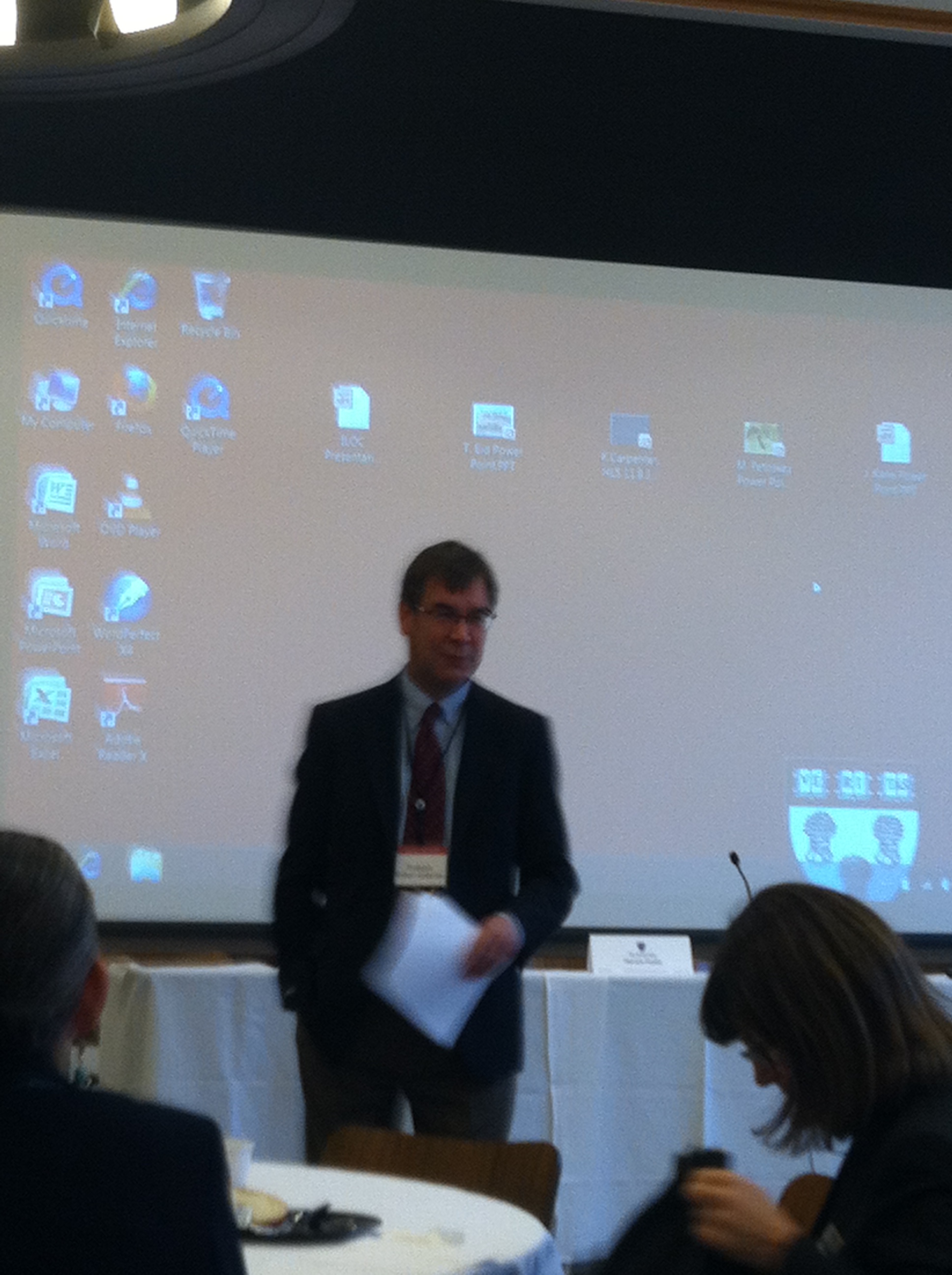
And opening keynote speaker Troy Eid, chair of the Indian Law and Order Commission:

Eid/Heffelfinger Letter to the House re: VAWA Reauthorization
Here:
WSJ on the Grand Canyon Controversy
Here. Or just go to Google news and enter “hualapai grand canyon”.
An excerpt:
The legal battle is testing the limits of business partnerships between tribes and non-Indians and is pitting tribal government leaders against one another. At stake are future profits of the lucrative Skywalk and at least $10 million in profits that the bridge has accumulated—now locked in an escrow account while the tribe fights with Mr. Jin.
“Our business is being destroyed by a handful of self-interested [tribal] government officials who are stealing our business and trampling our rights” said Troy Eid, a lawyer for Mr. Jin and former U.S. attorney for Colorado.
The tribe argues that it is Mr. Jin who “makes a promise, breaks it, then changes his story,” said Paul Charlton, the tribe’s lawyer and former U.S. attorney in Arizona.
Troy Eid and Thomas Heffelfinger Letter Supporting VAWA Reauthorization
Here:
ICT Article on Tribal Law and Order Commission
Here. An excerpt:
Federal justice on reservations is discriminatory and harsh, especially for youth, but recently enhanced tribal justice systems – a potential remedy – may not be easy to implement, says a noted advocate for Native rights.
The 2010 Tribal Law and Order Act (TLOA) initiated a nine-member Indian Law and Order Commission that includes Denver-based Troy Eid, a former U.S. Attorney, who has worked with a number of tribes. He and other Commission members have held informal discussions pending full Commission funding.
The Major Crimes Act of 1855, which covers Indian perpetrators and victims on tribal lands, is discriminatory in that it provides harsher penalties for Indian offenders than for non-Natives for essentially the same crimes, he said. It strikes hard at teenaged Indian offenders, about one-third of whom are sentenced as adults as compared to only one to two percent of non-Native youth.
The federal system the Native youth enter requires them to serve about 85 percent of their sentences and there is no parole, while in the state of Colorado, for example, the average proportion of sentences served is 32 percent. There are no juvenile diversion programs, alternative sentencing, restorative justice or other federal rehabilitative programs comparable to those at state level, he said.
Enter TLOA: It reauthorizes substance abuse programs and grants for summer youth programs, constructs youth shelters and detention and treatment centers, develops long-term plans for Indian juvenile detention and substance abuse treatment centers, and supports tribal juvenile delinquency prevention services and care of juvenile offenders.
The Tribal Youth Program would authorize $25 million annually through 2015 for juvenile delinquency prevention services and the care of juvenile offenders.
South Dakota Rep. Kevin Killer (D -Pine Ridge) hailed the potential of the youth programs for his district, where more than half of residents are under age 18, and his state, where nearly 40 percent of those in the juvenile justice system are Native youth. Restorative programs are probably among those the Oglala Lakota would be interested in pursuing, he said.
Other major TLOA provisions allow participating tribal courts to impose penalties of up to three years’ imprisonment compared to the existing one-year limit and require tribal courts to provide court-funded licensed defense attorneys for indigent defendants, with more stringent qualifications for both attorneys and judges.
TLOA offers some financial support for enhanced tribal justice systems – a cost, which Eid himself says is “substantial” and which the Congressional Budget Office estimated at about $1 billion over the first five years.
Troy Eid Added to Indian Law and Order Commission
Here is the news article.
Congrats to Troy!!!!
 Turtle Talk
You must be logged in to post a comment.