Jason Robison on Yellowstone River

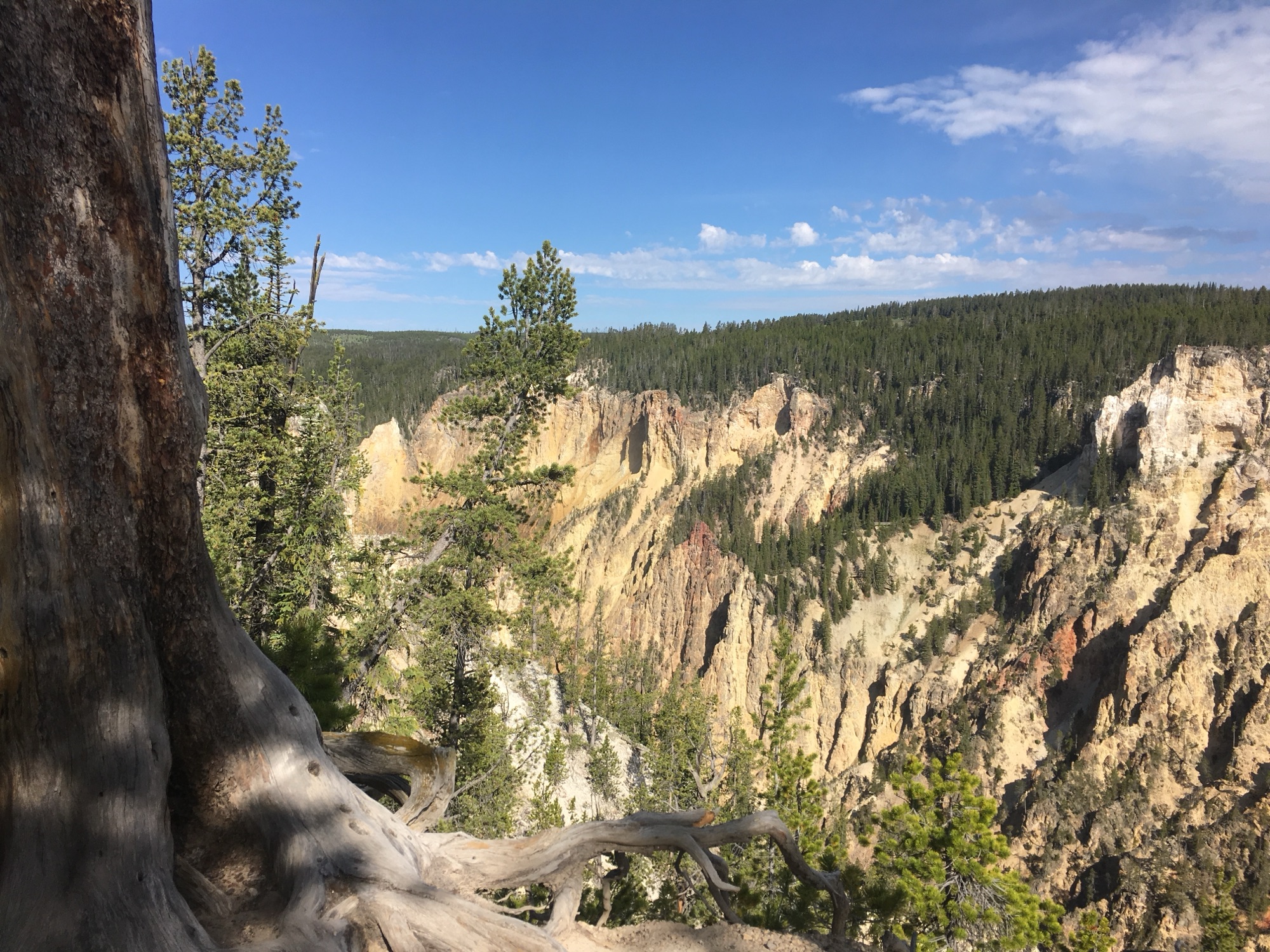
Jason Robison has posted “Equity Along the Yellowstone,” published in the University of Colorado Law Review, on SSRN.

Here is the abstract:

As one of three major rivers with headwaters in the sublime Greater Yellowstone Ecosystem, the Yellowstone and its tributaries are subject to an interstate compact (a.k.a. “domestic water treaty”) litigated from 2007 to 2018 in the U.S. Supreme Court in Montana v. Wyoming. Four tribal nations exist within the 71,000 square‑mile Yellowstone River Basin: the Crow, Eastern Shoshone, Northern Arapaho, and Northern Cheyenne. Yet, the Yellowstone River Compact, ratified in 1951, more than a decade before the self‑determination era of federal Indian policy began, neither affords these tribal sovereigns representation on the Yellowstone River Compact Commission nor clearly addresses the status of their water rights within (or outside) the compact’s apportionment. Such marginalization is systemic across Western water compacts. Devised as alternatives to original actions for equitable apportionment before the U.S. Supreme Court, this Article focuses on the Yellowstone River Compact and its stated purpose of “equitable division and apportionment,” reconsidering the meaning of “equity,” procedurally and substantively, from a present‑day perspective more than a half‑century into the self‑determination era. Equity is a pervasive and venerable norm for transboundary water law and policy contends the Article, and equity indeed should be realized along the Yellowstone in coming years, both by affording the basin tribes opportunities to be represented alongside their federal and state co‑sovereigns on the Yellowstone River Compact Commission, as well as by clarifying the status of and protecting the basin tribes’ water rights under the compact’s apportionment.
New Scholarship on Standing Rock, Treaties, and the Supremacy Clause

Carla F. Fredericks & Jesse D. Heibel have posted “Standing Rock, the Sioux Treaties, and the Limits of the Supremacy Clause,” forthcoming in the University of Colorado Law Review.

Here is the abstract:

The controversy surrounding the Dakota Access Pipeline (“DAPL”) has put the peaceful plains of North Dakota in the national and international spotlight, drawing thousands of people to the confluence of the Missouri and Cannonball Rivers outside of Standing Rock Sioux Reservation for prayer and peaceful protest in defense of the Sioux Tribes’ treaties, lands, cultural property, and waters. Spanning over 7 months, including the harsh North Dakota winter, the gathering was visited by indigenous leaders and communities from around the world and represents arguably the largest gathering of indigenous peoples in the United States in more than 100 years. 

At the center of the fight are the 1851 and 1868 Treaties entered into by the United States and the Great Sioux Nation. The pipeline route, which was chosen without input from the Tribes, runs directly through the heart of treaty lands secured to the Great Sioux Nation in the 1851 Treaty of Fort Laramie, lands to which the Sioux Tribes continue to have strong cultural, spiritual, and historical ties. Furthermore, the construction and operation of an oil pipeline directly upstream from their current reservations undoubtedly threatens the Tribes’ hunting and fishing rights expressly reserved in the 1868 Treaty and affirmed in numerous subsequent Acts of Congress, as well as their reserved water rights pursuant to the Winters Doctrine. 

But as the Tribe and their attorneys battled for injunctive relief in federal court, the Treaties were largely absent in the pleadings and court opinions. However, with the District Court’s ruling on June 14, 2017, it appears the Treaties now present the crux of the surviving argument, presenting problems for the Court in terms of both their applicability in the face of Congress’ plenary power over Indian tribes and diminished Trust responsibility as well as the appropriate remedy for the Tribes when and if these Treaty rights are violated. As such, the case provides an opportunity to analyze the truth and lies surrounding the Constitutional place of Indian Treaties in federal courts. 

Article VI, Clause 2 of the Constitution states “all Treaties made, or which shall be made, under the Authority of the United States, shall be the supreme Law of the Land; and the Judges in every State shall be bound thereby, any Thing in the Constitution or Laws of any state to the Contrary notwithstanding.” Known as the “Supremacy Clause,” this consitutional provision has serious implications in federal Indian law. Of particular importance is whether treaties made with Indian tribes can be considered the “supreme Law of the Land”. The current litigaiton and historic indigenous uprising against the Dakota Access Pipeline, the route of which lies within recognized tribal treaty boundaries, provides a contemporary example of the limitations of Supremacy Clause. This article attempts to place the Standing Rock and other Sioux Tribes’ legal battle against the Dakota Access pipeline against the history of Indian treaties and treaty rights for a contemporary examination of federal courts application of Indian treaty rights and the limits of the Supremacy Clause to ensure Indian treaties and treaty rights be respected as the “supreme law of the land.”

Kirsten Carlson’s “Congress and Indians”

Kirsten Matoy Carlson has published “Congress and Indians” (PDF) in the University of Colorado Law Review. Here is the abstract:

Contrary to popular narratives about courts protecting certain minority rights from majoritarian influences, Indian nations lose in the United States Supreme Court over 75  percent of the time. As a result, scholars, tribal leaders, and advocates have suggested that Congress, as opposed to the courts, may be more responsive to Indian interests and have turned to legislative strategies for pursuing and protecting tribal interests. Yet very little is known about the kinds of legislation Congress enacts relating to American Indians. This Article charts new territory in this understudied area and responds to recent calls for more empirical legal studies in the field of federal Indian law by enhancing understandings of the amount and kinds of Indian-related legislation enacted by Congress. Based on an analysis of 7799 Indian-related bills, the Article expounds a basic typology of the kinds of Indian-related legislation introduced and enacted by Congress from 1975 to 2013. The Article reports a higher enactment rate for Indian-related legislation as compared to the enactment rate of all bills introduced in Congress. This finding problematizes traditional narratives about the success of minority groups in the political process and has serious implications for how scholars and advocates understand congressional policymaking. Further, the Article shows that much of this legislation does not affect Indians alone. Rather, Congress generates a substantial amount of legislation for the general welfare of its citizens, including Indians and Indian nations. It suggests that federal Indian law scholarship, which has focused on legislation specific to Indian nations, has overlooked an important part of the development of federal Indian law and policy. Finally, the Article considers some possible explanations for the higher enactment rate of Indian-related legislation and the implications of this study for congressional policymaking, especially federal Indian law and policy. It confirms the need for further investigation into the different kinds of Indian-related legislation and the complex relationships between Congress and Indians.

This is a highly anticipated and highly recommended paper. Counsel for tribal interests could be well served to consider routing resources away from litigation toward legislative efforts. Consider for one example the Gun Lake Tribe, which secured a legislative fix to the problem created by the Supreme Court’s interpretation of the Quiet Title Act.

Student Note on Tribal Consultation and Sacred Sites

The University of Colorado Law Review has published “Meaningful Consultation with Tribal Governments: A Uniform Standard to Guarantee that Federal Agencies Properly Consider Their Concerns.” Here is the abstract:

The obligation that federal agencies consult with Indian tribes regarding undertakings that impact tribal interests is grounded in various statutes, implementing regulations, and Executive Order 13,175. Currently, tribes confront a variety of approaches to consultation because each agency develops its own standards for conducting consultation. Once an agency has reached a final decision on a proposed undertaking, any consultation that occurred to comply with Executive Order 13,175 will not be reviewed in court because Executive Order 13,175 and the consultation policy that an agency developed as required by Executive Order 13,175 do not provide tribal governments with a cause of action to challenge the adequacy of consultation. While courts will review tribal-agency consultation mandated by a federal statute or implementing regulation, judicial review tends to focus on the procedural aspects of consultation rather than examining the substantive decision made by an agency. Thus, Indian tribes are unable to challenge whether an agency’s final determination adequately considered the concerns that tribal governments raised during the consultative process. In recognition of the federal government’s general trust responsibility to protect the general welfare of tribes and the government-to-government relationship that exists with Indian tribes, Congress should enact a statute that creates a uniform standard for agency-tribal consultation. The statute will create one standard for conducting tribal consultation. Additionally, the consultation statute will permit judicial review of the procedural and substantive aspects of the interaction between tribal governments and federal agencies. To ensure agency decisions adequately consider tribal interests and concerns, agencies will have to overcome a rebuttable presumption that will be granted to tribal assertions raised during consultation. If an agency cannot produce sufficient evidence to support its determination, a federal court will have the power to overturn the decision. The statutory approach to agency-tribal consultation will ensure the federal government honors the unique relationship it has with Indian tribes.

Michalyn Steele Paper: “Comparative Institutional Competency and Sovereignty in Indian Affairs”

Michalyn Steele, a Seneca Nation member and soon to be one of only a handful of American Indian tribal member women to be a tenure system law professor (BYU), has published “Comparative Institutional Competency and Sovereignty in Indian Affairs” in the University of Colorado Law Review.

Here is the abstract:

While vigorous debate surrounds the proper scope and ambit of inherent tribal authority, there remains a critical antecedent question: whether Congress or the courts are ultimately best situated to define the contours of inherent tribal authority. In February 2013, Congress enacted controversial tribal jurisdiction provisions as part of the Violence Against Women Act reauthorization recognizing and affirming inherent tribal authority to prosecute all persons, including non-Indian offenders, for crimes of domestic violence in Indian country. This assertion by Congress of its authority to set the bounds of tribal inherent authority—beyond where the United States Supreme Court has held tribal inherent authority to reach—underscores the importance of addressing the question of which branch ought to resolve the issue. This Article proposes a framework drawn from Supreme Court jurisprudence in the field of state sovereignty to argue that when sensitive issues of sovereignty are at stake, the comparative competence of the respective branches must be considered. Unlike any preceding work in this field, this Article proposes a model based on the indicia of institutional competence to suggest that Congress, rather than the courts, is the branch best suited to determine the scope of inherent tribal sovereignty.

New Student Scholarship on the Patchak Decision

Anna O’Brien has published Misadventures in Indian Law: The Supreme Court’s Patchak Decision in the University of Colorado Law Review

Here is the abstract:

Ever since European colonization of the Americas began in the fifteenth century, there has been friction between the new arrivals and the native inhabitants. The United States has dealt with its “Indian problem” through assimilation, reservations, and eventually, self-determination for Indian tribes. But Indian tribes have never truly lost their sovereignty. Over the years, the United States has developed a vast body of Indian law to try and find a place for tribal sovereignty in a legal and political system created by the conquerors. In a recent case, the Supreme Court created a new rule that will allow non-Indians to sue the Federal Government to divest the government of title to land held in trust for Indian tribes. The decision has dealt a blow to tribal sovereignty by rendering the trust status of tribal lands uncertain. That uncertainty should be removed by legislative action.

Fletcher on NAICJA/Getches’ “Indian Courts and the Future”

I posted my University of Colorado Law Review symposium paper, “Indian Courts and Fundamental Fairness: Indian Courts and the Future Revisited.” Here is the abstract:

This paper comes out of the University of Colorado Law Review’s symposium issue honoring the late Dean David H. Getches. It begins with Dean Getches’ framework for analyzing Indian courts. I revisit Indian Courts and the Future, the 1978 report drafted by Dean Getches, and the historic context of the report. I compare the 1978 findings to the current state of Indian courts in America. The paper focuses on the ability of Indian courts to successfully guarantee fundamental fairness in the form of due process and the equal protection of the law for individuals under tribal government authority is uniquely tied to the legal infrastructure available to the courts. Congress tried to provide the basic framework in the Indian Civil Rights Act, and many of the most successful tribal justice systems have borrowed from ICRA or developed their own indigenous structure to guarantee due process and equal protection. I argue that ICRA is declining in importance as Indian tribes domesticate federal constitutional guarantees by adopting their own structures to guarantee fundamental fairness.

The Colorado Law Library recently archived Indian Courts and the Future and its two appendices  (here and here). Check them out. The Indian law portion of the symposium is here.

Student Comment in Colorado Law Review re: Tribal Law and Land Use

John C. Hoelle has published “Re-Evaluating Tribal Customs of Land Use Rights” in the University of Colorado Law Review.

Here is the abstract:

Indigenous peoples developed sustainable land tenure systems over countless generations, but these customary systems of rights are barely used by American Indian tribes today.  Would increasing formal recognition of these traditional customs be desirable for tribes in a modern context?  This Comment examines one traditional form of indigenous land tenure—the use right—and argues that those tribes that historically recognized use rights in land might benefit from increased reliance on these traditional customs.  The Comment argues that in the tribal context, use rights can potentially be just as economically efficient, if not more so, than the Anglo-American system of unqualified, absolute ownership in land.  The Comment also argues that tribal customs of land use rights may help preserve Indian cultural identity by cultivating core, non-economic values of tribal peoples.  The Comment concludes by addressing some of the challenges tribes will likely face in attempting to more broadly rely on their customs of land use rights in the new millennium, while also remarking on some current and important opportunities for the re-integration of tribal customs in tribal land law.

If we get a pdf, we’ll post the paper too.

Dean Kevin Washburn on the Next Great Generation of Indian Law Judges

Dean Kevin Washburn has posted his paper, “The Next Great Generation of American Indian Law Judges,” on SSRN. The paper is forthcoming from the University of Colorado Law Review.

Here is the abstract:

This short essay, which was the keynote address at a conference of the same title in 2010, argues that the best predictors of good Indian law judging are education, familiarity and experience. People who have been raised believing that there are only two orders of government in the United States are often surprised when they encounter the legal existence of Indian tribes. Most judges become more comfortable with notions of tribal sovereignty after prolonged exposure to cases discussing those principles. Thus, educating all Americans about Indian tribes in primary and secondary education would produce better policy-makers in general and better judges for Indian law cases.

“Resisting Federal Courts on Tribal Jurisdiction” Draft Paper Available

My paper, “Resisting Federal Courts on Tribal Jurisdiction,” forthcoming in the University of Colorado Law Review‘s 2010 symposium issue, is available for download on SSRN.

The abstract (if you want to call it that):

This paper is part of a call for a paradigm-shifting re-examination by Indian tribes and Indian people about their place in the American constitutional structure. For tribal advocates to prevail in the federal judiciary, they must force federal judges to rethink everything they know about federal Indian law. There are at least two ways to do this. Tribal advocates and American Indian law scholars must first establish a baseline of knowledge and information about the realities of Indian Country in the 21st century. This work is nascent and ongoing, if not burgeoning, but frankly is far from enough. A second strategy must be a strategy itself, litigation with an eye toward presenting the best cases before the federal judiciary and the Supreme Court. As any litigator knows, facts win a case, not general truths.

In this paper, I argue a theory of tribal consent and resistance to federal government control embodied in the Supreme Court’s assertion of federal court supervision of tribal court civil jurisdiction. The pure federal common law cause of action expounded by the Supreme Court in 1985’s National Farmers Union v. Crow Tribe is ripe for reexamination, if not outright reversal. Tribes never consented to such a broad-based assertion of federal court jurisdiction, although tribes could consent if asked. I propose methods by which tribes and their appellate counsel can resist such jurisdiction, and perhaps in the same breath establish a meaningful recognition by the Supreme Court of the legitimacy of tribal justice systems.

Comments appreciated, as this is still a draft.