Here:
“Enforcement of Tribal Protection Orders in California”
Here:
Here:
Meant to post this sooner, but the CTAS applications are up and due February 28th. These grants provide can support to tribal courts and tribal justice systems:
In Fiscal Year 2010, the U.S. Department of Justice (DOJ) launched the Coordinated Tribal Assistance Solicitation (CTAS) initiative, which encompassed most of the Department’s available Tribal government-specific grant programs. Through CTAS the Department has awarded over 1,600 grants totaling more than $722 million to hundreds of American Indian and Alaska Native communities. The Tribes are using these funds to enhance law enforcement, bolster justice systems, prevent and control delinquency, strengthen the juvenile justice system, serve sexual assault and elder victims, and support other efforts to combat crime.
Agenda and registration here.
August 24-26, 2016
Harrah’s Cherokee Casino Eastern Band of the Cherokee Nation Cherokee, North CarolinaThe BIA Office of Justice Services and the Eastern Band of the Cherokee Nation present a free training for tribal judges, prosecutors, public defenders and tribal leaders in trial advocacy skills and the Violence Against Women Act Reauthorization Special Domestic Violence Jurisdiction over Non-Indians.
Presenters Include:
Jill Rose, United States Attorney, Western District of North Carolina
Hon. Steve Aycock, National Council of Juvenile and Family Court Judges
John Pritchard, Assistant United States Attorney and Tribal Liaison, Western District of North Carolina
Leslie Hagan, National Indian Country Training Coordinator for the JusticeThe Training is free of charge, but travel and lodging are at the participant’s expense. Rooms have been reserved at the Harrah’s Cherokee Casino Resort at a conference rate of $129 a night. Call 1-866-503-3904 to reserve rooms and use the conference code S08VAWA.
Please email and return the attached registration form to Tessa Turnbow at tessat@whitenergroup.biz
Link to full press release here .
Attorney General Craig Richards published a formal Attorney General Opinion today regarding whether state and local law enforcement can enforce a tribal protection order that has not been registered with the court system. The opinion had been requested by Commissioner Folger, Department of Public Safety in order to provide clarity to the State Troopers in carrying out their duties.
This Opinion concludes that a tribal protection order does not need to be registered with the court system before a State trooper or other officer can enforce it. The protection order will be immediately enforceable if it meets the criteria outlined in the federal Violence Against Women Act (VAWA).
“This Opinion provides clear direction to officers on the ground as well as the victims they seek to protect,” said Attorney General Richards. “There should now be no doubt that these protection orders must be enforced.
Opinion available here Opinion Alaska Tribal Protection Orders
News coverage here .
Here.
This webinar will focus on ways for law school clinics to provide assistance to tribes seeking to exercise the Violence Against Women Act (VAWA) 2013 enhanced jurisdiction. Indian tribes now have the general authority to implement criminal jurisdiction over non-Indians who violate protective orders or commit domestic violence or dating violence against Indian victims on tribal lands. Tribes wishing to exercise this Special Domestic Violence Criminal Jurisdiction over non-Indians (SDVCJ) must provide certain rights to criminal defendants and meet certain legal requirements.
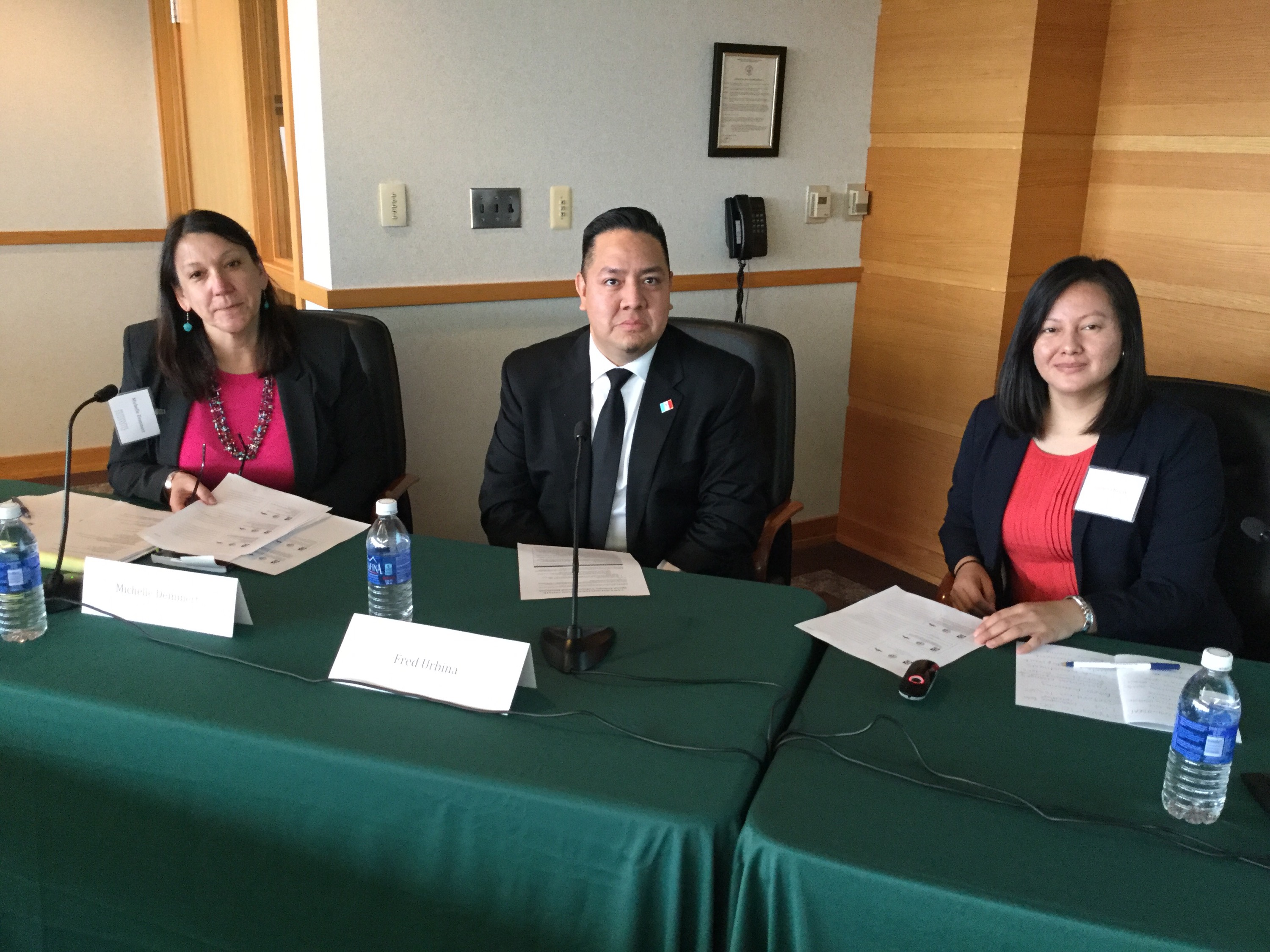
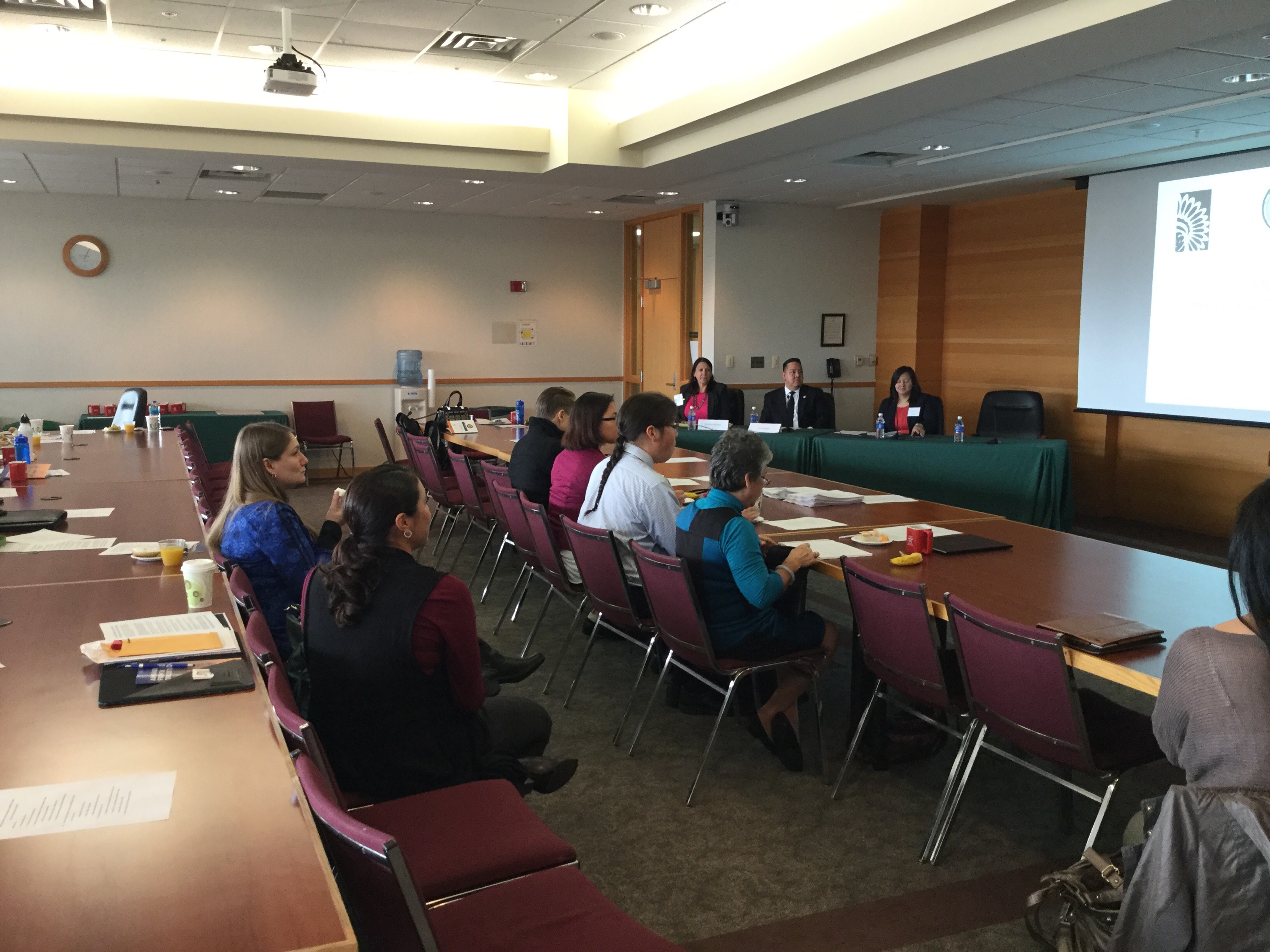
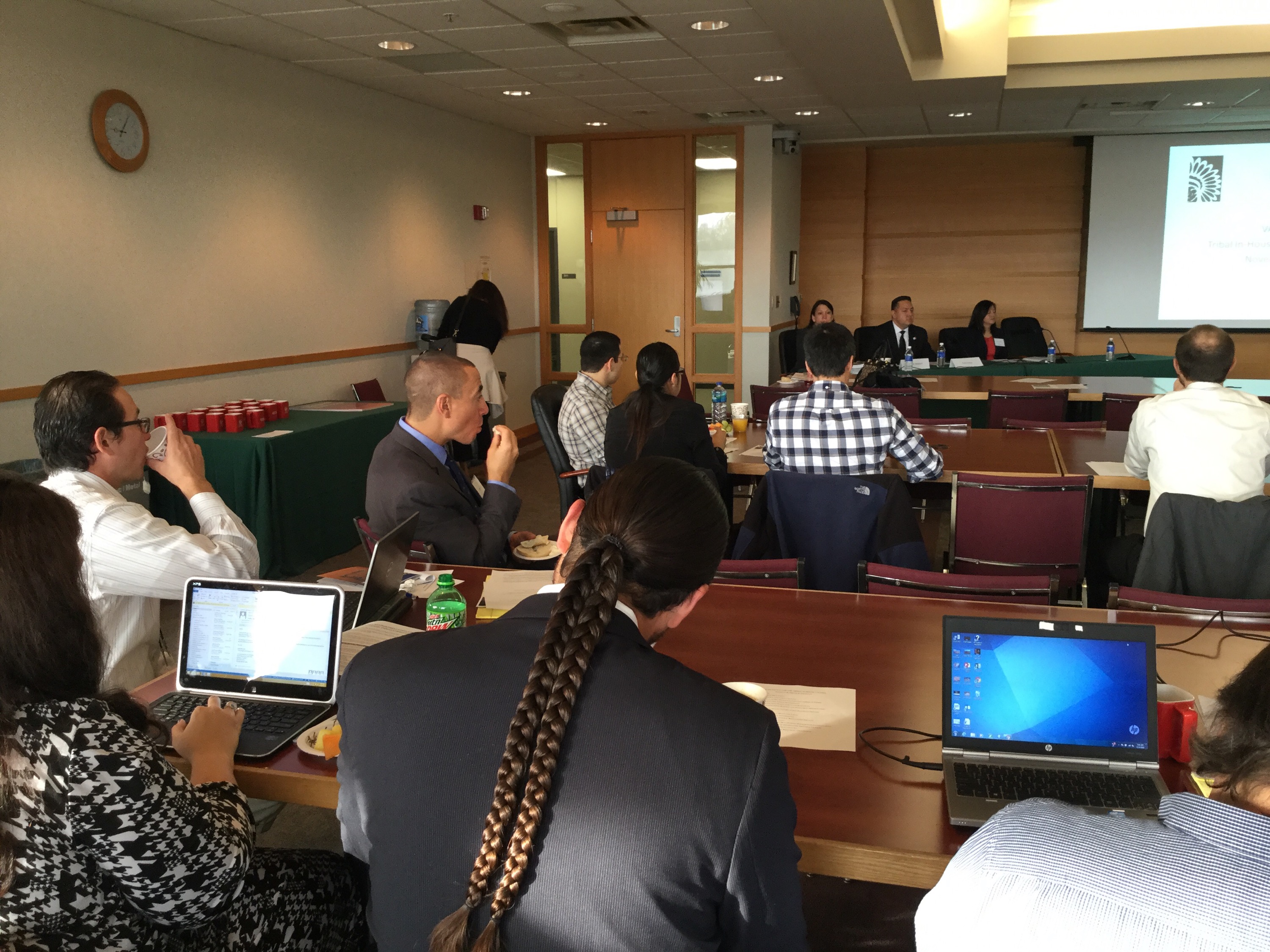
Here’s a picture from Seattle University School of Law’s very inspiring VAWA Panel tonight. Left to right, the panelists were Molly Cohan, Sharon Jones Hayden, Alfred Urbina, and Ye-Ting Woo. Most of the handouts are here.
Among the many things I learned is that the one of the Pascua Yaqui Tribe’s first VAWA cases involved a same-sex couple. It was originally thought that this case might turn out to be the first tribal VAWA case to go through the federal habeas process and to eventually reach the Supreme Court, but the jury was uncertain as to whether the victim and defendant were in an intimate relationship as required by VAWA and so the defendant was acquitted. Given that the defendant and victim lived together and had a sexual relationship, this skepticism is troubling and, sadly, may reflect unconscious homophobia. There are still many positives, however. Despite the acquittal, the case helps shed light on a hidden problem–same-sex domestic violence is still a little-known and rarely mentioned phenomenon. Kudos to Pascua Yaqui for bringing the case. The prosecutorial response on its own was undoubtedly meaningful to the victim. And, given the jury’s acquittal, the case stands as a strong example of a tribal jury’s impartial treatment of a non-member.
There was also an important discussion of the holes in VAWA, including the lack of tribes’ ability under VAWA to prosecute crimes against children as well as stranger rape. Many of the more serious recent domestic violence crimes committed by nonmembers at both Tulalip and Pascua Yaqui involved crimes against children, but tribes cannot prosecute crimes against children under VAWA, so they must depend on the federal government (or the state in Public Law states) for prosecution of these crimes.
Full article here.
Excerpts from the article:
The Cherokee Tribal Court did something on Thursday, April 2 that no other court in Indian Country has ever done before – open a CVB (Central Violation Bureau) session. In a special event at the EBCI Justice Center, the Tribal Court celebrated the momentous occasion with various state and federal judicial officials.
CVB Court handles small, petty misdemeanor offenses that occur on federal lands.
“In the big scheme of things, where a District Court or a Magistrate’s Court is held, might not seem that important,” said Cherokee Supreme Court Chief Justice Bill Boyum. “And, unless you know what’s going on in Indian Country, it’s really not that important, but given what is going on in Indian Country, it is of the ultimate importance.”
Boyum added, “Given the fact that the Violence Against Women Act (VAWA) now allows Tribes the right to prosecute non-Indians and has opened the door for full sovereign independence for tribal courts, it means that we would be able to prosecute all folks on our reservation at some point in time. VAWA has opened that door, and that means that we’re really going to have to work with federal courts.”
On the importance of the Cherokee Tribal Court hosting the CVB Court, Boyum stated, “There are no rules. There are no laws. There are no regulations. There is no case law. There are not even any policies or thought processes on how this kind of thing could happen because it’s never happened before. On the bright side, there are no rules, policies or regulations to say it can’t happen.”
Last month, Principal Chief Michell Hicks and Chief U.S. District Court Judge Frank Whitney signed a Memorandum of Understanding outlining the details of the agreement whereby the Tribal Court would host CVB Court.
Boyum said the relationships the Eastern Band of Cherokee Indians has with the State of North Carolina and the federal government helped make this a reality. “In the rest of Indian Country, there is often an antagonist relationship between the state and the Tribe and the federal government. The system that is in place requires the exact opposite of that. It requires all three of them to work together.”
“In the future, we hope to hold some U.S. District Courts here; at least the motions and sentencing and maybe some jury trials,” said Boyum who added the Tribal Court has been in discussions with state court officials and may share space with the state courts in the future as well.
Now it’s off to the President for his signature or veto:
Senator Lisa Murkowski and Congressman Don Young today teamed up to make sure that Section 910 of the Violence Against Women Act was repealed. Through numerous conversations with their House and Senate colleagues, the two Alaska lawmakers succeeded in having the provision removed from the law.
In the final days of the 113th Congress, Representative Young worked directly with House leadership – including several interactions with Speaker John Boehner, Majority Leader Kevin McCarthy, and other senior House members – to secure expedited passage of the bill in one of the House’s final actions prior to adjourning. Meanwhile, Senator Murkowski worked with her Senate colleagues to build support for the action, including a call across Capitol Hill before the vote to Majority Leader McCarthy, encouraging his consent for the move that officially took place after tonight’s final budget vote.
“Alaska tribes asked me to repeal Section 910 of VAWA, and I thank the Alaska Delegation for working with me on their behalf,” said Murkowski. “But it doesn’t stop today; in the new Congress beginning next month, it will be imperative to ensure that our tribal courts in Alaska receive the funding they need to deliver the justice and protection the need and deserve – not only for training and capacity development, but also for operations.”
“Today I am pleased that the House of Representatives passed S. 1474, a bill which repeals Section 910 of the Violence Against Women Reauthorization Act of 2013 (VAWA). In the many conversations I have had with Alaska Native leaders and families since the reauthorization of VAWA last year, I heard a consistent, clear, and powerful message: that Section 910 was an error and must be repealed,” said Congressman Young. “I was proud to work with Lisa in these final moments to ensure that one of the final acts of the House of Representatives in the 113th Congress was to empower Alaska’s tribes and uplift Alaska Native women.”
Link to press release here.
You must be logged in to post a comment.