Here are the materials in GTEC Industries Inc. v. Guzman (D.D.C.):
Here are the materials in GTEC Industries Inc. v. Guzman (D.D.C.):
Obit here. PLSI Class of 1969.
Alan Parker was a big deal — his footprint on Indian affairs is massive. Before I get into his interesting career, I’m going to paste here the nice profile UCLA did of him last year:
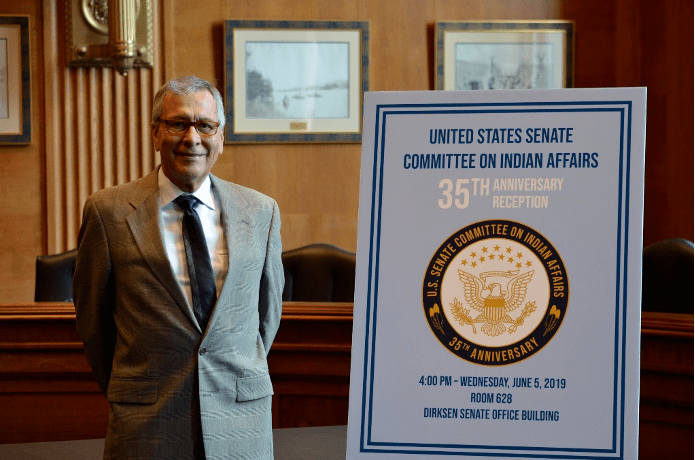
Continue readingA citizen of the Chippewa Cree Tribal Nation, Alan R. Parker attended St Thomas Seminary where he earned a B.A. in Classical Philosophy in 1965. He subsequently attended UCLA School of Law, in Los Angeles, California, where he received a Juris Doctor degree in 1972. Prior to attending Law School, he served as 1st Lt. in the Signal Corp in the US Army from 1965 1968. He was awarded a Bronze Star medal for Out-standing Leadership Service under combat conditions in Vietnam.
This means that the United States is potentially liable under the Federal Tort Claims Act. Let the settlement negotiations proceed.
Opinion in L.B. v. United States:
Argued by April Youpee-Roll in her first argument. She kicked some serious onze in this one.
Briefs:
Here is the opinion in Lac Courte Oreilles Band of Lake Superior Chippewa Indians v. Evers:
Briefs and lower court materials here.

Here are the materials in Rabang v. Gilliland:
Fletcher and Singel’s paper, “Lawyering the Indian Child Welfare Act,” has been published in the Michigan Law Review. We’re honored to be part of a symposium on civil rights lawyering!
Our abstract:
This Article describes how the statutory structure of child welfare laws enables lawyers and courts to exploit deep-seated stereotypes about American Indian people rooted in systemic racism to undermine the enforcement of the rights of Indian families and tribes. Even when Indian custodians and tribes are able to protect their rights in court, their adversaries use those same advantages on appeal to attack the constitutional validity of the law. The primary goal of this Article is to help expose those structural issues and the ethically troublesome practices of adoption attorneys as the most important Indian Child Welfare Act (ICWA) case in history, Brackeen v. Haaland, reaches the Supreme Court.
Here are the updated materials in Coyote Band of Pomo Indians v. Findleton (N.D. Cal.):
Prior post here.


 Turtle Talk
You must be logged in to post a comment.