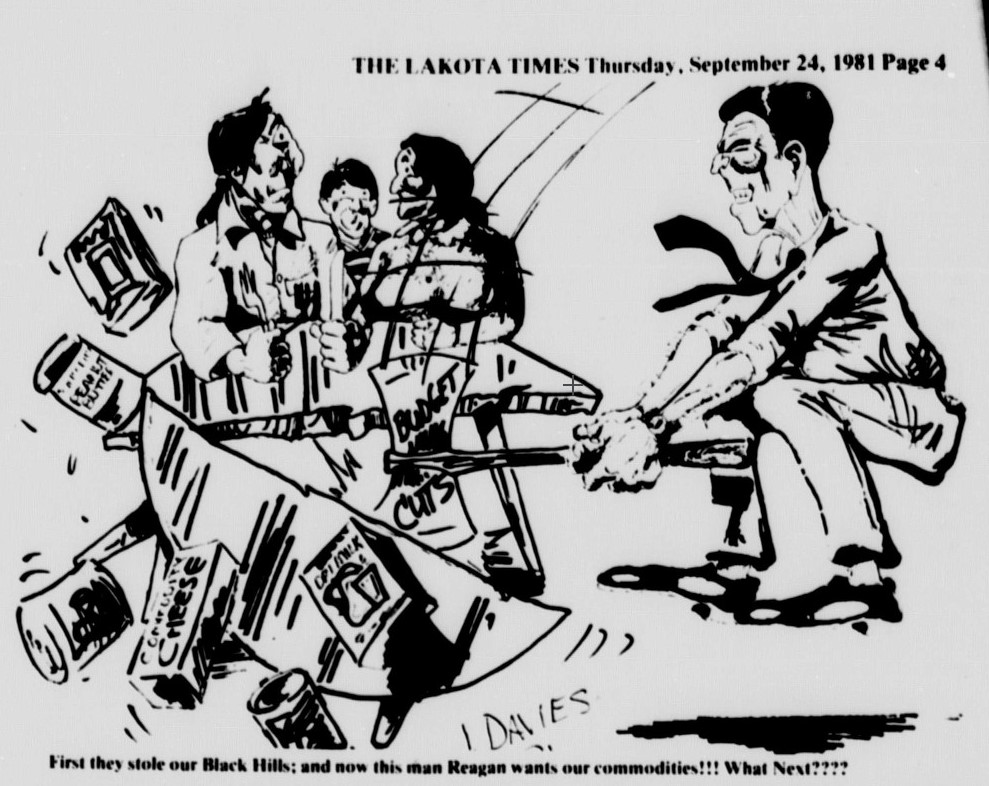
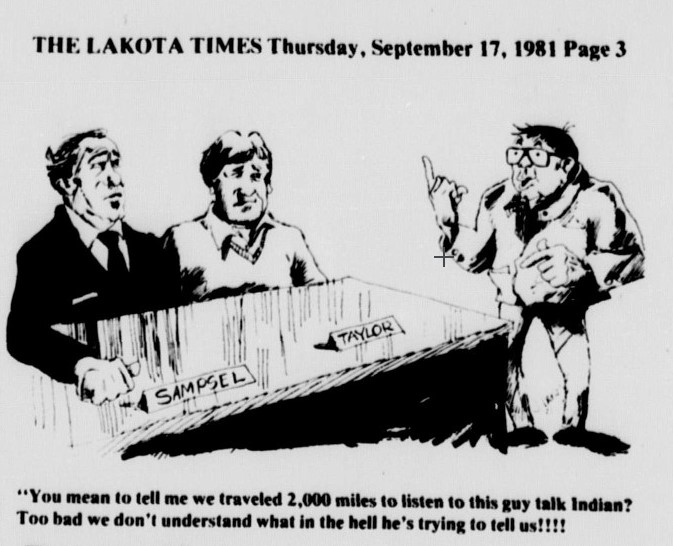
Here:
States Amicus Brief Supporting South Dakota
Lower court materials here.

NatGeo: “The heartbreaking, controversial history of Mount Rushmore“
Here are the materials in Malachowski v. United States (W.D. Okla.):
Leelanau Ticker: “Leading The Way In Vaccinations, Grand Traverse Band Still Aims Higher“
Grist: “Montana tribe finalizes historic $1.9 billion water rights settlement“
WaPo: “Housing in Alaska can’t survive climate change. This group is trying a new model.”
Cherokee Phoenix: “Oklahoma organizations, foster families react to developments in Supreme Court’s review of Indian Child Welfare Act“
NYTs: “She Bought Her Dream Home. Then a ‘Sovereign Citizen’ Changed the Locks.”
AP: “Tribe wins major step toward resuming whaling off Washington“
Here:
Alaska Native Corporation Endowment Models
Robert Snigaroff & Craig Richards
PDF
New settlement trust provisions in the Tax Cuts and Jobs Act of 2017 have significant implications for Alaska Native Corporation (ANC) business longevity and the appropriateness of an operating business model given ANC goals as stated in their missions. The Alaska Native Claims Settlement Act (ANCSA) authorized the creation of for-profit corporations for the benefit of Alaska Native shareholders. But for Alaska Natives, cultural continuation was and continues to be a desired goal. Considering the typical life span of U.S. corporations and the inevitability of eventual failure, the for-profit corporate model is inconsistent with aspects of the ANC mission. Settlement trust amendments to ANCSA facilitate ANC cultural continuation goals solving the problem of business viability risk. We make a normative case that ANCs should consider increasing endowment business activity. We also discuss the Alaska Permanent Fund and lessons that those structuring settlement trusts might learn from literature on sovereign wealth funds and endowments.
Alaska’s Tribal Trust Lands: A Forgotten History
Kyle E. Scherer
PDF
Since the enactment of the Alaska Native Claims Settlement Act in 1971, there has been significant debate over whether the Secretary of the Interior should accept land in trust for the benefit of federally recognized tribes in Alaska. A number of legal opinions have considered the issue and have reached starkly different conclusions. In 2017, the United States accepted in trust a small parcel of land in Craig, Alaska. This affirmative decision drew strong reactions from both sides of the argument. Notably absent from the conversation, however, was any mention or discussion of Alaska’s existing trust parcels. Hidden in plain sight, their stories reflect the complicated history of federal Indian policy in Alaska, and inform the debate over the consequences of any future acquisitions.
Selective Justice: A Crisis of Missing and Murdered Alaska Native Women
Megan Mallonee
PDF
Across the country, Indigenous women are murdered more than any other population and go missing at disproportionate rates. This crisis of missing and murdered Indigenous women is amplified in Alaska, where the vast landscape, a confusing jurisdictional scheme, and a history of systemic racism all create significant barriers to justice for Alaska Native women. This Note examines the roots of the crisis and calls for a holistic response that acknowledges the role of colonialism, Indigenous genocide, and governmental failures. While this Note focuses on the epidemic of violence against Alaska Native women in particular, it seeks to provide solutions that will increase the visibility and protection of Indigenous women throughout North America.
“If a person is murdered in the village, you’ll be lucky if someone comes in three, four days to work the murder site and gather what needs to be gathered so you can figure out a case later . . . but if you shoot a moose out of season, you’re going to get two brownshirts there that day.”
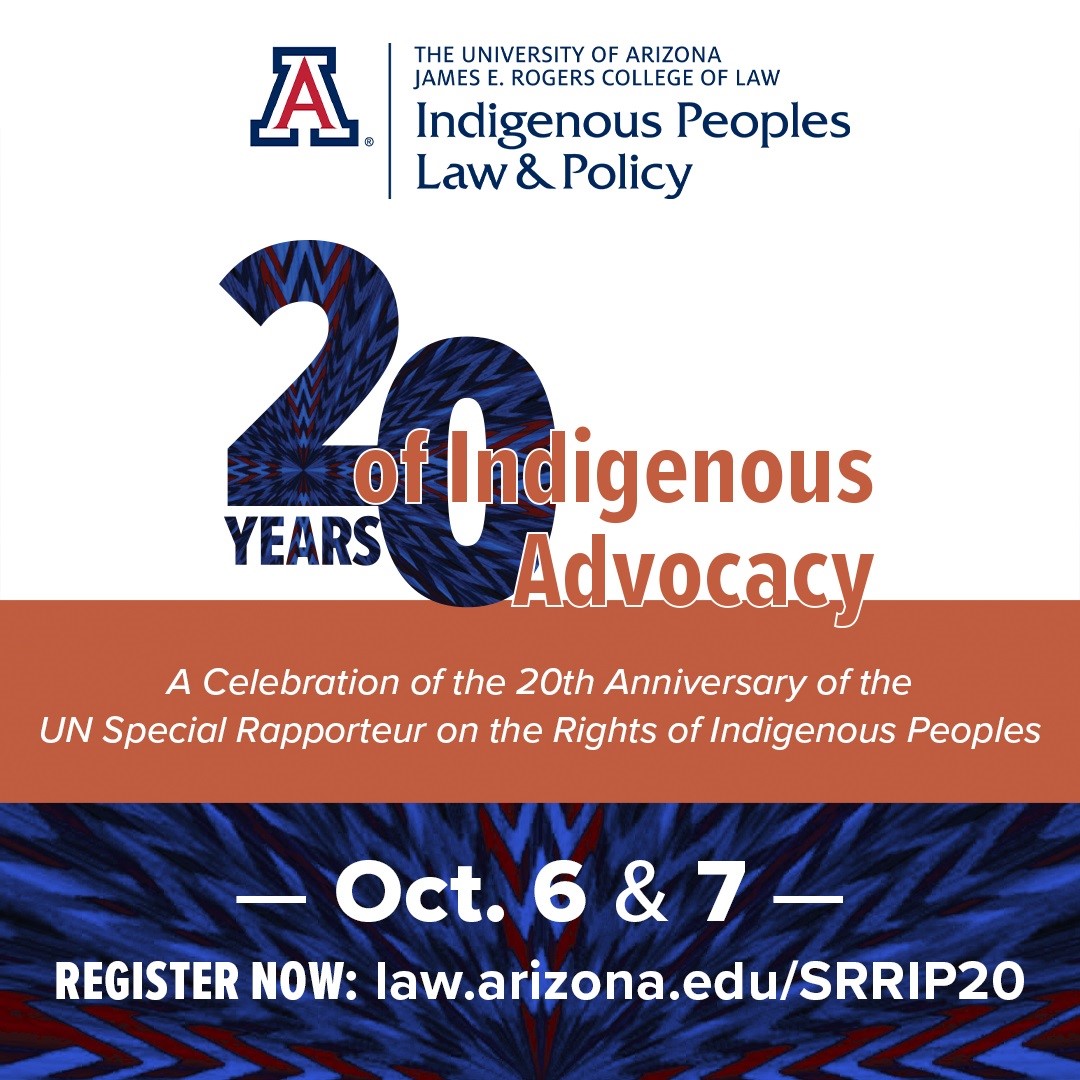
U of A symposium on the 20th anniversary of the UN Special Rapporteur.
UC Davis Law Review symposium — Ann Tweedy will speak on the racialized history of self-defense with respect to tribes.
Tara Houska at Vanderbilt
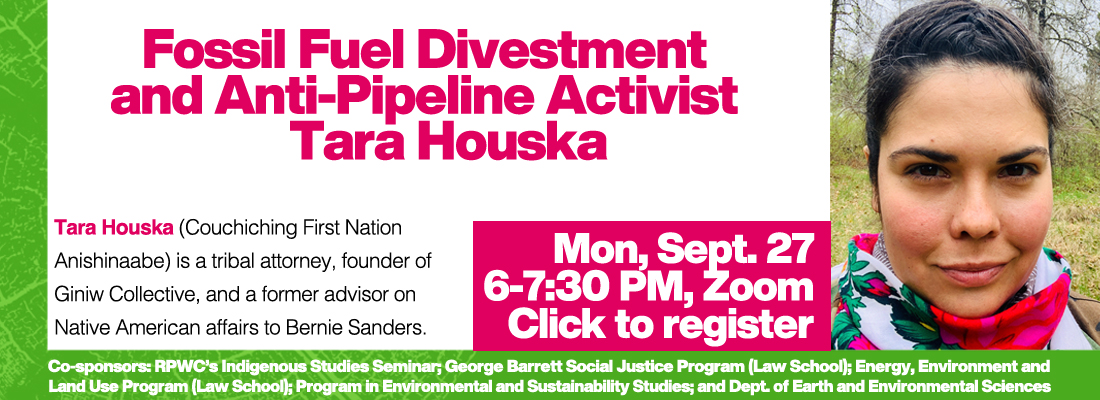
Here.
Abstract:
There are less than three dozen American Indians who are enrolled tribal members who are tenure system law professors in American law schools. We study this group, as well as a few known tribal members who have either retired or left the academy for loftier pursuits, for purposes of identifying the profiles of tribally enrolled American Indians on the tenure track in American law schools. The object of this short paper is to advise American Indian law students and others on how to become an American Indian law professor. This paper is an update from a 2012 paper: https://papers.ssrn.com/sol3/papers.cfm?abstract_id=2058557.
Prepared in anticipation of the “Transforming the Legal Academy” conference.

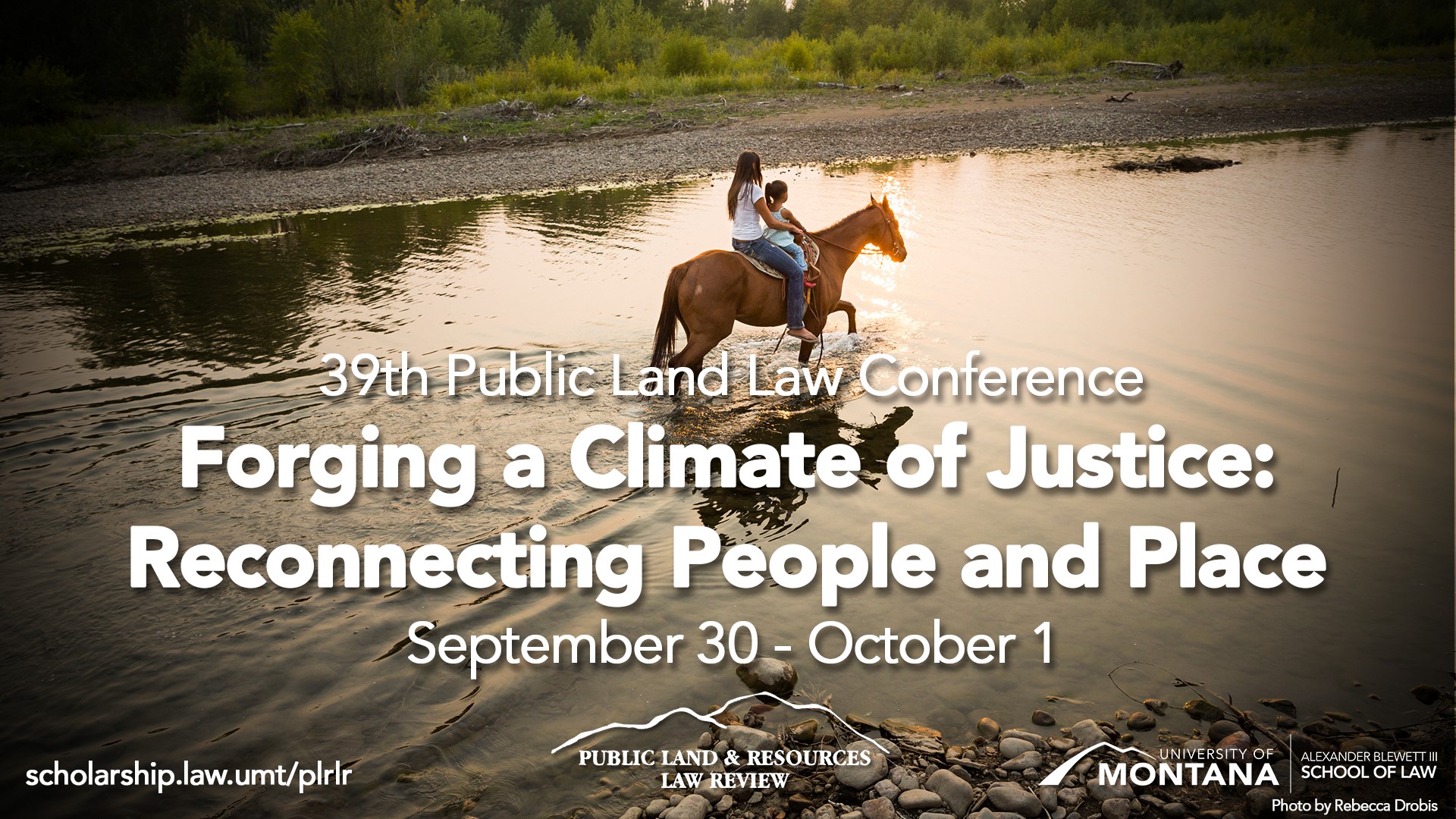
The full agenda and registration link is available here, and below is a teaser about the panel themes and some of the speakers’ recent work. It is approved by Montana for CLE credit and credits may be available for other states too. Registration is free for those not seeking CLE credit.
Opening Night – Sept 30
Offering the opening poetry reading on Thursday is Heather Cahoon, PhD, an award-winning poet and Assistant Professor of Native American Studies & Director of the American Indian Governance & Policy Institute at the University of Montana. Take a listen to this incredible Montana Public Radio interview with Cahoon and then peruse her work, Horsefly Dress: Poems.
Danna Jackson will deliver the opening keynote address. She is Senior Counselor to the Director at the U.S. Department of Interior Bureau of Land Management. Before receiving her appointment to the Department of Interior, Danna served as chief legal counsel to the State of Montana’s Department of Natural Resources and Conservation – the agency that manages Montana’s trust lands, waters, state forests, and conservation initiatives. She has spent the majority of her career in the public sector including as a federal prosecutor and a Hill staffer.
Day 2 Conference
Knowledge: Centering Tribes in Resource Management
Life: Defending the Right to Water
Dr. Len Necefer, Founder of Natives Outdoors, will present the Midday Address on Friday. If you are a backcountry winter recreationist, you won’t want to miss Episode 17 of The Fifty Project, in which Dr. Necefer skins up Mt. Tukuhnikivatz with Cody Townsend to teach us about the cultural significance of this mountain to the Navajo Nation.
Voices: Amplifying the Next Generation of Environmental Advocacy in Climate Change
Last, but not least: We’re very excited that Supaman, an award-winning Apsáalooke hip hop artist and fancy dancer, will be offering the Closing Address & Performance of the Conference. He has won awards such as the North American Indigenous Image Award for best hip hop, a Native American Music Award for best gospel, the Aboriginal Peoples Music Choice Awards for best video, and an MTV Video Music Award for Best Fight Against the System. If you’re not familiar with Supaman’s music and performance, check it out, and watch this interview on spreading Good Medicine!
 Turtle Talk
You must be logged in to post a comment.