Here.
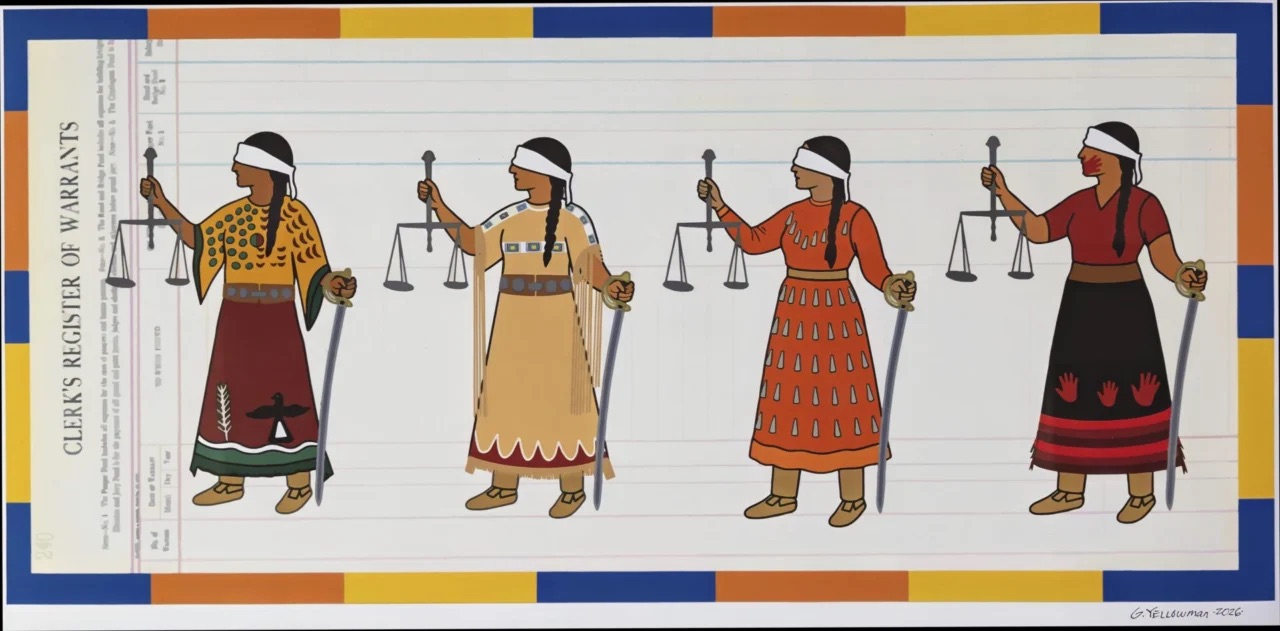
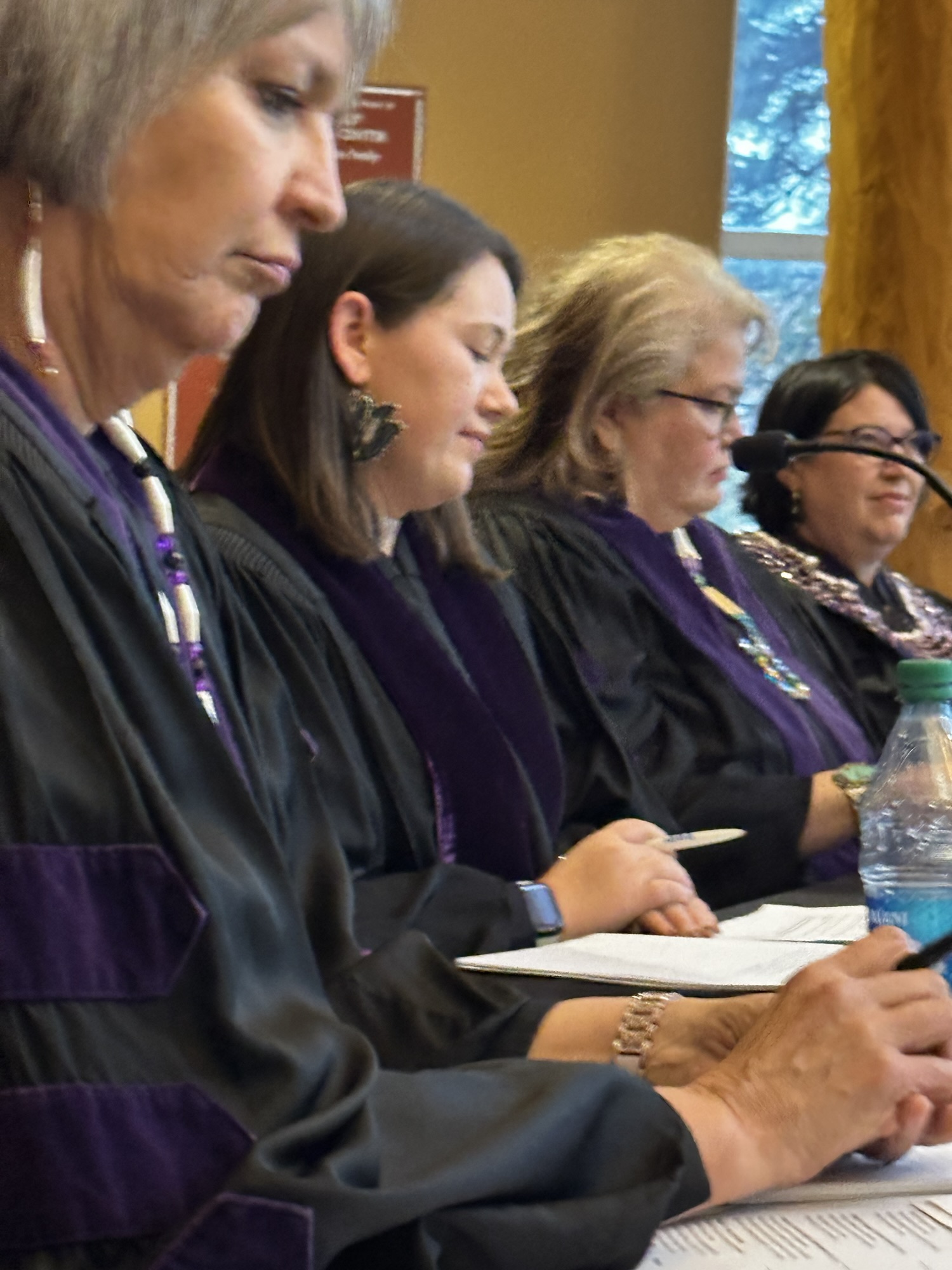
“Inter-Tribal Ladies of Justice”
By Gordon Yellowman
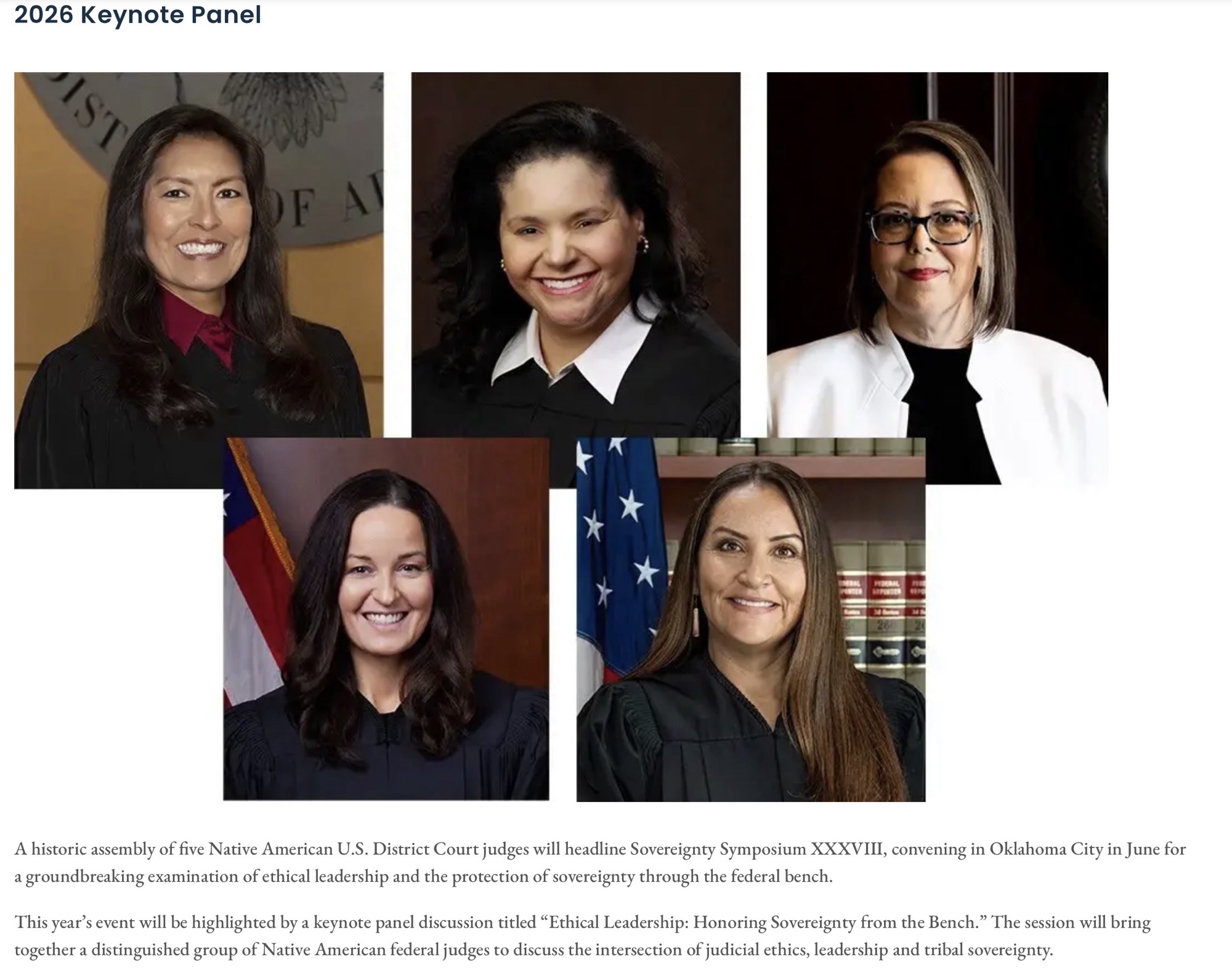
Here are the materials in Becker v. Ute Indian Tribe (D. Utah):

Here.
Select materials:



Intermediate-level Tribal Code Drafting Workshop
Dates and Times:
Thursday, March 26, 2026 | 9 a.m. to 5 p.m.
Friday, March 27, 2026 | 9 a.m. to 4 p.m.
Location:
William H. Gates Hall, Room 207
4293 Memorial Way NE
Seattle, WA 98195
Registration:
Registration is $275 per person and includes CLE credit reporting and continental breakfast each morning at 8:30 a.m.
Registration link. https://cvent.me/KOobzW
Brief Description:
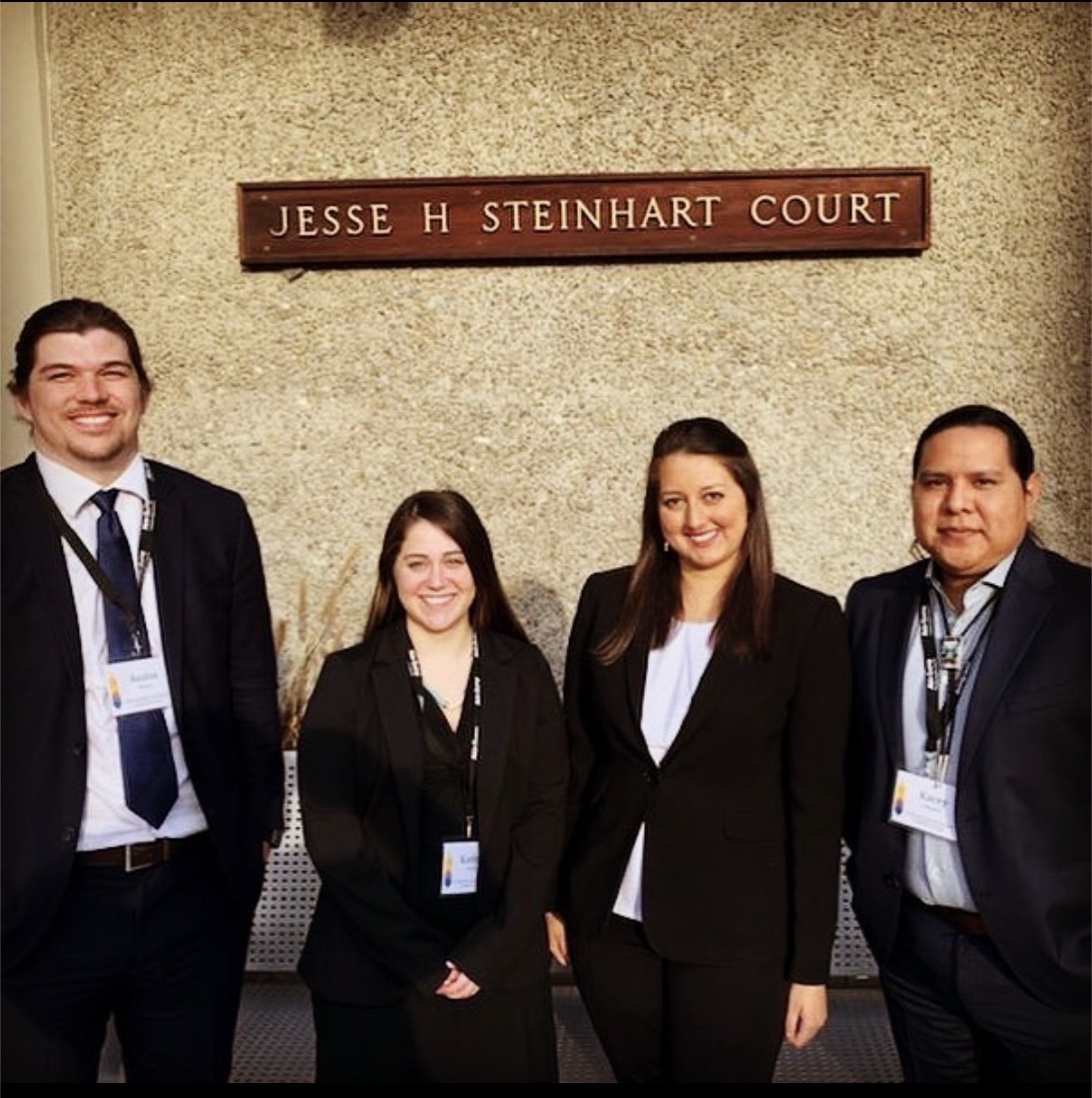
The course — led by Professor Eric Eberhard, Associate Director of the NALC, and NALC Fellow Avey Menard — will focus on legislative drafting techniques to strengthen and build upon your preexisting knowledge and experience in drafting tribal codes. The program will benefit practitioners who have a working understanding of the canons of statutory interpretation. The two-day workshop will provide you with the opportunity to draft code provisions that incorporate standards established in federal law to address the problems of trespass on tribal lands and consent.
The program will only be offered live and in-person. For Washington state attorneys, the UW School of Law will submit your attendance to the WSBA for Continuing Legal Education (CLE) credit after a post-event survey is completed. We anticipate a minimum of 11 MCLE credit hours for those who attend the full program. Registration costs $275 and attendance is limited to 15 participants.

Melissa Uri has published “Rule 19 and Tribal Representation in Indian Gaming Litigation” in the Stanford Law Review.
Here is the abstract:
Since 1988, when Congress passed the Indian Gaming Regulatory Act (IGRA) into law, many Indian tribes have established gaming as a vital source of economic and political sovereignty. The process envisioned by IGRA, however, has allowed private actors to challenge tribal gaming operations by suing state and federal entities that negotiate the gaming operations with the tribes, rather than the tribes themselves. These third parties have succeeded in legal challenges enjoining tribal gaming without ever making the operating tribe a party to the suit.
Tribes, protected by the well-established doctrine of tribal sovereign immunity, frequently intervene in these suits under Rule 19, arguing that their inability to be joined necessitates dismissal of the case. An emerging disagreement among federal circuit courts underscores the procedural and practical difficulties that courts face in weighing these interests, particularly in assessing whether existing federal or state defendants can adequately represent absent tribal interests such that the case can proceed “in equity and good conscience.” This Note argues that consistent with the deference under Rule 19 case law accorded to other sovereigns, there should be a presumption of dismissal when tribes cannot be joined in discrete gaming challenges due to tribal sovereign immunity. In doing so, this Note examines Indian gaming challenges as a unique form of Administrative Procedure Act litigation and catalogs where federal, state, and tribal gaming interests diverge, underscoring why this divergence poses significant legal and practical threats to tribal sovereignty in a budding area of contemporary Indian law

Stacy L. Leeds, Samantha Phillips, and Micayla Bledsoe Downes have published “Proactive Solutions in Implementing Tribal Digital Sovereignty” in The Journal of Community Informatics.
Here is the abstract:
This article argues that Tribal Nations must move rapidly from ad hoc digital practices to comprehensive legal and governance frameworks that fully implement Tribal Digital Sovereignty. Drawing on lessons from Indian gaming and other economic sectors, it shows how vendor-driven arrangements, weak contracts, and incomplete jurisdictional assertions have historically created long-term vulnerabilities around data, infrastructure, and regulatory authority. The article reframes digital systems—cloud services, health information technologies, broadband and spectrum, AI tools, and data-intensive enterprises—as core sites of sovereignty rather than as technical back-office functions. It contends that delays in regulating these domains allow external actors to harden jurisdictional and economic advantages that are difficult to unwind.
To provide practical guidance, the article proposes four interlocking “buckets” of legal infrastructure: Tribal codes and regulations that assert digital jurisdiction; contracts and agreements that safeguard data ownership, limit sovereignty waivers, and require portability; easements and infrastructure arrangements that preserve Tribal authority over physical and virtual networks; and business registration systems that capture entities operating digitally in Tribal territories. It situates these tools within Indigenous Data Sovereignty frameworks such as the CARE Principles and emerging Tribal AI governance efforts, including early government policies that embed cultural values and guard against data exfiltration. The article further emphasizes workforce development, procurement strategies, and collaborative regional or inter-Tribal models as necessary conditions for sustained digital self-governance. Taken together, these approaches aim to ensure that Tribal sovereignty is exercised as powerfully in digital spaces as in the governance of land, resources, and institutions.



 Turtle Talk
You must be logged in to post a comment.