November 9-10, 2023 at MSU College of Law in East Lansing, MI
https://www.indigenouslawconference.com/
Click here for the agenda.


November 9-10, 2023 at MSU College of Law in East Lansing, MI
https://www.indigenouslawconference.com/
Click here for the agenda.
The NNALSA Moot Court competition will be hosted by the Alexander Blewett III School of Law at the University of Montana on February 23-24, 2024.
The Montana NALSA hosts are seeking volunteer judges for oral arguments for one or both days on February 23-24, 2024. They also need judges to grade briefs prior to the competition from January-February.
If you’re interested in judging, please enter your contact information on this webpage.
If you would like to contribute a donation to the National NALSA Moot Court Competition, please follow this link, and make sure to mention NNALSA in the comments section.
If you would prefer to send a check, please send it to the following address:
University of Montana Foundation
P.O. Box 7159
Missoula, MT 59807
Be sure to write NNALSA in the memo line.
For other inquiries or questions, reach out to Monte Cole.

Michigan State University College of Law is hiring in Indigenous law. Entry-level and lateral tenure-system faculty members are invited to apply. Our announcement is below:
MICHIGAN STATE UNIVERSITY COLLEGE OF LAW
Michigan State University College of Law seeks to fill several tenure-system and fixed-term faculty positions for the 2024-2025 academic year. We welcome applications from candidates across all areas of law, but are particularly interested in hiring: (1) a tenured faculty member with exceptional teaching and scholarship credentials to fill our John F. Schaefer Chair in Matrimonial Law; (2) an entry-level or lateral tenure-system faculty member to join the Indigenous Law and Policy Center; (3) an entry-level or lateral tenure-system faculty member to fill the Inaugural 1855 Professorship in the Law of Democracy, which will focus on legal inequities in the democratic process and election law; (4) several entry-level or lateral tenure system faculty members to teach in one or more of the following subject areas: Trusts and Estates, Civil Procedure, Family Law, Commercial Law, Criminal Law and Criminal Procedure, Torts, International Law, Constitutional Law, and Professional Responsibility; (5) an entry-level or lateral tenure-system or fixed-term faculty member to direct the Low-Income Taxpayer Clinic; and (6) a fixed-term faculty member to teach in our Legal Research, Writing, and Advocacy program. Michigan State University is the nation’s premier land grant university, established in 1855. MSU Law’s history dates to 1891. More information about the Law College can be found at www.law.msu.edu. MSU is committed to achieving excellence through diversity. The University actively encourages applications from and nominations of people from diverse backgrounds including women, persons of color, people with diverse gender identities and sexual orientations, veterans, and persons with disabilities. Please submit application materials to MSU College of Law Faculty Appointments Committee Co-Chairs, Professor David Blankfein-Tabachnick dbt@law.msu.edu and Professor Brian Kalt kalt@law.msu.edu.
This article, published in the Harvard Human Rights Journal, is available here.
Abstract
The United States has long positioned itself as a leader in global human rights. Yet, the United States lags curiously behind when it comes to the human rights of Indigenous Peoples. This recalcitrance is particularly apparent in diplomacy regarding the United Nations Declaration on the Rights of Indigenous Peoples. Adopted by the United Nations General Assembly in 2007, the Declaration affirms the rights of Indigenous Peoples to self-determination and equality, as well as religion, culture, land, health, family, and other aspects of human dignity necessary for individual life and collective survival. This instrument was advanced over several decades by Indigenous Peoples themselves as a means to remedy the harms of conquest and colonization, along with legacies of dispossession and discrimination persisting to this day. The United States first voted against the Declaration in 2007, and now, having reversed that position, is still stuck behind international organizations and governments that are working to implement it. The examples are myriad. From a new infrastructure at the UN to legislation in Canada, Mexico City, and the Muscogee (Creek) Nation, the world community is dedicating itself to realizing the aims of the Declaration. Not so the United States. In international meetings, U.S. representatives diminish the Declaration’s legal status when they could be embracing it as a vehicle for human rights advocacy; sharing best practices to and encouraging others to follow suit. At home, federal lawmakers are ignoring the calls of tribal governments to start implementing the Declaration in domestic law and policy. Increasingly, these positions of the United States are difficult to reconcile with respect for the dignity of Indigenous Peoples, much less global human rights leadership. Thus, it is time for the United States to abandon the notion that Indigenous Peoples’ human rights are “aspirational” and instead embrace the legal, political, and moral imperative to advance the Declaration both at home and abroad.
Please join the American Constitution Society tomorrow, July 11, 2023, from 2:30 – 4:00 pm EDT for the National Supreme Court Review, which examines the most consequential cases of the 2022-2023 Term. Prof. Wenona Singel will offer commentary on Haaland v. Brackeen and discuss the decisions of this Term and their long-term effects on law and policy.

Welcome Remarks
Russ Feingold, President, American Constitution Society
Featuring
Chris Geidner, Publisher and Author, Law Dork, moderator
Debo Adegbile, Partner and Chair of the Anti-Discrimination Practice, WilmerHale
Ruben Garcia, Professor of Law and Co-Director of the Workplace Law Program, University of Nevada, Las Vega William S. Boyd School of Law
Kelly Moser, Senior Attorney and Leader of the Clean Water Program, Southern Environmental Law Center
Wenona Singel, Associate Professor of Law, Michigan State University College of Law and Director, Indigenous Law & Policy Center
Stephen I. Vladeck, Charles Alan Wright Chair in Federal Courts, The University of Texas at Austin School of Law
The American Constitution Society is a State Bar of California approved provider. This event has been approved for 1.5 hour of California MCLE credit.
As the nation’s leading progressive legal organization, ACS is committed to ensuring that all aspects of our events are accessible and enjoyable for all. If you require any accommodations, please contact us at info@acslaw.org.
The registration link is available here.

Seeking Indigenous people who have given birth to participate in a research study to learn about your stories and experiences with feeding your baby.
Angie Sanchez ndizhnikaaz, ajijaak ndodem, Odawa minwaa Ojibwekwe ndaw. My family comes from Kewadin and Northport on my mom’s side, and Sault Ste. Marie and Sheshegwaning, ON on my father’s side. I am a fourth year PhD student at Michigan State University studying Geography, and my research focuses on increasing access to breastfeeding support resources in Indigenous communities. I am looking for life givers to interview either in a talking circle (focus group) or in single interviews or surveys. If you are willing to participate, please see the eligibility requirements below and then fill out the application at the link provided.
Please fill out application to participate, found at https://bit.ly/Indigi_BF
Eligibility:
• Must have given birth and fed a baby (breastmilk or formula)
• Be at least 18 years old
If selected, you will be invited to participate in ONE of the following:
• In person talking circle (focus group) plus survey, receive $150 Visa Gift Card
• In person or zoom interview plus survey will receive $75 Visa Gift Card
• Online survey only will receive a $25 Visa Gift Card
Contact Information:
Angie Sanchez (Doctoral Student, Co-PI)
Email: asanchez@msu.edu Phone: 231.642.0114
Dr. Sue Grady (Co-PI)
Email: gradys@msu.edu Phone: 517.432.9998
For information about the IRB:
IRB# STUDY00002828
irb@msu.edu
Michigan Executive Office of the Governor sent this bulletin at 12/06/2022 04:04 PM EST
FOR IMMEDIATE RELEASE
December 6, 2022
Contact: Press@Michigan.gov
Gov. Whitmer Attends State-Tribal Summit in Sault Ste. Marie, Appoints First Tribal Citizen Ever to Michigan Court of Appeals
Governor meets leaders from every tribe to continue collaboration on shared priorities, makes historic appointment to second-highest court in Michigan
LANSING, Mich. – Today, Governor Gretchen Whitmer attended the Tribal Summit in Sault Ste. Marie. She met with Tribal leaders to address shared priorities and continue an open dialogue between the State of Michigan and sovereign tribal governments. She also announced her appointment of Judge Allie Greenleaf Maldonado to the Michigan Court of Appeals. Judge Maldonado will be the first Tribal citizen ever appointed to the Michigan Court of Appeals.
“It was an honor to attend the Tribal Summit in the Sault,” said Governor Whitmer. “The State of Michigan and sovereign tribal nations must continue working together on our shared priorities and maintain an open, productive dialogue to get things done on the kitchen-table issues. I am committed to working alongside Tribal leaders to make a real difference in people’s lives and continue growing our economies. Our fortunes are linked, and we must collaborate to move our nations forward.”
“We are pleased to host today’s summit between the state’s tribal communities and Gov. Whitmer,” said Austin Lowes, vice chairman of the Sault Ste. Marie Tribe of Chippewa Indians. “It is fitting we hold this meeting in Sault Ste. Marie, a major gathering place for tribes and their leaders for hundreds of years. Each tribe had an opportunity to discuss individual issues with the governor and her staff, and we expressed support for continued meeting, expanded consultation on key matters and a higher profile for tribal matters during our general session with the governor.”
In Governor Whitmer’s first year in office, she signed Executive Directive 2019-17, which reaffirms and extends Michigan’s commitment to recognize the sovereignty and right of self-governance of Michigan’s federally-recognized tribes and orders each state department and agency to adhere to these principles. It’s also the first executive directive in Michigan history to require training on tribal-state relations for all state department employees who work on matters that have direct implications for tribes, and also required each department and agency to adopt and implement a tribal consultation policy.
Governor Whitmer has shown a deep commitment to ensuring members of Michigan’s federally recognized tribes have a seat at the table in state government. She has appointed 44 Native Americans to judgeships, councils, boards, and commissions. One of those appointees, Bryan Newland, was sworn in as Assistant Secretary of the Interior for Indian Affairs last year, where he serves Native communities nationwide alongside Secretary Deb Haaland.
Judge Maldonado Appointment
Governor Whitmer announced her appointment of Judge Allie Greenleaf Maldonado to the Michigan Court of Appeals, District 4. Judge Maldonado currently serves as the Chief Judge of the Little Traverse Bay Bands of Odawa Indians Trial Court. Judge Maldonado has also served as a pro tem judge for the Saginaw Chippewa Indian Tribe, Little River Band of Ottawa Indians, and the Sault Ste. Marie Tribe of Chippewa Indians. Prior to her appointment as Chief Judge, she served as assistant general counsel for the LTBB tribe from 2002-2012. Following her graduation from law school, Judge Maldonado was selected as only the 15th tribal citizen to enter the prestigious honors program at the United States Department of Justice (DOJ). There she became a litigator in the Indian Resources Section of the Environment and Natural Resources Division. She later worked as a staff attorney for Monteau & Peebles, LLP.
Maldonado earned her Juris Doctor degree from the University of Michigan Law School, and she holds a Bachelor of Science in Business from the City University of New York. Judge Maldonado is a nationally recognized expert on the Indian Child Welfare Act (ICWA) and the Michigan Indian Family Preservation Act (MIFPA). She is active in the legal community outside the court room and is a member of the Black Women Lawyer’s Association of Michigan, Anishinaabek Caucus of Michigan, Women Lawyer’s Association of Michigan, Michigan Committee on Juvenile Justice, and Michigan Justice for All Commission, and the treasurer for the National Association of Drug Court Professionals. Allie lives in Petoskey with her husband, Jay. She is a citizen of the Little Traverse Bay Bands of Odawa Indians and a member of the Turtle Clan.
“I am humbled and honored to be trusted by Governor Whitmer for this appointment to the Michigan Court of Appeals,” said Judge Maldonado. “I look forward to taking all of my professional experience and diligently applying it to the work ahead of me. This is a moment of importance not just for me, but for all of Indian Country as the Governor’s wisdom in this appointment sends a message about the critical importance of the work of tribal courts. I am grateful to the Governor and her team, and I look forward to giving all of Michigan my best.”
Frank Ettawageshik, executive director of United Tribes of Michigan and a member of the Little Traverse Band’s appellate court, called the appointment of Maldonado “an important step for Judge Maldonado, the court and Native Americans.”
“Allie is eminently qualified for this important position. She has a deep understanding of the law, including the sometimes misunderstood but vitally important role of Native American tribes as sovereign nations under our system of justice,” said Ettawageshik. “This will give her an opportunity to expand her constituency from our tribal members to the entire state. She is a worthy addition to the Michigan Court of Appeals.”
This appointment was made to fill a partial term following the retirement of Judge Amy Ronayne Krause effective December 13, 2022. Judge Maldonado’s term will commence on January 9, 2023 and expire at twelve o’clock noon on January 1, 2025. If Judge Maldonado wishes to serve the remainder of Judge Krause’s term, expiring January 1, 2027, she would be required to run for reelection in November of 2024.
Judicial appointments are not subject to the advice and consent of the Senate.
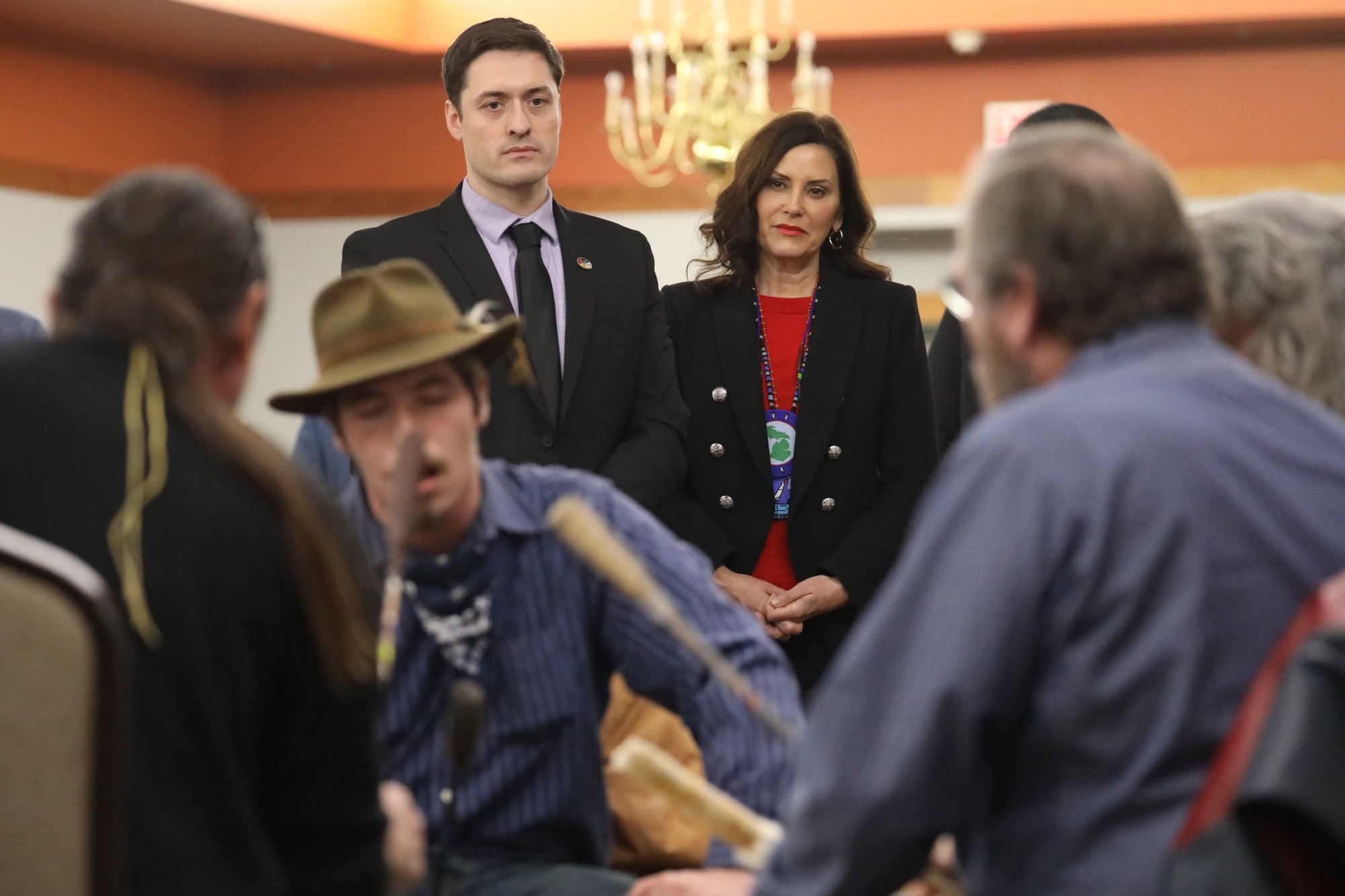
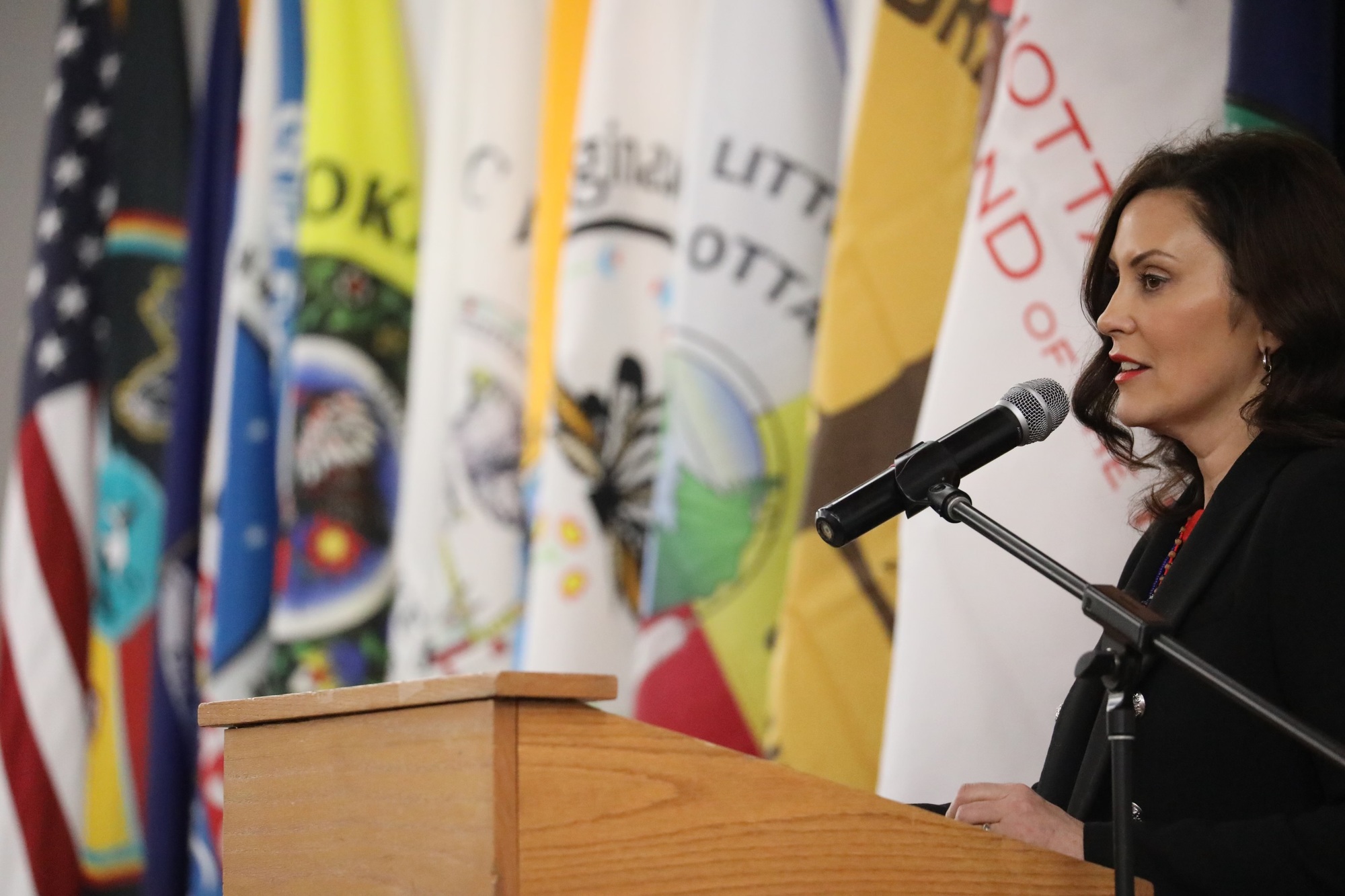
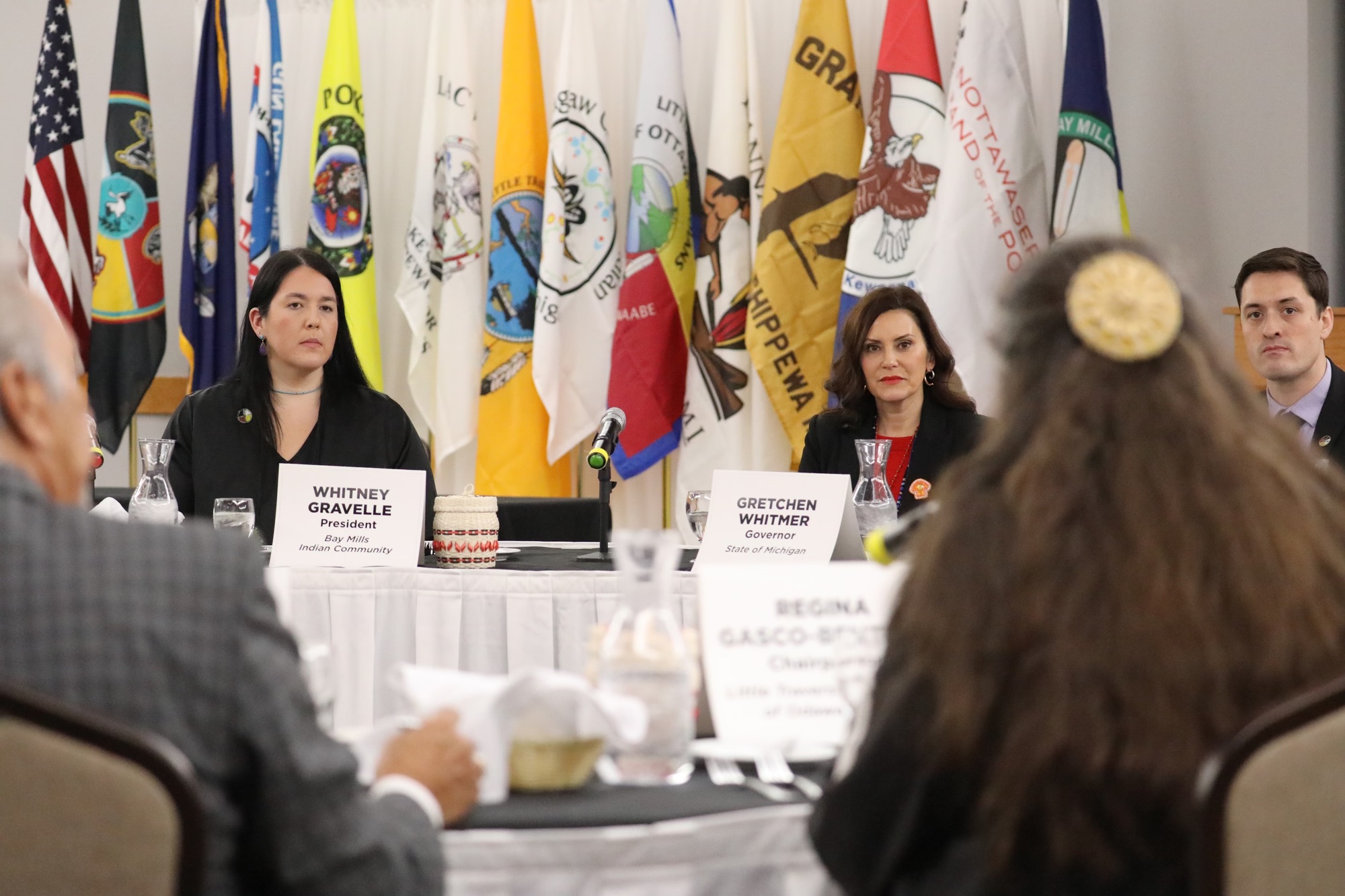

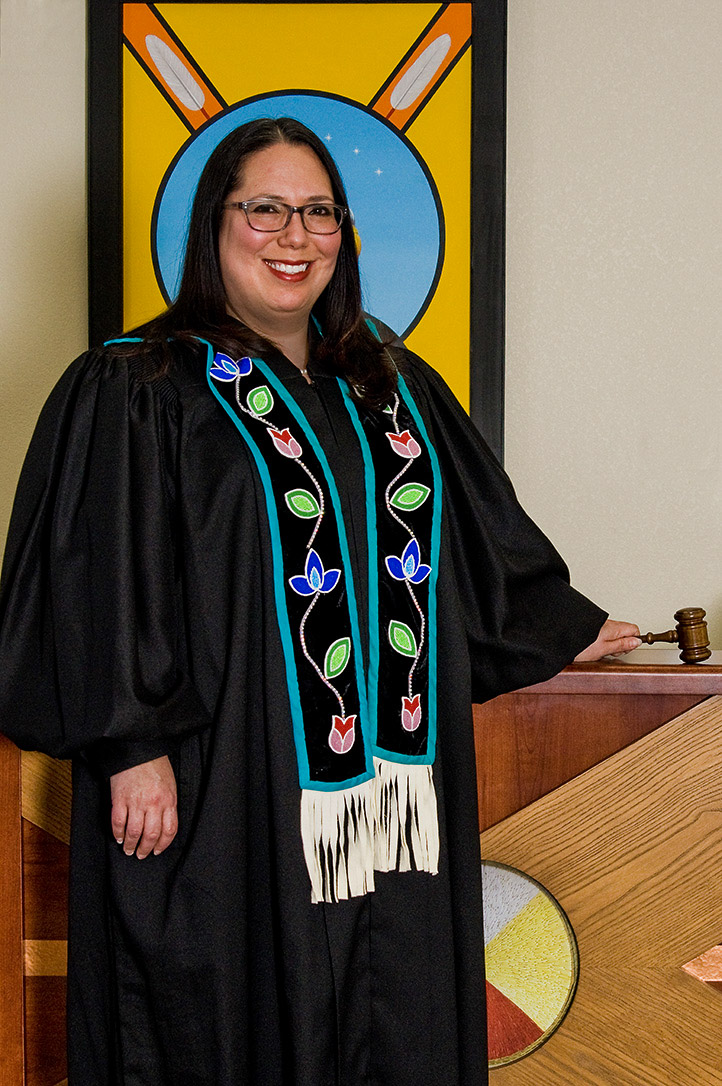
Judge Allie Greenleaf Maldonado will be the first Native person to serve on the Michigan Court of Appeals. The historic appointment was announced by Governor Gretchen Whitmer today during the annual Michigan Tribal Summit in Sault Ste. Marie. Congratulations to Judge Maldonado!!
Judge Maldonado currently serves as the Chief Judge of the Little Traverse Bay Bands of Odawa Indians Tribal Court. Prior to her service as Chief Judge, she served as assistant general counsel for LTBB from 2002-2012. Judge Maldonado also worked as a lawyer for the Indian Resources Section of the U.S. Department of Justice’s Environment and Natural Resources Division. Maldonado earned her JD from the University of Michigan Law School, and she holds a Bachelor of Science in Business from the City University of New York. She’s a nationally recognized expert on the Indian Child Welfare Act.
“I am humbled and honored to be trusted by Governor Whitmer for this appointment to the Michigan Court of Appeals,” Judge Maldonado said in a statement. “I look forward to taking all of my professional experience and diligently applying it to the work ahead of me. This is a moment of importance not just for me but for all of Indian Country, as the Governor’s wisdom in this appointment sends a message about the critical importance of the work of tribal courts. I am grateful to the Governor and her team, and I look forward to giving all of Michigan my best.”
Judge Maldonado’s appointment fills a partial term following the retirement of Judge Amy Ronayne Krause. Judge Maldonado’s term will begin January 9, 2023 and expire on January 1, 2025. If she wishes to continue to serve on the Michigan Court of Appeals after that date, she would be required to run for reelection in November of 2024.
Here.

The Indigenous Law & Policy Center at Michigan State University College of Law is hiring a Communications Coordinator. A description of the position is below, and the MSU HR link is here. The deadline for applying is May 3, 2022.
Work type: Support Staff
Pay Grade: 10
Major Administrative Unit / College: Michigan State University College Of Law
Department: Juris Doctorate Programs 40001138
Sub Area: AP- Professionals
Salary: Salary Commensurate with Experience
Location: East Lansing
Categories: Administrative/Business/Professional, Administrative Professionals- AP, Full Time (90-100%), Union, Remote-Friendly
The College of Law Indigenous Law & Policy Center (ILPC) welcomes candidates who have a passion for working in indigenous rights advocacy; experience working with indigenous peoples and diverse groups of people; strong communication and organizational skills; and exhibit a high degree of professionalism and the ability to work in a self-directed environment or in a group setting.
The Indigenous Law & Policy Center Communications Coordinator supports the ILPC by assisting with developing website content, electronic newsletters, visual aids, social media posts, and other organizational communications aligned with the ILPC’s needs and strategic initiatives. The Communications Coordinator also maintains the ILPC office and assists ILPC faculty and staff in coordinating events, conferences, and student programming.
The ILPC welcomes candidates who (1) have a passion for working in indigenous rights advocacy; (2) have experience working with indigenous peoples and diverse groups of people; (3) have strong communication and organizational skills; and (4) exhibit a high degree of professionalism and the ability to work in both a self-directed environment and in a group setting.
The ILPC currently includes a Director, Associate Director, Clinic Director, and Legal Counselor. The Center works very closely together to recruit students; provide services to students, clinical clients, and tribal governments; provide teaching and learning opportunities related to Indigenous law; produce original research and scholarship on Indigenous law; and host events at the law school.
The Communications Coordinator reports to the Director and Associate Director of the ILPC and assists the ILPC team in providing administrative support. In collaboration with the College of Law Director of Events and the Director of Communications and Marketing, the Communications Coordinator:
• Assists the ILPC faculty and staff with planning and coordinating all ILPC events.
• Coordinates lunches, speaking events, and ILPC visits for students interested in Indian Law.
• Plans and organizes the annual ILPC conference.
• Manages marketing materials that amplify and strengthen ILPC presence at MSU, Michigan tribal communities, and within Indian country.
• Drafts ILPC correspondence and creates newsletters for the ILPC community, students, and alumni.
• Manages the ILPC social media accounts, including Turtle Talk.
• Attends Indian law events and conferences 1-4 times per year to promote the ILPC and its objectives; requires overnight travel.
Knowledge equivalent to that which normally would be acquired by completing a four-year college degree program in Communications, Telecommunications, Journalism, Marketing, or Public Relations; up to six months of related and progressively more responsible or expansive work experience in internal communications; news, broadcasting, and print media, and/or marketing, advertising, and creative services; graphic design; word processing; desktop publishing; web design; presentation software; spreadsheet and/or database software; public presentation; or radio production; or an equivalent combination of education and experience.
• Experience working with Native American and Indigenous communities.
• Excellent oral and written communication skills.
• Experience in event planning and logistics for on-campus events.
• Ability to work with a variety of individuals.
• Experience using WordPress and social media platforms.
• Ability to multitask.
• Experience using programs like InDesign and Photoshop.
• Experience in Communications, Development, Marketing, or related fields.
• Experience working in a university environment.
All qualified applicants will receive consideration for employment without regard to race, color, religion, sex, sexual orientation, gender identity, national origin, citizenship, age, disability or protected veteran status.
The university is requiring all MSU students, faculty and staff to be vaccinated against COVID-19 with limited exceptions. Learn more at: https://msu.edu/together-we-will/
STANDARD 8-5
MSU strives to provide a flexible work environment and this position has been designated as remote-friendly. Remote-friendly means some or all of the duties can be performed remotely as mutually agreed upon.
Advertised: Apr 20, 2022 Eastern Daylight Time
Applications close: May 3, 2022 Eastern Daylight Time
 Turtle Talk
You must be logged in to post a comment.