Here.
Presidential Proclamation on National Native American Heritage Month
Here.
Here.

Here are the materials in Mitchell v. Tulalip Tribes of Washington (W.D. Wash.):
Here is the opinion in Brown v. Garcia. PDF
An excerpt:
This case is different. As the trial court noted, Maxwell and Pistor make clear that the general rule is not dispositive if the lawsuit will encroach upon the tribe’s sovereignty. (See Maxwell, supra, 708 F.3d at p. 1088.) Here, substantial evidence established that defendants were tribal officials at the time of the alleged defamation and that they were acting within the scope of their tribal authority when they determined that, for the reasons stated in the allegedly defamatory Order of Disenrollment, plaintiffs should be disenrolled from the Tribe pursuant to a validly enacted tribal ordinance. On this record, which we have carefully reviewed, the trial court concluded that plaintiffs sought to hold defendants liable for actions they took as tribal officials in pursuing plaintiffs’ disenrollment from the Tribe on the basis of plaintiffs’ alleged unlawful acts. The court further found that adjudicating the dispute would require the court to determine whether tribal law authorized defendants to publish the Order and disenroll plaintiffs, “which itself requires an impermissible analysis of Tribal law and constitutes a determination of a non-justiciable inter-tribal dispute.”
Here is the 7-2 opinion in Ktunaxa Nation Council v. Minister of Forests:
An excerpt:
The Ktunaxa are a First Nation whose traditional territories include an area in British Columbia that they call Qat’muk. Qat’muk is a place of spiritual significance for them because it is home to Grizzly Bear Spirit, a principal spirit within Ktunaxa religious beliefs and cosmology. Glacier Resorts sought government approval to build a year-round ski resort in Qat’muk. The Ktunaxa were consulted and raised concerns about the impact of the project, and as a result, the resort plan was changed to add new protections for Ktunaxa interests. The Ktunaxa remained unsatisfied, but committed themselves to further consultation. Late in the process, the Ktunaxa adopted the position that accommodation was impossible because the project would drive Grizzly Bear Spirit from Qat’muk and therefore irrevocably impair their religious beliefs and practices. After efforts to continue consultation failed, the respondent Minister declared that reasonable consultation had occurred and approved the project. The Ktunaxa brought a petition for judicial review of the approval decision on the grounds that the project would violate their constitutional right to freedom of religion, and that the Minister’s decision breached the Crown’s duty of consultation and accommodation. The chambers judge dismissed the petition, and the Court of Appeal affirmed that decision.
Use these to certify your participation in your continuing legal education to your licensing jurisdiction.

Here.
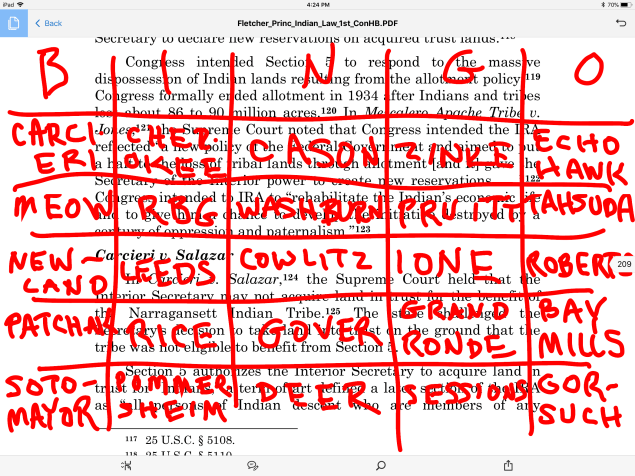
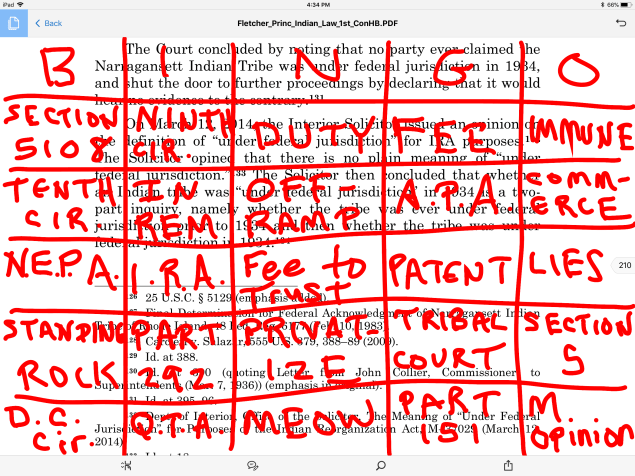
Prepared for the FBA’s DC Indian Law Conference this Friday!
Here:
| The National Indian Law Library added new content to the Indian Law Bulletins on 10/26/17.
News Bulletin U.S. Federal Courts Bulletin Tribal Courts Bulletin State Courts Bulletin U.S. Regulatory Bulletin U.S. Legislation Bulletin Law Review & Bar Journal Bulletin |
Here (aka United States v. Washington subproceeding 14-2):
Lower court materials here.
 Turtle Talk
You must be logged in to post a comment.