Hopi Tribal Court Decision in Lomayesva v. Talayumptewa — Matter Involving Termination of General Counsel

Here:

Final Order and Opinion CASE NO. 2015-CV-0088

An excerpt:

In short, the Tribal Council must follow its own laws, and not conveniently “re-interpret” a Hopi Tribal Council Resolution when the political winds change. Here, not one notion of Hopi fundamental fairness, not one attempt at due process, and not a single attempt to provide notice and an opportunity to be heard can be gleaned from the record and testimony before this Court. If this Court were to endorse and condone this abrogation of Hopi law, then all of the Hopi Tribe, the Hopi people, would suffer a terrible precedent in the Hopi way of life. 

This is not to say that Plaintiff cannot be terminated. He does not have a lifetime expectation of employment under any circumstance that may arise. Rather, the Employee Manual must be followed properly as required by the Resolution. Hopi law must be respected. If Tribal Council wishes to remove and terminate Plaintiff’s employment, it must follow the terms of the Resolution that the Hopi Tribal Council, on its own accord, adopted. 

Federal Court Dismisses Contract Action against New Mexico Pueblo Consortium

Back in April 2015….

Here are the materials in Corabi v. ENPIC Inc. (D. N.M.):

6 Motion to Dismiss

8 Opposition

10 Reply

13 DCT Order

Navajo Nation Amicus Brief in Harris v. Arizona Independent Redistricting Commission

Here:

Navajo Amicus Brief in Harris v Arizona Independent Redistricting Commission

California Court of Appeals Decides Against Tribal Enterprise in Contract Dispute

Here is the unpublished opinion in 29 Palms Enterprises v. Cadmus Construction:

29 Palms Enterprises v Cadmus Construction

Petition for Hearing in Torres v. Santa Ynez Band of Chumash Indians

Here:

Petition for Rehearing

Cert petition has already been denied, here.

South Dakota SCT Decides Matter Involving Shannon County (Pine Ridge) Jury Pools

Here is the opinion in Good Lance v. Black Hills Dialysis (S.D.). From the opinion:

Vera Good Lance sued Black Hills Dialysis, LLC and LeEtta Brewer (collectively, BHD) for negligence after suffering an injury from a fall while at BHD’s facility in Shannon County on the Pine Ridge Indian Reservation.1 A dispute arose between the parties about whether the circuit court should summon jurors from Shannon County or neighboring Fall River County. A 2009 standing order issued by the Seventh Circuit Presiding Judge required that all cases filed in Shannon County be venued in Fall River County. In accordance with this order, the circuit court ruled that it would summon Fall River County jurors. Good Lance, through her estate’s administrator Hilda Kills Small, requested this intermediate appeal. We reverse and remand for further proceedings.


“Nooksack tribal members facing disenrollment win records fight”

News coverage from the Bellingham Herald here.

Materials on the St. Germain v. DOI case here.

MSU/TICA Ethics Panel

John Petoskey, Bryan Newland, Monte Mills, and Paul Spruhan


Ninth Circuit Decides Tohono O’Odham Nation v. State of Arizona

Here is the opinion. From the court’s syllabus:

The panel affirmed the district court’s summary judgment in an action challenging the constitutionality of H.B. 2534, an Arizona law that allows a city or town within populous counties to annex certain surrounding, unincorporated lands.

The Tohono O’odham Nation purchased unincorporated land in Maricopa County, Arizona. The Nation alleged that H.B. 2534 was enacted in order to block the federal government from taking the land it purchased into trust on behalf of the Nation, a process that would render the land part of the Nation’s reservation pursuant to the Gila Bend Indian Reservation Lands Replacement Act. H.B. 2534 was enacted after the Nation announced its intention to build a casino on “Parcel 2” of the land, and after the Secretary of the Interior decided to take Parcel 2 into trust.

The panel affirmed the district court’s holding that H.B. 2534 is preempted by the Gila Bend Indian Reservation Lands Replacement Act because it stands as an obstacle to the accomplishment and execution of the full purposes and objectives of the Act namely, to enable the Secretary to take Parcel 2 into trust and thereby incorporate the land into tribal land. 

The panel concluded that under H.B. 2534, the City of Glendale, Arizona, purportedly had the authority ̄at the point when the Nation filed a trust application ̄to preemptively annex unincorporated land and effectively block the trust application.
The panel thus affirmed the legality of the Secretary’s taking of Parcel 2 into trust pursuant to the Act. It did not reach the Nation’s other challenges to H.B. 2534.

Briefs here. Lower court materials here.

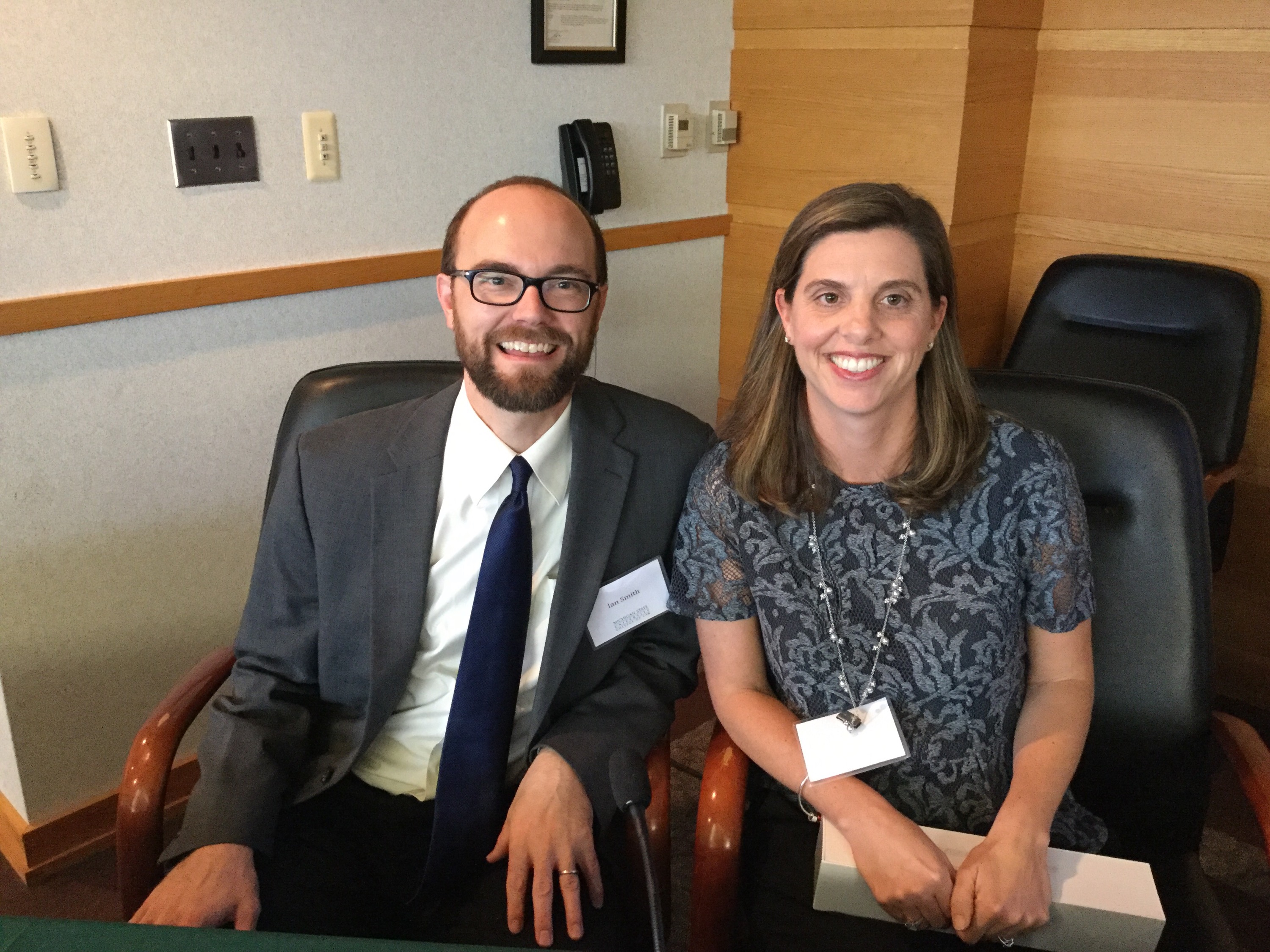
MSU/TICA Tribal Historical Records & the Federal Government Panel

Ian Smith and Catherine Munson