Hilary B. Miller has published “The Future of Tribal Lending under the Consumer Financial Protection Bureau” in the ABA trade journal Business Law Today.
economic development
Injunction Granted in Wells Fargo v. Chukchansi EDC (N.Y. Supreme Court) — UPDATED
D.C. Circuit Affirms Injunction against Enforcement of PACT Act
Here are the materials in Gordon v. Holder (opinion link & PDF):
Anti-Smoking Amici in Support of DOJ
Convenience Stores Amici in Support of DOJ
Lower court materials here.
Corrected Opinion in City of New York v. Golden Feather
Stipulation for Entry of Judgment in Olin v. Chukchansi Economic Development Authority
Here, settling a complaint against CEDA for breach of contract and wrongful termination.
Thanks to Marc Benjamin at the Fresno Bee.
Commentary from MF: This is a till-tap case, where a state court orders a sheriff to collect on a judgment by literally taking money from the till. Does anyone know if there has been a case like this involving tribes before?
RAND Report on Sole-Source 8(a) Native American Contracts
Here.
The description:
Some participants in the federal 8(a) Business Development Program, including Alaska Native Corporations, Indian tribes, and Native Hawaiian Organizations, face no limit on the value of sole-source contracts they can receive. Concerns over the rising number of these contracts led to requirements for justification and approval of contracts above $20 million. This raised other concerns regarding the effects of the new requirements on Native American-owned firms and contracting personnel. The new federal requirement may delay the award of these contracts but have little impact on the number of such contracts awarded.
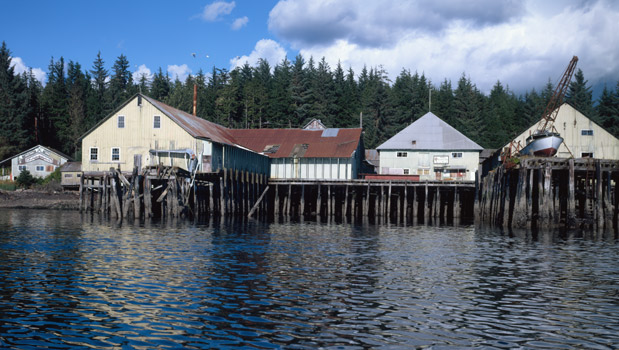
Kake Cannery on List of 11 Most Endangered Historic Places
ND Tribe Plans to Launch Riverboat Gambling Yacht
The Three Affiliated Tribes plans to dedicate a yacht next month that eventually will be used for a riverboat gambling operation on the Missouri River in North Dakota.
The tribe earlier this year reached an agreement with the state to allow for the expansion of gambling on the Fort Berthold Reservation, which straddles the Lake Sakakawea reservoir on the Missouri. A yacht currently is being assembled at the tribally owned 4 Bears Casino and Lodge west of New Town, the Minot Daily News reported.
Here.
N.Y. Appellate Division Concludes Tribal Enterprise Formed under Tribal Law Not Immune From Suit
Here is the opinion in Sue/Perior Concrete and Paving Co. v. Lewiston Golf Course Corp.:
An excerpt:
Other factors, however, including what the Court of Appeals has characterized as the “[m]ore important[]” financial factors, weigh in favor of a determination that LGCC does not share in the Nation’s sovereign immunity (id.). With respect to whether LGCC’s “purposes are similar to or serve those of the tribal government” (id.), we conclude that this factor supports the denial of sovereign immunity to LGCC. In minutes from its August 2002 meeting approving the creation of SGC, the Council declared that “it is . . . the policy of the Nation to promote the welfare and prosperity of its members and to actively promote, attract, encourage and develop economically sound commerce and industry through governmental action for the purpose of preventing unemployment and economic stagnation,” and that “the Gaming industry is vitally important to the economy of the Nation and the general welfare of its members.” To that end, the Council created SNFGC for the purpose of “developing, financing, operating and conducting the Nation’s gaming operations on its Niagara Falls Territory at the Niagara Falls Gaming Facility.” In creating the LGCC, the Council declared that, “in furtherance of the economic success of the Nation’s gaming operations, [SNFGC] has commenced development of a . . . golf course located in the Town of Lewiston, New York[, which] will be developed and operated as an amenity to . . . SNFGC’s casino operations, . . . the purpose of which amenities is to enhance the overall success and profitability of the casino’s operations” (emphasis added). In that manner, the Council believed that the golf course project “may reasonably be expected to benefit, directly or indirectly, the Nation” (emphasis added). Thus, the Council’s own statements reflect that the purpose of LGCC – to develop a golf course as an “amenity” to the Nation’s gaming operations – is several steps removed from the purposes of tribal government, e.g., “promoting tribal welfare, alleviating unemployment, [and] providing money for tribal programs” (Gristede’s Foods, Inc., 660 F Supp 2d at 477; cf. Ransom, 86 NY2d at 560).
These common law tests to decide whether a tribal enterprise is under the cloak of tribal immunity are baffling, generating far too many unpredictable results like this one. It’s fairly clear to me that the wide majority of courts would conclude a tribally-owned enterprise chartered under tribal law is immune without looking toward subjective factors such as what the purpose of the corporation is — tribes just aren’t for-profit entities. They’re governments.
Buy Indian Act, Final Rule
The Department of the Interior is finalizing regulations guiding implementation of the Buy Indian Act, which provides Indian Affairs (IA) with authority to set aside procurement contracts for Indian-owned and controlled businesses. This rule supplements the Federal Acquisition Regulation (FAR) and the Department of the Interior Acquisition Regulation (DIAR).
Federal Register here.
Press Coverage here.
 Turtle Talk
You must be logged in to post a comment.