Here.
Here.
Here:
Payday Financial Supplemental Brief
Federal Trade Commission Amicus Brief
Gavin Clarkson Amicus Brief [CA7 Order Denying Clarkson Motion: out of time]
Payday Financial Brief in Response to Amici TK
Prior briefs here, with supplemental briefing order.
State Bar of Michigan
American Indian Law Section Annual Meeting
September 19, 2013 at 2:00 p.m.
The Lansing Center
333 E. Michigan Avenue
Lansing, MI 48933
The American Indian Law Section is pleased to announce that Matt Wesaw is the recipient of the 2013 Tecumseh Peacekeeping Award. Please join us in honoring him at the American Indian Law Section Annual Meeting. Tribal Leaders, staff and community members are welcome. We will also be having a program on “Financing Economic Development” featuring Kristi Jackson and Rob Gips. There is no charge and light refreshments will be served.
The 2013 Tecumseh Peacekeeping Award Recipient is Matt Wesaw.
Matthew Wesaw has spent his career devoted to public service. He began by enlisting with the Michigan State Police in 1975. During his 26-year career as a state trooper, Mr. Wesaw received numerous awards, recognitions and promotions. He was elected to the position of Vice President of the Michigan State Police Troopers Association in 1995, a position he held until his retirement in January of 2001. Throughout his career, Mr. Wesaw has held many positions in Native American organizations, including past board member to the Lansing American Indian Center, Nokomis Learning Center, and past chairman of the Commission on Indian Affairs. He has also served on the Pokagon Band of Potawatomi Indians Tribal Council as a member, Chairman and Vice Chairman. In 2004, Mr. Wesaw was appointed to the Michigan Civil Rights Commission, becoming only the second Native American appointed to the Commission. In 2010, he became the first Native American to serve as Chair of the Commission, a position he held until 2012. In 2007, Mr. Wesaw was hired as the Executive Director of the United Tribes of Michigan. He served in this position until his election as Tribal Chairman of the Pokagon Band of Potawatomi Indians in 2009. In addition to his current position as Chairman at Pokagon, he serves as the President and CEO of the Pokagon Gaming Authority, as the Recording Secretary for the National Congress of American Indians and on the Council on Law Enforcement and Reinvention committee.
This year’s program is “Financing Economic Development.”
Our two featured speakers are Kristi Jackson and Rob Gips.
Kristi Jackson will be focusing her remarks on the following: financial and business due diligence issues to consider when creating an economic development project; issues to look for to make sure an economic development project can be successful; and various financing options available for these projects.
Rob Gips will be focusing his remarks on the following: legal due diligence issues to consider when creating an economic development project; best practices for negotiating financing with banks or other investors; and how tribal laws can impact financing negotiations.
Kristi Jackson is the CEO of Tribal Financial Advisors, an investment banking firm she co-founded in 2009 to exclusively serve tribes with financing related issues. TFA raises capital for tribes as well as works on general financial advisory assignments – often as an enhancement to a tribe’s own finance team. TFA has been a part of over $1billion of capital raised for tribes since 2010. In her prior role, she served as a managing director of Bank of American Secruities, leading the tribal finance effort which raised more than $15 billion of capital for over 30 tribes, including syndicated bank debt, high yeild and tax-exempt bonds. Ms. Jackson holds a Bachelor’s decgree in economics and mathematics from the University of California at Irvine and a MBA from Anderson School at UCLA.
Rob Gips is special counsel on Indian affairs at the Drummond Woodsum law firm. He has served as legal counsel and as a key business and financial advisor to Indian tribes since 1983. Rob’s practice has included service as general counsel and as an advisor in business and financial transactions by tribal governments throughout the United States.His specialized business development work for his clients has included the creation and acquisition of hotel, resort, casino and gaming facilities, tribal housing, tribal manufacturing facilities, industrial lands and a broad variety of both on- and off-reservation joint ventures, and representation of parties in a variety of complex commercial financing in Indian country. Mr. Gips has a Bachelor’s degree from Harvard University and a J.D. and M.B.A. from Yale Law School and Yale School of Management.
Here are the briefs in Quechan Tribe of the Fort Yuma Indian Reservation v. Dept. of Interior:
Doc 11_1 Appellant’s Opening Brief 090413. wo Addendum
Reply brief TK
Lower court materials here.
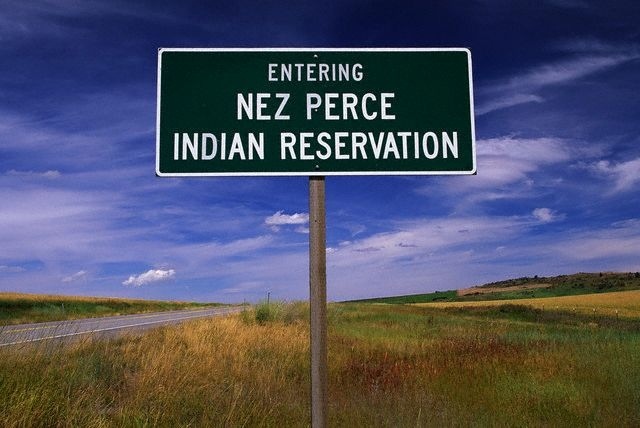
Here are the materials in Nez Perce Tribe v. United States Forest Service (D. Idaho):
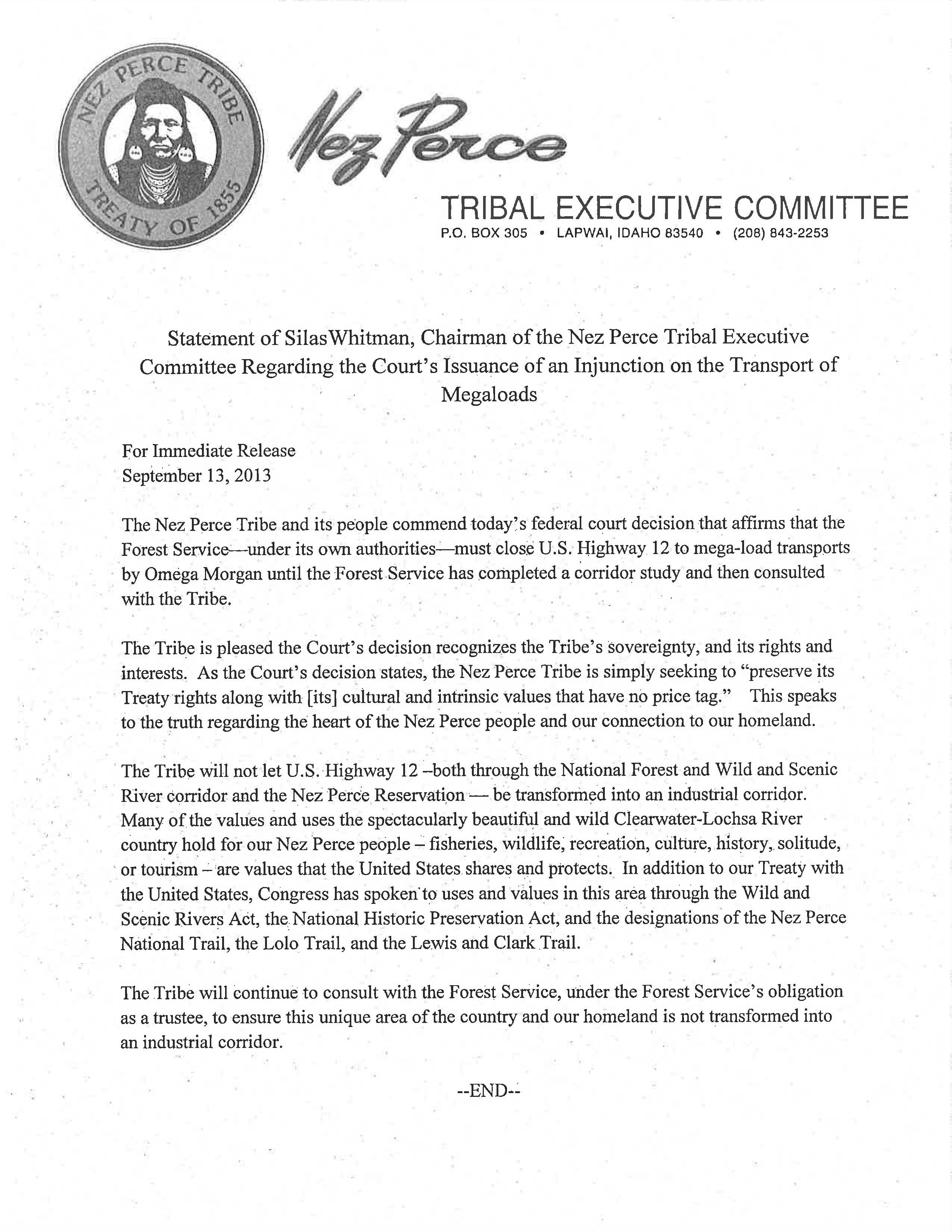
Nez Perce (Mega-load) Consultation decision (Sept 2013)
Here.
An excerpt:
Online lending has become a popular venture for Indian tribes over the last several years as states have cracked down on payday loans. The tribes say that in many cases, e-commerce activities have become a vital source of revenue, especially because their remote locations inhibit their ability to operate casinos. For the Otoe Missouria Tribe, lending revenue accounts for roughly half of the tribe’s nonfederal budget, according to a court filing.
“Every Indian tribe worth its salt has to provide health care, public safety, education and a panoply of essential services to its members,” said Matthew Fletcher, a law professor at Michigan State University and an authority on Indian law. “These tribes must reach off the reservation to conduct business because there is a desperate need for revenue.”
Hearing today on this motion.
Here:
Here are the materials in St. Isidore Farm LLC v. Coeur D’Alene Tribe of Indians (D. Idaho):
3-1 St. Isadore Motion for TRO
21 Coeur d’Alene Motion to Dismiss
61 DCT Order Granting Motion to Dismiss
News coverage here.
 Turtle Talk
You must be logged in to post a comment.