Here:
Complaint is here.
Here are the briefs in Schaghticoke Tribal Nation v. Kent School Corp. Inc.:
Lower court materials here.
From the Hawaii Independent. A response to this news.
An excerpt:
In moving forward, what should be done? The process for Federal recognition was a knee-jerk reaction to the Rice v. Cayetano decision. Surely there are other legal strategies and plans that the Office of Hawaiian Affairs and State officials can undertake to protect the OHA trust assets and Native Hawaiian entitlement programs. In the 14 years since the decision, the trust and programs have survived without a serious attack. It should be noted that political winds change all the time and there is no absolute certainty with Federal recognition either. For instance, during the 1940s, 1950s and 1960s the US Federal government’s policy was to terminate the legal and political existence of some Federally recognized American Indian tribes in California, Oregon and a number of other US States. During the Civil Rights era of the 1960s and 1970s, the US Federal government made a significant change in that policy and worked to empower tribal governments. However, it is impossible to guarantee that future US Federal policies will not shift back in that direction again.
Proposed Rule here:
2014-05-22 Proposed Rule 25 CFR 83
Related materials:
Frequently Asked Questions on Proposed 25 CFR 83
Summary of Comments and Responses on Part 83 Discussion Draft
Press release here:
Interior Proposes Reform of Federal Acknowledgment Regulations
Proposed rule would address “broken” process
Washington, D.C. — Secretary of the Interior Sally Jewell and Assistant Secretary-Indian Affairs Kevin K. Washburn today announced publication of proposed regulations that would reform the 35-year old process by which the Department of the Interior officially recognizes Indian tribes. Federal acknowledgment establishes the U.S. Government as the trustee for Tribal lands and resources and makes Tribal members and governments eligible for federal budget assistance and program services.
“President Obama believes that reforming the federal acknowledgment process will strengthen our important trust relationship with Indian tribes. Acknowledgment by the Department of the Interior confirms the existence of a nation-to-nation relationship between an Indian Tribe and the United States,” said Secretary Jewell. “Through this Administration’s outreach initiatives, tribal leaders have told us that the current process can be inconsistent, cost millions of dollars and take decades to complete. Our proposed rule maintains the rigorous integrity needed, but allows that process to be conducted in a timely, efficient and transparent manner.”
The existing regulations, known as “the Part 83 process”, were originally adopted in 1978 and were updated only once 20 years ago. Prior to that, Interior had addressed requests for Tribal acknowledgment on a case-by-case basis. While the 1978 regulations established a structured process for federal acknowledgment, these regulations have been widely criticized as being too time-consuming, sometimes arbitrary and generally “broken.”
Here is the complaint:
An excerpt:
COMES NOW, Petitioner, MACKINAC TRIBE, by and through undersigned counsel, to petition the Court to determine that the MACKINAC TRIBE is a federally recognized Indian Tribe, and to order the Defendant, Secretary of the Interior, to conduct elections under the Indian Reorganization Act to adopt a draft proposed Constitution for such tribe, and such other relief as may be appropriate.
Amy Den Ouden, Kathleen Brown-Perez, Jean O’Brien, Ruth Torres
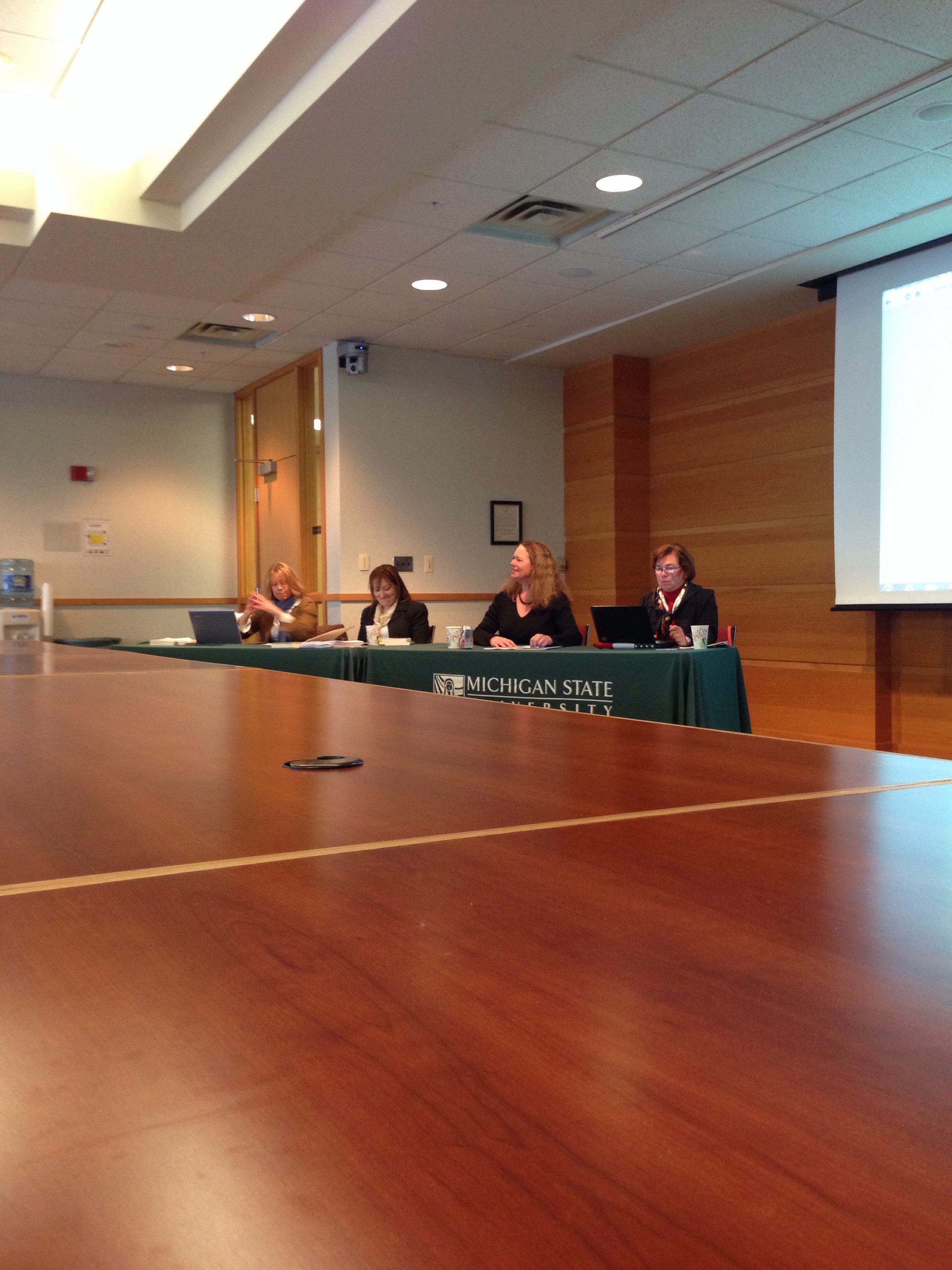
This is a big week at Michigan State. Our Spring Speakers event is this Thursday at 2pm in the Castle Board Room at MSU Law. The 1491s will be on campus Friday.

 Turtle Talk
You must be logged in to post a comment.