Here is the new complaint in California Valley Miwok Tribe v. Haaland (D.D.C.):
Here is the new complaint in California Valley Miwok Tribe v. Haaland (D.D.C.):
Here are the materials in the case captioned California Valley Miwok Tribe v. Haaland (D.D.C.):
37 Motion for Preliminary Injunction

By Robert A. Williams, Jr.
At its annual meeting next week, the National Congress of American Indians (NCAI) will consider removing state recognized tribal governments from its voting membership. This proposal comes amid an all-out, misguided assault on state recognized Tribes based on the asserted claim that they somehow threaten Tribal sovereignty.
This self-righteousness about who qualifies and who doesn’t qualify as Indigenous is all too familiar. This brand of identity-policing is based on the historically mistaken belief that there has been a foolproof, legitimate and consistent system developed by the United States as a colonizing government for recognizing the Tribal governments it believes it has successfully colonized. It ignores the colonial, post-colonial and neo-colonial impacts on Indigenous peoples who may not have been fortunate enough to be recognized with the stroke of the pen by a federal Indian affairs bureaucrat, or to have been participants in a federal court case, or to have been signatories to a treaty that Congress bothered to ratify but has never fully enforced or honored.
The proposal NCAI will entertain in New Orleans—that Tribal rights should be dictated and determined by a listing of select tribes made up by the federal government—is one of the highest and more efficient forms of colonization one can imagine; getting the “officially” colonized to do the dirty work of culling out and silencing the voices of those “unofficial” groups the colonizer doesn’t want to bother with.
NCAI was “established in 1944 in response to the termination and assimilation policies of the U.S. government.” According to Thomas W. Cowger’s book, The National Congress of American Indians: The Founding Years, the Indian Congress originally “stressed both civil and tribal rights by declaring that the common welfare of Native Americans required the preservation of cultural values.” The organization has drifted far from its original instructions.
In 1978, NCAI convened its historic National Conference on Tribal Recognition, unanimously adopting a Declaration of twelve principles, proclaiming that “as an organization that represents the common interest of all tribes,” NCAI demands that the United States “fulfill its obligation to all tribes . . . and acknowledge the existence” of non-federally recognized Tribal governments. That proclamation aligns with the United Nations Declaration on the Rights of Indigenous Peoples (UNDRIP), including its affirmation of the right to “distinct political, legal, economic, social and cultural institutions” and related “constructive arrangements” with nation-states.
Continue readingHere are the materials in Historical Eastern Pequot Tribe v. Office of Acknowledgment (D.D.C.):

Here are the materials in Kanam v. Bureau of Indian Affairs:

Here are the new materials in Burt Lake Band of Ottawa and Chippewa Indians v. Haaland (D.D.C.):
Docket No. 64: MINUTE ORDER. Federal courts are courts of limited jurisdiction and the law presumes that “a cause lies outside this limited jurisdiction.” Kokkonen v. Guardian Life Ins. Co. of Am., 511 U.S. 375, 377 (1994); see also Gen. Motors Corp. v. EPA, 363 F.3d 442, 448 (D.C. Cir. 2004) (“As a court of limited jurisdiction, we begin, and end, with an examination of our jurisdiction.”). Subject matter jurisdiction may not be waived, and “courts may raise the issue sua sponte.” NetworkIP, LLC v. FCC, 548 F.3d 116, 120 (D.C. Cir. 2008), quoting Athens Cmty. Hosp., Inc. v. Schweiker, 686 F.2d 989, 992 (D.C. Cir. 1982). Indeed, a federal court must raise the issue because it is “forbidden… from acting beyond [its] authority, and ‘no action of the parties can confer subject-matter jurisdiction upon a federal court.'” Id., quoting Akinseye v. Dist. of Columbia, 339 F.3d 970, 971 (D.C. Cir. 2003). In connection with the 63 Motion to Rule Upon Constitutional Claims and For Permanent Injunction, then, plaintiff must show cause by January 6, 2023 why the question of the validity of the proposed rule would be ripe at this time, and why the Court has subject matter jurisdiction to consider the constitutional issues when there is no live controversy before it. The 2015 rule has been vacated but its replacement has not yet been promulgated, so plaintiff must explain why it is not simply seeking an advisory opinion. SO ORDERED. Signed by Judge Amy Berman Jackson on 12/23/2022. (lcabj2) (Entered: 12/23/2022)
Prior post here.
Here is the opinion in Alturas Indian Rancheria v. Bernhardt.
Briefs and lower court materials here.

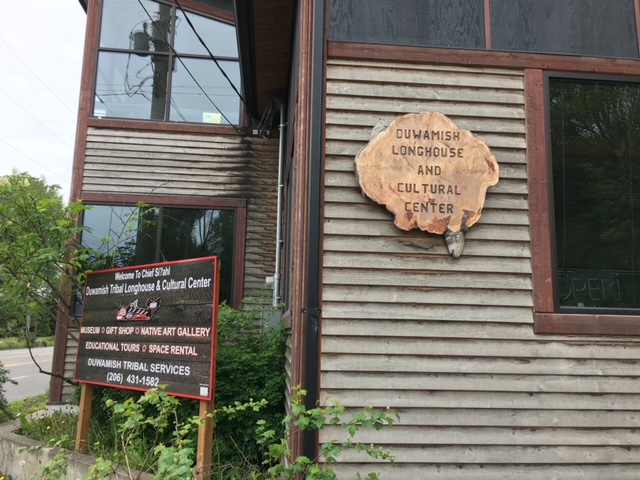
Here are the materials in Duwamish Tribe v. Haaland (W.D. Wash.):
14 Muckleshoot Motion to Intervene
Complaint here.
Here are the materials in GTEC Industries Inc. v. Guzman (D.D.C.):
Here:
Here are the district court materials:
31 [minute order dismissing case]

 Turtle Talk
You must be logged in to post a comment.