Here:

RSVP here. Zoom Info:
Meeting ID: 884 9472 0042
Passcode: 696746



Consultation notice here.
Here:

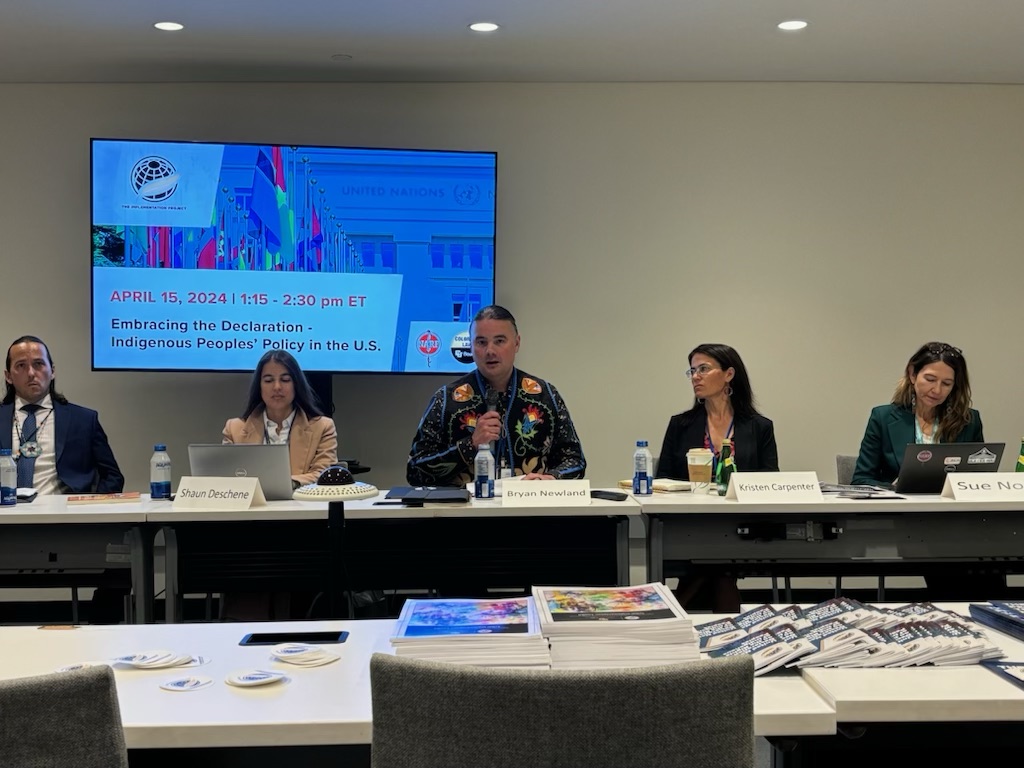
The United Nations Declaration on the Rights of Indigenous Peoples (UNDRIP) is the leading international instrument articulating the individual and collective rights of Indigenous Peoples. It recognizes that Indigenous Peoples have fundamental rights to freedom, equality and non-discrimination, as well as rights related to self-determination, life, land, religion and culture. The UNDRIP underscores the interrelatedness of efforts to ensure that Indigenous Peoples can live free from violence, take care of their children, revitalize their languages, and participate in lawmaking that affects them, among other rights and interests.
The product of decades of advocacy by Indigenous leaders, the UNDRIP is now embraced by all 193 Member States of the United Nations, including the United States. In 2014, at the conclusion of the World Conference on Indigenous Peoples, the United States joined a consensus resolution of the United Nations General Assembly committing to take measures to achieve the ends of the UNDRIP.
More specifically, the United States committed to “taking, in consultation and cooperation with Indigenous Peoples, appropriate measures at the national level, including legislative, policy and administrative measures, to achieve the ends of the Declaration and to promote awareness of it among all sectors of society, including members of legislatures, the judiciary and the civil service.” The United States further committed to “cooperate with Indigenous Peoples, through their own representative institutions to develop and implement national action plans, strategies or other measures, where relevant, to achieve the ends of the Declaration.”
Consistent with this commitment, during the Biden-Harris administration, the Interior Department along with other federal agencies have undertaken certain measures to achieve the ends of the UNDRIP, and advance the rights of American Indian, Alaska Native, and Native Hawaiian peoples.
Those include:
It will be important for the United States, working with Indigenous Peoples, to continue to take measures to achieve the ends of the UNDRIP going forward.
Here:
Purpose: The United Nations Special Rapporteur on the independence of judges and lawyers, Margaret Satterthwaite, invites Member States, national human rights institutions, and other relevant State institutions, international and regional organizations, civil society, scholars, activists, and other interested individuals and organizations to provide written inputs for her next thematic report on Indigenous justice. The report will be presented at the 59th session of the Human Rights Council in June 2025.


 Turtle Talk
You must be logged in to post a comment.