Here is “From the Halls of the Senate to the Chambers of Colorado’s Federal Judges.”
judges
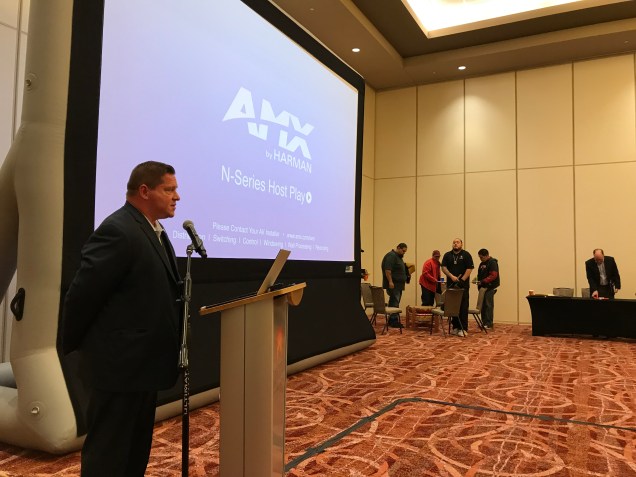
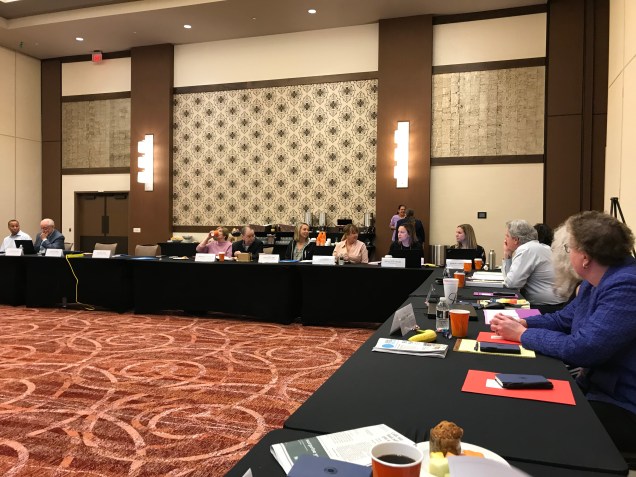
Michigan Tribal-State-Federal Judicial Forum Spring 2019 Meeting

Muscogee (Creek) Nation SCT Issues Opinion in Judicial Recusal Matter
Here is the order in Bruner v. Muscogee (Creek) Nation.
Colorado SCT Sanctions Former Judge for Use of Racial Epithet
Here is the opinion in In re Booras:
NCJFCJ Statement Supporting ICWA
The National Council of Juvenile and Family Court Judges, one of the oldest and largest judicial membership organizations in the country serving an estimated 30,000 professionals in the juvenile and family justice system has released a statement supporting ICWA.
The full statement is available here
The Honorable John J. Romero, Jr. President, National Council of Juvenile and Family Court Judges (bold added by me):
It’s imperative to preserve the rights, culture, connections, and traditions of Indian children and their families. The disproportionate numbers of American Indian and Alaska Native children in our child welfare system persist almost 40 years after ICWA became law. Consequently, the new ICWA rules and regulations enacted in 2016 promote the uniform application of ICWA and to advance and protect Indian children’s best interests.
Our American Indian and Alaska Native children are essential to the security and stability of each tribe. In each ICWA proceeding, the judicial officer and other court professionals should be mindful that children are the heart of the law. Committed uniform application of ICWA and the Regulations will advance and protect the best interests of each child and enhance tribal security and stability.
LTBB Judge Profiled in New Book on Judging
Here is “Judges discover strength in pivotal decisions” from the National Catholic Reporter.
The article reviews the new book, “Tough Cases: Judges Tell the Stories of Some of the Hardest Decisions They’ve Ever Made.”
CSKT 2018 Indian Child Welfare Legal Summit, September 12-13
Confederated Salish & Kootenai Tribes’2018 Indian Child Welfare Legal Summit
The Montana Court Improvement Program, in conjuction with CSKT, would like to invite you to this interactive training designed to improve legal knowledge, skills, and practices in relation to Indian Child Welfare.
After opening with a case law update describing recent Montana opinions, federal court litigation, and note-worthy opinions from sister states, this CLE will provide a quick interactive refresher on the basics of tribal jurisdiction in child custody cases and the requirements of the Indian Child Welfare Act.
With this foundation in place, participants will explore topics like best practices in child welfare cases, domestic child sex trafficking, tribal code enhancement, and ethics as it relates to Indian child welfare cases. Participants will have the opportunity to break out into small affinity groups to discuss improving systems and practices across the state in order to better serve AI/AN children and families.
This two-day training is designed for tribal attorneys, tribal judges, parents’ attorneys, GALs, adoption attorneys, and state prosecutors. (Although caseworkers, CASAs, and other child welfare practitioners are welcome to join us, the focus of this training is to improve legal knowledge, skills, and practices.) Faculty includes local and national experts, practitioners, and scholars from across the country. An application for CLE credits will be filed.
For agenda, updates and more visit:
Clerkships with Washington Supreme Court accepting applications.
Here.
Judge Kavanaugh’s Indian Law Record [Updated]
The judge nominated to replace Justice Kennedy, Brett Kavanaugh, is a D.C. Circuit judge, originally nominated by President Bush in 2006. He has written one opinion in an Indian law case, Vann v. Dept. of Interior (vann v doi), plus one other opinion in which an Indian tribe was the plaintiff that was not really an Indian law case but instead an administrative law matter, Hoopa Valley Tribe v. FERC (hoopa v ferc). He also wrote a short concurring and dissenting opinion in a matter involving the USA Pact Act, Gordon v. Holder (gordon v holder). In none of these cases did he write in support of tribal interests, though none of these opinions betrays any general anti-tribal leanings, either.
Vann was a suit in the long-running Cherokee Freedmen dispute; Judge Kavanaugh wrote an opinion affirming the dismissal of the Vann plaintiff’s suit against the Cherokee Nation, but allowed the suit to proceed against the Principal Chief of the Cherokee Nation in his official capacity.
Hoopa involved the tribe’s challenge to the licensing of the Klamath River Dam. The permanent license had expired and was being operated pursuant to annual licenses. The tribe argued the annual licenses were detrimental to the fish in the Klamath River and asked for conditions to be imposed on the dam operator to protect the fish. The court rejected those claims.
Gordon involved the interlocutory appeal by the federal government of an injunction against the enforcement of the USA Pact Act, a federal law that effectively gutted the intertribal trade in cigarettes. For about a minute and a half, everyone was excited. Judge Kavanaugh would have dissolved the injunction on the grounds that the plaintiff’s constitutional challenge to the Act had no basis. He was right, and eventually the D.C. Circuit dismissed remaining challenges to the constitutionality of the Act a few years later.
Judge Kavanaugh’s remaining cases involve issues in which he participated but did not write. Amador County v. DOI (amador county v doi 2014) was about the denial of permissive intervention in a lawsuit. CETAC v. Kempthorne (cetac v kempthorne) affirmed the authority of Interior to acquire land in trust for a Michigan tribe recognized in the late 1990s; it’s a pre-Carcieri case. Felter v. Kempthorne (felter v kempthorne) involved the dismissal of trust breach claims by mixed-blood Utes. Navajo Nation v. DOI (navajo nation v doi) involved the dismissal of funding claims under the ISDEAA for failure to meet the statute of limitations; Judge Kavanaugh concurred and write a short opinion suggesting that the statute might be equitable tolled because of a government shutdown, but not here. And finally, Timisha Tribe v. Salazar (timbisha v salazar) involved the dismissal of claims brought by a faction of that tribe seeking individual distributions of Indian Claims Commission judgments.
UPDATE: Judge Kavanaugh participated in at least one Indian law matter, as counsel of record filing an amicus brief for a conservative, anti-minority rights coalition of amici in Rice v. Cayetano: rice v cayetano amicus brief
UPDATED UPDATE: News coverage on Sen. Hirono’s release of other Native Hawaiian related docs.
Additional Update: Are Hawaiians Indians? The Justice Department Thinks So [Wall Street Journal op ed]
High Country News: “Why Justice Anthony Kennedy wasn’t good for Indian Country The retiring Supreme Court justice leaves a legacy of anti-tribal votes.”
Here.


You must be logged in to post a comment.