Reflections on Justice Kennedy’s Indian Law Legacy

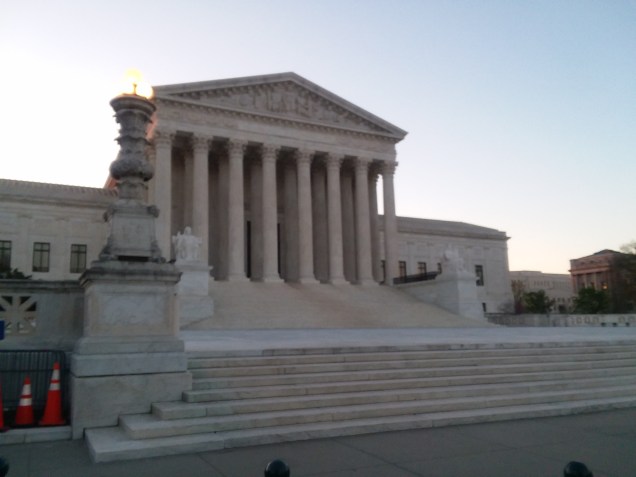
My most enduring memory of Justice Kennedy is no doubt watching him lean over the bench, red faced and angry, screaming/yelling/lecturing at Neal Katyal during the Dollar General oral argument. I concluded then, if I hadn’t already before that moment from his writings, that Justice Kennedy was so disturbed by tribal jurisdiction over non-Indians and non-Indian businesses that he angrily wanted to protect a non-Indian sexual predator from the horror of being subject to a tort claim in tribal court.

Justice Kennedy was confirmed for SCOTUS in 1988. His first vote in an Indian law case was in Oklahoma Tax Commission v. Graham. His last vote in an Indian law case was in the Upper Skagit matter (he recused in the culverts case). During his tenure, tribal interests cleanly won 15 cases and cleanly lost 40 cases. There were two cases in which there were two or more issues in which tribal interests won and lost. There were three cases decided by 4-4 tie votes (including one which Kennedy was recused), and in which tribal interests had prevailed below. There were two non-criminal cases in which the interests of individual Indians were at play, making it difficult to declare it a clean win or loss for tribal interests. There was one case the Court remanded (not talking about Upper Skagit) without a clear winner. In short, it was/is a bad time for tribal interests — just under a 30 percent win rate for tribes, adding in the tie cases.

Justice Kennedy’s voting record was overwhelmingly oppositional to tribal interests. Kennedy voted cleanly in favor of tribal interests 11 times (and that includes Lara, in which he wrote a scathing opinion blasting tribal powers, and nearly half of those votes were in the past few years), and voted cleanly against tribal interests 45 times. There was one case where voted to split issues. We can and should presume he was an anti-tribal vote in both of the 4-4 tie cases (and would have been a deciding vote against the tribes and the US in the culverts case had he not recused). I count just under a 20 percent pro-tribal vote rate for Justice Kennedy.

Justice Kennedy wrote relatively few Indian law opinions, as few as Justice Scalia. It should be clear to observers that during this period, Chief Justice Rehnquist, Justice Thomas, and junior justices carry the conservative side’s laboring oar in Indian law, not right wing stalwarts who write the federalism and anti-civil rights opinions.

The most important majority opinion Justice Kennedy wrote was Duro v. Reina, though Rice v. Cayetano comes in a close second. Duro really shouldn’t be considered an important opinion because it was so clearly wrong on so many levels Congress enacted a temporary Duro fix within weeks of its announcement, making the fix permanent within a year or so. Perhaps because the principles Justice Kennedy advanced in Duro were principles he had been working with in his own mind since at least the 1970s when he dissented as a Ninth Circuit judge in Oliphant [544_f.2d_1007] — this is America where Americans must consent to government and non-Indians cannot choose to be subject to tribal jurisdiction because they cannot be tribal citizens — he seemed to ache to have an opportunity to strike down the Duro fix. His concurring opinion in United States v. Lara lays out how his consent theory would be enough to kill the Duro fix and all but asks the Court to seek a vehicle out for review, a vehicle that never came (sorry Russell Means, you shouldn’t have hired a lawyer). Maybe the biggest problem for Kennedy’s consent theory is that it’s completely farcical and simply not grounded in the Constitution or reality (try driving from Michigan to New Mexico just to vote, not that I would have voted for Gavin even if I could vote — go Deb Haaland!).

For all my criticism, I have a favorite Kennedy opinion, his lower court opinion in United States v. Finch [548_f.2d_822], a precursor to the Montana v. United States case in which SCOTUS held that the Crow Nation did not possess the Big Horn River. Kennedy wrote strongly in favor of the tribe’s ownership, guaranteed by treaty, an opinion that shows how completely misguided Justice Rehnquist’s Montana decision actually was. If he had been that judge during his tenure as a Supreme Court judge he’d be celebrated, even worshipped, by Indian country. Instead a collective “meh” upon his retirement, Indian country would be mourning the retirement of a great justice.
Guest Post: Kirsten Matoy Carlson on Eighth Circuit Judge Diana Murphy

In Remembrance: Judge Diana Murphy

Last month, Indian country lost a powerful advocate and friend, the Honorable Diana E. Murphy of the U.S. Court of Appeals for the Eighth Circuit. Judge Murphy was the first woman appointed to the Court of Appeals for the Eighth Circuit, and she remained the only women on the court for decades. Unlike many federal appellate judges, she served as a district court judge for over a decade before joining the Court of Appeals.

During her thirty-plus years on the federal bench, Judge Murphy heard almost 50 cases and wrote close to two dozen opinions related to federal Indian law. Her majority, concurring, and dissenting opinions covered a wide range of topics, including, inter alia, land-into-trust, taxation, gaming, tribal civil adjudicatory jurisdiction, tribal sovereign immunity, treaty rights, reservation boundaries, and criminal jurisdiction. Her Indian law jurisprudence reflected her remarkable ability to tackle complicated factual and historical patterns, to read closely and identify the relevant facts in their historical context, to apply the law precisely to those facts, and to value and give voice to cultures and ways of life distinct from her own. She was one of those rare federal judges who recognized Indian nations and their people for what they are: sovereign governments with distinctive cultures and ways of life.

Among Judge Murphy’s well known majority opinions are:

Mille Lacs Band of Chippewa Indians v. Minnesota Dep’t of Natural Resources, 861 F. Supp. 784 (Dist. Minn. 1994) — 861_f.supp._784

Gaming Corp. of Am. v. Dorsey & Whitney, 88 F.3d 536 (8th Cir. 1996) — 88_f.3d_536

United States v. Brown, 777 F.3d 1025 (8th Cir. 2015) — 777_f.3d_1025

County of Charles Mix v. United States DOI, 674 F.3d 898 (8th Cir. 2015) — 674_f.3d_898

Hornell Brewing Co. v. Rosebud Sioux Tribal Court, 133 F.3d 1087 (8th Cir. 1998) — 133_f.3d_1087

Leech Lake Band of Chippewa Indians v. Cass County, 108 F.3d 820 (8th Cir. 1997) — 108_f.3d_820

Yankton Sioux Tribe v. Podhradsky, 577 F.3d 951 (8th Cir. 2009) — 577_f.3d_951

Gaming World Int’l v. White Earth Band of Chippewa Indians, 317 F.3d 840 (8th Cir. 2003) — 317_f.3d_840

United States v. Santee Sioux Tribe, 254 F.3d 728 (8th Cir. 2001) — 254_f.3d_728

United States v. Santee Sioux Tribe of Neb., 324 F.3d 607 (8th Cir. 2003) — 324_f.3d_607

Bettor Racing, Inc. v. Nat’l Indian Gaming Comm’n, 812 F.3d 648 (8th Cir. 2016) — 812_f.3d_648

City of Duluth v. Fond Du Lac Band of Lake Superior Chippewa, 785 F.3d 1207 (8th Cir. 2015) — 785_f.3d_1207

United States ex rel. Bernard v. Casino Magic Corp., 384 F.3d 510 (8th Cir. 2004) — 384_f.3d_510

Plains Commerce Bank v. Long Family Land & Cattle Co., 491 F.3d 878 (8th Cir. 2007) — 491_f.3d_878

Attorney’s Process & Investigation Servs. v. Sac & Fox Tribe, 609 F.3d 927 (8th Cir. 2010) — 609_f.3d_927

DISH Network Serv. L.L.C. v. Laducer, 725 F.3d 877 (8th Cir. 2013) — 725_f.3d_877

Judge Murphy also wrote several powerful concurrences and dissents, including:

Nord v. Kelly, 520 F.3d 848 (8th Cir. 2008) (concurrence) — 520_f.3d_848

Fond Du Lac Band of Lake Superior Chippewa v. Frans, 649 F.3d 849 (8th Cir. 2011) (dissent) — 649_f.3d_849

South Dakota v. United States DOI, 69 F.3d 878 (8th Cir. 1995) (dissent) — 69_f.3d_878


Senate Judiciary Committee Minority Report on Judicial Nominations

Here:

judiciary-dems-final-judges-report-5.10.18-

Profile of 9th Circuit Judge Ronald M. Gould

Here’s my profile of Judge Gould, from the April Federal Lawyer.

Ninth Circuit Judge Alex Kozinski to Immediately Retire

From WaPo, here.

News Profile on Judge Abby Abinanti

From Rebecca Clarren of InvestigateWest, here is “NATIVE AMERICAN JUDGE SHOWS PEACEMAKING COURTS OFFER A MODEL FOR REFORM.”

Linda Greenhouse: “A Conservative Plan to Weaponize the Federal Courts”

Here.

Prairie Island Indian Community Job Opportunities

Here:

Request for Proposals Appellate Judge 2017

Request for Proposals Election Legal Services 2017

Request for Proposals Tribal Court Associate Judge

Nez Perce Tribe Seeks Chief Judge

The Nez Perce Tribe Department of Law & Justice is recruiting for: CHIEF JUDGE HR-17-179 full-time regular. This position requires a wide range of legal, administrative, management and budgetary skills. The Chief Judge presides over the Tribal Court, and hears, or assigns to other Tribal Court Associate and Pro-Tem judges, all cases heard in the Tribal Court. The Chief Judge handles all phases of civil and criminal litigation, drafts orders, opinions, memoranda and other legal documents, and fulfills all other duties required of the Chief Judge to assure an effective and fair Tribal Court. In addition, the Chief Judge supervises Associate Judges, Court Administrator and Healing to Wellness Court Coordinator. Requires three (3) years’ experience as a judge, tribal court judicial experience preferred. More than five (5) years of tribal court Chief Judge experience and evidence of success in court administration, court staff supervision and court budget development is preferred. Applicants must demonstrate that they have a thorough knowledge of Indian law, the Nez Perce Tribal Code, and applicable federal law, including but not limited to the Tribal Law and Order Act and Violence Against Women Act. Must have a Juris Doctorate from an accredited law school and must be a member in good standing of a state bar. This is a four (4) year contract position with generous salary and benefits. “Class description available at the NPT Human Resources Department.” The Nez Perce Tribe is a drug free work environment, pre-employment drug testing required. Requires a valid driver’s license with the ability to be insured under the Tribe’s policy. Must provide a current motor vehicle report (MVR) where you have been licensed to drive within the last three (3) years. Open until filled. (Grade 28) 

Human Resources contact person is Robert Kipp at 208. 843.7332, email address is robertk@nezperce.org.