Here.
“Insistence on French for SCC judges could block historic appointment of first Indigenous judge”
Here.
Here.
Here.
Here is “Nominating Judge Humetewa to the Ninth Circuit,” which appears in the Los Angeles Review of Books blog. HT.
An excerpt:
Obama could have nominated Humetewa, but little time remained in his tenure for the Senate to confirm her. Thus, President Trump should promptly make Humetewa’s nomination. Elevation is a venerable tool which modern Presidents have employed, because the Senate has already confirmed the jurist, who has compiled a lengthy, accessible record. Trenchant Ninth Circuit illustrations encompass Judges Mary Murguia and Jacqueline Nguyen. The White House must assiduously consult McCain and Flake, who should be very supportive, as they promoted Humetewa’s district court appointment, especially by persuading GOP colleagues to favor her approval.
In sum, President Trump should promptly nominate Judge Diane Humetewa to the Ninth Circuit. Because she is a well qualified, consensus jurist, who has much experience addressing critical issues that the Ninth Circuit resolves, Humetewa will serve with great distinction.
From The Hill:
“Trump is nominating 10 judges, including two candidates he had previously floated for the Supreme Court, Joan Larsen and David Straus.”
HERE.
From the National American Indian Court Judges Association (NAICJA) Facebook Page:
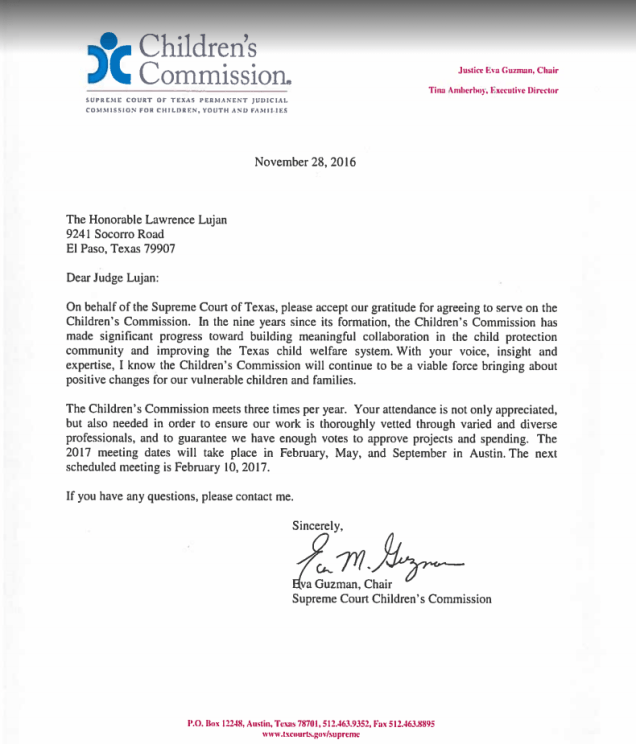
NAICJA Vice President Appointed Commissioner to the Texas Supreme Court’s Permanent Judicial Commission for Children, Youth and Families
Our Tribal Courts not only serve our sovereign communities but also seek partnerships at the state and federal level. These partnerships enhance Indian Country legal services and most importantly put our tribal nations in key leadership positions that promote the welfare of our community members and the sovereignty of all Tribal Courts.
Congratulations on your new appointment Chief Judge Lawrence Lujan of the Ysleta del Sur Pubelo!

Here:

Here is the motion in United States v. Walker River Irrigation District (D. Nev.):
Congratulations Judge Anne McKeig
Link to full article here
From the article:
Gov. Mark Dayton has selected Fourth Judicial District Judge Anne McKeig as the next Supreme Court justice, giving the state’s highest court its first American Indian jurist, as well as the first female majority since 1991.
McKeig, 49, a descendant of White Earth Nation, has specialized in child protection and Indian welfare issues. She was first appointed to the bench in 2008 by GOP Gov. Tim Pawlenty. She will replace retiring Justice Christopher Dietzen, also a Pawlenty appointee.
The selection means that Dayton has made a majority of appointments on the 7-member court, likely ensuring his legacy on the bench long after he leaves office. He has now appointed five justices, though former Justice Wilhelmina Wright joined the federal bench earlier this year.
In his two terms, Dayton has made diversifying the state’s courts a priority. He praised McKeig’s legal experience, and he also emphasized her biography, reading a passage from her application as he announced his pick.
“I grew up in rural Minnesota in challenging circumstances surrounded by poverty,” McKeig wrote. “The lessons I learned as a young woman from Federal Dam, Minn. planted in me a strong desire to make a difference for my community. My passion for public service comes from seeing the enormous need matched against the limited resources on the reservation.”
McKeig delivered an emotional speech Tuesday to reporters, members of her family and other Minnesota dignitaries, including the state Supreme Court. She called her appointment a “historic day” for American Indians. She thanked trailblazing Judge Robert A. Blaeser for paving the way for other American Indians pursuing legal careers.
“I didn’t know him, but he was a White Earth member,” McKeig said, recalling the impression his 1995 swearing-in ceremony left on her. “And, I, a proud descendant of the White Earth nation, knew that if he could do it, than maybe I could.”
She added: “It is people like him and his wife who have led the way that have allowed for others like me to dare to dream. So today is a historic day, not only for myself and for my family, but for all native people.”
| This Request for Qualifications is directed at qualified individuals and/or firms interested in serving as a Pro Tem Judge for the Nooksack Indian Tribe. The Nooksack Tribal Court exercises jurisdiction over a broad range of civil and criminal matters. A Pro Tem Judge will be appointed to hear cases, as assigned by the Chief Judge, in instances where the Nooksack Tribal Court Chief Judge is ill, disqualified, or otherwise unavailable. This is a part time, as-needed appointment, and compensation will be negotiated. Specifically, contractors providing Pro Tem Judicial services will be placed into a pool and drawn from on an as-needed basis when judicial conflicts arise.
DUTIES AND RESPONSIBILITIES: Preside over cases as assigned by the Chief Judge. Prepare and issue written orders, judgments, search and arrest warrants. Keep accurate records of cases and court hearings. MINIMUM QUALIFICATIONS: Possess JD from an ABA-accredited law school and admitted to practice before the Supreme Court of the United States, or any United States Circuit Court of Appeals, or the Supreme Court of any state of the United States. Extensive experience in: (1) criminal case adjudications; (2) juvenile dependency and delinquency; (3) family law and child support; and (4) general civil case adjudications, including complex litigation. Demonstrated knowledge in the following areas: (1) Federal Indian law and policy; (2) Tribal law; and (3) Tribal customs and traditions. Is at least 30 years of age. Has never been convicted or pleaded guilty to any felony, nor been found guilty of any crime involving fraud or dishonesty. Maintain a current business license and admitted to practice before the Nooksack Tribal Court. Successfully pass a background investigation and drug test. Interested individuals (or firms) should submit a letter of interest including availability, along with a current resume and the names of at least three professional references to: Suzanne Brownrigg, Human Resources Director Nooksack Indian Tribe P.O. Box 157 Deming, WA 98244 (360) 592-5176 sbrownrigg@nooksack-nsn.gov |
| NOOKSACK INDIAN TRIBE REQUEST FOR QUALIFICATIONS PRO TEM JUDGE SERVICES (6/2016) |


You must be logged in to post a comment.