Hometown Profile of Zeke Fletcher

Here (we’re from Wayland, which now for the first time ever seems to like Indians, mostly). An excerpt:

Zeke Fletcher, a 1998 graduate of Wayland High School, now is owner of his Lansing law firm and counsel to the Gun Lake Band of Potowatamis.
The owner of Fletcher Law PLLC and formerly a partner at Rosette, LLP and an associate at Honigman, Miller, Schwartz & Cohn, he earned his bachelor’s degree at the University of Michigan in 2003 and his juris doctor law degree at the University of Wisconsin Law School in 2006.
While at Wayland, Fletcher earned fame as a top-notch golfer and was individual Class B state co-champion for the Wildcats in the fall of 1997, carding an 18-hole score of 74 in the finals match.

PHOTO: Zeke Fletcher, legal counsel for the Gun Lake Tribe, relaxes and listens to proceedings at a recent Hopkins Township Board meeting.

Asked and Answered on Lansing Casino Litigation

Featuring “Steve” Matthew Fletcher. Here.

An excerpt:

Thorpe: What is likely to be the next step in this process and when might it take place?

Fletcher: The next step is to litigate the Section 9 question; that is, whether it applies at all because of MILCSA and, if so, whether it forecloses the fee to trust application. I was surprised that Judge Jonker shut down Sault Tribe this early in the process, but it really hurts the tribe. Had Sault Tribe put in their application, the federal government is a party. And especially if Interior took the land into trust, suddenly the United States is a defendant, and they’re much more difficult to defeat than a mere Indian tribe. And no one is better suited to know the implications of an injunction at this early date than Judge Jonker, with all his experience litigating against the United States in Indian gaming cases.

Thorpe: If you were a betting man, what would you say are the odds of the Lansing casino ever being built, at least be the current proposed ownership team?

Fletcher: Flip a coin. Sault Tribe, because of its advantageous position as a result of MILCSA, has the best chance of any tribe. But the Section 9 problem may shut it all down. Moreover, all it takes is one rider in an Interior appropriations bill to undercut that provision.

MSU-E (Emily Proctor): “How VAWA Impacts Tribal Nations in Michigan”

Here. H/T Pechanga.

An excerpt:

Each of the 12 federally recognized tribes of Michigan have their own tribal court and social service departments that assist women and families who are in violent situations. Michigan State University Extension continues to work with Michigan tribal nations to address the needs of communities in the area of government and public policy.

For more information, please contact Emily Proctor, MSU Extension educator on tribal nations, with questions or comments at 231-439-8927 or proctor8@anr.msu.edu.

This article was published by Michigan State University Extension. For more information, visit http://www.msue.msu.edu. To contact an expert in your area, visit http://expert.msue.msu.edu, or call 888-MSUE4MI (888-678-3464).

Saginaw Chippewa and Nottawaseppi Huron Potawatomi Chairs Op/Ed on Lansing Casino

Here.

LSJ Article on Potential Wolf Hunt and Tribes: “Saving Ma’iingan”

Here.

Tribal leaders say they have more than a cultural stake in the wolf, however.

They also believe the state has a legal obligation to give Michigan’s tribes an equal say in the management of the wolf and other wildlife species because of a treaty signed in 1836.

The Treaty of Washington was an agreement between the Ottawa and Chippewa nations and the United States in which the Indians agreed to cede 13 million acres of tribal land to the U.S. government — a move that paved the way for Michigan to become a state in 1837.

In return, Indians were granted unlimited hunting, gathering and fishing rights to the land.

In 2007, the treaty was strengthened in a court-mandated consent decree between the Department of Natural Resources and the tribes. The agreement requires the DNR to manage the state’s natural resources based on “sound scientific management” and to coordinate their efforts with the tribes.


First Same Sex Couple Married by Little Traverse Bay Band

AP Article here features a quote from Cherie Dominic, who is pictured below today (on her birthday!) with the newly married couple. Congratulations to Mr. Barfield and Mr. LaCroix!

photo

NBC News Coverage of Little Traverse Same-Sex Marriage Ceremony

Here.

2013 Michigan Indian Education Critical Issues Conference Today and Tomorrow

Website here. Agenda here.

Program Highlights
Keynote Speaker – Friday Breakfast
We welcome Richard M. Church, Pharm. D. as our Keynote Speaker on Friday morning…
Dr. Church was appointed Director of the Office of Public Health Support for the Indian Health Service (IHS) in 2004. He is a native of Michigan and an enrolled member of the Grand Traverse Band of Ottawa and Chippewa Indians. He earned his Bachelor of Science and Doctor of Pharmacy degrees from the University of Michigan, College of Pharmacy, and he completed his residency at the University of Michigan Medical Center. Dr. Church‘s career accomplishments include developing mission-oriented clinical service and practice roles for pharmacists. He played an active part in advancing progressive pharmacy practice positions that grew out of the IHS and were incorporated into the pharmacy profession at large. Building upon his clinical service foundation, he devoted another career segment to building an information technology infrastructure that positioned the IHS to take advantage of future technology innovations to support public health programs. In his present senior management roles, he provides national leadership in several critical public health support areas, including medical epidemiology; program statistics; planning, evaluation, and research; and health professions support.
Dr. Church has been recognized for service as the recipient of a number of awards and honors. These include the Surgeon General‘s Medallion and the Distinguished Service Medal, as well as many other PHS and professional awards.
Keynote Speaker – Saturday Lunch
Jessica Rickert, DDS was inducted into the Michigan Women‘s Hall of Fame for her work relating to American Indian health issues. A member of the Prairie Band Potawatomi Nation, she was a direct descendant of the Indian chief Wahbememe (Whitepigeon) for whom a village in Michigan is named. Dr. Rickert made history of her own when she became the first female American Indian dentist in the country upon graduating from the University of Michigan – School of Dentistry in 1975. While working in private practice in southeast Michigan, she developed a prevention program and added orthodontics to the dental clinic at Detroit‘s Children‘s Aid Society. As a board member of the Michigan Urban Indian Health Council, Dr. Rickert also established an intertribal dental clinic in Detroit. She assisted two state tribes—the Grand Traverse Band of Chippewa and Ottawa Indians and the Saginaw Chippewa Indians — with such services as dental screenings, preliminary planning for dental clinics, and educational presentations. In 2001, she began a dental advice column syndicated by American Indian newspapers across the nation and distributed in health clinics. That effort earned her the American Dental Association Access Award. She also authored a book entitled ―Exploring Careers in Dentistry.‖

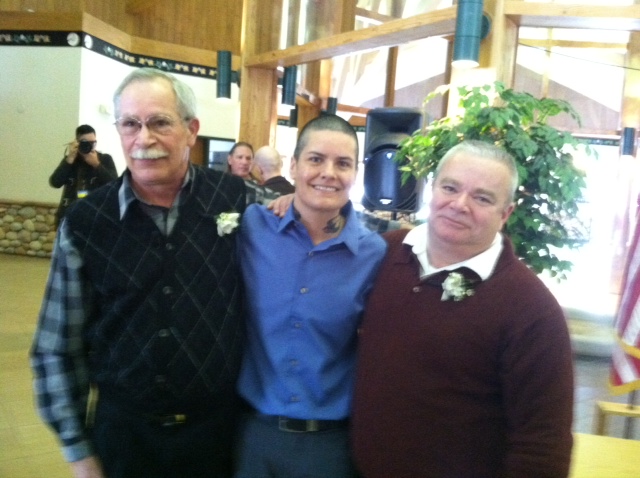
LTBB Chairman Dexter McNamara to Sign Tribal Wedding Ordinance; Officiate Wedding

Here. H/T Pechanga.

FTCA Claim against US for Alleged Negligence of Hannahville Indian Community Employee Dismissed on Jurisdiction Grounds

Here are the materials in Rock v. United States (W.D. Mich.):

DCT Order Dismissing Rock Complaint

Federal Motion to Dismiss 1st Amended Complaint

Rock Opposition

Federal Reply

Horrid story.