Register for 51st Annual Critical Issues Conference March 11-13

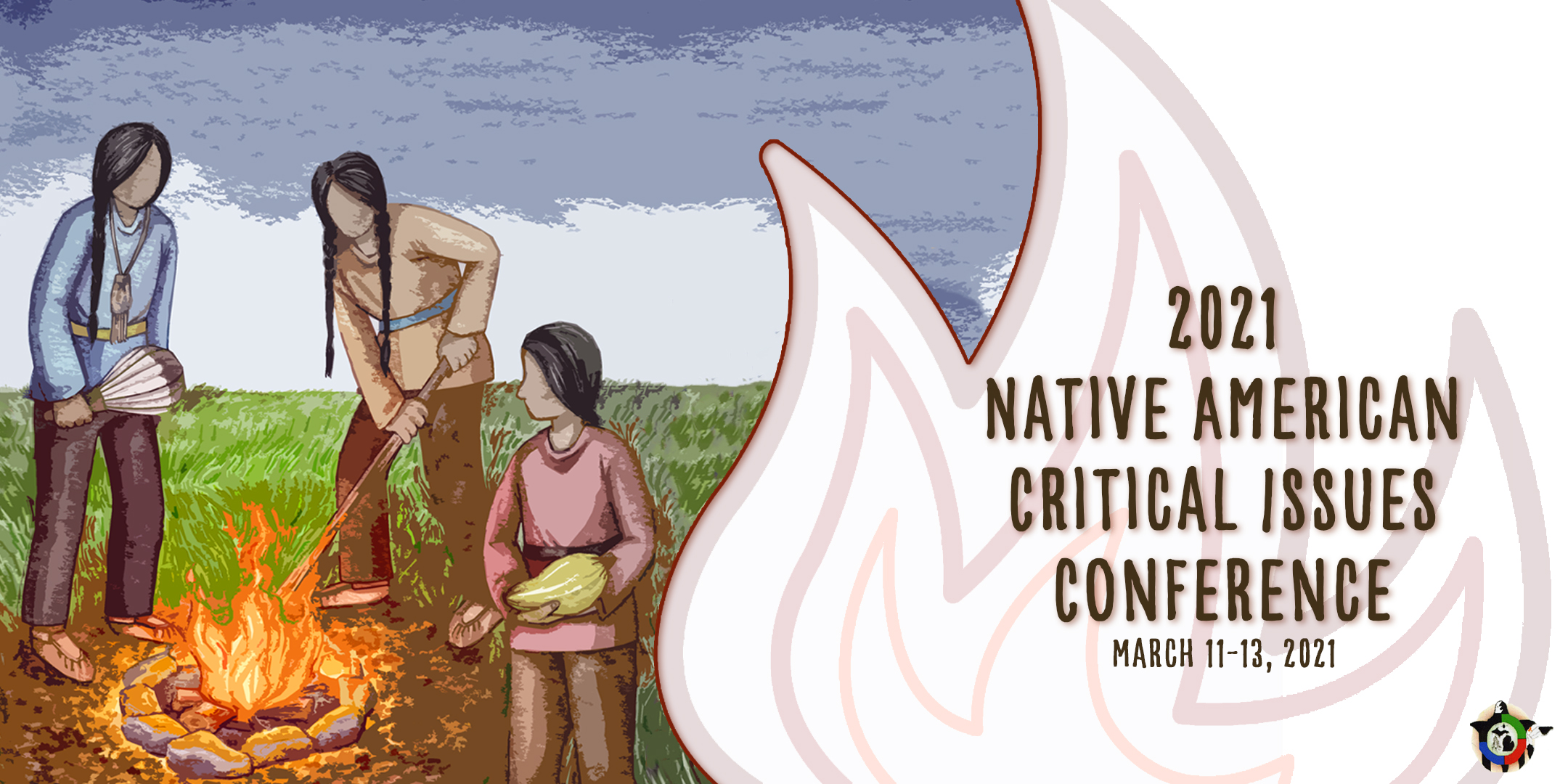
The 51st Annual Native American Critical Issues Conference hosted by the Michigan Indian Education Council

More information at miec.org/conference

March 11-13, 2021, 9-12:30pm ET on Zoom

click here to REGISTER

Download the agenda at glance here. 

Download the save the date flyer here.

Session Topics

  • Cultural Uses of Fire
  • Indigenous Foraging, Cooking, and Eating
  • Fire Ring in the Mackinac Straits
  • Ishkode: The Language of Fire
  • Fired Up: Activism in Indian Country, Past and Present
  • Tri-Lateral Indian Education Panel
  • Missing and Murdered Indigenous Women Panel
  • Rematriation and Pedagogical Reform in K-12 Systems
  • Treaty Rights and Water Habitat
  • The Impact of COVID-19 on Indian Country Keynote
  • Native American Student Organizations Meet and Greet: Our College Experience
  • Graduate School 101
  • Native Scholar Network Summit Keynote
  • Decolonizing NASO
  • and more!

Registration

Click here to register for $150 on Eventbrite and receive access to the password protected Participant Portal. The Participant Portal at miec.org contains the Zoom links needed to gain access to the conference.

More information and registration at miec.org/conference

2021 Pipeline to Law Initiative Program Announced!

Are you interested in applying to law school and want to learn more about the process? We want you to join us! Check out this FREE program offered by law school admissions professionals, law school staff and faculty, and attorneys this summer. For more information, please visit our website!

NNALSA Moot Court Competition Updates!

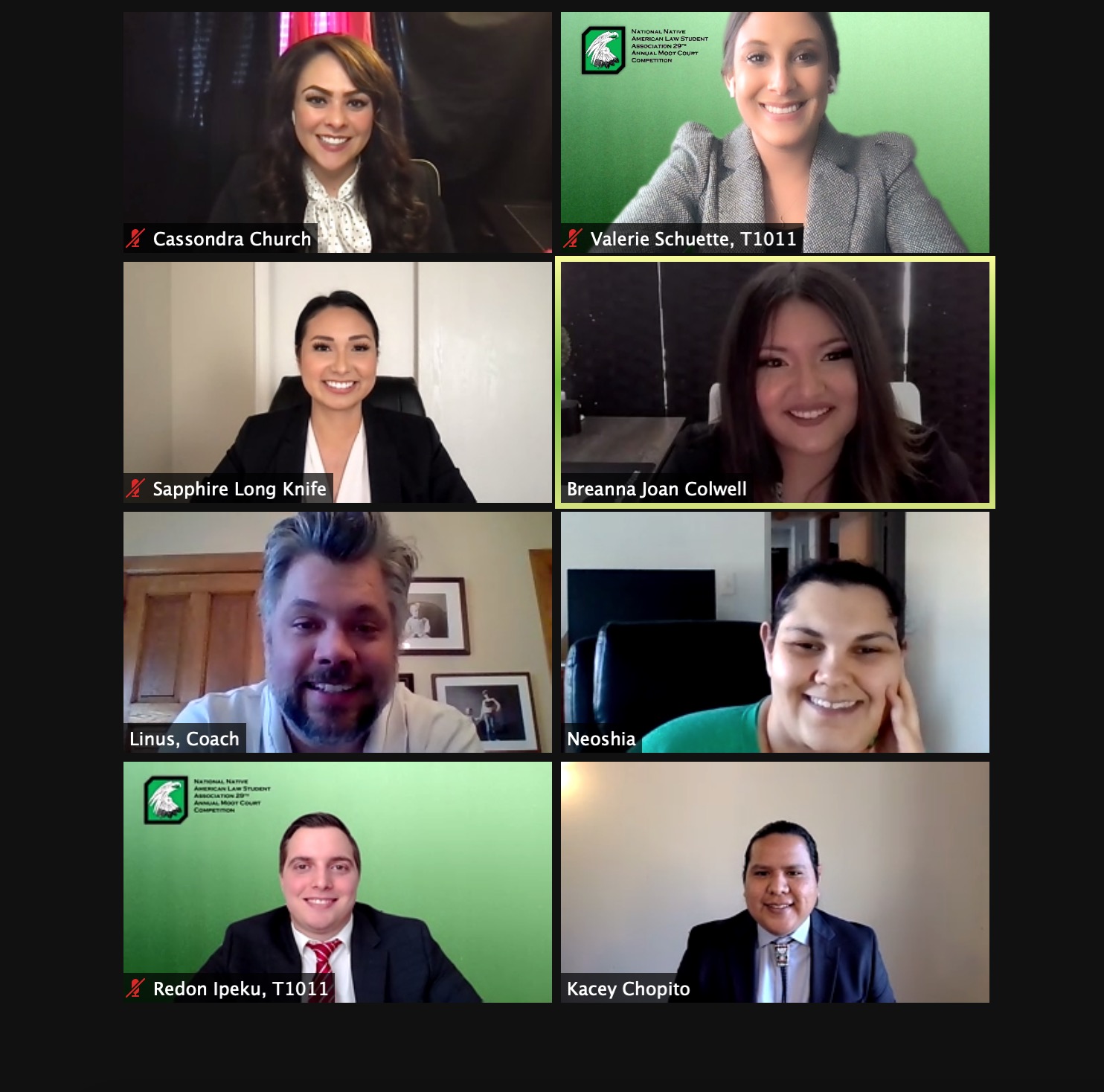
Kacey Chopito (Pueblo of Zuni) and Cassondra Church (Pokagon Band of Potawatomi Indians) competed and advanced to the Final Four round in the 29th Annual National NALSA Moot Court Competition at the University of North Dakota School of Law on February 26-27, 2021. Photo credit: Cassondra Church.

This weekend, three MSU LAW teams competed in the National NALSA Moot Court Competition at the University of North Dakota School of Law. While we are proud of all three of our teams, we are especially pleased to announce that 3Ls Kacey Chopito and Cassondra Church (pictured above) advanced to the Final Four round of this year’s competition, winning both a Semi-Finalist Award and 2nd Place for Best Written Advocates!

We are very proud of all three of our teams (pictured below), who were coached by Linus Banghart-Linn and Neoshia R. Roemer! Please join us in congratulating them on their hard work!

From left to right: Cassondra Church, 2L Val Schuette (Pascua Yaqui Tribe), 3L Sapphire Long Knife (Fort Belknap Indian Community), 2L Breanna Colwell (Saginaw Chippewa Indian Tribe), Coach Linus Banghart-Linn, Coach Neoshia R. Roemer, 3L Redon Ipeku, and Kacey Chopito. Photo credit: Breanna Colwell.

Montana Federal District Court Holds Crow Tribe Has Jurisdiction Over Electric Co-op

Previous post on this litigation here.

Oregon Court Affirms Klamath Tribes’ Water Rights

On Wednesday, February 24, 2021, in an order from Klamath County Circuit Court Judge Cameron F. Wogan, the Oregon court again affirmed the Klamath Tribes’ water and treaty rights. Wednesday’s order rejected attacks on the Tribes’ water rights determined by the Oregon Water Resources Department (OWRD) during the administrative phase of the Klamath Basin Adjudication (KBA), affirmed the senior priority date of the Klamath Tribes’ water rights in the Klamath Basin, and upheld the need to maintain a healthy and productive habitat to meet the Tribes’ treaty right to fish, hunt, trap, and gather.

Klamath Tribes Chairman Don Gentry responded to the order, “We are pleased that Judge Wogan upheld the rulings from the administrative phase of the KBA. He reaffirmed that the 1864 treaty entered into between the Klamath Tribes and the United States reserved to the Tribes sufficient water to keep our fisheries and other aquatic resources healthy so that we can protect our natural resources and cultural traditions.”

NARF Staff Attorney Sue Noe explained, “Judge Wogan correctly affirmed quantification of the Tribal water rights based on the habitat needs of the fish, wildlife, and plants. Although he ruled that opponents of the Tribal rights will have another chance to try to reduce the amounts by showing the Tribes don’t need all the water awarded by OWRD to meet their livelihood needs, Judge Wogan made clear in no uncertain terms that the amounts cannot be below what is necessary to provide healthy and productive habitat.”

Importantly, like all other courts that have considered the issue, Judge Wogan ruled that the Klamath Tribes’ water rights extend to Upper Klamath Lake. Upper Klamath Lake forms part of the border of the former Reservation and provides critical habitat for the endangered c’waam and koptu (Lost River and shortnose sucker fish), which are sacred fish species traditionally harvested by the Tribes.

Represented by NARF, the Klamath Tribes successfully achieved recognition of their treaty-reserved water rights in federal court litigation in the 1970s and 1980s in United States v. Adair, but the federal courts left quantification of the water rights to the state adjudication in the KBA. After the successful conclusion of the KBA’s 38-year administrative phase, the Tribes were able to begin enforcing their water rights for the first time in 2013. The administrative determinations are presently on review in the Klamath County Circuit Court and Judge Wogan’s ruling is the latest to come out of that process.

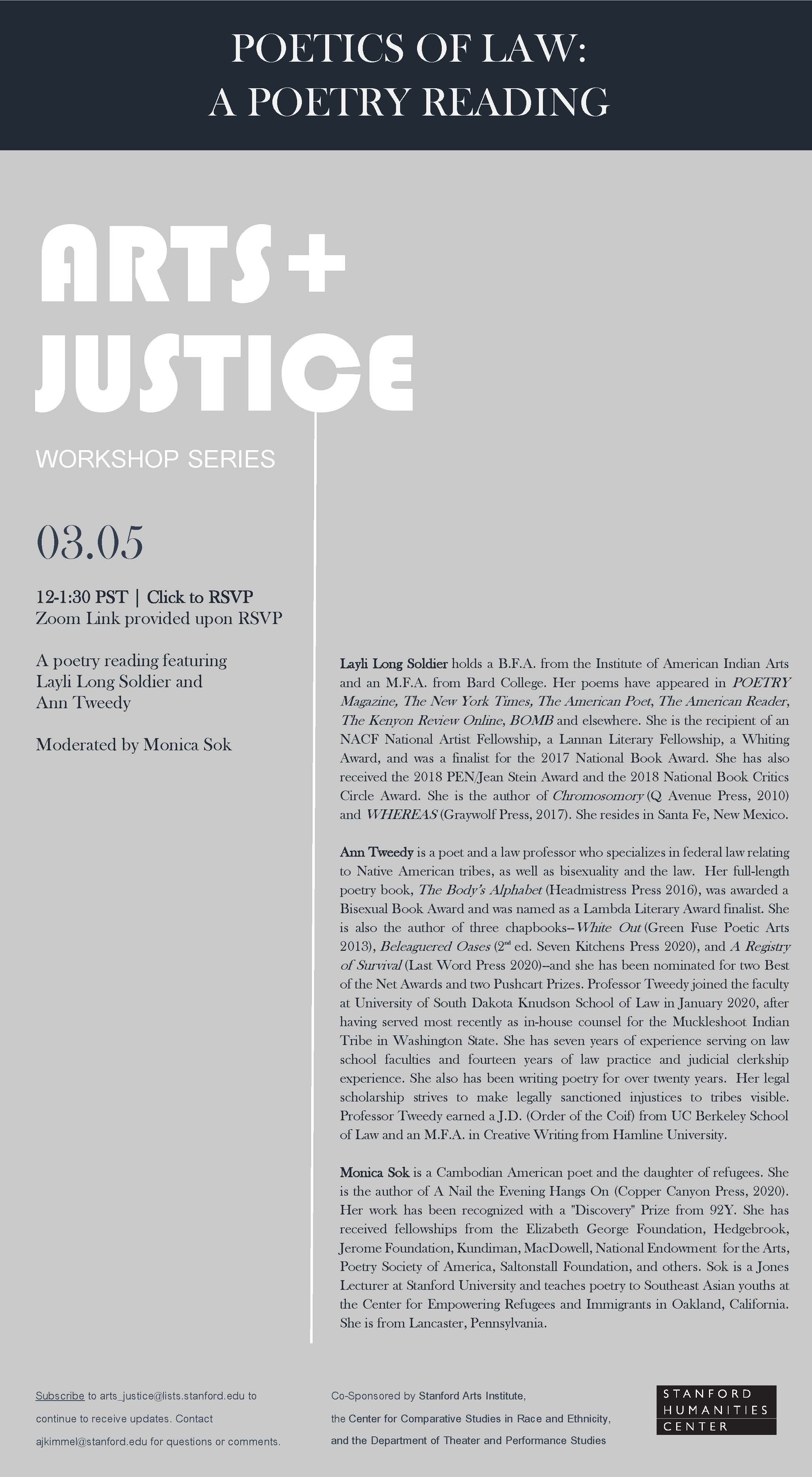
Layli Long Soldier and Ann Tweedy Poetry Reading — March 5

RSVP link here.

NNABA Foundation Bar Review Scholarship

The National Native American Bar Association (NNABA) Foundation is continuing to accept applications for the 2021 Bar Review Scholarship. This scholarship is intended to alleviate some of the financial strains to ensure that future Native attorneys can successfully devote their mind and spirit to the final hurdle of becoming legal warriors. Applications are due March 1, 2021 to scholarship@nativeamericanbar.org. Please visit www.NativeAmericanBar.org for the full application criteria. Awardees will be honored at the NNABA Annual Meeting.

Additionally, the NNABA Foundation’s 2021 scholarship awards will be given in memory of some of our legal warriors who journeyed on this past year. The hope is that our awardees will carry the spirit and fight of their memorial award as they prepare for the bar exam and honor our legal warriors’ memories as they enter the legal profession.

If you would like to nominate a legal warrior to be honored in this way, please submit their name, bio, and photo (if appropriate) to scholarship@nativeamericanbar.org for consideration by the Scholarship Committee. If you would like to donate to this year’s scholarship awards, you can make donations to the NNABA Foundation at https://www.nativeamericanbar.org/the-national-native-american-bar-association-foundation/.

51st Annual Native American Critical Issues Conference: March 11-13

The 51st Annual Native American Critical Issues Conference

More information at miec.org/conference

March 11-13, 2021, 9-12:30pm ET on Zoom

click here to REGISTER

*there are a limited number of student registration scholarships available. Contact mreinhar@nmu.edu for more information.

Download the agenda at glance here. 

Download the save the date flyer here.

Join us for 3 conference tracks, including

  • General Track (A), for the general public
  • Youth Track (B), for young students
  • NASO Track (C), for college-aged students who may be involved in Native American Student Organizations
  • 15 Breakout sessions
  • 4 Plenary sessions
  • 2 Vendor Booth and Information Booth sessions to meet directly with vendors
  • 2 Networking CafĂ© sessions to connect with other attendees
  • Access to Zoom session recordings after the conference

Session Topics

  • Cultural Uses of Fire
  • Indigenous Foraging, Cooking, and Eating
  • Fire Ring in the Mackinac Straits
  • Ishkode: The Language of Fire
  • Fired Up: Activism in Indian Country, Past and Present
  • Tri-Lateral Indian Education Panel
  • Missing and Murdered Indigenous Women Panel
  • Rematriation and Pedagogical Reform in K-12 Systems
  • Treaty Rights and Water Habitat
  • The Impact of COVID-19 on Indian Country Keynote
  • Native American Student Organizations Meet and Greet: Our College Experience
  • Graduate School 101
  • Native Scholar Network Summit Keynote
  • Decolonizing NASO
  • and more!

Registration

Click here to register for $150 on Eventbrite and receive access to the password protected Participant Portal. The Participant Portal at miec.org contains the Zoom links needed to gain access to the conference. Registered attendees will receive the Participant Portal password by email one week prior to the event.

Seeking Artists and Informational Vendors

Vendors: Would you like to be listed as a vendor on the conference website and meet one-on-one with attendees during 2 Vendor Sessions on March 12? Contact Dr. Martin Reinhardt to request a vendor form at mreinhar@nmu.edu by Friday, March 5. Vendor fees are $50.

More information and registration at miec.org/conference