Here:

Fletcher and Fort posted “Intimate Choice and Autonomy: Adoptive Couple v. Baby Girl,” forthcoming in CRITICAL RACE JUDGMENTS (Cambridge Univ. Press, eds. Bennett Capers, Devon Carbado, Robin A. Lenhart, and Angela Onwuachi-Willig) (forthcoming 2021).
As if there was any doubt, we have reached the opposite outcome as the Supreme Court did back in 2013. A few excerpts:
This case is about a little girl (Baby Girl) who is a citizen of the Cherokee Nation, like her father, grandparents, and a multitude of generations before her. American Indian tribal citizenship with a federally recognized tribe is a unique concept in American law. E.g., Santa Clara Pueblo v. Martinez, 436 U.S. 49, 55 (1978) (“[Indian tribes] have power to make their own substantive law in internal matters. . . .”). Tribal citizens are beneficiaries of the federal government’s trust relationship with Indian tribes, and the federal government has promised to tribal citizens for centuries to assist in the maintenance of tribal governments, cultures, and sovereignty. Worcester v. Georgia, 31 U.S. 515, 556 (1831) (“[The Cherokee treaty], thus explicitly recognizing the national character of the Cherokees, and their right of self government; thus guarantying their lands; assuming the duty of protection, and of course pledging the faith of the United States for that protection; has been frequently renewed, and is now in full force.”).
And:
The ethically dubious acts of the Petitioners in this case extends to this Court’s amici. Several amici invoked the racist dog whistle of referring to the Petitioners as the “only family” Baby Girl has ever known. E.g., Brief for Guardian Ad Litem, as Representative of Respondent Baby Girl, Supporting Reversal at 56 (“Indeed, it is hard to imagine what liberty interest is more important to a 27-month old child than maintaining the only family bonds she has ever known, absent a strong showing of necessity.”) (emphasis added); Brief of Amica Curiae Birth Mother in Support of Petitioners at 3 (“The decision below effectively negated Birth Mother’s decision to place Baby Girl with Adoptive Couple, and ripped Baby Girl from the only family she has ever known, in derogation of both Birth Mother’s and Baby Girl’s rights and expectations under state law.”) (emphasis added); Brief of Amici Curiae Bonnie and Shannon Hofer; Roger, Loreal, and Sierra Lauderbaugh; and Craig and Esther Adams in Support of Petitioners at 38 (“[T]he lower court took non-Indian Petitioners’ adopted Indian daughter from them – destroying the only family she has ever known.”) (emphasis added); Brief of Amici Curiae National Council for Adoption in Support of Petitioners at 13-14 (“ICWA is implemented in some cases to traumatize children by forcing them into completely unknown environments, traumatizing them by removal from the only family they’d ever felt a connection with and imposing the developmental delays that come with the traumatic removal from a secure attachment.”) (emphasis added).[1] It appears that for some of our amici, the “only family” that matters is the non-Indian Petitioners’ family. For these amici, the Indian family and other biological relatives are strangers and foreigners. The only pain and shame of removal and separation that matters is that of the non-Indian family. It is apparent the “only family” dog whistle is designed to distract our attention from the ever-present bias against Indian parents and relatives in the child welfare and adoption system. This we will not accept. As noted above, this Court long has been complicit in dehumanizing Indian people. In Professor Harris’ words, “[C]ourts established whiteness as a prerequisite to the exercise of enforceable property rights.” Harris, supra, at 1724. No longer. We additionally suspect that this form of advocacy implicates American Bar Association Rules of Professional Conduct 3.4 (Fairness to Opposing Party and Counsel), 3.5 (Impartiality & Decorum of the Tribunal), 4.4 (Respect for Rights of Third Persons), and 8.4 (Misconduct).
[1] One commentator even referred to the Cherokee family here, who descend from an Indigenous nation that has been present in this hemisphere since time immemorial, as “foreign.” Thomas Sowell, Indian Child Welfare Act does not protect kids, Denton Record-Chronicle, Feb. 1, 2018, at 6A (“This little girl is just the latest in a long line of Indian children who have been ripped out of the only family they have ever known and given to someone who is a stranger to them, often living on an Indian reservation that is foreign to them.”) (emphasis added).
Seth Davis has published “Tribalism and Democracy” in the William & Mary Law Review. Here is the abstract:
Americans have long talked about “tribalism” as a way of talking about their democracy. In recent years, for example, commentators have pointed to “political tribalism” as what ails American democracy. According to this commentary, tribalism is incompatible with democracy. Some commentators have cited Indian Tribes as evidence to support this incompatibility thesis, and the thesis has surfaced within federal Indian law and policy in various guises up to the present day with disastrous consequences for Indian Tribes. Yet much of the talk about tribalism and democracy—within federal Indian law, and also without it—has had little to do with actual tribes. Looking at the histories and practices of Indian Tribes calls the premises of the incompatibility thesis into question. Indeed, many examples of Indian Tribalism reflect the democratic practices that critics of “political tribalism” praise. First, Indian Tribal self government safeguards democracy by ensuring that Indians not only are governed (by the federal and state governments), but also have the opportunity to govern. Second, Indian Tribal governance is compatible with democracy because it depends in no small measure upon discourse and negotiation, not upon coercion and zero-sum gaming. And third, the persistence of Indian Tribes in the face of the coercion and violence of colonialism challenges Americans to honor the democratic ideal of consent of the governed. In all three ways, Indian Tribalism and American democracy are compatible.
Here:
ANOTHER INAPPROPRIATE F WORD: FIDUCIARY DOCTRINE AND THE CROWN-INDIGENOUS RELATIONSHIP IN CANADA
Bryan Birtles
“ONE PERSON, ONE VOTE”: NAVAJO NATION V. SAN JUAN COUNTY AND VOTER SUPPRESSION OF NATIVE AMERICANS
Carter Fox
REHABILITATIVE JUSTICE: THE EFFECTIVENESS OF HEALING TO WELLNESS, OPIOID INTERVENTION, AND DRUG COURTS
Majidah M. Cochran and Christine L. Kettel
THE INDIAN CHILD WELFARE ACT’S APPLICATION TO CIVIL COMMITMENTS OF INDIAN CHILDREN IN STATE COURT PROCEEDING
Courtney Lewis
PEYOTE CRISIS CONFRONTING MODERN INDIGENOUS PEOPLES: THE DECLINING PEYOTE POPULATION AND A DEMAND FOR CONSERVATION
James D. Muneta
John Minode’e Petoskey has published “International Traditional Knowledge Protection and Indigenous Self Determination” in UCLA Law School’s Indigenous Peoples’ Journal of Law, Culture & Resistance.
An excerpt:
In February 2019, the World Intellectual Property Organization (WIPO) issued a “Proposal For a Study by the WIPO Secretariat on Existing Sui Generis Systems For the Protection of Traditional Knowl- edge in WIPO Member States.” This effort is a part of the organization’s ongoing endeavors to assist indigenous people in protecting their Traditional Knowledge (TK) from misappropriation and outright theft. This Comment will answer WIPO’s call by discussing history of indigenous TK in four countries and how the Indian Arts and Crafts Act (IACA) can offer a viable model for TK protection in light of this history.
Grant Christenson has published “The Wrongful Death of an Indian: A Tribe’s Right to Object to the Death Penalty” in the UCLA Law Review Discourse.
The article is here.
Mark J. Cowan has posted “Taxing Cannabis on the Reservation,” forthcoming in the American Business Law Journal, on SSRN.
The abstract:
American Indian tribes that enter the cannabis industry confront a multi-sovereign tax system that lacks certainty and horizontal equity. The complex interaction of state legalization and taxation of cannabis, federal tax law, the status of tribes as both governments and business enterprises, and the legal and tax landscape in Indian country can give tribes tax advantages and disadvantages compared to off-reservation cannabis dispensaries. This article analyzes these tax issues, examines them in the context of prior challenges posed by Indian gaming, and suggests reforms that address the tax inequities that can result from cannabis sales on Indian reservations.
Here.
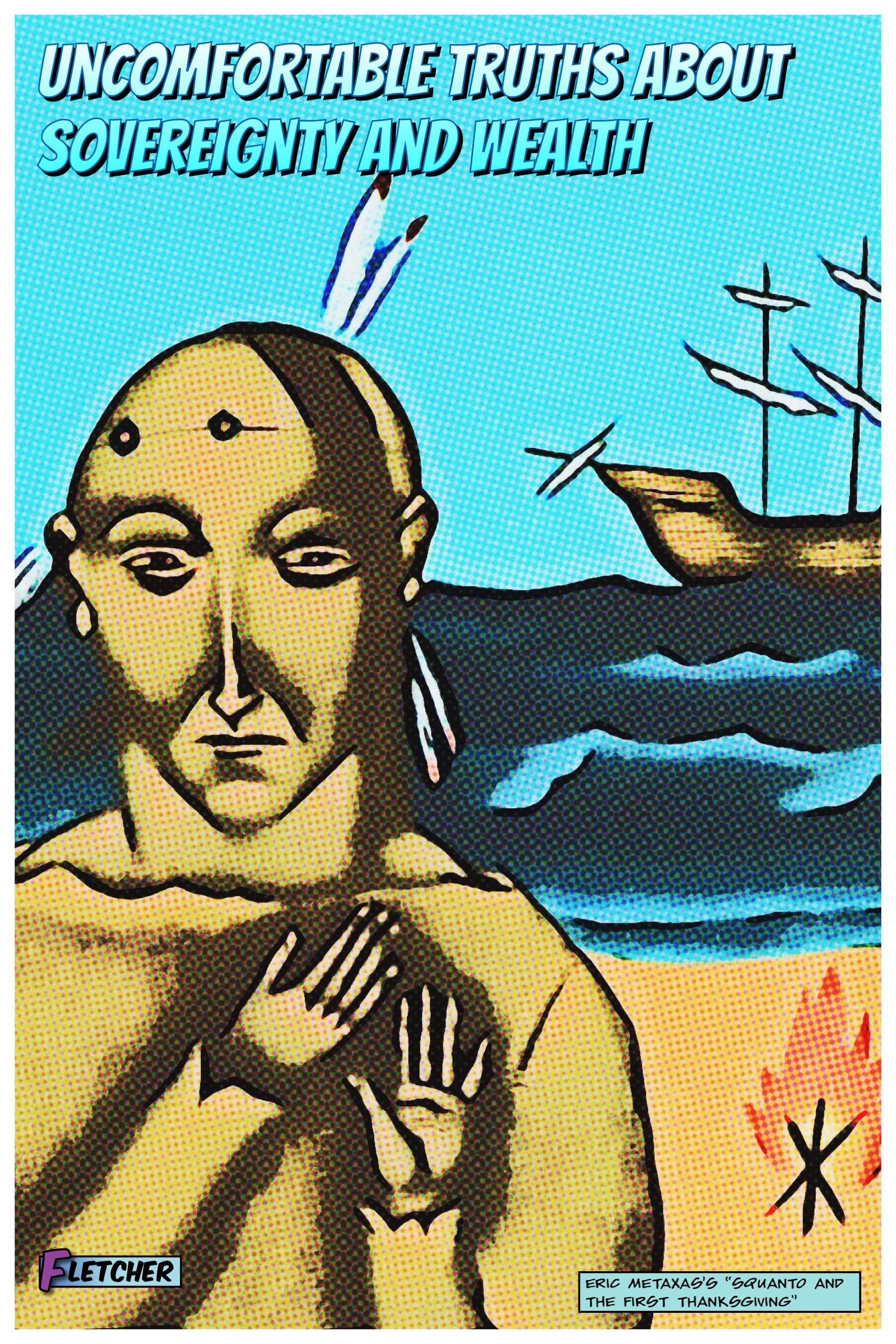
On today’s episode of A Hard Look, a Junior Staffer on ALR, Olivia Miller, joins host, Sarah Knarzer, and Professor Matthew Fletcher to discuss the tribal recognition process and the barriers it poses to tribes across the United States, and in particular the Mashpee Wampanoag tribe. Earlier this year, and in the middle of a surging coronavirus pandemic, the Bureau of Indian Affairs announced its intention to revoke the Mashpee Wampanoag’s land from its federal trust. This action is only a continuation of the Mashpee Wampanoag’s four hundred year struggle for tribal survival, dating back to the origins of the Thanksgiving myth.
Olivia and Professor Fletcher discuss Olivia’s comment, which she wrote as part of ALR’s comment writing process, to identify why the tribal recognition process is such a difficult, expensive, and frustrating administrative process for tribes who want and need to be federally recognized.
Trevor Reed has posted “Fair Use as Cultural Appropriation,” forthcoming in the California Law Review, on SSRN.
Here is the abstract:
Over the last four decades, scholars from diverse disciplines have documented a wide variety of cultural appropriations from Indigenous peoples and the harms these inflict. And yet, there are currently no federal laws other than copyright that limit the appropriation of song, dance, oral history, and other forms of intangible culture. Copyright is admittedly an imperfect fit for combatting cultural appropriations – it is a porous form of protection, allowing some publicly beneficial uses of protected works without the consent of the copyright owner under certain exceptions, foremost being copyright’s fair use doctrine. This article evaluates fair use as a gate-keeping mechanism for unauthorized uses of culture. As codified in the 1976 Copyright Revision Act, the fair use doctrine’s four-part test is supposed to help fact finders determine whether an unauthorized use of another’s work is reasonable in light of copyright’s goals of promoting cultural production. But, while the fair use test has evolved to address questions about the purpose behind an appropriation, the amount and substance of the work used, and the effects of the appropriation on the market for the work, the vital inquiry about the “nature” of the original work and the impact of unauthorized appropriation on its creative environment has been all but forgotten by lower federal courts. Combining doctrinal analysis, settler-colonial theory, and ethnographic fieldwork involving ongoing appropriations of copyrightable Indigenous culture, this article shows how this “forgotten factor” in the fair use analysis is key to assessing the real impacts unauthorized appropriations have on culturally diverse forms of creativity. Thus, if we are committed to the development of creativity in all of its varieties and natures, a rehabilitation of the forgotten factor is both urgent and necessary.
Looks like important reading to me.
You must be logged in to post a comment.