Here is “Navajos Face Leadership Crisis as Lawmakers Take Office, Minus a New President.”
Tribal Codes
New Mexico Supreme Court Holds State Officers May Transport Navajo Members Off Reservation for Chemical Testing
Here is the opinion in State v. Charlie:
An excerpt:
In summary, the testimony that the Navajo Nation enabled cross-commissioned State Police officers to transport Navajos off the reservation for chemical testing to investigate Navajo Code violations was unopposed. Defendants instead argued that in spite of this testimony, extradition protocols had to be followed. They erred as a matter of law because no extraditions occurred. In addition, because Defendants’ only argument for lack of jurisdiction erroneously relied on the purported need to follow Navajo extradition procedures, the Court of Appeals erred in reversing the district court decisions on bases that exceeded the scope of review. As a result, we reverse the Court of Appeals.
Eighth Circuit Affirms Dismissal of Lee v. Cleve Her Many Horses
Fifth Circuit Decides Bankruptcy Matter Involving Interpretation of Navajo Law
Here are the materials in In the Matter of Vallecito Gas LLC (Morton v. Yonkers):
This is a Chapter 11 bankruptcy trustee who was trying to void overriding royalty interests purchased by third parties from a Navajo Tribe, but without approval by the Navajo Nation as per the Navajo Code. The Court agreed with the Bankruptcy Court that the Trustee could not raise the lack of Navajo approval as an impediment to the validity of the underlying transfer of the overriding royalty interests. Although the Navajo Code requires the approval from the Navajo Nation for such transfers, the Court reasoned that because the Navajo Code does not serve to protect the Trustee’s interests, but rather to protect the Navajo Nation from exploitation, the Trustee was not permitted to raise the lack of approval.
Ninth Circuit Files Amended Opinion in EEOC v. Peabody Western Coal Co.
Here. The amendment appears minor:
At Slip Op. 22, 768 F.3d at 974, the sentence beginning with <The Indian preference exemption> and ending with <does not extend to Indians.> is deleted and replaced with:
The Indian preference exemption contained in Section 703(i) is therefore necessary to clarify that Title VII’s prohibition against racial or national origin discrimination does not extend to preferential hiring of Indians living on or near reservations.
Panel materials here.
Federal Bankruptcy Court Holds Prairie Band Potawatomi Per Cap is Property of Individual Debtors
Here are the materials in In re McDonald (D. Kan. Bkrcy.):
47 Order Sustaining Objections
An excerpt:
Debtors, William and Bonnie McDonald and Kliffton and Jeanette Scott, have filed chapter 13 plans that do not propose to pay any amount to satisfy the best interest of the creditors test of 11 U.S.C. § 1325(a)(4) with regard to per capita payments they receive from the Prairie Band Potawatomi Nation Indian Tribe (hereinafter “Prairie Band” or the “Tribe”). Building on governing precedent, the Court concludes that despite changes to the Prairie Band Per Capita Ordinance and Tribal Code since it last ruled on these issues, the per capita payments remain property of the respective chapter 13 estates, and the Debtors’ plans have thus failed to satisfy the best interest of the creditors test with respect to this contingent, unliquidated property.
Debtors William and Bonnie McDonald also seek to exempt the per capita payments from the bankruptcy estate by arguing they are exempt under 11 U.S.C. § 522(b)(3)(A) as “local law that is applicable . . . at the place in which the debtor’s domicile has been located for the 730 days immediately preceding the date of the filing of the petition.” The McDonalds have stipulated that their domicile is in Topeka, Kansas, however, and they are not domiciled on Prairie Band land. As a result, § 522(b)(3)(A)’s exemption based on “local law” is not applicable. The McDonalds’ other exemption arguments likewise fail.
As a result of the conclusions discussed more fully herein, the Court sustains the Chapter 13 Trustee’s objections to confirmation and objections to exemption in each case.
Update in Navajo Nation Election Dispute
Here is “Navajo Nation presidential candidate suffers setback after ruling” reporting that the Navajo President vetoed the bill that would have allowed Chris Deschene to remain on 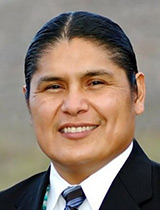 the ballot.
Also, “Navajo Language Fluency Still a Requirement for Tribal Candidates.”
On the motion for contempt (here), the Navajo Supreme Court’s website states:
The Supreme Court has set a hearing for the Petitioners’ Motion to Hold Respondents in Contempt of Court in Tsosie and Whitethorne v. Navajo Board of Election Supervisors and Navajo Election Administration, No. SC-CV-68-14. The hearing is scheduled for 10 a.m. on October 31, 2014, at the Chinle District Court. See order. The Supreme Court has also set hearings on October 31, 2014, at the Chinle District Court on costs and fees in SC-CV-57-14 and SC-CV-58-14 at 9 a.m., and in SC-CV-68-14, at 1 p.m.
The Navajo SCT previously issued an opinion on the merits here.
Disbarred Tribal Lay Advocate’s ICRA Suit Dismissed
Here are the materials in Young-Man v. Fallon Paiute-Shoshone Tribe (D. Nev.):
Navajo Nation SCT Briefs and Materials in Tsosie v. Deschene
Here:
The Supreme Court has issued an Order of Dismissal in Tsosie and Whitethorne v. Deschene, No. SC-CV-68-14. The Notice of Appeal is available here.
Most of the briefs are here:
- SC-CV-68-14 Petitioners’ Brief on Jurisdiction
- SC-CV-68-14 Petitioners’ Brief on the Merits of the Writ of Mandamus and Injunction
- SC-CV-68-14 Respondent’s Response to Petition for Writ of Mandamus Regarding Court’s Jurisdiction
- SC-CV-68-14 Reply to Petition for Mandamus Regarding Merits
Amicus briefs are here:
2014-10-20 E Arthur et al Brief of the Amicus Curiae
2014-10-20 NN Purpose of Amicis Brief-CC
Briefs before the Supreme Court remanded are here:
- Order Setting Briefing.
- Opening Brief of the Appellant No. SC-CV-57-14.
- Order of Consolidation and Revision of Briefing ScheduleThis order consolidates two separate appeals by Dale E. Tsosie and by Hank Whitethorne, both against Christopher C. Deschene. It also revises the briefing schedule. Oral argument remains as scheduled.
- Opening Brief of the Appellant No. SC-CV-58-14
- Brief of Chris Deschene
- Amicus Curiae Brief of Navajo Election Administration
Navajo SCT Dismisses Chris Deschene Appeal on Procedural Grounds
Here is the opinion.
 Turtle Talk
You must be logged in to post a comment.