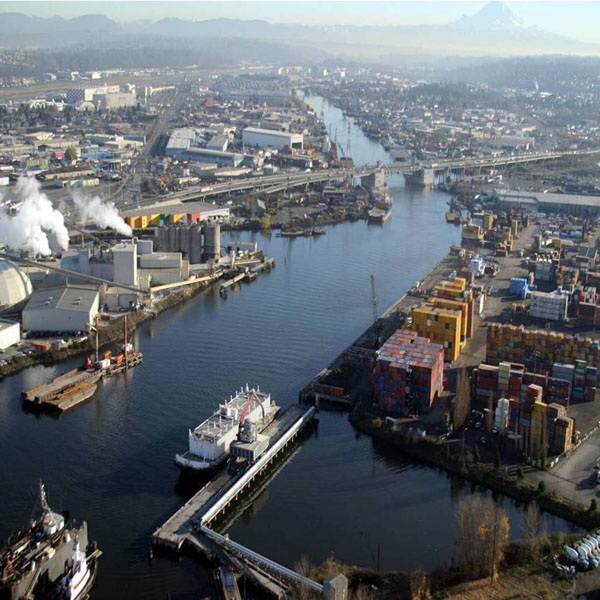
Here is the complaint in United States v. Lynden Inc. (W.D. Wash.):
Here is the opinion in Williams v. Martorello.
An excerpt:
This class-action proceeding relates to a lending scheme allegedly designed to circumvent state usury laws. Matt Martorello appeals from three district court rulings that (1) reconsidered prior factual findings based on a new finding that Martorello made misrepresentations that substantially impacted the litigation, (2) found that the plaintiffs- appellees—Virginia citizens who took out loans (the “Borrowers”)—did not waive their right to participate in a class-action suit against him, and (3) granted class certification.
In particular, Martorello argues that the district court violated the mandate rule by making factual findings related to the misrepresentations that contradicted this Court’s holding in the prior appeal and then relying on those factual findings when granting class certification. He also contends that the Borrowers entered into enforceable loan agreements with lending entities in which they waived their right to bring class claims against him. In addition, he asserts that common issues do not predominate so as to permit class treatment in this case.
As explained below, we disagree with Martorello. We conclude that the district court did not violate the mandate rule and that the Borrowers did not waive the right to pursue the resolution of their dispute against him in a class-action proceeding. Finally, we conclude that the district court did not abuse its discretion in granting class certification because common issues predominate. Accordingly, we affirm the rulings of the district court.
Briefs here.
Lower court materials here.

The 2023 American Indian Justice Conference (AIJC) is planned for May 3-4, 2023 in Reno, NV. The conference planners for this event are the National Criminal Justice Training Center of Fox Valley Technical College (NCJTC), the Tribal Judicial Institute at the University of North Dakota (TJI) and the National Tribal Judicial Center (NTJC). We are seeking presentation proposals from BJA training and technical assistance providers and partners.
Please complete the online call for presentations form (using the link below) by Wednesday, February 8, 2023.
Here.
Angela Riley & Sarah Glenn Thompson have posted “Mapping Dual Sovereignty and Double Jeopardy in Indian Country Crimes,” recently published in the Columbia Law Review, on SSRN.
Here is the abstract:
The Double Jeopardy Clause guarantees no individual will be put in jeopardy twice for the same offense. But, pursuant to the dualsovereignty doctrine, multiple prosecutions for offenses stemming from the same conduct do not violate the Clause if the offenses charged arise under the laws of separate sovereigns, even if the laws are otherwise identical. The doctrine applies to tribal prosecutions, but its impact in Indian country is rarely studied. Such an inquiry is overdue, particularly as the scope of crimes potentially subject to dual tribal and federal prosecutions has broadened in recent years. This Article is the first to undertake a preliminary examination of the dual-sovereignty doctrine in the tribal–federal context and describe the complex interplay between the doctrine and the rest of the criminal law fabric in Indian country. Perhaps most significantly, it includes an original typology highlighting when a defendant may be subject to the doctrine, which sovereigns have the authority to prosecute, pursuant to what source of power each sovereign operates, and when and how the sequence of prosecutions matters, if at all. This leads to the Article’s central thesis: Indian tribes are separate sovereigns with inherent sovereignty, and, under current conditions, the dual-sovereignty doctrine plays a central role in ensuring safety in Indian country. The doctrine’s application in Indian country, however, creates unique complexities that may threaten tribal sovereignty and raise issues of unfairness for defendants. This Article offers numerous reforms—some highly ambitious and others more modest—to address these issues.

Here is the cert petition in Sulgrove v. Spokane Tribe:
Here are the questions presented:
Lower court materials here.
To post an open Indian law or leadership job to Turtle Talk, send all of the following information to indigenous@law.msu.edu
In the email body:
A typed brief description of the position which includes
Litigation Counsel. Banning, CA. Under general direction of In-House Counsel, the Litigation Counsel will be part of the Legal Department’s function of delivering legal counsel, advice, and support as the legal advisor to the Tribe, including the Tribal Council, General Membership, all tribal administrators and department heads, and various committees and commissions on litigation and other matters, including, but not limited to, providing attorney services to the Morongo Cheehun ‘Evra – Office of Victims of Crime Program (OVC), funded by grants under the federal Office of Victims of Crime. The duties of the Litigation Counsel will be divided 60% to legal services to the tribal government and 40% to OVC. Open until filled.
Paralegal. Highland, CA. Under the direction of the Director of Legal Operations and designated attorneys, Paralegals play a key role in providing legal-related assistance and administrative support for different functional areas of the organization including government, litigation, real estate, employment and labor, transactions and intellectual property management, as applicable based upon individual experience and need. The Paralegal role is an integral part of the Legal Department, supporting a team of attorneys and a legal operations team in enabling the efficient and effective delivery of legal services to Tribal government and enterprise partners. This Paralegal role offers an unparalleled opportunity to increase your professional network, gain valuable experience, and grow with the organization as we pursue strategic initiatives in 2022 and beyond. Open until filled.
Environmental Justice Staff Attorney. Albuquerque, NM. As a Staff Attorney, you will engage in legal, policy, and administrative advocacy, as well as coalition-building, fundraising, and media work. You will work closely with client communities to achieve client-directed priorities. You will also be responsible, in collaboration with the Executive Director and staff, for identifying, managing and advancing new campaign and litigation opportunities. Staff Attorneys are involved in policy development, advocacy, and larger development/fundraising initiatives that help to support and expand NMELC’s legal services and work. Closing date: Open until filled.
General Attorney (Trade Regulation). Dallas, TX, San Francisco, CA or Washington, DC. The Bureau of Consumer Protection and the FTC’s Regional Offices investigate and litigate civil actions to enforce federal consumer protection laws, including unfair and deceptive acts and practices related to COVID-19. Closing date: February 9, 2023.
Associate Attorney. Washington D.C. We are accepting applications for Associate Attorneys to conduct legal advocacy and litigation with the Washington, DC office. The position requires 0-4 years post-law school legal experience. The attorney selected for this position will have the opportunity to play a key role in legal actions that can make a real difference to people’s health and well-being and in protection of important environmental values. Applicants should submit via Jobvite by Feb 12, 2023.
Attorney-Advisor. Sacramento, CA. This position will primarily provide legal advice to the Bureau of Land Management in its operations in California and Nevada. Legal issue areas include the entire range of environmental and natural resources laws applicable to the Bureau, including but not limited to the National Environmental Policy Act, Federal Land Policy and Management Act, and Administrative Procedures Act. The closing date for this position is February 3, 2023.
Legal and Policy Fellow. Remote. Fellows will have both internal and external responsibilities grounded in serving urban Indian organizations (UIOs) to advance the mission of NCUIH through policy, advocacy, outreach, technical assistance, and research projects. Fellows will report to the Director of Federal Relations and regularly work with NCUIH’s Director of Congressional Relations, Public Policy Counsel, and Vice President of Public Policy. Fellows’ will conduct legal research, analysis, and writing in various legal fields including health law, Federal Indian Law, and administrative law. Fellows will also have the opportunity to participate in legislative and regulatory analysis. Closing date: February 10, 2023.
Deputy Bureau Director. Washington, D.C. or Albuquerque, NM. This Senior Executive position serves as the principal executive expert advisor to the Director, Bureau of Indian Affairs concerning Bureau programs designed to promote the welfare and development of individual Indians and Indian communities nationwide. Closing date: 02/20/2023.
2L Summer 2023 Law Clerk. Helena, MT and Eugene, OR. We are looking for bright and motivated individuals committed to public interest environmental law and to WELC’s mission and advocacy. The selected summer law clerks will work with WELC attorneys in all aspects of case development, including developing litigation strategies, conducting legal research, attending client meetings and court appearances, and drafting pleadings, briefs, memoranda, and other legal documents. Applications received by February 6th will be prioritized.
Summer Associate 2023. Tempe, AZ. This is a 40 hour/week in-office position with remote work flexibility, as needed and approved upon hire. Applicants must have completed 1L or 2L year by Summer 2023. Excellent research abilities. Excellent written and oral communication skills. Indian law coursework and work experience is preferred but not required. Closing Date: February 10, 2023.
In-House Attorney. Fort Yates, ND. Provide legal advice, counsel and legal services to the Standing Rock Sioux Tribal Council, Executive Committees: (Judicial, Health Education & Welfare and Economics), Tribal Administration, and Tribal Programs as needed. 2. Render legal opinions on matters of concern to the Tribe, including but not limited to interpretation of the Constitution, Code of Justice and state and federal law. 3. Act as legal counsel for the Tribe in legal disputes with entities and/or individuals as the Tribal Council or administration shall direct. 4. Review, advise and assist in updating the Tribe’s Code of Justice to reflect current laws. 5. Act as representative of the Tribe in matters which have a legal impact upon the Tribe and at which testimony or representation is required to protect. 6. Perform other duties as assigned or delegated by the Tribal Council, Executive Committees or Tribal Administration, or requested legal issues by Tribal Programs. Open Until Filled.
Attorney. Phoenix, AZ. Main duties: Provide legal services for matters pertaining to the various agencies within the Department of the Interior, primarily for, but not limited to, the Bureau of Land Management and the Bureau of Indian Affairs. Closing date: 1/27/2023.
Assistant Attorney General. Whiteriver AZ. Provides nonpartisan legal advice and representation as needed to the tribe, its officials, departments, agencies, offices, enterprises, and the Tribal Council and its committees. Stipulate assistance in accordance to civil and criminal matters, contracts and grants, resolutions and tribal codes, legal advice and opinions, and continuing legal education. Closing date: Open until filled.
Tribal Prosecutor. Whiteriver, AZ. Under general supervision of the Tribal Attorney General, the Tribal Prosecutor represents the White Mountain Apache Tribe before the White Mountain Apache Tribal Court on the Fort Apache Indian Reservation. Administrate prosecutions, financial and statistical assessments, developmental and procedural matters, and trainings and consultations. Open until filled.
Policy Specialist/Lobbyist. Washington D.C. This position is responsible to track and monitor key developments in the U.S. Congress, at the White House, and at federal agencies for applicability to clients; attend and analyze Congressional hearings and press events on behalf of clients; create written analysis and advice for clients based on legislative and executive activity relevant to Indian Country; schedule and attend Congressional and agency meetings, including coordination and preparation of materials for those meetings; and generate significant billable work for clients related to federal policy on both ends of Pennsylvania Avenue. This position also works with other members of the Big Fire policy team to help manage client meetings, events, visits, and D.C. client fly-ins. The position requires participating in firm client development initiatives and client service meetings and activities. Open until filled.
Program Analyst. Washington, D.C. (or negotiable remote work location). Responsibilities include: providing liaison services to water rights settlement implementation and negotiation teams nation-wide; briefing policy-level leaders within the Department; facilitating meetings focused on negotiations with various parties to settlements including Tribes, States, and other governmental and non-governmental organizations; conducting research and analyses on issues related to Indian water right and related legal and policy matters; and other duties as more fully described in the job posting. The application for this position is open until January 23, 2023.
Assistant Court Administrator. Dowagiac, MI. Assist the Court Administrator in the overall administration of Court operations and supervising and directing court clerks. Primary responsibility to ensure that all of the clerical duties and responsibilities of the Tribal Court are met by providing clerical work supervision, monitoring & training. Responsible for the day-to-day clerical operations of the Court and is the first point of contact for court clerks for operational matters, which includes clerical duties, scheduling, equipment, and technology issues. Provides leadership for special projects, assists with Court budgets and assists with timely implementation of organization changes, court policy and procedures. Closing Date: January 28, 2023.
Director, Climate Judiciary Project. Washington D.C. ELI is seeking a dedicated professional to serve as the Climate Judiciary Project Director to lead the project team and, in partnership with the Vice President of Research and Policy, the Project Founder, and the Director of Judicial Education, develop and implement its strategic vision and plan. The CJP Director conducts program development and fundraising, and is a thought leader in the climate law and policy community. The CJP Director works extensively with both the project leadership team as well as organizational leadership. Application Deadline: 2/15/2023.
Legislative Services Attorney. Harbor Springs, MI. The primary function of the Legislative Services Attorney is to serve the Tribal Council and provide legal advice in order to promote and protect Tribal Sovereignty, Tribal Self-sufficiency, and Tribal Self-determination. The Legislative Services Attorney shall interact and communicate with Tribal Council and Tribal Council committees, representatives from other tribes, local, state, and federal units of government when necessary; and in some cases, the Tribal citizens, while maintaining effective cooperative relationships. The Legislative Services Attorney will provide representation of Tribal Council; provide advice and analysis of the Tribal Constitution, Tribal Codes, state and federal laws and regulations; negotiate and draft legal, business and State/Tribal documents; and draft Resolutions, Statutes, Certified Motions, policies, procedures, Legislative Directives, Declarations, Special Tributes, agreements, proposals, legal memorandums, Memorandums of Understandings (MOU), Leases and contracts for the Tribe and Tribal Council. Open until filled.
Principal Tribal Court Advocate. Window Rock, AZ. Performs legal work related to representation of the Navajo Nation government, as assigned by the Assistant Attorney General, including legal research, negotiations, legal writing, drafting pleadings, briefs, memoranda, resolutions and other documents for the divisions, departments, or programs assigned. Child Support Enforcement: Present child support enforcement cases before the Office of Hearings and Appeals. Participate in case staffing with Child Support Enforcement officers; provide legal advice and case strategy. This position is open until filled.
Principal Attorney (Water Right Unit). Window Rock, AZ. Under general direction of the Assistant Attorney General or the Attorney General and Deputy Attorney General, professionally represents the Nation in multiple water rights adjudications pending in state and federal courts, in state administrative water rights matters and in any settlement negotiations concerning the Nation’s water rights. The Principal Attorney works closely with technical staff within the Water Rights Unit Staff, Department of Water Resources and other programs within the Navajo Nation, and with consultants retained to provide technical support to the Nation or to serve as expert witnesses. The Principal Attorney provides legal advice on all water rights matters to the Office of the President and Vice President, the Office of the Speaker, the Navajo Nation council, and its committees and subcommittees and the Navajo Nation Water Rights commission (NNWRC) to ensure that the water rights of the Navajo Nation are effectively pursued and protected. This position is open until filled.
Principal Attorney. Window Rock, AZ. Under general direction of the Assistant Attorney General or the Attorney General and Deputy Attorney General, represents the Navajo Nation government; Review documents, such as service contracts, sub-recipient and grant agreements, legislation, proposed policies, etc., for legal sufficiency. Participate in negotiations regarding legal documents/agreements with parties outside of the Navajo Nation. Respond to Request for Services and other legal inquiries from clients. Perform legal research and provide legal advice verbally and in writing. Legal advice and services will include: conducting initial eligibility determination reviews on proposed FRF expenditure plans; interpreting federal, state, and Navajo laws, regulation, policies, and procedures; and advising on legal compliance in the implementation of FRF programs and projects. This position is open until filled.
Attorney (Litigation Unit). Window Rock, AZ. Legal work related to federal, Navajo Nation, and state court and administrative tribunal representation of the Navajo Nation Government, as assigned by the Assistant Attorney General of the Litigation Unit or the Office of the Attorney General, and Deputy Attorney General, including legal research, pleading drafting, and settlement negotiation for Litigation Unit of the Department of Justice. Review of proposed disciplinary actions by Navajo Nation government programs for compliance with Navajo Nation Personnel Policies Manual and Navajo Preference in Employment Act. Drafting of proposed Navajo Nation legislation, regulations, and policies. Other duties as assigned. This position is open until filled.
Attorney (Human Services and Government Unit). Window Rock, AZ. Under general direction of the Assistant Attorney General or the Attorney General and Deputy Attorney General, represents the Navajo Nation government in reviewing documents, such as services contracts, sub-recipient and grant agreements, legislation, proposed policies, etc., for legal sufficiency. Participates in negotiations regarding legal documents/agreements with parties outside of the Navajo Nation. Respond to Request for Services and other legal inquiries from clients. Perform legal research and provide legal advice verbally and in writing. Legal advice and services will include: conducting initial eligibility determination reviews on proposed FRF expenditure plans; interpreting federal, state, and Navajo laws, regulation, policies, and procedures; and advising on legal compliance in the implementation of FRF programs and projects. This position is open until filled.
Attorney Candidate. Window Rock, AZ. Under general direction of the Assistant Attorney General, the Attorney General, or the Deputy Attorney General, provides legal direction to Navajo Nation Divisions, Departments and offices, regarding a wide range of legal issues, including statutory and regulatory authority, contracts and procurement issues, and intergovernmental relations; Assists Attorneys; prepares and presents civil cases in tribal court and administrative bodies; confers and provides guidance, and prepares advisory opinions for assigned departments and branches of the government; prepares interpretations of new legislation and judicial decisions; reviews contracts, leases, permits and related documents; interviews witnesses, complainants, and others on a variety of legal matters; conducts legal research, prepares briefs, pleadings and other legal documents. This position is open until filled.
Senior Attorney (Tax and Finance Unit). Window Rock, AZ. Respond to Requests for Services and other legal inquiries from clients, particularly in the area of the American Rescue Plan Act (ARPA) and federal Fiscal Recovery Funds (FRF). Perform legal research and provide legal advice orally and in writing. Legal advice and services will include: conducting initial eligibility determination reviews on proposed FRF expenditure plans; interpreting federal, state, and Navajo laws, regulations, policies, and procedures; as well as advising on legal compliance in the implementation of FRF programs and projects. Participate in Legislative Branch and Executive Branch meetings, including Standing Committee meetings and Council Sessions, regarding approval of FRF expenditure plans and the planning and implementation of FRF programs and projects, in order to respond to legal questions pertaining ARPA and the use of FRF. This position is open until filled.
Principal Attorney (Human Services and Government Unit). Window Rock, AZ. Provides legal direction to other attorneys and advocates in providing complex legal representation of Navajo Nation Divisions, Departments, and Programs regarding a wide range of legal issues. Some legal issues may include statutory and regulatory review, contract disputes and procurement issues, and intergovernmental relations; performs professional legal work, research; presents cases in court and performs related duties as required; confers with, gives advice to and prepares opinions for various departments and branches of the Navajo Nation; drafts legal and judicial processes; prepares interpretations of new legislation and judicial decisions; reviews contracts, mortgages, leases, permits and related documents; conducts interviews on a variety of legal matters; conducts legal research, prepares briefs, pleadings and other legal documents. Advises clients and members of the various oversight committees of the Navajo Nation Council, as is required, on legal questions. Provides opinions on Navajo Nation law and policies and/or legislations/resolutions that may impact the Navajo Nation. Assist in routine operation of the Department of Justice. This position is open until filled.
Prosecutor. Kayenta, AZ. Represents the interest of the Navajo Nation in juvenile adjudications, dependencies, Children in Need of Supervision (CHNS); research and study of litigation of juvenile proceedings and child neglect cases including appellate cases, reviews police, social service, and related reports/complaints, and other law enforcement documents and reports; prepares oral arguments, gathers facts and data; determines if sufficient evidence exists to support the charges; attends juvenile related hearings in Navajo Nation Courts; conducts legal research; drafts complaints, motions and/or other legal proceedings; prepares a legal strategy; identifies and subpoenas witnesses, records and other information required to present the case, prepares legal memoranda, briefs, motions and other required documents for court presentation; performs extensive legal research. Makes decisions in sensitive case and seeks assistance as needed in the juvenile matter. This position is open until filled.
Senior Prosecutor. Crownpoint, NM. Represents the interest of the Navajo Nation in prosecuting individuals alleged to have violated provisions of the Navajo Nation Code and present major and complex litigation in District and Family Courts. Reviews citations, arrest sheets and other law enforcement documents and reports; interviews witnesses, gathers facts and data; determines if sufficient evidence exists to support the charges; conducts legal research; drafts complaints, motions and/or other legal proceedings; prepares a legal strategy; gathers and compiles evidence; identifies and subpoenas witnesses, records and other information required to present the case. Prepares and presents criminal and civil cases in the Navajo Nation and appellate courts; prepares legal memoranda, briefs, motions and other required documents for court presentation; collaborates with law enforcement agencies; and negotiates settlement with opposing parties. This position is open until filled.
Prosecutor. Crownpoint, NM. Represents the interest of the Navajo Nation in prosecuting individuals alleged to have violated provisions of the Navajo Nation Code; reviews citations, arrest sheets and other law enforcement documents and reports; interviews witnesses, gathers facts and data; determines if sufficient evidence exists to support the charges; conducts legal research; drafts complaints, motions and/or other legal proceedings; prepares a legal strategy; gathers and compiles evidence; identifies and subpoenas witnesses, records and other information required to present the case. Prepares and presents criminal and civil cases in the Navajo Nation and appellate courts; prepares legal memoranda, briefs, motions and other required documents for court presentation; performs extensive legal research. This position is open until filled.
Click here for last week’s job announcements!
Here is the complaint in Winnebago Tribe of Nebraska v. Thurston County (D. Neb.):
Here is the order in JLLJ Development LLC v. Kewadin Casinos Gaming Authority (Mich. Cir. Ct.):
Prior post here.

 Turtle Talk
You must be logged in to post a comment.