
Register here.
Register here.
It’s ‘cuz of PL280 (and, yeah, I know you’re out there Red Lakers, so chill). Here is the opinion in Martin v. State of Minnesota:

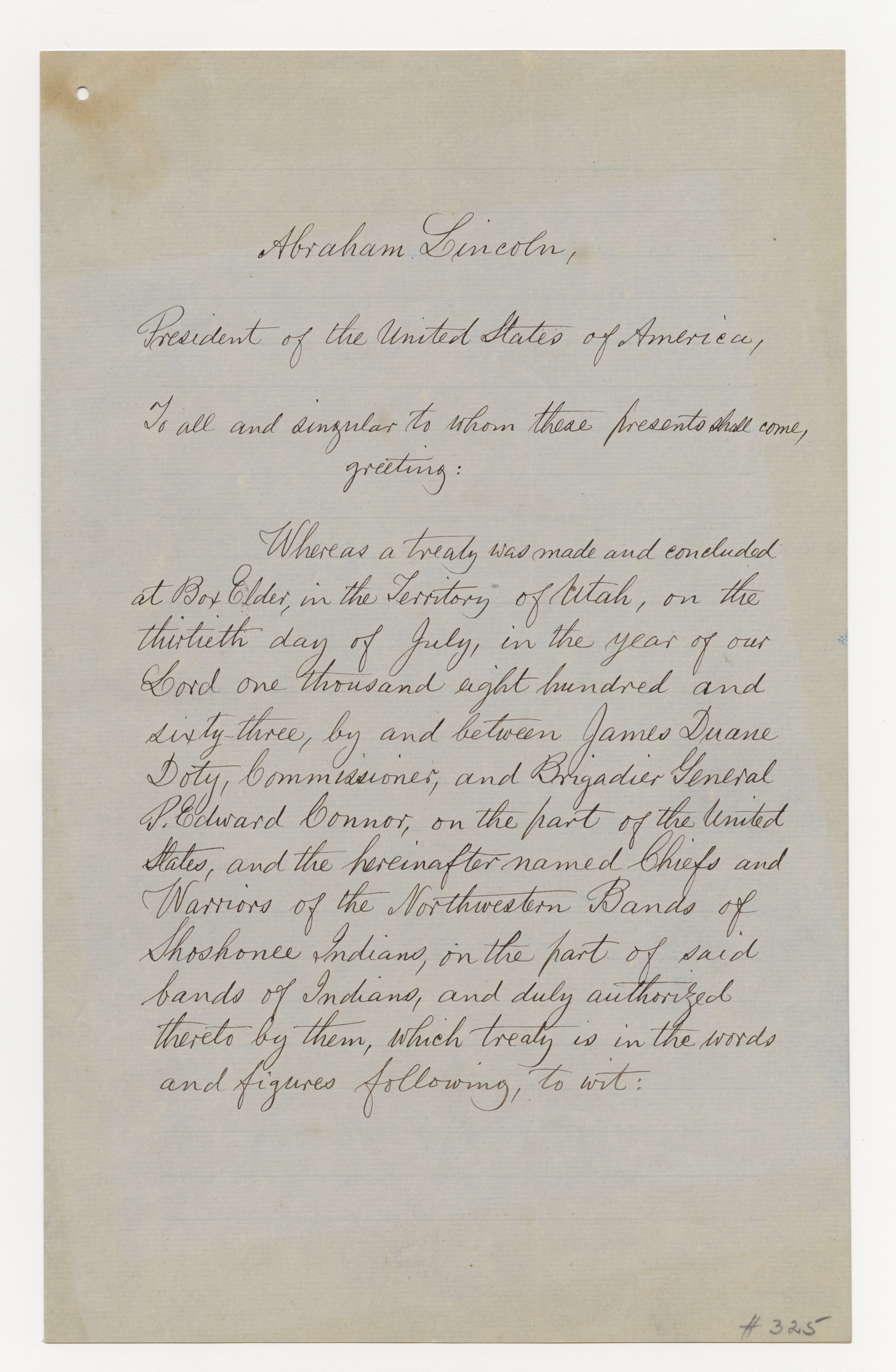
Here are the materials in Northwestern Band of the Shoshone Nation v. State of Idaho (D. Idaho):
Here are the materials in Miller v. Eastern Band of Cherokee Indians (N.C. Ct. App.):

Just a reminder that early bird registration for the Symposium on the Restatement of the Law of American Indians closes on January 31. The program is packed with speakers and panelists from around the nation who participated in the development of the Restatement and will feature keynote presentations from Judge William Fletcher of the 9th Circuit and Justice Montoya Lewis from the Washington Supreme Court. Use the link below to register soon for the best rates.
Home – 34th Annual Indian Law Symposium: Restatement of the Law of American Indians (cvent.com)
Here is today’s order list. See prior post here.
The Court denied cert in two McGirt-related petitions filed by prisoners:
Bentley v. Oklahoma: Bentley Petition
White v. Oklahoma: White Petition
Robert Miller and Torey Dolan have published “The Indian Law Bombshell: McGirt v. Oklahoma” in the Boston University Law Review.
Check it out — McGirt + . . .


Here.
The asbtract:
The Supreme Court decision McGirt v. Oklahoma, confirming the boundaries of the Creek Reservation in Oklahoma, was a truly rare case in which the Court turned back arguments by federal and state governments in favor of American Indian and tribal interests. For more than a century, Oklahomans had assumed that the reservation had been terminated and acted accordingly. But only Congress can terminate an Indian reservation, and it simply had never done so in the case of the Creek Reservation. Both the majority and dissenting opinions attempted to claim the mantle of textualism, but their respective analyses led to polar opposite outcomes.
Until McGirt, a “faint-hearted” form of textualism had dominated the Court’s federal Indian law jurisprudence. This methodology enables the Court to seek outcomes consistent with the Justices’ views on how Indian law “ought to be.” This Article labels this thinking Canary Textualism, named after the dominant metaphor used for decades to describe Indian law, the miner’s canary—a caged bird used to warn of toxic gases in a mine. Canary textualists treat Indians and tribes as powerless and passive subjects of federal law and policy dictated by Congress and the Supreme Court. Canary Textualism relies on confusion in the doctrinal landscape and fear of tribal powers to justify departures from settled law. The 1978 decision Oliphant v. Suquamish Indian Tribe, in which the Supreme Court stripped Indian tribes of critical law enforcement powers by judicial fiat, is the prototypical Canary Textualism case. Oliphant’s hallmark is the Court’s legal acknowledgment that Indian tribes are dependent on the federal government in light of centuries of precedents that presumed the racial inferiority of Indian people. This allowed the Court to quietly assume that tribal governments are inferior as well.
Scholars long have decried the Court’s Canary Textualism but have rarely offered a better theory. This Article attempts to fill that gap and to provide more certainty in federal Indian law textualist doctrine that will help preclude Canary textualist activism. A far better metaphor than the miner’s canary is that of the muskrat—the hero of the Anishinaabe origin story of the great flood, a lowly, humble animal that nevertheless took courageous and thoughtful action to save creation. Indians and tribes are no longer caged birds. Tribal governments are active participants in reservation governance. They are innovative and forward-thinking. Luckily, the McGirt decision exemplifies a new form of textualism, Muskrat Textualism, that acknowledges and respects tribal actions and advancement. Muskrat textualists accept tribal governments as full partners in the American polity. Muskrat textualists accept the relevant interpretative rules that govern federal Indian law where texts are ambiguous and where texts are absent or not controlling. As a result, Muskrat Textualism is also a superior form of textualism more generally, illustrating the proper role of the judiciary in constitutional law and statutory interpretation and ensuring more predictable and just Indian law adjudication.
This Article argues that McGirt—and its embrace of Muskrat Textualism—is a sea change in federal Indian law, and rightfully so. If that is the case, then cases like Oliphant should be reconsidered and tossed into the dustbin of history.
 Turtle Talk
You must be logged in to post a comment.