Here is the complaint in Wilkie v. United States (D.N.D.):

Here are the materials in State of Minnesota v. Thompson (Minn. Ct. App.):

The Indigenous Peoples’ Journal of Law, Culture & Resistance (IPJLCR) is currently accepting submissions for Volume 12, which has a target publication date of Spring 2027. Submissions are being accepted until Sun., March 15, 2026. Email submissions and any questions to: ipjlcr@lawnet.ucla.edu.
IPJLCR is an interdisciplinary law journal housed at the University of California, Los Angeles School of Law that focuses on Indigenous legal issues and publishes scholarly articles, legal commentary, poetry, songs, stories, artwork, and other media. We are soliciting scholarly articles, student comments, and art that centers on or relates to legal issues important to Indigenous communities in the United States and throughout the world. We also seek works on issues or aspects of life in Native communities that are impacted by law, whether tribal law or the laws of nation-states. To access past issues, please visit https://escholarship.org/uc/uclalaw_ipjlcr.
Requirements:
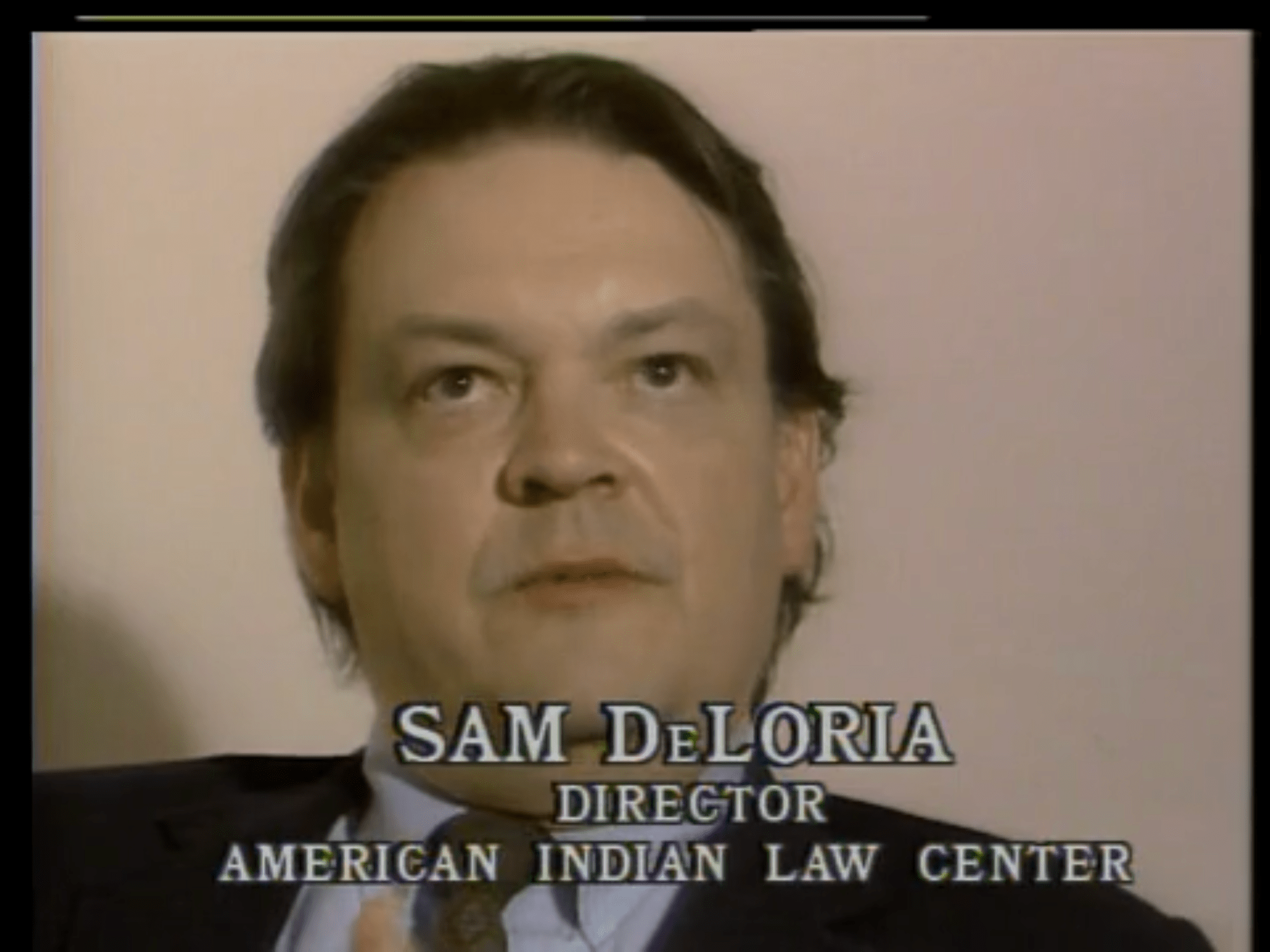
“How Tribes Entered the Modern Intergovernmental System”A talk & Q/A with renowned American Indian law and policy scholar
Philip “Sam” Deloria
Wednesday, March 18, 2026
8:00 PM Eastern
REGISTER HERE: https://linktr.ee/tribalrelations
(free, open to the public)
Here are the materials in Round Valley Indian Tribes v. Kendall (N.D. Cal.):
Prior post here.
Update (2/25/26):
If you have a new announcement, please share it with us by uploading the information requested on this Google Form. If you have any questions, please email the MSU College of Law Indigenous Law & Policy Center at indigenous@law.msu.edu.
Alaska Legal Services Corporation, Anchorage, AK
Alaska Legal Services Corporation is recruiting for a full-time (35 hours per week) Attorney to lead the training efforts of pro bono Community Justice Workers enrolled in a Rule 43.5 Waiver Curriculum, with a specific aim to train CJWs to represent clients in Domestic Violence Protective Order (DVPO) hearings. Located in Anchorage, this position is responsible for mentoring, providing feedback, serving as course instructor as needed, and arranging for court observation opportunities for pro bono CJWs. The Pro Bono Training Attorney also identifies, plans, and implements continuing education and professional development opportunities for pro bono volunteers in conjunction with other CJWRC staff, co-counsels on cases as required or requested, and travels as needed to support pro bono CJWs in court observation, co-counseling, and related duties.
Minimum of three years of legal experience; Applicants must be admitted to practice law in Alaska or admitted to practice in another state and be eligible for an Alaska Bar Rule 43 waiver. Information on Bar admission or requirements for a waiver can be found at http://www.alaskabar.org. Computer proficiency (Windows operating system, Microsoft Office, Google Workspace, Internet, e-mail and data entry).
Highly desired: The ideal candidate will have prior experience mentoring/supporting volunteers; experience in family law or domestic violence advocacy; strong communication and interpersonal skills, with the ability to manage challenging clients and situations in a professional and positive manner; experience working in rural Alaska; and a background working in cross-cultural situations.
Salary $73,155-$109,728 DOE. Generous benefits and leave package provided, including partial reimbursement of relocation expenses. Personal leave begins at six weeks per year for a full-time employee. ALSC observes 15 paid holidays. Open until 02/12/2026 https://www.alsc-law.org/2025/cjwrc-attorney/
Habematolel Pomo of Upper Lake, Upper Lake, CA (Remote)
Serve as an elected Associate Justice in the Court of Appeals for the Habematolel Tribal Court. Terms are for two years and must be filled by a licensed attorney. Position is remote. Contract will be negotiated following successful election. Licensed Attorney Associate Justice Qualifications:
1. Be 30 years of age or older by the date of election;
2. May not be a sitting member of the HPUL Executive Council;
3. May not have been convicted by a federal or state court of a felony;
4. Shall be a graduate of a law school accredited by the American Bar Association and a member of good standing of any state bar;
5. Must have a minimum of (5) years of practice as an attorney or judge in the area of Indian law;
6. Must submit to a drug and alcohol test in accordance with Tribe’s policies; and
7. Must not be considered ineligible to serve in accordance with Section 5.6 of the HPUL Judicial Code or have requested/obtained a special exemption from the Executive Council.
Salary Depends on Experience. Contract will be negotiated upon winning Tribal Election. Open until March 27, 2026 https://www.hpultribe-nsn.gov/wp-content/uploads/2026/01/HPUL-Judicial-Candidate-Application-Information-1.pdf
Sycuan Band of the Kumeyaay Nation, El Cajon, CA
The Sycuan Band of the Kumeyaay Nation is seeking a dedicated and experienced Assistant General Counsel to join the Sycuan Legal Department. Reporting directly to the General Counsel, this role offers a unique opportunity to provide high-impact legal services in support of Tribal self-governance, sovereignty, and a diverse portfolio of governmental and enterprise matters. Applicants who are committed to excellence, sound judgment, and practical legal problem-solving in a fast-paced environment are encouraged to apply. This position is onsite in El Cajon, California and is not eligible for remote or hybrid work. Competitive benefits package including comprehensive health coverage, retirement options, generous paid leave and holiday schedule, life and disability insurance, employee assistance benefits, and professional development support including bar dues and continuing legal education.
Salary: $160,000-190,000 plus bonus. Open until 3/15/2026 www.sycuan.com/employment
Yavapai-Apache Nation, Camp Verde, AZ
The Minimum Qualifications for Judges of the Tribal Court are established by Ordinance adopted by the Tribal Council as authorized under the Constitution of the Yavapai-Apache Nation. Title 3 of the Nation’s Judicial Code, Section 111, sets out the “Minimum Qualifications and Limitations of Judges of Tribal Courts.” A copy of Section 111 is attached to this Job Description and incorporated herein. In addition to the Minimum Qualifications set out in Title 3, the following qualifications also apply to this Position:
o In the case of applicants who are attorneys, a Law Degree and State Bar license plus two (2) year’s experiences as a Judicial Officer, Attorney, or Tribal Advocate (Law School Degree highly preferred for this position).
o In the case of Non-Attorney Applicants, a High School Diploma or GED plus six (6) years’ experience as Judicial Officer, or Tribal Advocate; or a Paralegal or Tribal Trial Advocacy Certificate plus five (5) years’ experience as a Judicial Officer, Lawyer or Tribal Advocate.
• Minimum of one (1) year of practice before courts of limited jurisdiction.(Tribal Court preferred).
• Possess a high level of competence, ability to apply legal thinking to reconciling the principles of law and the particular circumstances of issues presented in cases coming before the Court.
• Must have good verbal & writing skills and, excellent communications skills.
• Supervisory/Personnel Management experience preferred.
• Some judicial administrative experience preferred.
• Ability to manage courtroom and specialty court staffing.
• Sound judicial temperament.
• Must be able to use computers and have good PC skills in Microsoft Word, Microsoft Excel and Access.
• Ability to make effective presentations, explain the legal reasoning used on controversial or complex topics.
• Have the capacity to remain open-minded, manage case workload efficiently.
• Respect their peers and their constituencies.
• Knowledge of Tribal, Federal and State Law; regarding Tribes and familiarity with Tribal communities.
• Must not have been convicted of a felony or misdemeanor within the past ten (10) years other than traffic violations.
• Evidence of continuing education to maintain any required Certifications/License and update knowledge and skills.
• Must have a valid Arizona Driver’s License and be insurable with the Nation’s auto insurance policy and sustain insurability throughout the duration of employment.
Salary DOE Open Until Filled https://yavapai-apache.org/employment/
Yavapai-Apache Nation, Camp Verde, AZ
• Exercises the duties and powers of a judge of the Tribal Court;
• Oversees the administration of the Judicial Branch, including management of operations, planning, and submission of annual judicial budget, maintenance of records and case files;
• Supervises associate and pro-tem judge(s), court administrator, and clerical personnel and establishes work procedures to insure a smooth and efficient operation of the Court;
• Assigns cases to associate and pro-tem judges;
• Presides over all cases, civil and criminal, including domestic relations, dependency, landlord tenant, juvenile, exclusion, probate, specialty court and other matters arising under the Constitution and laws of the Yavapai-Apache Nation;
• Issues warrants of arrest, bench warrants, search warrants, subpoenas, temporary restraining orders, protection orders, and other legal documents;
• Manages cases, including hearings, motions, and rulings, on a timely basis;
• Prepares written opinions, orders and other court directives on a timely basis;
• Maintains and schedules court calendar for judges;
• Develops and implements court policy and procedures;
• Provides reports to Nation’s Tribal Council on the judicial branch;
• Represents the judicial branch before the Tribal Council, local, county, state, federal agencies and national meetings;
• Facilitates the development and use of alternative and informal procedures in the resolution of disputes;
• Remains current on relevant law matters including attending continuing legal education courses;
• Conducts, maintains and provides training for the Court personnel;
• Adheres to rules of Judicial Ethics.
The Minimum Qualifications for Judges of the Tribal Court are established by Ordinance adopted by the Tribal Council as authorized under the Constitution of the Yavapai-Apache Nation. Section 111 of the Nation’s Judicial Code sets out the minimum qualifications of judges of the Tribal Courts. A judge shall:
• Be either in order of preference:
o An attorney,
o An Indian graduate of an approved law school,
o A lay advocate who has regularly practiced before the Court as a member of the Bar of the Court for a period of five (5) years, or
o An Indian graduate of a paralegal program approved by the American Bar Association;
• Have demonstrated moral integrity and fairness in his/her business, public and private life;
• Have never been convicted of a felony and have not been convicted of any misdemeanor offense, except traffic offenses, for a period of five (5) years preceding appointment;
• Have regularly abstained from the excessive use of alcohol and any use of illegal drugs;
• Not be less than twenty-five (25) years of age;
• Cannot be a member of the Nation’s Legislative Branch or serve on any of the Nation’s Boards; and
• If not an attorney or law graduate, must have completed at least thirty (30) semester credit hours at an accredited college or university, or at least two (2) years of previous experience as a judicial officer for a Tribal Court.
In addition to the Minimum Qualifications, the following additional qualifications are preferred:
• Licensed attorney in good standing;
• Three (3) years full-time and/or equivalent judicial experience;
• Two (2) years judicial administrative experience;
• Supervisory/personnel management experience;
• Experience in Tribal Courts;
• Knowledge of Tribal and Federal Indian Law and familiarity with Tribal communities;
• Possess a high level of competence and ability to apply principles of law to the particular factual circumstances presented in cases coming before the Court;
• Excellent verbal, writing and communications skills;
• Ability to manage courtroom and specialty court staffing;
• Sound judicial temperament;
• Ability to use computers and good PC skills in Microsoft Word, Microsoft Excel and Access;
• Ability to make effective presentations and explain the legal reasoning in controversial or complex topics;
• Have the capacity to remain open-minded;
• Manage case workload efficiently;
• Respect peers and all persons appearing before the court;
• Must have a valid Arizona Driver’s License and be insurable under the Nation’s auto insurance policy and maintain insurability throughout the duration of employment.
Salary DOE Open Until Filled https://yavapai-apache.org/employment/
Pueblo of Isleta, Isleta, New Mexico
Represent the Pueblo of Isleta Social Services and Truancy Department in matters where legal interventions are necessary to ensure the safety and well-being of Pueblo of Isleta tribal members. Ensures State compliance with the federal Indian Child Welfare Act and the New Mexico Indian Families Protection Act in all matters involving Pueblo of Isleta Tribal Members. Routinely provide legal advice and counsel to Pueblo of Isleta governmental departments that directly engage in matters of child welfare, including Isleta Head Start, Isleta Department of Education, Isleta Social Services, Isleta Truancy Department, Isleta Behavioral Health, the Isleta Police Department, Isleta Probation, and Isleta WIC Program.
Monitors and assists in evaluating proposed tribal, state, and federal legislation and legal
proceedings affecting children.
Juris Doctor from an accredited law school; eligible for admission to the New Mexico State Bar Salary $38.51/hour – $53.92/hour Open until April 2026 https://www.isletapueblo.com/wp-content/uploads/2026/01/StateTribalChildWelfareAttorneyI-012326.pdf
California Tribal Families Coalition, Remote – California
– Reporting to a Senior Attorney, the Staff Attorney investigates, manages and
represents Tribal Nation clients in cases governed by the Indian Child Welfare Act (ICWA) and associated state law.
– Staff Attorneys are expected to possess experience sufficient to allow them
to work with substantial independence in furtherance of CTFC’s mission.
– Non-litigation advocacy is also required, including writing and publishing reports,
planning and participating in community events and tribal listening sessions, legislative
research and advocacy, working with law clerks, and training attorney and non-attorney
audiences.
– Staff Attorneys shall have excellent written and oral communication skills,
excellent project management skills, and a deep interest and understanding of
working for Tribal Nations and carrying out CTFC’s mission of promoting and protecting the health, safety, and welfare of tribal children and families as inherent Tribal government functions.
• Member of the California Bar;
• 1+ years litigation experience;
• Experience with dependency and juvenile justice legal representation;
• Excellent writing, verbal and interpersonal skills;
• Strong organizational skills;
• Public speaking skill and experience.
Salary $85,000 – $105,000 DOE + Benefit Package. Open until filled. https://caltribalfamilies.org/wp-content/uploads/2025/10/CTFC-Job-Description_Staff-Attorney_2025.10.14.pdf
Pueblo of Laguna, Laguna, New Mexico
The Pueblo of Laguna is seeking a dedicated and community-focused full-time Family Legal Assistance Attorney to provide legal advice and representation to Laguna tribal members across a broad range of civil legal matters. The Family Legal Assistance Attorney provides direct legal services to eligible Laguna members, helping individuals and families navigate complex civil legal issues while promoting stability, fairness, and access to justice.
Minimum Qualifications:
• Juris Doctor (JD) from an accredited law school
• Admission to the New Mexico State Bar
• Experience in civil legal services, family law, or public-interest law strongly preferred
• Strong communication, organizational, and client-advocacy skills
• Ability to work effectively with diverse populations and maintain confidentiality
Open Until Filled Go to www.lagunapueblo-nsn.gov and click on Employment Opportunities for application instructions and application form.
Pueblo of Laguna, Laguna, New Mexico
The Pueblo of Laguna is seeking an experienced full-time In-House Attorney to provide legal counsel and representation to the Pueblo government. This position advises on a wide range of matters including federal Indian law, contracts, governance, economic development, litigation, and regulatory compliance, while supporting and protecting tribal sovereignty.
Qualifications: Juris Doctor; minimum 5 years’ experience in federal Indian law or tribal government matters; member in good standing with the NM State Bar (or ability to obtain). Open Until Filled
Go to www.lagunapueblo-nsn.gov and click on Employment Opportunities for application instructions and application form.
Pueblo of Laguna, Laguna, New Mexico
The Pueblo of Laguna is seeking a Prosecutor to represent the Pueblo in criminal and civil ordinance enforcement matters in Pueblo Court. This position exercises prosecutorial discretion, prepares and prosecutes cases, advises law enforcement, supervises staff, and collaborates with service providers and justice partners while upholding Pueblo core values and customary practices.
Minimum Qualifications:
• Juris Doctor from an accredited law school
• 5 years criminal law experience
• 3 years supervisory experience
• Member in good standing with the New Mexico State Bar
• Laguna language fluency preferred
Open Until Filled. Go to www.lagunapueblo-nsn.gov and click on Employment Opportunities for application instructions and application form.
Pueblo of Laguna, Laguna, New Mexico
The Pueblo of Laguna is seeking a highly qualified and dedicated full-time Judge to serve in the Pueblo Court. This is an exceptional opportunity to work within a respected tribal justice. The Judge is responsible for presiding over criminal and civil matters within the Pueblo Court, ensuring fair, impartial, and timely administration of justice in accordance with tribal law, ordinances, customs, and applicable federal law.
Minimum Qualifications:
• At least five (5) years of legal experience
• Demonstrated ability to adjudicate criminal and civil cases
• Strong knowledge of court procedures, legal research, and judicial ethics
• Ability to maintain impartiality, professionalism, and confidentiality
• Admission to a state bar and/or eligibility to serve as a tribal judge preferred
Open Until Filled Go to www.lagunapueblo-nsn.gov and click on Employment Opportunities for application instructions and application form.
Sonosky, Chambers, Sachse, Endreson & Perry, LLP, Washington, DC
Legal research
Drafting court filings
Assisting partners with providing legal advice and analysis to clients
Must have at least 3 years of experience in federal Indian law and litigation.
Should have strong credentials and a commitment to representing Native American interests.
Judicial clerkship experience and experience working in private practice are highly preferred.
Must be licensed to practice law in the District of Columbia, or willing to become licensed in the District.
Salary range is $160,000 to $180,000 per year, for a 3-to-5-year associate. This position is open until filled. https://www.sonosky.com/careers.html
New Mexico Legal Aid (NMLA), Hybrid Southern NM, Roswell, Silver City, Las Cruces
New Mexico Legal Aid (NMLA) provides civil legal services to low-income New Mexicans for a variety of legal issues including domestic violence/family law, consumer protection, housing, and benefits. NMLA has locations throughout the state including Albuquerque, Santa Fe, Las Cruces, Gallup, Roswell, Silver City, Las Vegas, Taos, and Santa Ana Pueblo.
New Mexico Legal Aid is seeking a dynamic and creative leader to serve as Manager of our statewide Volunteer Attorney Program (“VAP”). This position requires collaboration with the Pro Bono Committees of the various Judicial Districts, the State Bar of New Mexico and the New Mexico Commission on Access to Justice.
NMLA, the State Bar and the Commission on Access to Justice are committed to building and maintaining one of the most successful and innovative pro bono projects in the country. The VAP Manager will work closely with the VAP Director, practice group and rural office managers, State Bar leaders, Courts, local Judicial District pro bono committees, individual private attorneys and law firms, law school faculty and student groups, and civil legal services partner agencies throughout the state to achieve maximum potential of pro bono initiatives for providing representation and other forms of legal assistance to low-income New Mexicans.
The VAP Manager will be responsible for collaborating with the overall function of the VAP, supervising (4) full-time-equivalent staff (statewide pro bono coordinator, paralegals, and community justice workers), working with project partners, Bar leaders and volunteers from throughout the state, and:
• Assisting the VAP Director in:
• implementing NMLA and Legal Services Corporation (LSC) policies related to VAP and in monitoring compliance
• developing and updating VAP procedures as initiatives evolve
• identifying and implementing solutions to improve efficiency, communication, and client service
• developing VAP training materials for volunteer attorneys, including continuing legal education (CLE) courses and print, audio, and video resource materials on legal topics needed to serve low-income New Mexicans
• developing new high-impact pro bono projects for New Mexico’s diverse client populations, particularly those living in rural areas of the state
• Acting as a liaison with other New Mexico Legal Aid (NMLA) practice group and rural office managers
• Drafting regular reports for NMLA, Access to Justice (ATJ) and LSC
• Developing and maintaining relationships with volunteer attorneys, providing support to them when needed
• Assisting in planning volunteer attorney appreciation events and other recognition
• Problem-solving issues that arise related to VAP, including follow-up with clients, VAP attorneys, or other people and entities
• Reviewing and assigning case referrals, helping to identify research needs, recruitment strategies, and necessary compliance documentation
• Expanding the number of pro bono attorneys willing to provide pro bono services, especially in key areas such as family law, housing and consumer law.
• Assisting the Statewide Pro Bono Coordinator in organizing, recruiting volunteer attorneys for, and conducting legal clinics and events throughout New Mexico;
We are looking for highly motivated candidates who are passionate and strongly committed to helping NMLA and our statewide pro bono partners better serve our client community.
The position will be located in Las Cruces or Southern New Mexico but will require periodic travel around the State.
• Three (3) or more years’ experience as a practicing attorney;
• Admission to practice in New Mexico required or ability to qualify for a limited license;
• Candidates must possess excellent written and oral communication skills;
• The ability to manage multiple tasks;
• Enthusiasm for building collaborative relationships within the State Bar and the statewide pro bono community;
• Must be willing to travel;
• Proficiency in technology such as virtual meeting platforms (Zoom and Teams), Microsoft Office products including Word, Excel, and PowerPoint;
• Prior experience in administrative, supervisory, or training roles is a plus;
• Prior experience working with pro bono programs or handling pro bono cases is a plus;
• Proficiency in Spanish is a plus.” $86,100 – $104,581, DOE Until filled. Resumes reviewed on a rolling basis. “Applicants must submit a current resume, three references, and a cover letter that explains your interest in this position and the mission of NMLA. Your application will not be considered unless we receive both of these documents. To apply, visit: https://newmexicolegalaid.isolvedhire.com/jobs/1693126
Applicants will be subject to a background check. Please do not let this deter you from applying. NMLA is committed to a strong workforce and recognizes that persons with marks on their record may still be able to perform admirably.
Skenandore Wilson LLP, Washington, DC, Madison, WI, Remote
Skenandore Wilson LLP is seeking an Associate Attorney or Senior Associate Attorney with 3-9+ years of experience in Tribal and federal Indian law to join our team in either our Madison, Wisconsin or Washington, D.C. offices.
Attorneys in this position will conduct legal research and prepare memoranda, Congressional testimony, pleadings, and other correspondence. They may attend meetings with clients, appear at trials, or attend Congressional hearings. Candidates must demonstrate excellent analytical, research and writing skills, and proven skills in effectively communicating with Tribal clients and federal, state and Tribal agency representatives. Candidates must actively apply their knowledge of legal procedures, cases, statutes, regulations, and policy development to effectively counsel clients and partners. Candidates must be willing to travel to attend client meetings, Congressional hearings, and court or administrative hearings.” “Education and Bar Admittance:
Candidates must be licensed to practice law and have graduated from an ABA accredited law school. They must be an active member in good standing of Wisconsin, Washington, D.C., or other state jurisdiction.
Collaboration:
• Ability to develop relationships and foster teamwork at all levels of the Firm
Communication:
• Excellent interpersonal skills and ability to work effectively with a diverse group of internal and external clients, attorneys, and staff
• Excellent oral and written communication skills
• Ability to manage confidential information and sensitive situations with tact and discretion
Problem Solving Skills:
• Ability and confidence to identify and analyze issues, make decisions, and initiate actions/solutions
• Agility to respond to unexpected challenges, including proactively developing innovative solutions to complex problems while maintaining a professional demeanor
Professionalism:
• Ability to maintain composure and demonstrate good judgment
To Apply, Candidates must submit:
• Cover letter
• Resume
• Writing sample (unedited by others)
• Law school transcript (if graduated less than five years ago)
• Three professional references
• Completed 2-page fillable application (on our website, http://www.skenandorewilson.com).
Salary: $100,000 – $170,000 Open until 02/06/2026 https://www.skenandorewilson.com/careers
Harvard Law School, Cambridge, MA
The Clinical Fellow will work with the Clinic Director and Clinical Instructor on a broad array of environmental, energy, and natural resource cases and projects and assist with the supervision of the students working in the Clinic. The Fellow’s work will involve a mix of litigation, administrative advocacy, policy work, legislative drafting, and client advising. The Clinical Fellow will be expected to do some or all of the following:
• Participate in researching, writing, and editing briefs, research and policy papers, comment letters, petitions for rulemakings, complaints, legislation, and other case and project documents;
• Investigate and develop new Clinic projects and follow up on inquiries for the Clinic’s assistance;
• Assist in the development of educational materials (e.g., research guides), seminars, and webinars offered by the Clinic;
• Collaborate with students and engage in student outreach.
Required:
o J.D. (earned within the last three years) and admission to state bar
o Willingness to seek admission to the Massachusetts bar under Rule 3.01
Preferred:
o Some specialized knowledge and/or experience in environmental law, administrative law, energy law, federal Indian law, and/or local government law
o Clerkship(s), litigation experience, legislative or policy experience, or advanced degrees in relevant disciplines are valued
The ideal candidate will have strong legal research, writing, and editing skills, strong interpersonal skills, good time management, and be comfortable working both independently and in teams.
Salary $60,000-$80,000 Open until April 30, 2026
Here are available materials for In the Matter of the Minnesota Racing Commission’s Approval of Running Aces Casino Hotel & Racetrack’s Request to Amend its Plan of Operation:

Here is the complaint in People of the State of Michigan v. BP P.L.C. (W.D. Mich.):


 Turtle Talk
You must be logged in to post a comment.