Here are the materials in Snoqualmie Indian Tribe v. City of Snoqualmie (W.D. Wash.):
Addie Rolnick on Juvenile Justice in Indian Country
Addie Rolnick has published “Untangling the Web: Juvenile Justice in Indian Country,” forthcoming from the NYU Journal of Legislation & Public Policy. [PDF]
Here is the abstract:
The juvenile justice system in Indian country is broken. Native youth are vulnerable and traumatized. They become involved in the system at high rates, and they are more likely than other youth to be incarcerated and less likely to receive necessary health, mental-health, and education services. Congressional leaders and the Obama administration have made the needs of Indian country, especially improvement of tribal justice systems, an area of focus in recent years. The release of two major reports—one from a task force convened by the Attorney General to study violence and trauma among Native youth and the other from a bipartisan commission appointed to recommend improvements to criminal justice in Indian country—has further trained this focus on improving juvenile justice. Two recommendations appear again and again in every report and article: give tribes more control over their juvenile justice systems and reduce the reliance on secure detention. Yet, implementing these recommendations seems next to impossible.
Taking as its starting point these two devastating reports, this Article provides a thorough description and diagnosis of the reasons that the Indian country juvenile justice system continues to fail Native youth, one that has been missing from the legal and policy literature. It provides a careful analysis of the law governing juvenile delinquency jurisdiction in Indian country. While it echoes others’ observations that the confusing jurisdictional web is part of the reason Native youth remain neglected and invisible in federal and state systems, and ill-served by tribal systems, this Article’s detailed analysis of the law reveals much greater potential for tribal control under current laws than others assume exists. More importantly, the Article moves beyond the familiar complaint about the jurisdictional web to examine the inner workings of each sovereign’s approach to Indian country justice, providing the fuller picture necessary to identify and implement both large-scale and small-scale solutions. As federal and tribal leaders debate legal and policy changes to the Indian country juvenile justice system, including potential amendments to the Federal Juvenile Delinquency Act, the Juvenile Justice and Delinquency Prevention Act, federal criminal laws, and Public Law 280, this Article’s timely investigation of barriers to improvement will elucidate a better path to healing, not harming, Native youth.
Application process, eligibility announced for $38 million Keepseagle grants distribution
Fast-track registration opens May 25, applications close June 24
WASHINGTON D.C. – Class counsel in the Keepseagle v. Vilsack settlement today announced details about the Native American Agricultural Fast Track Fund (NAAFTF), a one-time distribution of $38 million in settlement funds. Awards from this fund will be made on a competitive basis to non-profit organizations, tribal programs and educational institutions which provide agricultural, business, technical or advocacy services to existing and aspiring Native American farmers and ranchers.
“Among the far-reaching benefits of the Keepseagle settlement is the means for organizations which have a track record of supporting Native American farmers and ranchers to deliver valuable assistance to promote their continued engagement in agriculture — an important component of the economy in Indian Country,” said Joseph M. Sellers, lead counsel for the plaintiff class. “The Fast Track Fund will make vital resources available to these important efforts by the end of this year.”
The NAAFTF award process begins with a one-month period for letters of intent applications to be submitted to determine eligibility (after review, eligible applicants will be invited to submit full proposals). This first step starts May 25 at 12:00 p.m. MDT, when registration, application materials, and further process details and a timeline are made available at http://www.indianfarmclass.com/NAAFTF.aspx. An applicant must submit a letter-of-intent application no later than Friday, June 24, 2016, by 5:00 p.m. MDT. Technical assistance relating strictly to the application process will be available by dedicated phone and email contacts.
To be eligible, an applicant organization must document that it provided agricultural, business, technical or advocacy services to Native American farmers or ranchers between January 1, 1981, and November 1, 2010; is based in the United States; and is one of the following:
- 501(c)(3) tax-exempt organization
- 7871 designation as a non-profit organization chartered under the tribal law of a state or federally recognized tribe
- An educational institution described in 170(b)(1)(A)(ii)
- An instrumentality of a state or federally recognized tribe, designated under 7701(a)(40)
An applicant organization must propose its use of award funds to provide assistance designed to further Native American farming or ranching activities. Litigation, lobbying or political activities will not be eligible for funding.
The letter-of-intent application must include a description of the applicant organization, demonstrate eligibility through required documentation of a tribal or board resolution, the purpose for which funding is being sought, the applicant organization’s total annual operating budget, total project costs (if applicable), and requested amount.
An advisory committee will review the letters-of-intent applications and issue an invitation to selected organizations for full proposals on July 28, 2016.
The process will be managed under the supervision of class counsel by Echo Hawk Consulting. Class counsel will make recommendations to the Court, based on input from the Advisory Committee. The Advisory Committee is comprised of six individuals with experience and expertise in the fields of Native American farming, ranching and philanthropy.All awards are subject to Court approval. Awards will range in size depending on an organization’s or tribe’s budget, focus and scope. NAAFTF will consider as well applications from intermediary organizations having existing, relevant grant programs which can be expanded through awards.
Background
On April 20, 2016, the U.S. District Court for the District of Columbia approved a modification to the Keepseagle settlement agreement, which included a process for the distribution of funds to cy pres beneficiaries. The modification to the settlement also provides for additional damage awards to be paid to prevailing claimants. The remaining funds, approximately $265 million, will go to a Trust that will distribute funds at the direction of an independent board of trustees for up to 20 years. NAAFTF is separate from the Trust, and is designed to ensure that a substantial portion of the remaining funds are distributed to qualifying organizations much more quickly than the Trust will be able to begin making grants.
NAAFTF was created to make awards to such organizations already involved in supporting Native American ranchers and farmers before the original Keepseagle settlement was agreed to in 2010.
The Court’s order is open to appeal through June 20, 2016. If an appeal is filed, the grant process will be suspended until a decision on the appeal is rendered.
# # #
Contact: Crystal Echo Hawk
Echo Hawk Consulting
crystal@echohawkconsulting.com
720.891.9118
About Echo Hawk Consulting
Echo Hawk Consulting offers expert services in philanthropic giving, policy development, issues analysis, executive nonprofit leadership, program design, fundraising, and marketing to tribes, grant makers, businesses, nonprofit organizations and philanthropic individuals focused on strategic growth, social change, and investment in Indian Country. For more information visit: www.echohawkconsulting.com
Save the Date: 15th National Indian Nations Conference
December 8-10, 2016
Pre-Conference Institutes will be held on December 7, 2016
Agua Caliente Band of Cahuilla Indians Reservation Coachella Valley, California
This national conference provides opportunities for tribal, state, and federal participants to share knowledge, experiences, and ideas for developing and improving strategies and programs that serve the unique needs of crime victims in Indian Country. For information on previous conferences see www.OVCINC.org.
Questions:
Tribal Law and Policy Institute
P: 323-650-5467 ~ F: 323-650-8149
Email: Conference@TLPI.org
Conference Website: www.OVCINC.org
Registration Packets will be available in early summer 2016
Call for Presentations available here.
Formal Justice Department Conference Approval Pending.
Call for Presentations: 15th National Indian Nations Conference
The Office for Victims of Crime and the Tribal Law and Policy Institute are extending this invitation to participate as a presenter at the 15th National Indian Nations Conference. Workshop presentations should demonstrate methods and strategies to improve safety, as well as promote justice and healing for crime victims through cooperation, and collaboration between Tribal, Federal, State, local and private entities in American Indian and Alaska Native communities. Target Audience: The target audience is all persons interested in assisting victims of crime in Indian country including:
Indian Country Service Providers (Tribal, State, and Federal):
- Child Advocates
- Child Protection Case Workers
- Social Services
- Elder Services
- Victim Advocates
- Medical Personnel
- Law Enforcement
- Judges & Prosecutors
- Probation/Corrections
- Substance Abuse Counselors
- Traditional Healers
Tribal Community Members:
- Tribal Leaders
- Victims/Survivors of Crime
- Tribal Elders & Youth
- Tribal College Faculty & Students
We welcome presentation ideas for all levels of experience/knowledge. Presenters must demonstrate expertise in working with Native American communities. Selection Criteria for Workshops will include:
- Relevance to the target audience
- Fits into conference theme/goals
- Presenters demonstrate expertise in working with Native American communities.
- Encourages interdisciplinary coordination and cooperation
- Highlights promising practices
- Introduces innovative strategies
- Honors and supports victims of crime
- Workshop demonstrates clear connection to crime victimization
Workshops must conform to the Conference Theme “Harnessing Our Collective Wisdom: Strengthening the Circle of Safety, Justice and Healing” and one or more of the Conference Goals (below):
- Honoring & Listening to Victim/Survivor Voices: Creating victimcentered/
sensitive responses; being inclusive of victim/survivors particularly those from un‐served or underserved populations, including LGBTQ victims; and promoting peer to peer learning opportunities. - Promoting Safety, Justice and Healing: Justice for victims/justice for all; understanding jurisdictional issues; exercising tribal sovereignty to promote safety & justice; highlighting the resiliency of spirituality & healing in tribal communities.
- Honoring the Wisdom of the Past: Understanding historical trauma; enlisting tribal elders as keepers of our tribal histories; and embracing traditional teachings.
- Promoting Traditional Values: Promoting traditional values and incorporating traditional skills in crime victim services; upholding wellness, mentally, physically, spiritually and emotionally; and framing victim services around tribal traditions.
- Ensuring Safety, Justice & Healing for Seven Generations of Children: Addressing child sexual abuse & education on developing programs for victims; emphasis on victims within the juvenile justice system; support for keeping youth within.
- Working in Harmony: Building partnerships with federal agencies; supporting partnerships between tribes; education on the importance of networking and working together in collaboration to strengthen services; supporting multidisciplinary
teams; and networking with Native men to address domestic violence & sexual assault. - Supporting and Educating Tribal Leaders: Educating and supporting efforts of tribal leaders to achieve accountability and responsibility to victims of crime.
- Sustaining our Legacy: Developing skills and incorporating cultural approaches to enhance sustainability and measurability; increasing the accuracy of victimization research; and developing capacity within victim services.
- Healing the Healers: Ensuring safety and support for service providers.
Formal Justice Department Conference Approval Pending.
Questions: Tribal Law and Policy Institute, P: 3236505467 ~ F: 3236508149
Email: Conference@TLPI.org, Website: http://www.OVCINC.org
Mailing address:
Tribal Law and Policy Institute
8235 Santa Monica Blvd., Suite 211
West Hollywood, CA 90046
Federal Court Refuses to Suppress Statements Made to Red Lake Tribal Police in Federal Prosecution
Here are the materials in United States v. Makwa (D. Minn.):
Berkey Williams LLP Seeks Associate Attorney
Berkey Williams LLP is an Indian law firm based in the San Francisco Bay Area. The firm works exclusively for Indian tribes and tribal organizations on matters such as natural and cultural resource protection, land, water, governance development, health care, ICWA, tribal TANF, and employment. The firm has a distinguished record of championing tribal interests to protect and advance the legal, political, cultural, and economic rights of tribes and nations. Additional information about Berkey Williams LLP can be found at http://www.berkeywilliams.com.
The firm seeks an Associate Attorney with two or more years of experience and the following qualifications:
• Relevant experience in the firm’s practice areas;
• Excellent legal writing and research skills;
• Demonstrated understanding of tribal and federal Indian law and of native communities;
• Demonstrated commitment to working for tribes and tribal organizations;
• Willingness and ability to work on Indian Child Welfare matters for the firm’s clients in California, including occasional overnight travel;
• Superior communication skills; and,
• Licensed and in good standing with the California State Bar (or if licensed in another state, with the expectation that the candidate will promptly become admitted in California).
Native lawyers are encouraged to apply. Compensation package includes competitive salary, flexible work options, and excellent benefits. Applicants should email a cover letter, resume and concise writing sample (10 or fewer pages) to Gloria Coronado at gcoronado@berkeywilliams.com. No phone calls, please.
Placing Proposed Amendments to IGRA in Historical Context
On April 27, 2016, California Congressman LaMalfa introduced H.R. 5079, titled the “California Compact Protection Act.” This legislation was spurred by proposals of the North Fork Rancheria and the Enterprise Rancheria in California to develop two separate gaming facilities under IGRA’s two-part determination exception. It appears intended to prevent those two tribes from developing class III gaming facilities on sites approved by the Department of the Interior in 2011.
H.R. 5079 would amend the Indian Gaming Regulatory Act itself by preventing the Secretary of the Interior from approving a tribal-state gaming compact, or prescribing class III gaming procedures, for tribes when the California State Legislature (or California’s voters) do not ratify the compact. To understand this proposed amendment to IGRA, it is important to put it into context.
IGRA’s Enactment
In the mid-1980’s, as the Cabazon case and others were progressing through the federal courts, Congress was considering several different legislative proposals to regulate Indian gaming. Congress ultimately approved S. 555, which became the Indian Gaming Regulatory Act. Many tribal leaders opposed S.555, in large part because of the provisions requiring tribes to negotiate gaming compacts with state governments as a precondition to operating gaming facilities (there are numerous references to tribal opposition in the Senate Report accompanying IGRA, Senate Report 100-446.IGRA). Those leaders believed that the compact provisions would give states a tool to prevent Indian tribes from operating gaming facilities on their lands – even where those tribes met all of the other requirements of the Cabazon decision and IGRA itself.
Members of the U.S. Senate tried to assure concerned tribal leaders that IGRA’s compact provisions could not be used by states to block tribes’ inherent right to operate and regulate lawful gaming on tribal lands, or to allow states to control activities that should be regulated exclusively by Indian tribes.
On page13 of Senate Report 100-446, Sen. Inouye acknowledged tribal opposition, and stated:
After lengthy hearings, negotiations, and discussions, the Committee concluded that the use of compacts between tribes and states is the best mechanism to assure that the interests of both sovereign entities are met with respect to the regulation of [gaming].
***
It is the Committee’s intent that the compact requirement for class III not be used as a justification by a State for excluding Indian tribes from such gaming or for the protection of other State-licensed gaming enterprises from free market competition with Indian tribes.
On pages 33-34 of the Senate Report, Sen. McCain squarely addressed tribal concerns:
The Committee Report is clear as to the purpose of Tribal/State compacts as called for in Section 11(d). I understand Senator Evans’ concerns regarding the potential overextension of the intended scope of the Tribal/State compact approach. Toward this end, I believe it is important to again underscore the statement that appears on page 10 of the Report: “The Committee does not intend to authorize any wholesale transfer of jurisdiction from a tribe to a state.” From time immemorial, Tribes have been and will continue to be permanent governmental bodies exercising those basic powers of government, as do Federal and State governments, to fulfill the needs of their members. Under our constitutional system of government, the right of Tribes to be self-governing and to share in our federal system must not be diminished.
In response to criticism from Indian country, members of Congress pointed to the language of IGRA itself, which requires states to negotiate gaming compacts in good faith. Where a state does not comply with this obligation, IGRA allowed tribes to file a lawsuit against the state, and to request that the Secretary of the Interior prescribe “procedures” (i.e. a gaming compact) to regulate tribal gaming facilities. In other words, the members of Congress assured tribes that IGRA’s compact language could not be used to block tribal gaming facilities.
The Seminole Decision
Almost immediately after IGRA’s enactment, tribes and states became engaged in litigation over the compact provisions. The original fears regarding IGRA’s compact language, expressed by many concerned tribal leaders, came to pass when the U.S. Supreme Court issued its decision in Seminole Tribe v. Florida. In that case, the Supreme Court stated that tribes could not file lawsuits against states for their refusal to negotiate gaming compacts in good faith. The Court held that only the states themselves, and not Congress, could authorize such lawsuits.
Following the Seminole decision, many states began to demand that Indian tribes “share” gaming revenues in exchange for negotiating class III gaming compacts (despite the fact that IGRA itself prohibits states from imposing taxes on Indian gaming facilities). Some gaming compacts required tribes to pay between 15 and 25 percent of their slot machine revenues to the state in exchange for certain benefits (like exclusive gaming in certain markets). Other compacts required tribes to submit to state regulation of certain activities on tribal lands.
In light of the Seminole decision, tribes could not utilize the remedies Congress adopted in IGRA to exercise their inherent right to operate and regulate gaming facilities on their lands – the right recognized by the Supreme Court in the Cabazon decision.
IGRA Today, and H.R. 5079
The State of California, alone among the states, agreed to waive its sovereign immunity in 1999 to allow Indian tribes to file a lawsuit against the state for failure to negotiate gaming compacts in good faith. The State of California is the only state where the entire Indian Gaming Regulatory Act – including its remedial provisions – is in full effect.
In recent years, the Obama Administration has sought to push the playing field back toward the balance Congress originally adopted in 1988. The Department of the Interior has disapproved gaming compacts where states have demanded revenue sharing payments that amount to illegal taxes under IGRA. It has also disapproved compacts that allow states to regulate tribal activities beyond those allowed by IGRA.
In addition, the 9th Circuit Court of Appeals issued a landmark decision in 2010, when it ruled that the State of California’s demands for revenue sharing payments from the Rincon Band of Luiseno Indians violated IGRA. Following that decision, the Rincon Band of Luiseno Indians was able to get a gaming compact through IGRA’s remedial provisions (i.e. “Secretarial procedures”). That result was only possible in California.
Elsewhere around the country, tribes and states have been engaged in litigation about IGRA’s compact provisions – especially as they relate to revenue sharing, taxes, and regulation of activities on tribal lands. These lawsuits have happened recently in Florida, New Mexico, South Dakota, Oklahoma, and California.
Congress has never amended IGRA’s compact provisions. The National Congress of American Indians, the National Indian Gaming Association, tribal leaders and Indian gaming advocates have long opposed efforts to amend to IGRA that do not include a remedy to the Supreme Court’s Seminole decision.
H.R. 5079 would be remarkable for several reasons. First, it would mark the first amendment to IGRA’s compact provisions in the law’s 28-year history. Second, it would constitute a federal rebuke of California’s policy decision to give full effect to IGRA. Third, it would enshrine the Seminole decision into IGRA itself – marking a significant departure from the compromise approved by Congress in 1988.
This last point merits some emphasis. As explained above, Congress passed IGRA in the face of significant opposition from Indian country. That opposition was based on concerns that IGRA’s compact language could be used to deny the inherent rights recognized in the Cabazon decision. Congress responded to those concerns by assuring Indian country that its inherent rights were not subject to a state veto (unless the state itself opted to outlaw gambling in all of its forms). H.R. 5079 would mark a dramatic shift in congressional policy, because it would modify IGRA to subject tribes to a state veto of the rights recognized in Cabazon.
Given the amount of litigation pending around the country on these issues, combined with the legislative process, it is very possible that H.R. 5079 could be expanded to affect tribal-state gaming compacts across the country – further solidifying the Seminole decision as federal policy. Watching this play out will be very interesting.
Congratulations to the 2016 Indian Law & Policy Center Graduates!
We invited graduates and their friends and family on Thursday to a lunch at the College of Law to celebrate their achievements.
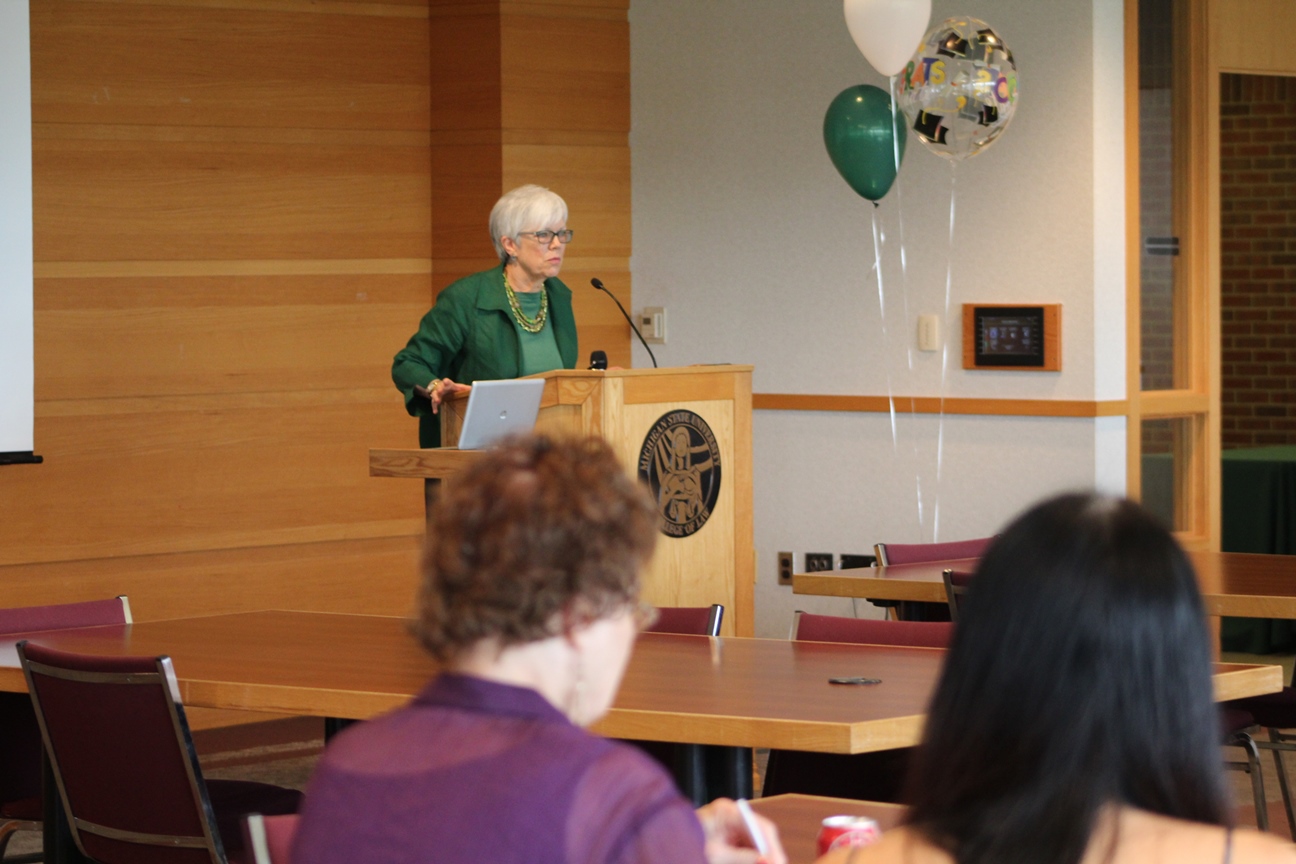

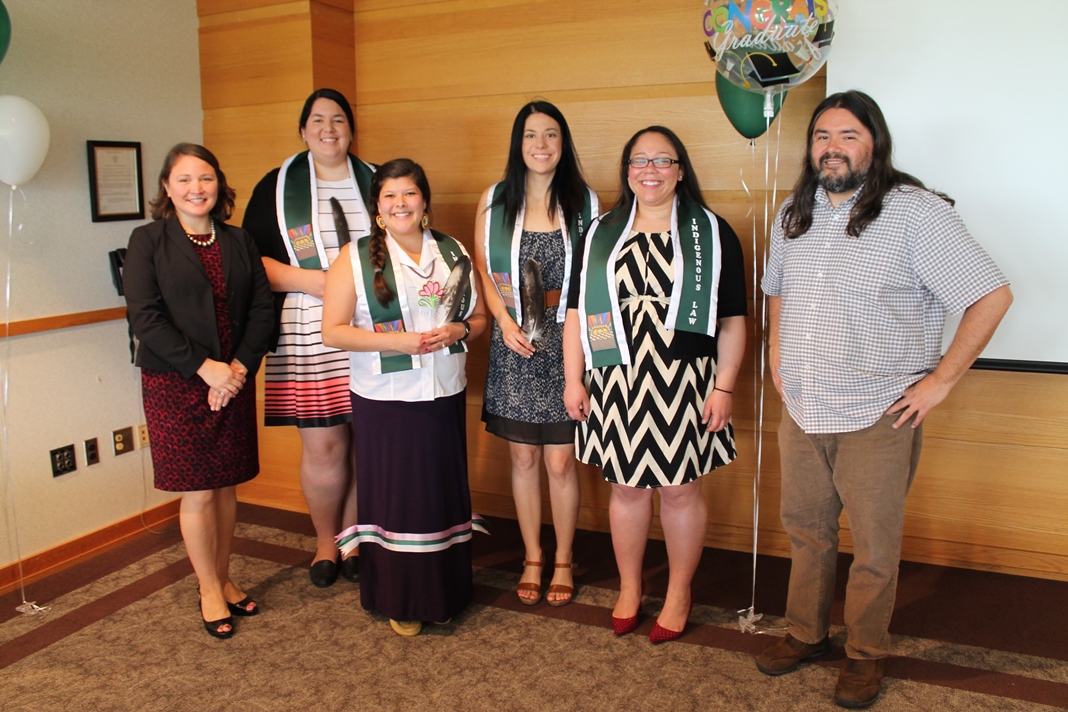
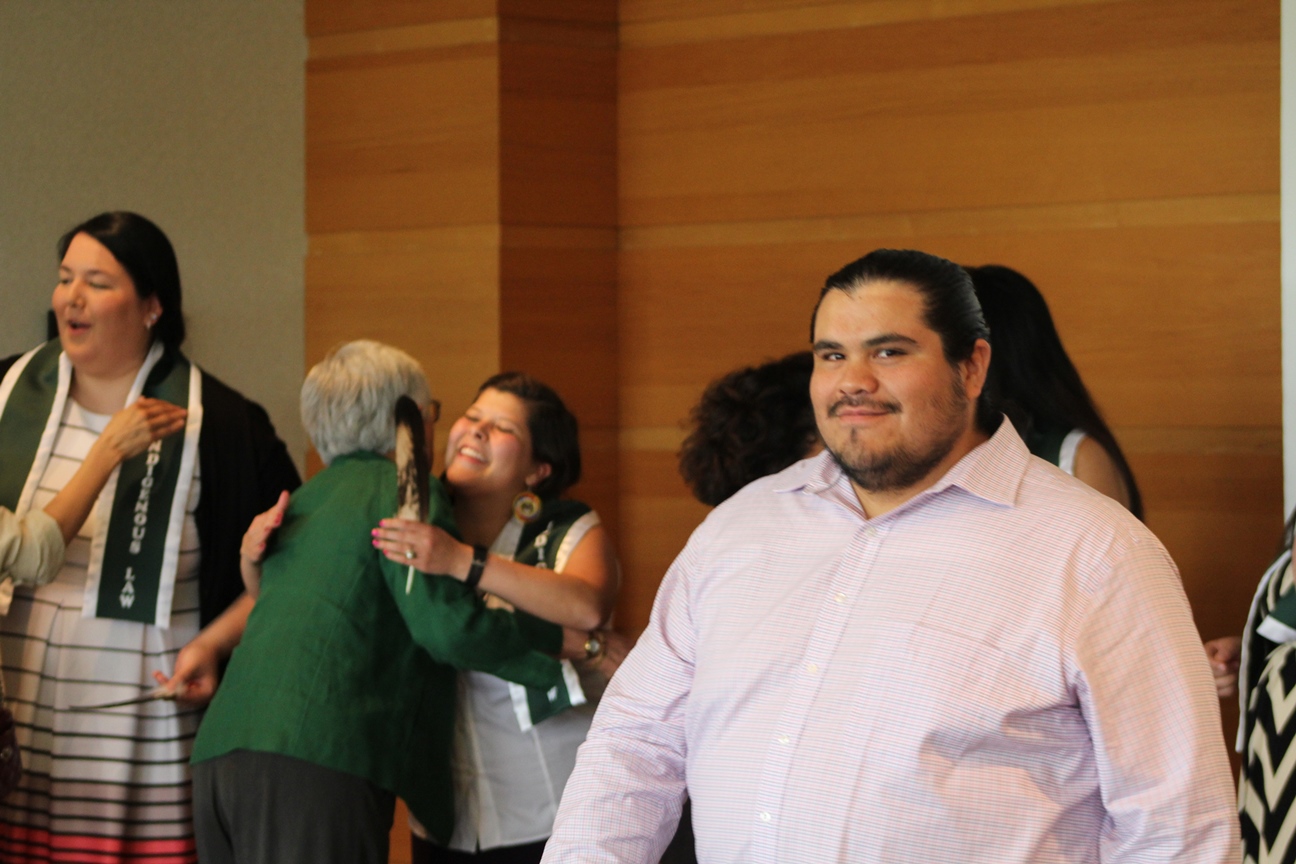
We also congratulate those Center graduates who weren’t present: Corrinna Bailey, Chantelle Dial, and Michael Hollowell.
Elem Indian Colony of Pomo Indians Members File ICRA Habeas Claim to Challenge Disenrollment
Here is the complaint and exhibits in John v. Brown (N.D. Cal.):
 Turtle Talk
You must be logged in to post a comment.