

Frank Pommersheim and Bryce Drapeau have published “United States v. Sioux Nation of Indians Revisited: Justice, Repair, and Land Return” in the South Dakota Law Review. PDF
HIGHLY RECOMMENDED!! A Frank Pommersheim joint is always worth it.
The abstract:
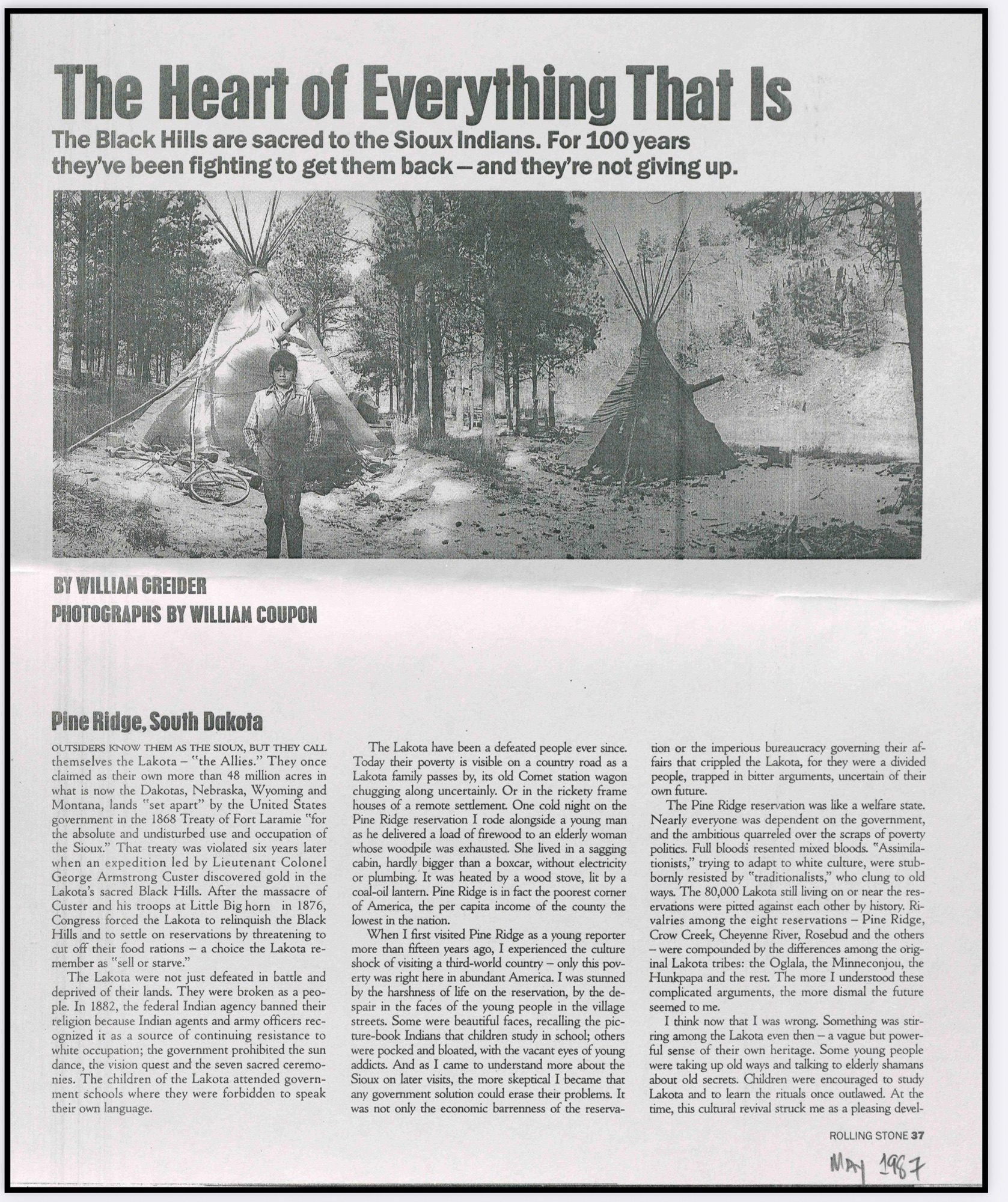
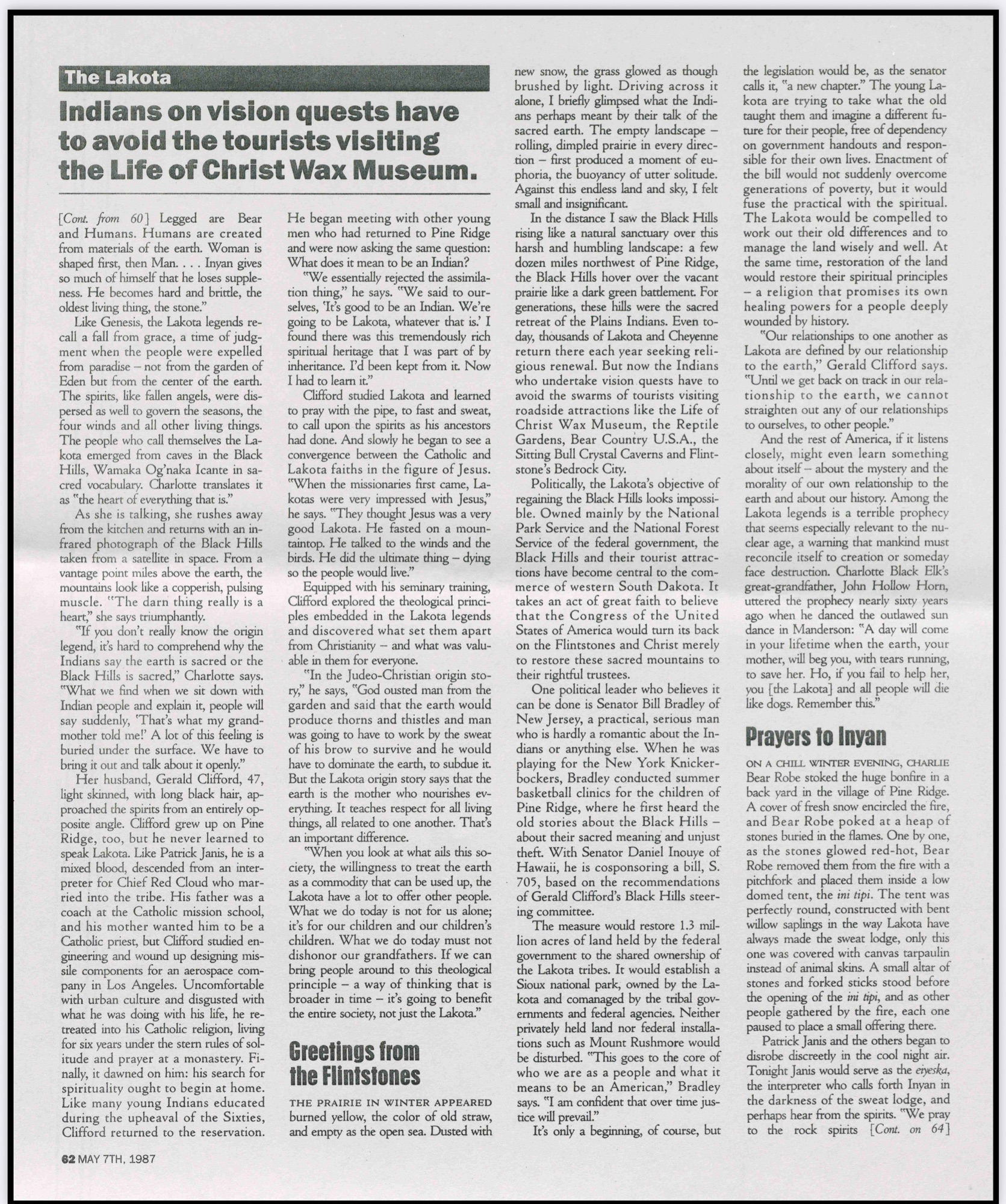
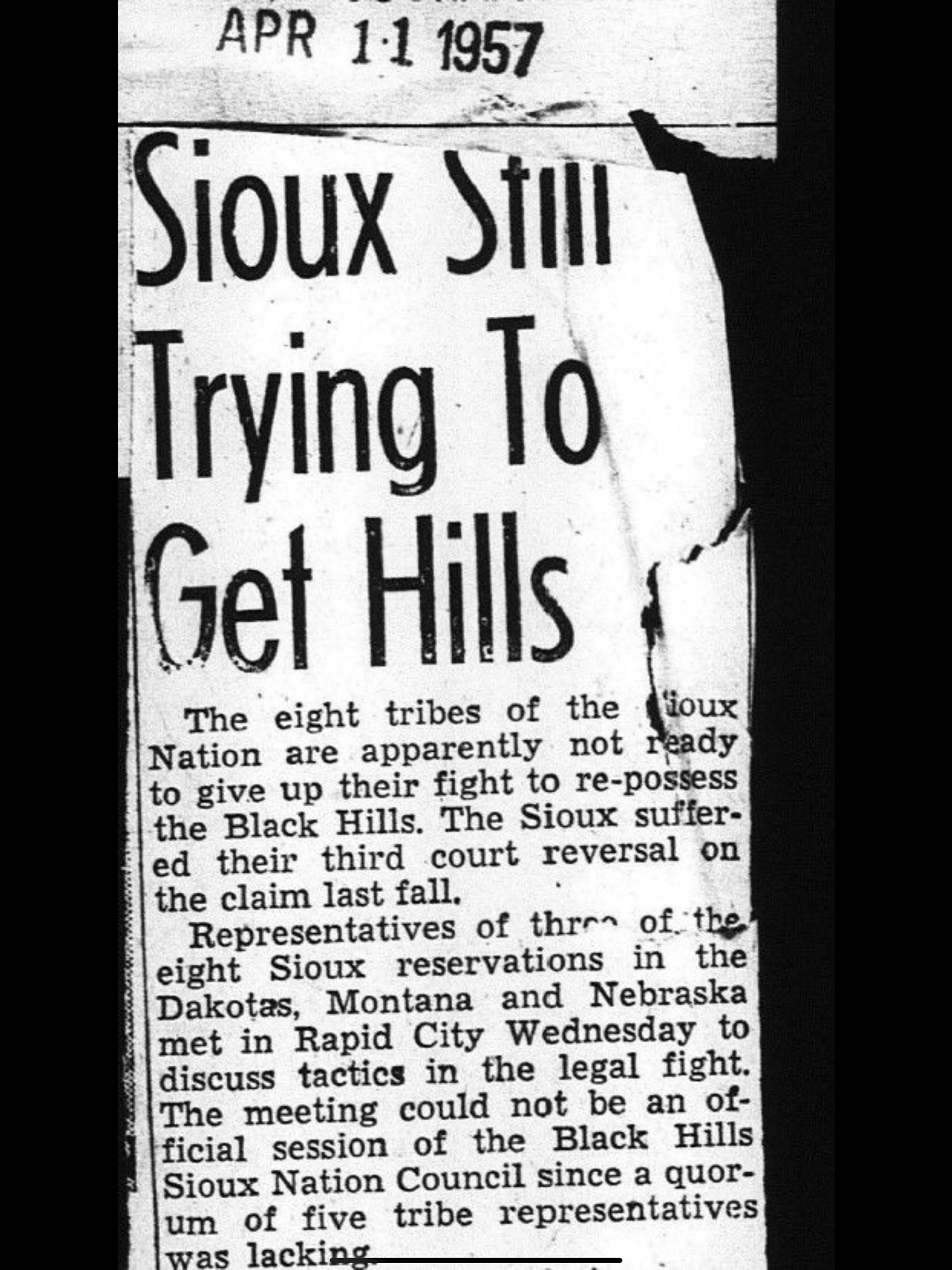
The amazing legal journey of this case begins in 1923 and ends with a Sioux Nation of Indians “victory” in the Supreme Court in 1980. Before reaching the Supreme Court, the case was litigated four different times before the Court of Claims because of the ineffective assistance of counsel and the necessity of a congressional statute to clear away the threatening ghost of res judicata. The historical backstory begins not in 1923, but with the signing of the Fort Laramie Treaty of 1868 and the United States’ illegal taking of the sacred Black Hills in1877. And the case does not end with the Sioux “victory” before the Supreme Court and its award of “just compensation” for the illegal taking. The Sioux Nation of Indians rejected—and continues to reject—the remedy of financial compensation without an attendant search for mutual repair and a justice that includes some form of land return. Despite some modest examples of land return in other parts of Indian country, no such efforts involve the Black Hills. This article seeks to inform all, but particularly those two generations of Lakota and non-Native citizens born since 1980, that now is the time for renewed effort and commitment to realize reconciliation and a justice that includes land return. This must be done before history closes its door for a second and final time and the Black Hills will remain stranded in historical infamy. No, this article is not just another twist on classic Indian Law principles gone awry, but the first of something we might call the Historical (Trauma) Trilogy of stealing Lakota land (and breaking treaties), suppressing the teaching and learning of the Lakota language and culture, and the battering ram of boarding schools to break-up Lakota families where a core value has always been to be a “good relative.” In its own careful way, this article is also about the persistence of Lakota resistance and the hard work of restoring the (sacred) hoop of land, language, and family for these new days.
Here.
Here.
Here is the opinion in Oglala Sioux Tribe v. Nuclear Regulatory Commission.
Briefs here.
Here are the materials in Oglala Sioux Tribe v. Nuclear Regulatory Commission:
Here:
Kirsten Matoy Carlson recently published “Priceless Property” in the Georgia State Law Review.
Here is the abstract:
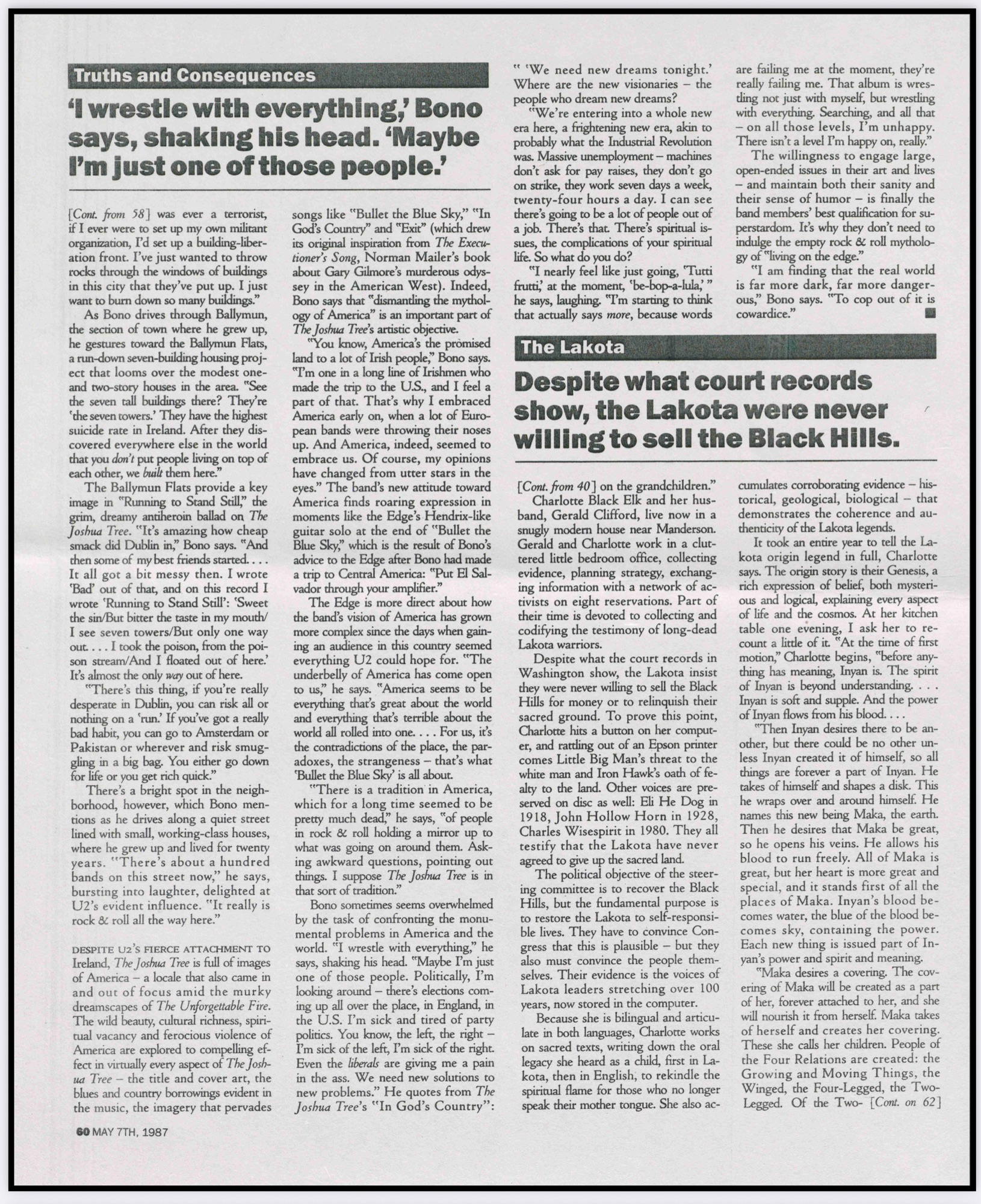
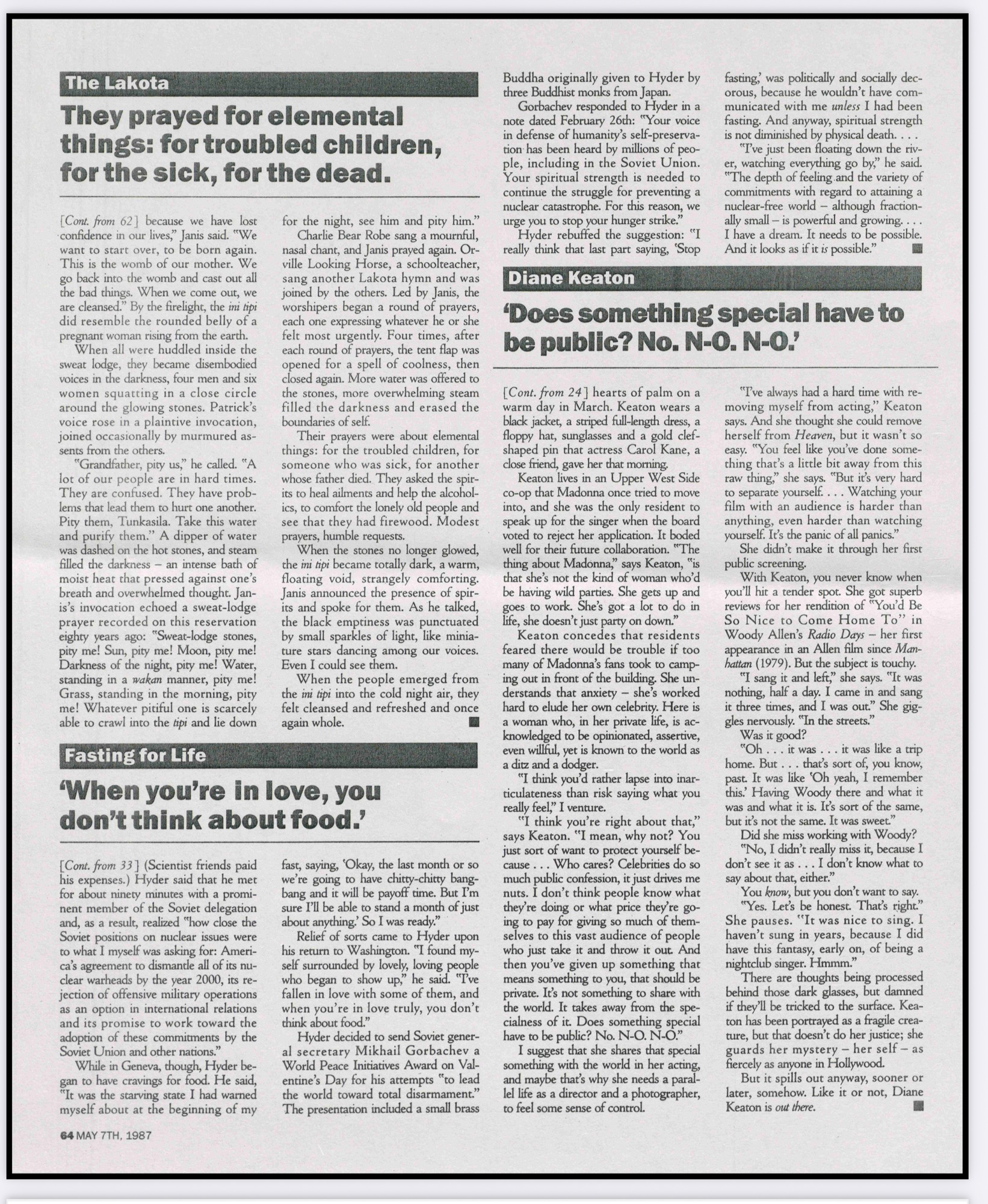
In 2011, the poorest American Indians in the United States refused to accept over one billion dollars from the United States government. They reiterated their long-held belief that money–even $ 1.3 billion–could not compensate them for the taking of their beloved Black Hills. A closer look at the formation of the Sioux claim to the Black Hills helps us to understand why the Sioux Nation has repeatedly rejected compensation for land taken by the United States over 100 years ago. This article seeks to understand why the Sioux view the Black Hills as priceless property by studying the formation of the Black Hills claim. It constructs a new, richer approach to understanding dispute formation by combining narrative analysis with the sociolegal framework for explaining dispute formation. The article argues that narratives enrich the naming, claiming, and blaming stages of dispute creation. It illustrates the usefulness of this new approach through a case study of the Black Hills claim. It uses the autobiographical work of an ordinary Sioux woman to provide a narrative lens to the creation of the Sioux claim to the Black Hills. American Indian Stories by Zitkala-Sa presents a narrative of Sioux life around the time of the claim’s emergence. By contextualizing and humanizing the claim, my analysis provides insights into why the Sioux claim to the Black Hills emerged into a legal dispute and helps to explain why the Black Hills remain priceless property to the Sioux Nation today. The article concludes with a suggestion for successful resolution of the Black Hills claim based on acceptance of the Black Hills as priceless property to the Sioux Nation.

Here.
Here. An excerpt:
South Dakota’s Black Hills, home to the granite faces carved into Mt. Rushmore, should be restored as Native American tribal lands, a United Nations official recently said.
James Anaya, a U.N. special rapporteur on the rights of indigenous people, completed a fact-finding mission on Friday that included meetings with a number of Native American tribal leaders as well as White House officials. His investigation led him to suggest that the United States take additional steps to repair the nation’s legacy of oppression against Native Americans. He’ll officially propose the plan in an upcoming report.
Of course, Anaya said absolutely no such thing, as the article (quoting the AP) says shortly thereafter notes (following two videos about and a picture of Mount Rushmore). But it’s the kind of political rhetoric that always accompanies (or responds to) calls to return Indian lands to the Indians.
 Turtle Talk
You must be logged in to post a comment.