Here are the materials in Metropolitan Life Insurance Co. v. Mundahl (D. S.D.):
Here are the materials in Metropolitan Life Insurance Co. v. Mundahl (D. S.D.):
Here is the opinion in In re Dependency of C.J.J.I.:
Briefs (links to state court website):
Here is the opinion in Hoffman v. Hollow Horn.

Here are the materials so far in Shaff v. Claymore (D.S.D.):

Here are the materials in Nygaard v. Taylor (D.S.D.):

Here is the unpublished opinion in United States v. Ducheneaux.
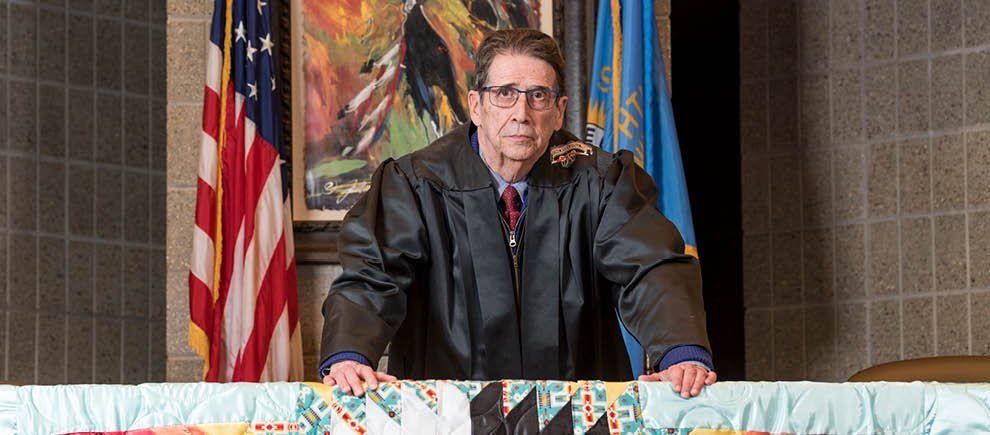
Frank Pommersheim asked us to post his keynote speech from this year’s NAICJA conference, “An Emeritus Prose Podcast: The Pandemic Checkpoints of the Cheyenne River Sioux Tribe: A Teaching Essay.”
Here it is:
The Pandemic Checkpoints of the Cheyenne River Sioux Tribe
An excerpt:
In the Spring of 2020, the Cheyenne River Sioux Tribe (CRST) began implementing a series of limited vehicle checkpoints within the boundaries of the reservation as part of its comprehensive public health response1 to limit the spread of COVID-19. One of the checkpoints was located on a state highway running through the Reservation. There was an immediate uproar in South Dakota. Many people, both Native and non-Native, contacted me and asked, ‘Frank, can the Tribe really do this?’ My answer was ‘yes.’
As the questions about this Tribal public health initiative became increasingly heated, the merits of the health policy were increasingly subsumed in political rhetoric concerning the ‘rights’ of non-Natives and the authority of the state to quash the Tribe’s efforts. The calls kept coming. My answer of ‘yes’ remained the same. Yet the supporting legal analysis was not so easily summarized. No (federal) statute or Supreme Court case unequivocally said yes or no. The answer of ‘yes’ required a careful exegesis of both Supreme Court precedent and the law of the CRST.
Cheyenne River Sioux Tribe brief
CRST brief addendum/Tribal Historic Preservation Officer Vance declaration
Briefs posted earlier are available here.


 Turtle Talk
You must be logged in to post a comment.