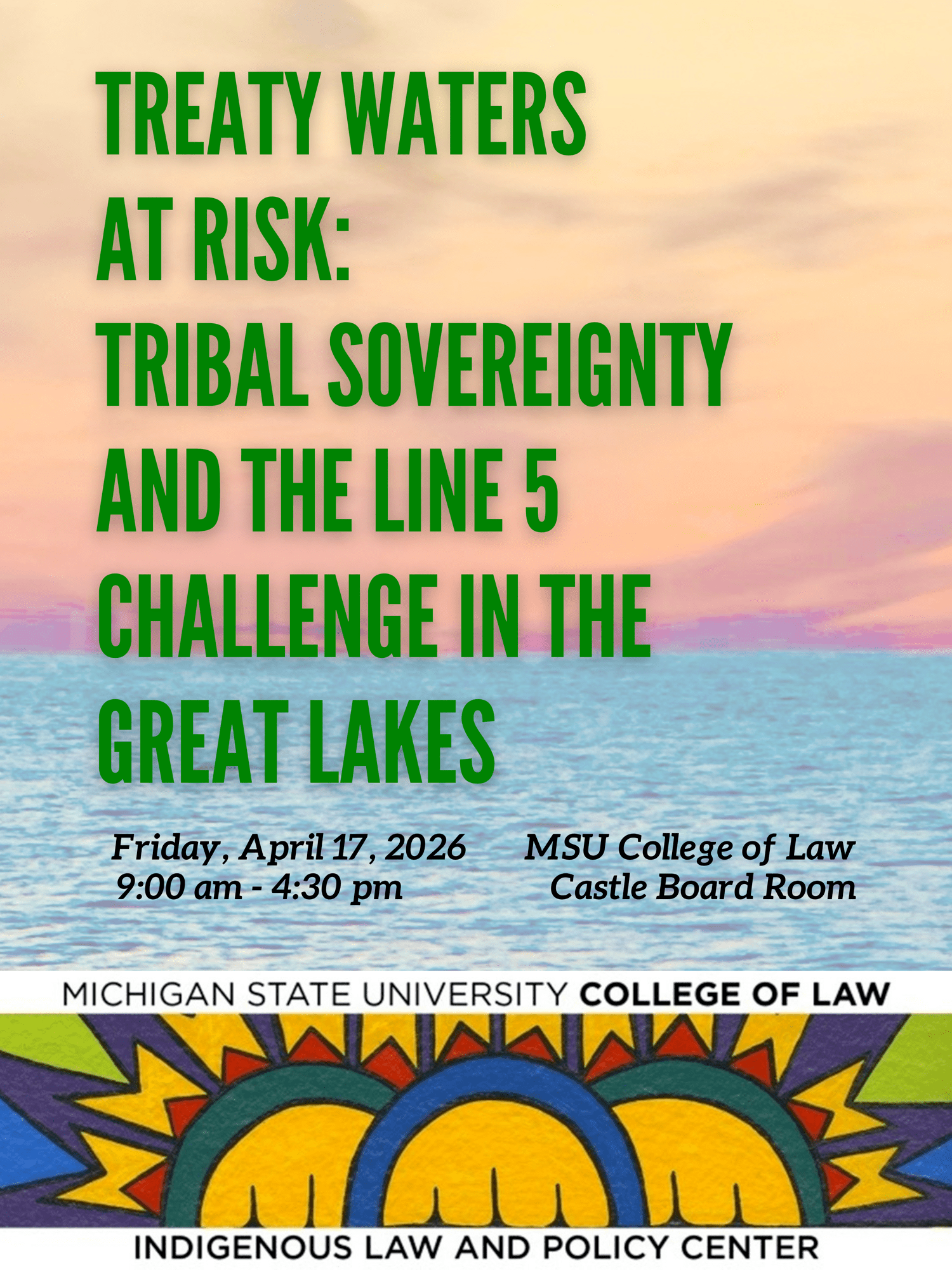
Here:

Earthjustice article detailing the issue and the brief here.
Delaney Kelly has published ““We Stand With the Water”: Ojibwe Treaty Rights, the Walleye Wars, and the Imminent Threat of Enbridge’s Line 5” in the Drake Journal of Agricultural Law.
Here is the abstract:
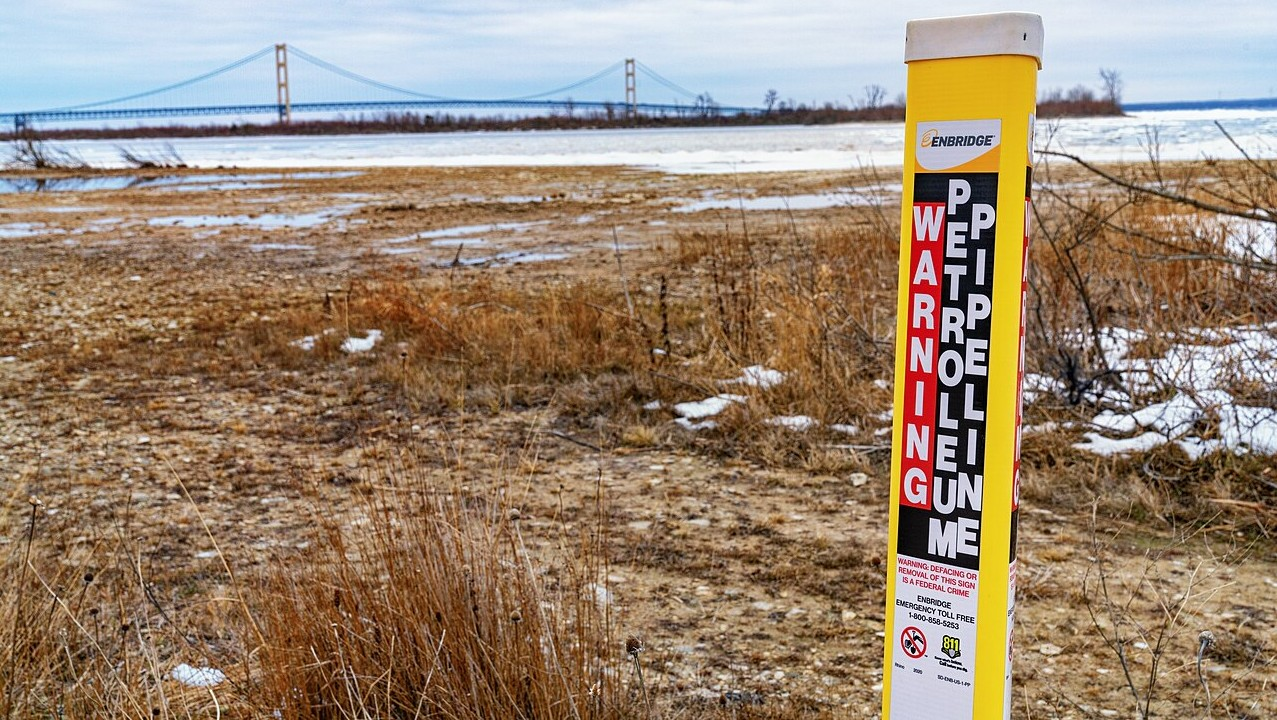
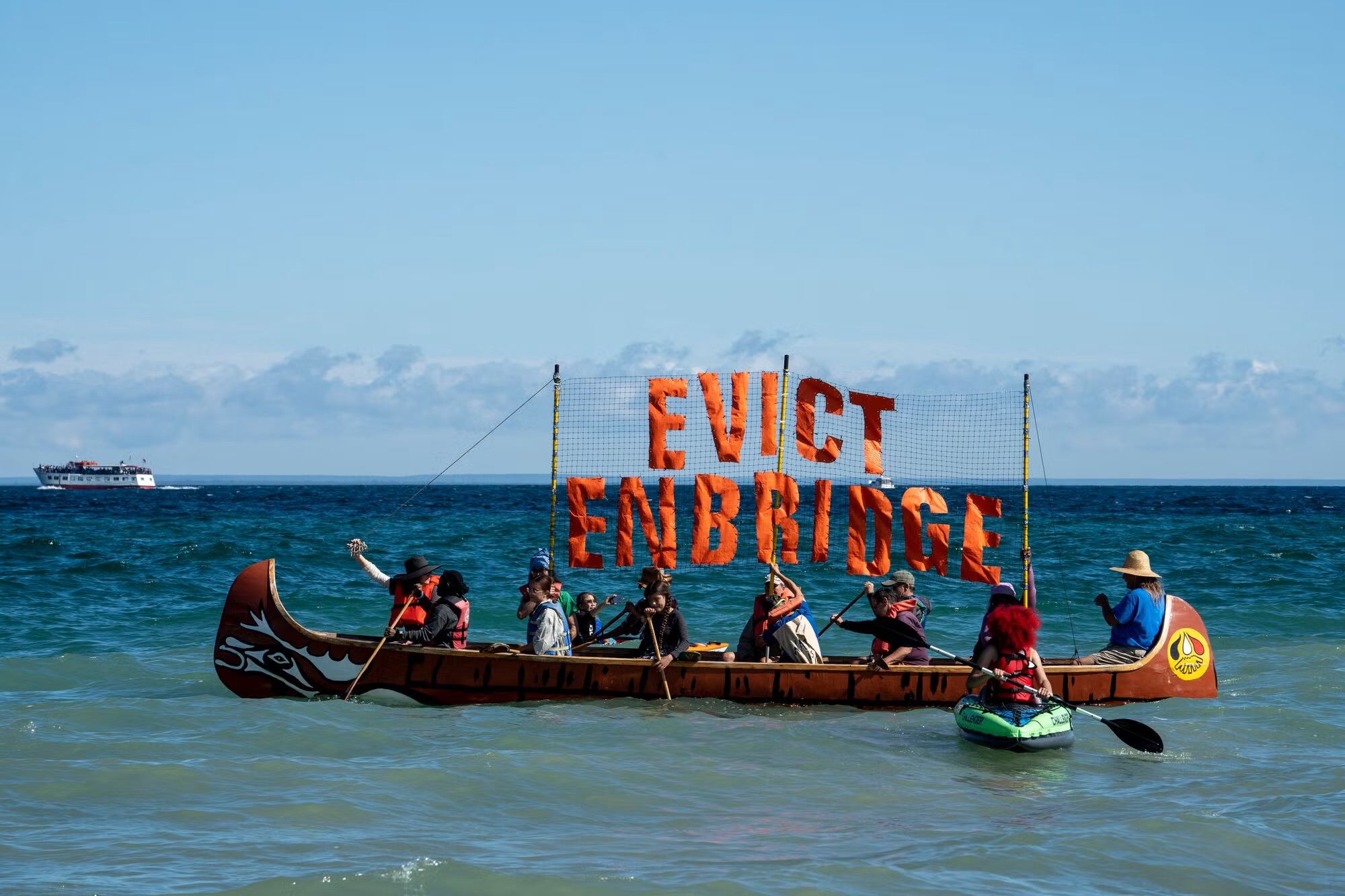
Enbridge Energy’s crude oil pipeline, known as Line 5, currently poses a serious threat to the vitality of the Bad River in Wisconsin and the Great Lakes more broadly. Its construction threatens centuries old treaty rights of Ojibwe nations. Line 5 has been the subject of protest and extensive legal action over the past decade. This Note analyzes the legal claims leveraged by various Ojibwe nations against Enbridge. First, it considers the history of the Ojibwe people in the Midwest region and the treaties forged between the United States and Ojibwe leaders, which enshrined rights to hunt, fish, and gather on both reservation and ceded territory. Then, it analyzes the attempted forced removal of the Ojibwe by the federal government, despite these treaties. Next, it details early twentieth century criminalization of the exercise of the right to hunt, fish, and gather, and the legal battle to exercise those reserved rights. Then, it discusses the Walleye Wars of the late twentieth century. Finally, this Note describes how the contemporary legal battle against Enbridge’s Line 5 builds upon this legacy, arguing that the environmental threat posed by the pipeline inhibits the ability to exercise reserved treaty rights, and threatens the vitality of the land.

Amicus Briefs (also known as “friend of the court” briefs) in support of Nessel’s position were filed by 12 states and the District of Columbia, 63 Tribal and First Nations, the Great Lakes Business Network (a network of over 200 businesses that rely on the Great Lakes including Bell’s Brewery, Patagonia, and Cherry Republic), and an environmental group committed to protecting the Great Lakes known as For Love Of Water.
The Government of Canada submitted a brief as amicus curiae to once again ask the Court to consider “Canada’s Treaty rights” by invoking the 1977 Pipeline Transit Treaty.
As Canada states:
Canada is committed to the process of reconciliation and ensuring full protection for the rights of Indigenous peoples in Canada (despite ignoring indigenous human rights obligations in recent UN Human Rights Council report), including as recognized in the United Nations Declaration on the Rights of Indigenous Peoples (not seen in recent recommendations from the UN Permanent Forum on Indigenous Peoples), and respects the rights and interests of Indigenous peoples in the United States, including the Band’s governance of its Reservation (while Tribal Nations on both sides of the border tell you to quit violating their rights). To this end, Canada supports cooperative and expeditious efforts to re-route Line 5 away from the Band’s Reservation.
In a Report from the Twenty-Second Session the United Nations Permanent Forum on Indigenous Issues, Economic and Social Council issued a recommendation on Line 5:
You must be logged in to post a comment.