New Student Scholarship Arguing that Elk v. Wilkins Was Wrongly Decided

Shunhe Wang has published “Oh Deer: The Elk Court’s Misunderstanding of the Citizenship Clause” in the University of Richmond Law Review.

Here is the abstract:

This Article examines the enduring legacy of Elk v. Wilkins, 112 U.S. 94 (1884), a Supreme Court decision that interpreted the Fourteenth Amendment’s Citizenship Clause to exclude Native Americans from birthright citizenship. By relegating Native citizenship status to a statutory privilege rather than a constitutional right, Elk created a framework that has since been weaponized to challenge birthright citizenship for the children of undocumented immigrants. This Article demonstrates how Elk’s flawed reasoning—particularly its narrow reading of “subject to the jurisdiction thereof”—continues to shape legal and political efforts to erode the Fourteenth Amendment’s guarantees.

Drawing on Justice Harlan’s dissent in Elk, the legislative history of the Fourteenth Amendment, and the text of the Citizenship Clause, this Article argues that Elk was wrongly decided and that the jurisdictional requirement was never intended as a tool for exclusion. The Reconstruction Framers designed the Citizenship Clause to ensure equal citizenship for all persons born on U.S. soil, regardless of ancestry or parental status. Justice Harlan’s dissent provides a blueprint for this inclusive reading, rejecting the notion that allegiance at birth determines jurisdiction.

This Article calls for the explicit repudiation of Elk and its continued misuse in modern birthright citizenship debates. The Fourteenth Amendment’s promise is clear: for anyone born in the United States who subjects themselves to its jurisdiction, birthright citizenship is a constitutional right, not a congressional privilege.
Fletcher and Khalil on ICWA Preemption and Commandeering

Fletcher and Randall F. Khalil have posted “Preemption, Commandeering, and the Indian Child Welfare Act,” forthcoming in the Wisconsin Law Review, on SSRN. This paper is part of the law review’s symposium on Interpretation in the States.

The abstract:

This year (2022), the Supreme Court agreed to review wide-ranging constitutional challenges to the Indian Child Welfare Act (ICWA) brought by the State of Texas and three non-Indian foster families in the October 2022 Term. The Fifth Circuit, sitting en banc, held that certain provisions of ICWA violated the anticommandeering principle implied in the Tenth Amendment and the equal protection component of the Fifth Amendment’s Due Process Clause.
We argue that the anticommandeering challenges against ICWA are unfounded because all provisions of ICWA provides a set of legal standards to be applied in state which validly and expressly preempt state law without unlawfully commandeering the States’ executive or legislative branches. Congress’s power to compel state courts to apply federal law is long established and beyond question.
Yet even if some provisions of ICWA did violate the Tenth, we argue that Section 5 of the Fourteenth Amendment sufficiently authorizes Congress’s enactment of ICWA so as to defeat the anti-commandeering concerns. Strangely, no party ever invoked Congress’s power under Section 5 of the Fourteenth Amendment to assess its constitutionality. ICWA seems like an obvious candidate for analysis under Congress’s enforcement powers under Section 5. States routinely discriminated against American Indian families on the basis of their race and ancestry (and their religion and culture), and ICWA is designed to remedy the abuses of state courts and agencies.
We further have no doubt that the state legislatures that adopted ICWA in whole, in part, or as modified also possessed the power to do so, even in the event the Supreme Court holds all or portions of ICWA unconstitutional.

The Wisconsin Law School gargoyle.

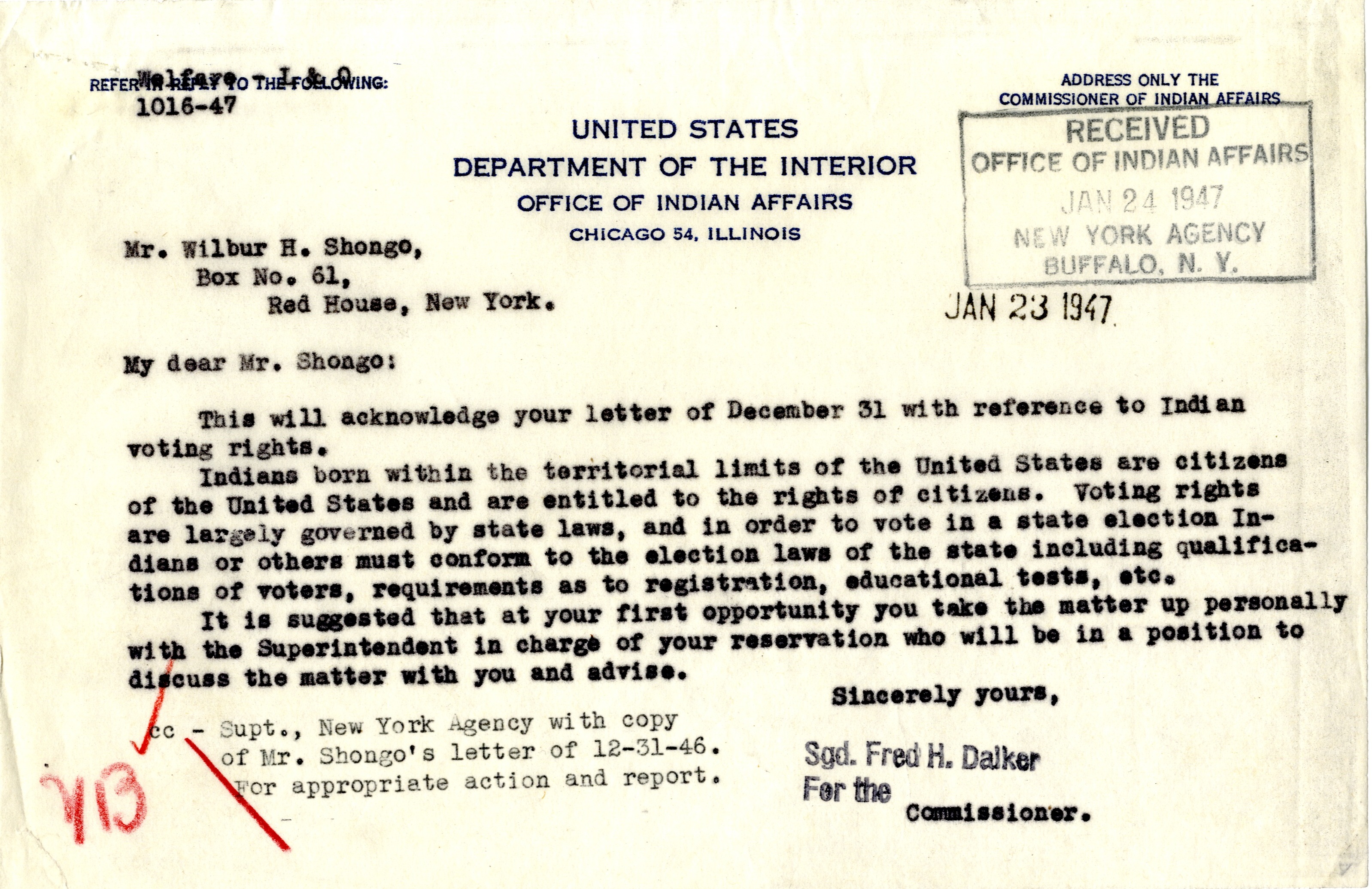
Fletcher Paper on States and American Indian Citizenship Rights (+ ICWA)

Here is “States and Their American Indian Citizens,” recently published in the American Indian Law Review.

An excerpt:

This article is intended to provide a theoretical framework for tribal advocates seeking to approach state and local governments to discuss cooperation with Indian nations, with a special emphasis on Indian child welfare. While the federal government has a special trust relationship with Indians and Indian nations, Indian people are also citizens and residents of the states in which they live. Thus, states have obligations to Indians as well.

This article posits the fairly controversial and novel position that states have obligations to guarantee equal protection to all citizens, including American Indians (and non-Indians) residing in Indian country. In other words, states have an affirmative obligation to ensure that reservation residents, Indian and non-Indian, receive the same services from states that off-reservation residents receive.

Eighth Circuit Affirms Injunction against South Dakota Ban on Native Prisoner Tobacco Use

Here is the opinion in Native American Council of Tribes v. Weber. An excerpt:

In this appeal, we consider the South Dakota Department of Corrections’ (“SDDOC”) decision to prohibit tobacco use by Native American inmates during religious activities. In 2009, the Native American Council of Tribes (“NACT”) and South Dakota Native American inmates Blaine Brings Plenty and Clayton Creek (collectively “inmates”) brought suit against 1 prison officials from the SDDOC (collectively “defendants”)2 claiming that the tobacco ban substantially burdened the exercise of their religious beliefs in violation of the Religious Land Use and Institutionalized Persons Act of 2000 (“RLUIPA”), 42 U.S.C. § 2000cc-1(a). After a three-day bench trial, the district court granted 3 injunctive relief to the inmates and directed the parties confer regarding a revised tobacco policy. On failure to agree, the district court entered a remedial order that, among other things, limited the proportion of tobacco in the mixture distributed to inmates for religious purposes to no more than one percent. The defendants appeal the grant of injunctive relief, including the remedial order. Having jurisdiction under 28 U.S.C. § 1291, we affirm.

Briefs here:

South Dakota Opening Brief

Native American Council Brief

US Amicus Brief

South Dakota Reply Brief

Lower court materials are here and here.

Other posts are here, here, and here.


Update in South Dakota Prisoner Litigation– No Stay on Appeal and Attorney Fees Award

Here are the new materials in Native American Council of Tribes v. Weber (D. S.D.):

DCT Order on Stay and Attorney Fees

Prior materials are here, here, here, and here.

Remedial Order re: South Dakota Prison Ban on Tobacco

The case, once again, is Native American Council of Tribes v. Weber (D. S.D.):

DCT Remedial Order

The court previously issued an order explaining how the ban violates federal religious freedom rights here.

Since the prison system could not agree with the prisoners on a way to craft an injunction, Judge Schreier simply issued an order stating, “[D]efendants are enjoined from banning tobacco used during Native American religious ceremonies.”


Navajo Nation Sues Gallup-Kinley School Board over Voting Rights

Here are the materials in Navajo Nation v. Gallup-McKinley Schools Board of Education (D. N.M.):

Navajo Nation v. GMCS Complaint 12-06-12

Navajo Motion for PI

South Dakota American Indian Prisoners Prove State Ban on Tobacco Violates Religious Freedom Rights

Here are the materials in Native American Council of Tribes v. Weber (D. S.D.):

Plaintiffs’ Post-Trial Brief

South Dakota Post-Trial Brief

Plaintiffs’ Post-Trial Reply

US Statement of Interest

South Dakota Response to US

DCT Order Finding Violation

Earlier materials on this case were here.

DOJ Joins Plaintiffs in Challenge to South Dakota Ban on Indian Prisoner Use of Tobacco

Here is that brief:

US Statement of Interest

The parties’ initial post-trial briefs are here:

Brings Plenty Post-Trial Brief

South Dakota Post-Trial Brief

Our prior post is here.

News coverage (h/t A.E.).

Government Summary Judgment Motion Denied in Challenge to S. Dakota Prison Ban on Tobacco

Here is the opinion in Native American Council of Tribes v. Weber (D. S.D.):

NA Council of Tribes v Weber

Summary judgment is denied on plaintiffs’ RLUIPA claim because genuine issues of material fact exist on whether defendants’ October 2009 policy substantially burdens plaintiffs’ religious exercise. Summary judgment is also denied on plaintiffs’ First and Fourteenth Amendment claims because defendants offer no argument as to why summary judgment is appropriate on those claims. Summary judgment is granted on the AIRFA claim because AIRFA does not create an independent cause of action. Summary judgment is also granted on plaintiffs’ international law claims because the customary law claim is vague, the genocide claim lacks a factual basis, and the United Nations Charter claim does not create an individual cause of action.