Grand Rapids Press Coverage of Gun Lake Supreme Court Case

Here. An excerpt:

WAYLAND TOWNSHIP — The Supreme Court will decide next year whether the federal government properly took land into trust for the Gun Lake Tribe to build a casino, in a case that experts say reaches far beyond the borders of Allegan County.

On Monday, the court agreed to hearformer Wayland Township trustee David Patchak’s reinstated lawsuit against the Gun Lake Band of Pottawatomi and the federal Interior Department, a case which could force the Gun Lake Casino to shut its doors.

The casino, which employs about 900 people, opened in February and has since paid out $10.4 million in state and local revenue sharing while raking in about $104 million in net profits on electronic games after payouts in less than a year of operation.

“This is an incredibly high-stakes case,” said Matthew Fletcher, a law professor at Michigan State University who specializes in Indian gaming law. “This casino is generating a lot of revenue — a lot more than they thought they would.”

But the Supreme Court, which accepts only about 3 to 4 percent of cases for which they’re petitioned each year, would not be scheduling arguments if the lawsuit were simply about jobs, profits and revenue sharing for municipalities, although that helps, said Fletcher.

Rather, the Roberts Court justices are likely hoping to clear-up a gray-area in the law that governs decisions by the Department of Interior about taking land in trust on behalf of Indian tribes; a wrinkle that bodes well for the tribe and the government, he said.

The Supreme Court typically reverses about 70 to 75 percent of cases they hear, Fletcher said. “They usually agree to hear a case when they think a lower court is wrong.”
Gustafson v. Poitra Cert Petition

Here is the petition (docket no. 11-701):

Gustafson v Poitra Cert Petition

Here are the questions presented:

1. Whether the State of North Dakota can supplant its own state case law, instead of federal law on jurisdictional disputes between state courts and tribal courts.
2. Whether the State of North Dakota has subject matter jurisdiction over a contract dispute between a nonmember individual and a member of an Indian tribe arising from the ownership and use of a building located on non-Indian owned fee land on an Indian reservation.
Here is the lower court opinion. Here is Gustafson’s lower court brief. And Poitra’s. Poitra was pro se.

Quick Commentary on SCOTUS, Patchak, and Corboy

The Supreme Court granted cert in an Indian law case where the petition was filed in favor of tribal interests. This is, of course, the Patchak case involving the Department of Interior’s decision to take land into trust for gaming purposes on behalf of the Gun Lake Band. The last time the Court granted a petition filed on behalf of tribal interests was Cherokee Nation v. Leavitt, a case decided in 2005. The Court might also grant cert this Term in Ramah Navajo v. Salazar. Key to these successful cert petitions is the participation of the United States as supportive of the granting of the petition (if not the merits). In fact, every cert petition granted on behalf of tribal interests in recent memory has the support of the federal government, the last one (I believe) being Mississippi Band Choctaw v. Holyfield. Only Justice Scalia remains from that Court.

Key point: A cert petition on behalf of tribal interests has almost no chance of being granted by the Roberts Court unless the United States favors of the petition. Even then, as the Oneida and Cayuga land claims petitions demonstrates, it is a bit of a crap shoot.

Corboy v. Louie is more representative of where the Supreme Court is in relation to Indian law (though I suppose this isn’t an Indian law case, precisely). There’s nothing certworthy in this case whatsover (no split, nothing of national importance, a case brought by a private tax protester), but the Court is thinking carefully about this case perhaps because Indian law-type legal doctrines are outside of what Dean Getches called the “mainstream” of constitutional law, and should be reeled in. I have no doubt the OSG will recommend a denial because there simply is nothing worthy of Supreme Court review, but the fact this isn’t already a denied petition is telling.

Key point: A cert petition opposing tribal interests (regardless of its merit) receives more attention from the Supreme Court than a petition favoring tribal interests. End of story.

Cherokee Nation v. Ketchum Cert Petition — ICWA Membership Issue

The Cherokee Nation and Britney Jane Little Dove Nielson (child’s mother) have filed a petition for cert in the Supreme Court of the Tenth Circuit’s controversial decision to override the Cherokee Nation’s law establishing automatic temporary citizenship for all children born to Cherokee descendents when determining whether a child was an “Indian child” for the purposes of ICWA.

The Cert Petition is here. Previous materials on this case are here. Dean Leeds earlier commentary on this case is here. While the likelihood the Court grants cert is slim, this is an incredibly important case implicating not just ICWA determinations but tribal citizenship requirements, and the respect granted them in federal courts, in general.

Omaha Tribe v. StoreVisions Cert Opposition Brief

StoreVisions Cert Opp

SCT Relists Arctic Slope Native Assn. v. Sebelius Petition (Two Other Indian Law Petitions Denied)

We think. 🙂

Here is today’s order list.

The Supreme Court also denied cert in Evans v. Wapato Heritage and Begay v. United States, a case that the Ninth Circuit heard en banc.

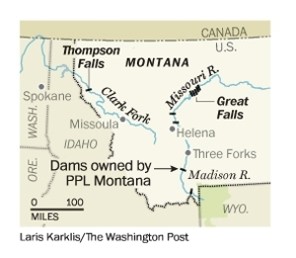
Lewis & Clark Expedition and PPL Montana v. Montana in the SCT

Here is the news coverage (h/t How Appealing) of this interesting historical case involving the notes from the Lewis & Clark expedition. An excerpt:

Both the state and the company say Lewis and Clark’s experiences make their case.

Clement points out that the expedition never even attempted to navigate one of the rivers at issue, and that the record shows Lewis and Clark bypassed the 17-mile Great Falls Reach of the Missouri “not out of convenience, but out of necessity — the stretch was impassable.”

Historians who agree with PPL said the state’s evidence of the commercial history of the rivers is in part based on notoriously unreliable frontier-era newspapers with boosterish and fabricated tales of “28-pound radishes and steamboat traffic between Denver and the Gulf of Mexico.”

Montana replies with Lewis’s observation that he did not believe “that the world can furnish an example” of how rivers can run through such mountainous country as Montana and yet be “so navigable as they are.”

It is beyond dispute that the rivers played an important part of the new nation’s economic development, Montana argues.The state’s supportive historian is Stephenie Ambrose Tubbs, who has written extensively about Montana and is the daughter of Lewis and Clark scholar Stephen Ambrose.

“For those of us who have spent our lives on these Rivers, retracing Lewis and Clark’s historic footsteps,” she told the court in a brief, a piecemeal approach to ownership is threatening.

And, for those who look to original meaning, she proposed that the court affirm the Montana Supreme Court, which she said recognized “that these rivers were navigable, as that term was understood by President Jefferson and the Founders before him.”

Continue reading

New Scholarship on U.S. v. Tohono O’odham Nation

Craig A. Schwartz has published Footloose: How to Tame the Tucker Act Shuffle After United States v. Tohono O’odham Nation in the UCLA Law Review Discourse.

The article has very little to do with Indian law, but demonstrates (if you read between the lines a bit) how the United States probably used all of the Indian claims cases now being dismissed en masse to also wipe out a class of claims based on regulatory takings. If the CFC “shuffle” case had arisen in the regulatory takings context, imagine how Scalia, J. would have reacted.

Cert Opposition Brief in Corboy v. Louie (Challenge to Hawaii Homestead Lease Qualification)

Here.

Supreme Court May Grant Arctic Slope v. Sebelius Monday Morning

Scotusblog’s list of petitions to watch for last week’s conference is here.

The government recommended a hold in this case, arguing that the Ramah Navajo petition is a better vehicle. So, maybe the Court will resist this case, and hold it pending the decision in Ramah, or perhaps relist here and then consolidate it with Ramah.