Here are the materials in Cedar Band of Paiutes v. Department of Housing and Urban Development (D. Utah):
73-reply-in-support-of-motion-for-pi.pdf
News article explaining the injunction here.
We posted the complaint and the motion here.
Here are the materials in Cedar Band of Paiutes v. Department of Housing and Urban Development (D. Utah):
73-reply-in-support-of-motion-for-pi.pdf
News article explaining the injunction here.
We posted the complaint and the motion here.
From Monique Vondall:
I was at the historic consultation — a first — with the DOJ regarding domestic violence funding for Indian Country. Of the $169 million in grants available only 59 tribes applied and the cap of $500,000 only allowed $29 million to be distributed. The DOJ listening session was met with many requests to continue the set-aside funding for Indian Country.
The Southwest region in Alaska reports the highest percentage of women who experience domestic violence in America. The 2019 Section 903 Reauthorization of VAWA found that Alaska Native women experience domestic violence at a rate of 250% more than any other women in America.


Here are the materials in Cedar Band of Paiutes v. Department of Housing and Urban Development (D. Utah):
Worth a look, most especially for Dylan Minor’s excellent artistic rendering of the treaty cessions by Michigan Indian nations (skip ahead to page 15); available on SSRN here.
It was cherry blossom time, too!
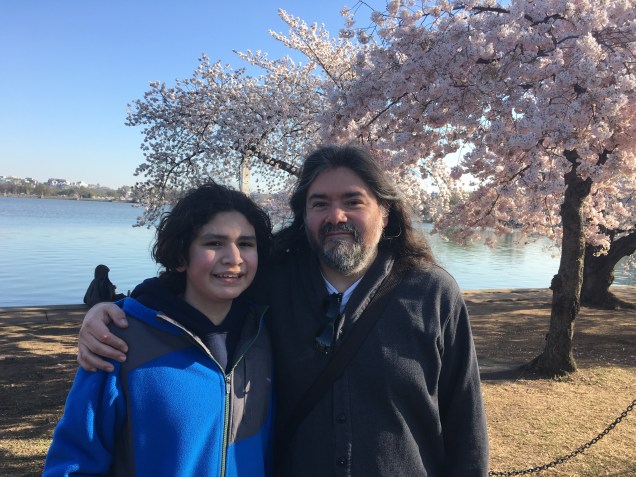
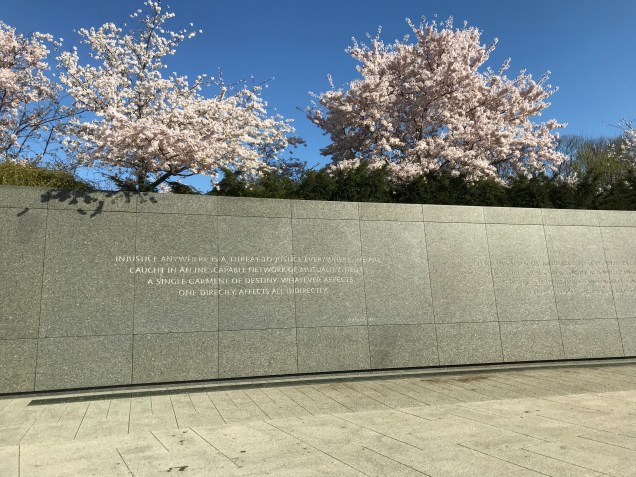
And on the way over, we happened by the Japanese Internment Memorial, noting that the federal government placed many of the concentration camps on Indian reservations: Continue reading
Here is the complaint Narragansett Indian Tribe v. Federal Highway Administration (D.R.I.):
An excerpt:
The Tribe brings this action to challenge the termination of a programmatic agreement(“PA”) entered into pursuant to the regulations of the National Historic Preservation Act (“NHPA”). The termination of the PA occurred after substantial construction had taken place on the project for which the PA was meant to address and resolve the adverse effects of the project on historic properties to the signatories’ satisfaction. The termination of the PA after substantial work had been performed on the project, and the subsequent final decision of the Federal Highway Association (“FHWA”) was arbitrary and capricious.
Here:
Question presented:
Section 106 of the National Historic Preservation Act (“NHPA”), 54 U.S.C. § 306108, requires federal agencies to consult with Indian tribes and other interested parties to assess and mitigate the potential adverse impacts that a project requiring federal approval may have on sites of historic and cultural significance.
The question presented here is whether the NHPA imposes a continuing obligation upon federal agencies to engage in consultation under Section 106 when an agency maintains supervision of an ongoing project, and has the opportunity to require changes to mitigate adverse impacts after the initial approval.
Lower court materials here.
Inadequate consultation with First Nations is among the reasons. More here.
Defending Tribal Sovereignty: The Ongoing Battle Over “Meaningful Consultation” and Self-Governance Over Natural and Cultural Resources
May 23, 2018
12:00 PM – 1:30 PM EST
Non-CLE Webinar
(direct link: https://shop.americanbar.org/ebus/ABAEventsCalendar/EventDetails.aspx?productId=326797486)
The Dakota Access Pipeline, Bears Ears National Monument, de-listing of the gray wolf and the Greater Yellowstone Ecosystem Grizzly Bear, and the Bureau of Land Management’s rule regulating hydraulic fracturing on Federal and Indian land. These high-profile courtroom dramas are about more than the protection and use of natural resources: they encapsulate the ongoing struggle between tribes and federal agencies over the government’s obligation as trustee to engage in “meaningful consultation” about actions impacting Indian Country. These developments are just the latest in a centuries-long debate about the meaning of tribal sovereignty, and they offer an indigenous perspective into the promise of true environmental justice.
 Turtle Talk
You must be logged in to post a comment.