Yale Law Journal Seeks Submissions from Scholars Who Follow Turtle Talk

Starting July 18, 2025, the Yale Law Journal submission portal for Articles & Essays will open. The submission guidelines and portal can be found here. Any questions about the submission process can be referred to YLJ‘s Managing Editors, Ako Ndefo-Haven (ako.ndefo-haven@yale.edu) and Matt Beattie-Callahan (matthew.beattie-callahan@yale.edu).

Katie Kroft, Executive Editor of Articles & Essays for the Yale Law Journal.

It’s Yale-ish, right?

Fletcher’s April Fool’s Day Visit to Yale, Courtesy of the YLJ

With Megan Gupta and Ashlee Fox
With Gerald Torres, too
Bobby and Ryan’s mural at the Yale NACC
One of Yale’s ghosts

New Student Scholarship on Tribal Disenrollments

John K. Crawford (Forest County Potawatomi) has published “Disenrollment as Citizenship Revocation: Promoting Tribal Sovereignty by Embracing International Norms” in the Yale Law Journal.

Here is the abstract:

This Note argues that Indian tribes can best address disenrollment by viewing the problem through the lens of international norms regarding citizenship revocation. Tribal officials and members, advocates and journalists, and scholars and practitioners of federal Indian law typically understand disenrollment, which is when a tribe severs its governmental relationship with certain members, as a practice unique to Indian Country. However, while tribes’ unique legal status facilitates disenrollment, this practice can nevertheless be understood as a form of citizenship revocation, which is when a state deprives certain persons of their previously held citizenship. By understanding disenrollment as citizenship revocation, tribes can draw from a wide body of existing literature about states’ citizenship-revocation regimes when considering limitations on their power to disenroll. If tribes choose to address disenrollment by embracing international norms regarding citizenship revocation, they will not simply invoke tribal sovereignty, as sometimes occurs under the current status quo, but instead promote it by advancing good governance and aligning their sovereignty with state sovereignty.

This is no reflection on the quality of this paper, which seems excellent, but I have a limited number of Yale pics. And this one is straight fire.

Yale Law Journal Article Submissions Portal Opens Feb. 1

The Yale Law Journal plans to reopen its submissions portal for Articles & Essays on Saturday, February 1.

Submissions guidelines and portal can be found here. Any questions you might receive about the submission process can be referred to our Managing Editors, Ako Ndefo-Haven (ako.ndefo-haven@yale.edu) and Matt Beattie-Callahan (matt.beattie-callahan@yale.edu).

Yale Law Journal Comment on the Law of Nations Origin to the Marshall Trilogy

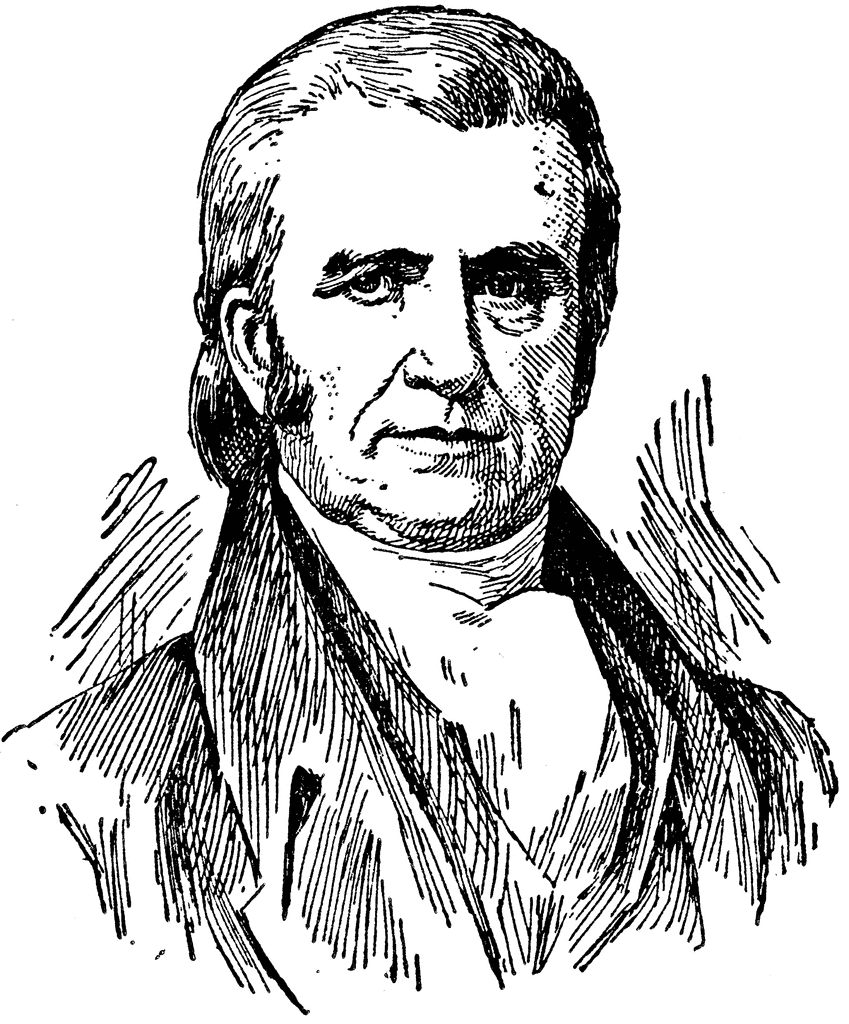
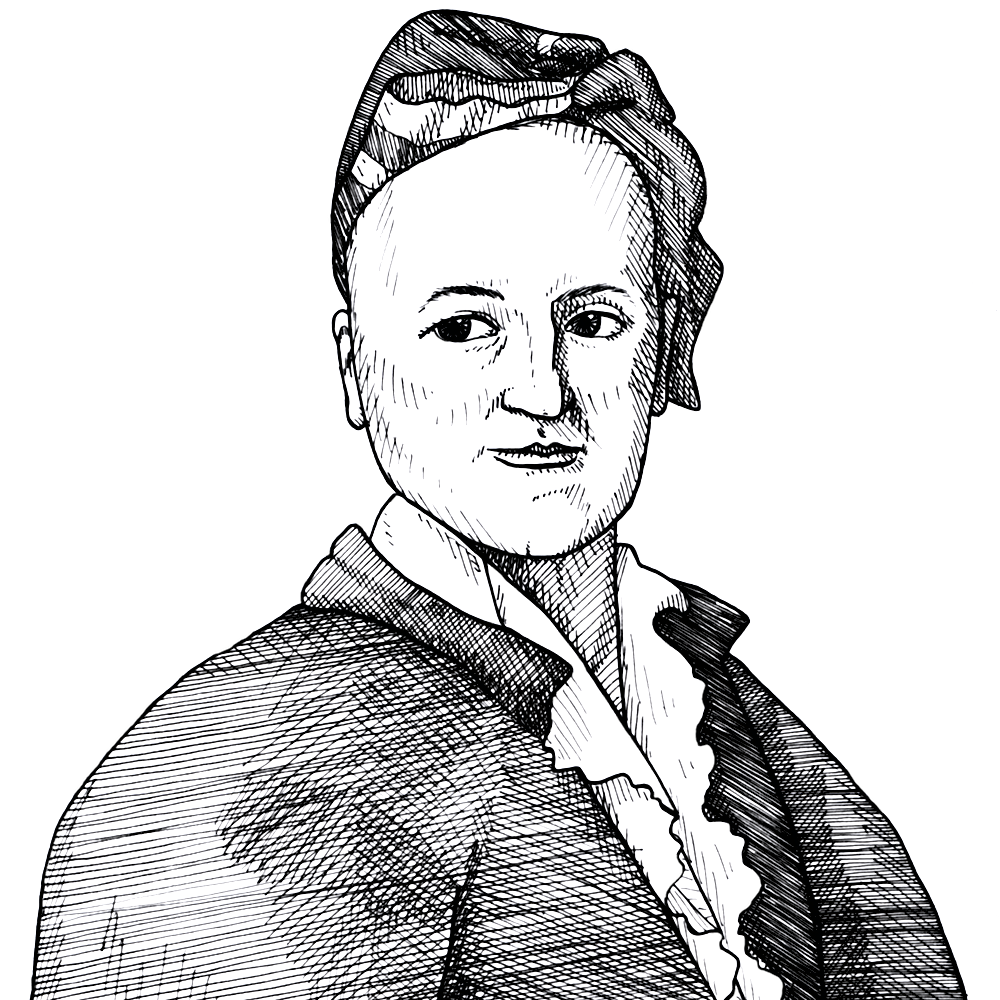
Eric Eisner has published “The Law-of-Nations Origins of the Marshall Trilogy” in the Yale Law Journal. PDF

Here is the abstract:

Federal Indian law is sometimes seen as a purely domestic part of American law, but its origins are in the law of nations. The Marshall Trilogy—Johnson v. M’IntoshCherokee Nation v. Georgia, and Worcester v. Georgia, three Supreme Court decisions authored by Chief Justice Marshall that are foundational for American federal Indian law—relied on law-of-nations sources. In particular, The Law of Nations, an eighteenth-century treatise by Emer de Vattel, provided a central influence on Marshall’s opinion in Worcester. In early national American legal thought, Vattel was a leading authority on the law governing the rights and obligations subsisting among nations. Recognizing the important role that the law of nations played in the foundations of federal Indian law under-scores the deep roots of tribal sovereignty in American law and clarifies current doctrinal disputes.

Who would win in a fight?

Yale Law Journal Submissions Now Open

The Yale Law Journal’s submissions season opened on February 1, and we are reaching out to see if you would be able to share a call for submissions on Turtle Talk. The Articles and Essays submissions guidelines can be found here.

We greatly appreciate your time, and we hope to hear from you soon! 

Best,

Ashlee Fox, Meghan Gupta, and Lily Moore-Eissenberg, on behalf of the Yale Law Journal

Yale

New Student Scholarship on Tribal Courts and Environmental Tort Litigation

Helia Bidad has published “The Power of Tribal Courts in Ongoing Environmental-Tort Litigation” in the Yale Law Journal. Here is the abstract:

Cities, counties, and states across the country are bringing environmental and climate tort suits to hold environmental tortfeasors accountable. These cases are commonly brought in state and federal court, but the possibility of bringing these suits in tribal courts has largely been left out of the discussion. In the wake of attacks on tribal sovereignty in the form of tribal jurisdiction stripping, this Essay uses an original empirical analysis of 308 cases to understand the circumstances in which tribal-court jurisdiction currently exists for tribal members to sue nonmembers for environmental torts in tribal court. This Essay makes recommendations for how to strategically bring these suits and highlights important considerations for tribal sovereignty.

Student Note on Native Voting Rights

Noelle N. Wyman has published “Native Voting Power: Enhancing Tribal Sovereignty in Federal Elections” (PDF) in the Yale Law Journal. Here is the abstract:

Members of tribal nations are disproportionately burdened by barriers to voting, from strict voter identification and registration requirements to inadequate language assistance and inaccessible polling locations. Restrictive voting laws are on the rise, while the avenues for challenging them under the prevailing model of voting rights are narrowing. This Note advocates for a different approach to conceptualizing and combatting Native American voter suppression.

First, it advances a new jurisprudential theory centered on tribal sovereignty: suppressing the Native vote not only denies rights to individual citizens but also denies sovereign power to tribes. Historically, states required Native American people to renounce tribal membership, culture, and lands to vote. Today, states and localities continue to denigrate tribal sovereignty in the administration of elections, such as by rejecting tribal-issued IDs and interfering with tribes’ organization of their own political communities. Apart from securing the fundamental rights of individual Native citizens, Congress has a substantive duty to secure tribal sovereignty in federal election administration that is rooted in its trust obligation to tribes.

Second, this Note proposes a new legal framework for enhancing Native voting power: Congress should require states and local election officials to negotiate with federally recognized tribes toward the formation of tribal-state compacts governing federal election administration in Indian Country. This framework would relieve tribes of the burdens that they currently carry to initiate collaboration with local election officials, fill gaps in voter assistance, and challenge unlawful voting restrictions in court. Meanwhile, it would involve tribes in the process of lawmaking and regulation, enabling them to exert a measure of sovereign power over federal elections in Indian Country.

Student Scholarship on McGirt and Aboriginal Title

Clare Blumenthal published “‘We Hold the Government to Its Word’: How McGirt v. Oklahoma Revives Aboriginal Title” in the Yale Law Journal.

Here is the abstract:

This Note analyzes for the first time how McGirt v. Oklahoma could revive aboriginal-title land claims against the United States and create an opening for Land Back litigation. It argues that McGirt directs lower courts to enforce aboriginal title’s congressional-intent requirement strictly and renews the relevance of an overlooked case from 2015, Pueblo of Jemez v. United States. In Pueblo of Jemez, the Tenth Circuit unknowingly demonstrated how insisting on clearer proof of congressional intent to extinguish title would implement McGirt’s holding and remove the jurisdictional bars—sovereign immunity and preclusion—that have prevented aboriginal-title litigation.

Gregory Ablavsky on the Origins of Dual Federalism

Gregory Ablavsky has published “Empire States: The Coming of Dual Federalism” in the Yale Law Journal (PDF).

Here is the abstract:

This Article offers an alternate account of federalism’s late eighteenth-century origins. In place of scholarly and doctrinal accounts that portray federalism as a repudiation of models of unitary sovereignty, it emphasizes the federalist ideology of dual sovereignty as a form of centralization—a shift from a world of diffuse sovereignty to one where authority was increasingly imagined as concentrated in the hands of only two legitimate sovereigns.

In making this claim, the Article focuses on two sequential late eighteenth-century transformations. The first concerned sovereignty. Pre-Revolutionary ideas about sovereignty reflected early modern corporatist understandings of authority as well as imperial realities of uneven jurisdiction. But the Revolution elevated a new understanding of sovereignty in which power derived from the consent of a uniform people. This conception empowered state legislatures, which, throughout the 1780s, sought to use their status under new state constitutions as the sole repositories of popular authority to subordinate competing claims to authority made by corporations, local institutions, Native nations, and separatist movements.

The second shift came with the drafting and ratification of the U.S. Constitution, which bolstered federal authority partly in order to protect state authority against internal competitors—an aim reflected in the Guarantee and New State Clauses. Ultimately, the Constitution both limited and enhanced state authority; it entrenched a framework of dual sovereignty. After ratification, competitors to state sovereignty were increasingly constrained to appeal to some federal right or power. What had previously been contests among supposedly coequal sovereigns—what modern scholars would call horizontal federalism—became questions of vertical federalism, issues of whether federal authority would vindicate states or their opponents.

Although the Article concludes with some implications of this history for present-day federalism doctrine and theory, its primary contribution is descriptive. Judges and lawyers routinely and almost unthinkingly invoke localism and power diffusion as the historical values of federalism. Yet the history explored here challenges whether these near-universal assumptions about federalism’s aims actually reflect what federalism was designed to accomplish.